Portable inverter generators range from compact units for essential devices to high-output models that can support larger backup loads. My best overall pick is the WEN DF480iX, which pairs dual-fuel flexibility with useful output for home or RV use. The WEN 2350 is a simpler fit for lighter loads, while the DuroMax XP11000iH stands out when capacity matters more than easy transport. The main tradeoffs are power versus weight, gasoline simplicity versus dual-fuel choice, and low-load portability versus backup capacity. Continue reading for the full breakdown and a guide to matching output, runtime, and outlets to your needs.

Get backup power and energy gear delivered free with Prime
- Fast, free delivery on millions of items
- Prime Video, Amazon Music and more included
- Member-only deals all year
Complete the kit


Key Takeaways
- Dual-fuel models dominate the flexible middle ground: the WEN DF480iX and DF360iX offer fuel choice without moving into the very high-output class of the DuroMax XP11000iH.
- More wattage can work against portability: the 11,000-watt DuroMax serves larger backup needs, but compact picks such as the WEN 2350 and RINADURS 2800W are easier to move and store.
- RV readiness is not the same as universal RV compatibility: several WEN models advertise RV outlets, but buyers still need to match the outlet and generator capacity to their trailer’s input and appliances.
- Fuel shutoff is a practical ownership distinction: models such as the WEN 56360i, WEN 2350, and WEN 4800W include this feature, which can simplify storage after seasonal use.
- Open-frame design changes the portability equation: the PowerSmart 4400W offers an inverter format with an open frame, while enclosed compact models generally suit buyers who prioritize easier handling and a more contained design.
| RINADURS 2800W Portable Inverter Generator with CO Sensor |  | Best Compact Pick | Engine: 122cc four-stroke | Fuel: Gasoline | Starting / running output: 2,800 / 2,500 watts | VIEW LATEST PRICE | See Our Full Breakdown |
| WEN DF480iX 4800-Watt Dual-Fuel Inverter Generator with Electric Start and CO Shutdown |  | Best Dual-Fuel Balance | Engine: 224cc four-stroke | Fuel: Gasoline or propane | Surge output: 4,800 watts gasoline; 4,320 watts propane | VIEW LATEST PRICE | See Our Full Breakdown |
| WEN DF680iX 6800-Watt Dual-Fuel Portable Inverter Generator |  | Best for Higher-Load Backup | Engine: 224cc dual-fuel | Fuel: Gasoline or propane | Surge output: 6,800 watts gasoline; 6,000 watts propane | VIEW LATEST PRICE | See Our Full Breakdown |
| Oxseryn 4400W Gas-Powered Inverter Generator with ECO Mode |  | Best Long-Run Open-Frame Pick | Engine: 208cc four-stroke | Fuel: Gasoline | Peak / running output: 4,400 / 3,400 watts | VIEW LATEST PRICE | See Our Full Breakdown |
| WEN 4500-Watt RV-Ready Gasoline Inverter Generator (56432i) |  | Best Lightweight RV Pick | Engine: 181cc | Fuel: Gasoline | Surge output: 4,500 watts | VIEW LATEST PRICE | See Our Full Breakdown |
| WEN DF360iX 3600-Watt Dual-Fuel Portable Inverter Generator |  | Best Dual-Fuel Compact Pick | Fuel type: Gasoline and propane | Gasoline output: 3,600 surge watts; 2,900 rated watts | Propane output: 3,500 surge watts; 2,600 rated watts | VIEW LATEST PRICE | See Our Full Breakdown |
| DuroMax XP11000iH 11,000-Watt Dual-Fuel Portable Inverter Generator |  | Best for High-Load Home Backup | Fuel type: Gasoline and propane | Peak output: 11,000 watts | Running output: 9,000 watts | VIEW LATEST PRICE | See Our Full Breakdown |
| WEN 3600-Watt Portable Inverter Generator with RV Outlet and Fuel Shutoff (56360i) |  | Best Lightweight Gas-Only RV Pick | Fuel type: Gasoline | Output: 3,600 starting watts; 2,900 running watts | Engine: 149 cc, 4-stroke | VIEW LATEST PRICE | See Our Full Breakdown |
| Oxseryn 2800-Watt Portable Inverter Generator |  | Best Compact Camping Pick | Fuel type: Gasoline | Output: 2,800 peak watts; 2,000 running watts | Engine: 79.8 cc, 4-stroke OHV | VIEW LATEST PRICE | See Our Full Breakdown |
| WEN 4800-Watt RV-Ready Portable Inverter Generator with Fuel Shutoff |  | Best Wheeled Mid-Output Pick | Fuel type: Gasoline | Output: 4,800 surge watts; 4,000 rated watts | Engine: 224 cc | VIEW LATEST PRICE | See Our Full Breakdown |
| PowerSmart 4000-Watt Gas-Powered Portable Inverter Generator |  | Best Compact Higher-Output Pick | Running wattage: 3,200 watts | Starting wattage: 4,000 watts in description; 3,800 watts in specifications | Fuel and engine: Gasoline; 149 cc 4-stroke | VIEW LATEST PRICE | See Our Full Breakdown |
| PowerSmart 4300-Watt Portable Gas Inverter Generator |  | Best for Longer Runtime | Running wattage: 3,500 watts | Starting wattage: 4,300 watts | Fuel and engine: Gasoline; 223 cc 4-stroke | VIEW LATEST PRICE | See Our Full Breakdown |
| WEN 2350-Watt Portable Inverter Generator with Fuel Shutoff |  | Best Lightweight Pick | Running and surge wattage: 1,900 running watts; 2,350 surge watts | Fuel and engine: Gasoline; 79 cc 4-stroke OHV | Total harmonic distortion: Under 0.3% at no load; under 1.2% at full load | VIEW LATEST PRICE | See Our Full Breakdown |
| Generac GP3300i 3,300-Watt Gas-Powered Portable Inverter Generator |  | Best for Built-In Carbon Monoxide Monitoring | Running and starting wattage: 2,500 running watts; 3,300 starting watts | Fuel: Unleaded gasoline | Fuel tank and runtime: 1.06 gallons; up to 7 hours at 25% load and 4.5 hours at 50% load | VIEW LATEST PRICE | See Our Full Breakdown |
| PowerSmart 4400-Watt Open-Frame Inverter Generator |  | Best for RV Outlet and Higher Output | Running and peak wattage: 3,600 running watts; 4,400 peak watts | Fuel and engine: Gasoline; 223 cc 4-stroke | Runtime: 11 hours | VIEW LATEST PRICE | See Our Full Breakdown |
| portable inverter generator | Runtime | Outlets | Engine | Weight |
|---|---|---|---|---|
| RINADURS 2800W Portable Invert | Up to 10 hours at 25% load | — | 122cc four-stroke | 45.6 lbs |
| WEN DF480iX 4800-Watt Dual-Fue | Up to 7 hours at half load on gasoline; up to 20 hours at half load on a 20 lb LPG tank | Four 120V NEMA 5-20R, one 120V TT-30R, 12V DC, two 5V USB | 224cc four-stroke | — |
| WEN DF680iX 6800-Watt Dual-Fue | Up to 6.1 hours at half load on gasoline; up to 9 hours at half load on a 20 lb LPG tank | One L14-30R 120V/240V, two 120V NEMA 5-20R, one 120V TT-30R, 12V DC, two 5V USB | 224cc dual-fuel | — |
| Oxseryn 4400W Gas-Powered Inve | Up to 14 hours at 25% load in ECO mode | Two 120V AC, one 12V DC, one RV port | 208cc four-stroke | 56 lbs |
| WEN 4500-Watt RV-Ready Gasolin | Up to 5.6 hours at half load | Two 120V NEMA 5-20R, one 120V TT-30R RV, 12V DC, two 5V USB | 181cc | 53 lbs |
| WEN DF360iX 3600-Watt Dual-Fue | Up to 5 hours at half load on gasoline; up to 14 hours at half load on a 20-pound LPG tank | Two 120V NEMA 5-20R, one 120V TT-30R, one 12V DC, and two 5V USB | 149 cc, 4-stroke | 49 pounds |
| DuroMax XP11000iH 11,000-Watt | 9 hours; load condition not specified | — | 459 cc, 4-stroke | 216 pounds |
| WEN 3600-Watt Portable Inverte | Up to 5 hours at half load | Two 120V NEMA 5-20R, one 120V TT-30R, one 12V DC, and two 5V USB | 149 cc, 4-stroke | 46 pounds |
| Oxseryn 2800-Watt Portable Inv | Up to 9 hours at 25% load | Two 120V AC, one 12V DC, one USB, and one USB-C | 79.8 cc, 4-stroke OHV | 40 pounds in description; title states 39 pounds |
| WEN 4800-Watt RV-Ready Portabl | Up to 7 hours at half load | Four 120V NEMA 5-20R, one 120V TT-30R, one 12V DC, and two 5V USB | 224 cc | 72.7 pounds |
| PowerSmart 4000-Watt Gas-Power | — | 120V 20A duplex, 120V 30A twist-lock, 12V 8A DC, dual 5V 2.1A USB | — | — |
| PowerSmart 4300-Watt Portable | Up to 12 hours at 25% load | 120V 30A L5-30R twist-lock, 120V 20A duplex, 12V 8A DC | — | — |
| WEN 2350-Watt Portable Inverte | Over 5.7 hours at half load; listed maximum 10 hours | Two 120V 14A AC receptacles, one 12V 8.3A DC receptacle, two 5V USB ports | — | — |
| Generac GP3300i 3,300-Watt Gas | — | Two 120V 20A household outlets, one 120V 30A L5-30R, two USB-A ports | — | 59.5 pounds |
| PowerSmart 4400-Watt Open-Fram | 11 hours | One 30A RV outlet, two 120V 20A outlets, one 12V DC port | — | 61 pounds in description; 39 pounds in specifications |
More Details on Our Top Picks
RINADURS 2800W Portable Inverter Generator with CO Sensor
The RINADURS RAD2800i is the most compact, lower-output choice in this group: its 45.6-pound weight and 2,500 running watts suit camping, tailgating, and essential small loads better than the larger WEN DF480iX or DF680iX. Its inverter output is rated below 3% THD, a useful fit for electronics, while Eco Mode can stretch runtime to up to 10 hours at 25% load. CO shutdown, low-oil protection, and USB-C add practical touches for portable use. The tradeoff is limited capacity: it is not the pick for running several demanding appliances at once. The listing also conflicts on starting method, describing recoil start while the specifications say electric start, so I would verify that before buying. Parallel use requires a separate kit.
Pros:- 45.6-pound weight is lighter than the WEN DF480iX and DF680iX.
- Up to 10 hours of runtime at 25% load with Eco Mode.
- CO shutdown, low-oil shutdown, overload protection, and overheat protection.
- USB-A, USB-C, 12V DC, and two household outlets provide varied charging options.
Cons:- 2,500 running watts limit the number of larger appliances it can support.
- Starting method is inconsistent across the listing.
- Parallel kit is sold separately.
Best for: Campers and tailgaters who want a light generator for electronics, lighting, and a few modest loads.
Not ideal for: RV owners or households needing higher sustained output, or buyers who require a clearly confirmed electric-start system.
- Engine:122cc four-stroke
- Fuel:Gasoline
- Starting / running output:2,800 / 2,500 watts
- Power quality:Pure sine wave; less than 3% THD
- Runtime:Up to 10 hours at 25% load
- Fuel tank:1.45 gallons
- Weight:45.6 lbs
- Outlets and ports:Two 120V 20A outlets, 12V DC, USB-A, USB-C
Our verdict“Choose the RINADURS for lighter-duty trips where low weight and long runtime at a small load matter more than high output.”
WEN DF480iX 4800-Watt Dual-Fuel Inverter Generator with Electric Start and CO Shutdown
The WEN DF480iX earns its place as a flexible middle ground: it delivers 4,000 rated watts on gasoline, offers propane as an alternative, and includes a TT-30R RV outlet. Compared with the gasoline-only WEN 4500-Watt RV-Ready model, dual-fuel operation gives owners another way to run the generator when gasoline is inconvenient; on propane, though, rated output falls to 3,600 watts. Electric start with recoil backup, onboard wheels, and a telescoping handle make this a more manageable package than the larger DF680iX. Its low listed THD suits sensitive electronics, and CO shutdown adds a safety layer. The compromises are a short gasoline runtime of up to seven hours at half load and a separately sold parallel kit.
Pros:- Gasoline and propane operation offers fuel flexibility.
- Electric start with recoil backup simplifies starting while retaining a fallback.
- Includes a TT-30R RV outlet, household outlets, DC, and USB connections.
- Wheels and a telescoping handle ease movement compared with the compact RINADURS.
Cons:- Rated output drops from 4,000 watts on gasoline to 3,600 watts on propane.
- Gasoline runtime is up to seven hours at half load.
- Parallel connection kit is sold separately.
Best for: RV travelers and homeowners who want a wheeled, dual-fuel inverter with enough output for several common loads.
Not ideal for: Buyers prioritizing the highest output in this group or a long gasoline run between refills.
- Engine:224cc four-stroke
- Fuel:Gasoline or propane
- Surge output:4,800 watts gasoline; 4,320 watts propane
- Noise level:62 dB at quarter load
- Runtime:Up to 7 hours at half load on gasoline; up to 20 hours at half load on a 20 lb LPG tank
- Outlets:Four 120V NEMA 5-20R, one 120V TT-30R, 12V DC, two 5V USB
- Starting system:Electric start with recoil backup
- Warranty:3-year limited
Our verdict“Pick the DF480iX if you want a practical RV-ready generator with gasoline and propane flexibility, rather than the greater output of the DF680iX.”
WEN DF680iX 6800-Watt Dual-Fuel Portable Inverter Generator
For buyers who need more capacity than the DF480iX, the WEN DF680iX is the clear step up: gasoline surge output reaches 6,800 watts, and its L14-30R outlet supplies 120V/240V power for compatible equipment. It also runs on propane, includes an RV outlet, and offers low-power Level 2 charging for battery and hybrid electric vehicles. Wheels and a telescoping handle help offset its larger format, while electric start has a recoil backup. Its tradeoffs are real: the listed gasoline runtime is only up to 6.1 hours at half load, and the 64 dB quarter-load figure is slightly higher than the DF480iX’s 62 dB. I would choose this model for added output, not simply because its wattage is the largest.
Pros:- Higher gasoline surge output than the DF480iX for larger starting loads.
- Gasoline and propane operation provides fuel choice.
- L14-30R 120V/240V and TT-30R RV outlets expand connection options.
- Electric start, recoil backup, wheels, and telescoping handle aid operation and transport.
Cons:- Gasoline runtime is up to 6.1 hours at half load.
- At 64 dB at quarter load, it is louder by the listed measure than the DF480iX.
- Parallel connection kit is sold separately.
Best for: Homeowners or RV users who need dual-fuel flexibility, a 120V/240V outlet, and capacity for heavier combined loads.
Not ideal for: Campers seeking a small, quiet, light-duty unit or buyers who rarely need more output than the WEN DF480iX provides.
- Engine:224cc dual-fuel
- Fuel:Gasoline or propane
- Surge output:6,800 watts gasoline; 6,000 watts propane
- Runtime:Up to 6.1 hours at half load on gasoline; up to 9 hours at half load on a 20 lb LPG tank
- Noise level:64 dB at quarter load
- Outlets:One L14-30R 120V/240V, two 120V NEMA 5-20R, one 120V TT-30R, 12V DC, two 5V USB
- Power quality:Under 0.3% THD at no load; under 1.2% at full load
- Starting method:Keyless electric start with recoil backup
- Warranty:3-year limited
Our verdict“Choose the DF680iX when its higher output and 120V/240V connection justify a larger, shorter-running portable generator.”
Oxseryn 4400W Gas-Powered Inverter Generator with ECO Mode
The Oxseryn EDOG10 stands apart from the enclosed WEN inverter models with its open-frame design and a stated runtime of up to 14 hours at 25% load. Its 3,400 running watts exceed the RINADURS’ 2,500, giving it more room for RV and backup loads, while the two-gallon tank and fuel gauge make fuel monitoring straightforward. It is gasoline-only, so it lacks the DF480iX’s propane option, and its noise figure—under 72 dBA at 23 feet—is less appealing for quiet campsites than the WEN models’ quarter-load figures. At 56 pounds, it remains portable, but I would not treat it as weatherproof: the product details do not describe weather protection. This is a capacity-and-runtime choice, not a quietest-in-class pick.
Pros:- 3,400 running watts provide more capacity than the RINADURS RAD2800i.
- Up to 14 hours at 25% load in ECO mode.
- Fuel gauge helps track remaining gasoline.
- Includes an RV port and low-oil shutdown.
Cons:- Open-frame construction is not described as weatherproof.
- Noise is listed as under 72 dBA at 23 feet, higher than the WEN models’ quarter-load figures.
- Gasoline-only operation lacks the fuel flexibility of the WEN DF480iX.
Best for: RV users and campers who want more running capacity than a compact inverter and value extended operation at a light load.
Not ideal for: Noise-sensitive campers, propane users, or anyone who needs a generator with stated weather protection.
- Engine:208cc four-stroke
- Fuel:Gasoline
- Peak / running output:4,400 / 3,400 watts
- Fuel tank:2 gallons
- Runtime:Up to 14 hours at 25% load in ECO mode
- Noise level:Under 72 dBA at 23 feet
- Weight:56 lbs
- Outlets:Two 120V AC, one 12V DC, one RV port
- Warranty:1 year
Our verdict“Choose the Oxseryn if you want open-frame output and long light-load runtime, and can accept its louder profile and gasoline-only fuel system.”
WEN 4500-Watt RV-Ready Gasoline Inverter Generator (56432i)
The WEN 56432i suits RV owners who want a lighter gasoline inverter with an RV connection, without moving up to the dual-fuel DF480iX. At 53 pounds, it is slightly lighter than the Oxseryn EDOG10, and its 62 dB quarter-load rating is a better fit for quieter campsites than that open-frame model’s stated noise figure. Clean inverter output, two household outlets, USB, and 12V DC cover a useful range of electronics and small equipment. The main compromise is endurance: its 1.27-gallon tank supports up to 5.6 hours at half load, so sustained use means more frequent refueling than the Oxseryn’s light-load runtime claim. It is gasoline-only, and parallel operation needs a separate kit.
Pros:- 53-pound weight is lower than the Oxseryn EDOG10’s 56 pounds.
- 62 dB noise rating at quarter load suits quieter settings better than the Oxseryn’s listed figure.
- RV, household, DC, and USB outlets support varied connections.
- Low listed THD and fuel shutoff support electronics use and storage maintenance.
Cons:- Up to 5.6 hours at half load and a 1.27-gallon tank limit time between refills.
- Gasoline-only operation offers less fuel flexibility than the WEN DF480iX.
- Parallel connection kit is sold separately.
Best for: RV travelers who need an RV-ready outlet, clean power, and a manageable 53-pound generator for moderate loads.
Not ideal for: Buyers planning long stretches at half load, or those who want propane as an alternative fuel.
- Engine:181cc
- Fuel:Gasoline
- Surge output:4,500 watts
- Noise level:62 dB at quarter load
- Fuel tank:1.27 gallons
- Runtime:Up to 5.6 hours at half load
- Weight:53 lbs
- Power quality:Under 0.3% THD at no load; under 1.2% at full load
- Outlets:Two 120V NEMA 5-20R, one 120V TT-30R RV, 12V DC, two 5V USB
Our verdict“Pick the WEN 56432i for a lighter, quieter RV-ready gasoline inverter, but look to a dual-fuel model for longer or more flexible operation.”
WEN DF360iX 3600-Watt Dual-Fuel Portable Inverter Generator
The WEN DF360iX makes the most sense for buyers who want a carryable generator with the option to switch between gasoline and propane. Its 49-pound weight and included TT-30R RV outlet suit campsite and RV use, while clean inverter power is intended for sensitive electronics. Unlike the gasoline-only WEN 56360i, this model can run from a 20-pound propane tank for up to 14 hours at half load, though its gasoline runtime is only up to five hours at the same load. That fuel flexibility comes with a lower rated output on propane: 2,600 watts versus 2,900 on gasoline. It is a better fit for portable, moderate loads than the much larger DuroMax XP11000iH, and the separately sold parallel kit limits easy expansion.
Pros:- Runs on gasoline or propane, giving users another fuel option during trips or outages.
- 49-pound weight and RV outlet make it easier to bring along than larger backup-focused models.
- Clean inverter power, USB ports, and a 12V outlet support a range of electronics and accessories.
- CO shutdown sensor and fuel shutoff add safety and storage-minded features.
Cons:- Gasoline runtime is up to five hours at half load, so extended use calls for refueling.
- Rated output falls from 2,900 watts on gasoline to 2,600 watts on propane.
- Parallel connection kit is sold separately.
Best for: RV owners and campers who want a relatively light inverter generator and the choice of gasoline or propane.
Not ideal for: Buyers who need long gasoline run time, high continuous output, or a generator that includes parallel-connection hardware.
- Fuel type:Gasoline and propane
- Gasoline output:3,600 surge watts; 2,900 rated watts
- Propane output:3,500 surge watts; 2,600 rated watts
- Engine:149 cc, 4-stroke
- Runtime:Up to 5 hours at half load on gasoline; up to 14 hours at half load on a 20-pound LPG tank
- Noise level:65 dB at quarter load
- Weight:49 pounds
- Outlets:Two 120V NEMA 5-20R, one 120V TT-30R, one 12V DC, and two 5V USB
Our verdict“Choose the DF360iX if you want dual-fuel flexibility in a portable RV-ready package and can work within its modest output and gasoline runtime.”
DuroMax XP11000iH 11,000-Watt Dual-Fuel Portable Inverter Generator
The DuroMax XP11000iH occupies a different class from the compact WEN models here: its 9,000 running watts and 240V output are aimed at substantial backup loads, not easy campsite carrying. Gasoline-or-propane operation gives owners fuel choice, and the remote electric start can make starting more convenient than the recoil system on the WEN 56360i. Its inverter technology is specified for stable power to sensitive electronics, but the 216-pound weight and 26.2-by-25-by-29.6-inch body make moving and storing it a serious commitment. The listed runtime is nine hours, without a load condition supplied, so it is harder to compare directly with models that state runtime at half load. For buyers who only need RV or camping power, the smaller WEN DF360iX is far easier to handle.
Pros:- 9,000 running watts provide far more capacity than the compact generators in this group.
- Gasoline and propane operation offers fuel flexibility.
- Remote electric start simplifies starting compared with recoil-only models.
- CO sensor with automatic shutdown and inverter power are useful for backup use around sensitive equipment.
Cons:- At 216 pounds, it is difficult to move and is not a practical choice for routine camping transport.
- Its listed nine-hour runtime does not specify a load, limiting direct runtime comparisons.
- Large dimensions require dedicated storage and setup space.
Best for: Homeowners who need high running capacity and 240V output for substantial backup loads, with a suitable place to keep a heavy generator.
Not ideal for: Campers, RV owners, and anyone who needs to lift or frequently move a generator without substantial assistance.
- Fuel type:Gasoline and propane
- Peak output:11,000 watts
- Running output:9,000 watts
- Engine:459 cc, 4-stroke
- Voltage:240 volts
- Fuel tank capacity:7.1 gallons
- Runtime:9 hours; load condition not specified
- Weight:216 pounds
- Starting system:Remote electric start
Our verdict“Pick the XP11000iH for high-demand backup where output matters more than portability, and skip it if you need a generator you can readily carry.”
WEN 3600-Watt Portable Inverter Generator with RV Outlet and Fuel Shutoff (56360i)
For shoppers who do not need propane, the WEN 56360i keeps the same 3,600-watt surge and 2,900-watt rated output as the DF360iX while trimming weight to 46 pounds. Its gasoline-only setup is simpler, but it gives up the DF360iX’s alternate fuel option and long propane runtime. The 1.6-gallon tank supports up to five hours at half load, so this is better for shorter trips or intermittent power than all-day operation without refueling. A TT-30R RV outlet, household receptacles, DC, and USB connections make it versatile for travel, and its stated low total harmonic distortion suits sensitive electronics. Like the dual-fuel WEN, it has a 65 dB quarter-load rating and requires a separate parallel kit; buyers needing more headroom may prefer the wheeled WEN 4800-watt model.
Pros:- At 46 pounds, it is lighter than the DF360iX while offering the same listed gasoline output.
- TT-30R RV, household, DC, and USB outlets accommodate varied travel equipment.
- Low stated total harmonic distortion is suited to sensitive electronics.
- Fuel shutoff and eco mode support storage care and load-matched operation.
Cons:- Gasoline runtime is up to five hours at half load.
- Gasoline is the only listed fuel, unlike the dual-fuel DF360iX.
- Parallel connection kit is sold separately.
Best for: RV travelers and campers who want a lighter gasoline inverter with an RV outlet and do not need propane operation.
Not ideal for: Buyers who want extended runtime between refills, dual-fuel flexibility, or more than 2,900 rated watts.
- Fuel type:Gasoline
- Output:3,600 starting watts; 2,900 running watts
- Engine:149 cc, 4-stroke
- Fuel tank capacity:1.6 gallons
- Runtime:Up to 5 hours at half load
- Noise level:65 dB at quarter load
- Weight:46 pounds
- Outlets:Two 120V NEMA 5-20R, one 120V TT-30R, one 12V DC, and two 5V USB
- Total harmonic distortion:Under 0.3% at no load; under 1.2% at full load
Our verdict“Choose the 56360i for lighter, gasoline-powered RV and campsite use if its short half-load runtime fits your plans.”
Oxseryn 2800-Watt Portable Inverter Generator
The Oxseryn EDOC09 is the smallest-output choice in this group, trading appliance capacity for a 40-pound carry-friendly form and a stated noise level under 58 dBA at 23 feet. Its 2,000 running watts are well below the 2,900 watts from the WEN 56360i, so buyers should match connected loads carefully rather than expect it to serve as a broad household backup source. For campsite essentials and charging, it offers a useful mix of AC, DC, USB, and USB-C outlets, plus ECO mode and parallel capability. The up-to-nine-hour runtime applies at only 25% load, and the 1.1-gallon tank leaves little reserve for heavier use. The WEN is a stronger fit for RV loads; this Oxseryn makes more sense when compact carrying and light-duty power lead.
Pros:- 40-pound design and built-in handle make it easier to carry than the larger WEN 3600-watt models.
- USB-C, USB, AC, and DC outlets offer flexible charging and device connections.
- Listed noise level is under 58 dBA at 23 feet.
- Parallel capability and ECO mode provide expansion potential and load-responsive operation.
Cons:- 2,000 running watts are substantially below the WEN 56360i’s 2,900 watts.
- The 1.1-gallon tank is small, and its nine-hour runtime is specified only at 25% load.
- A high-altitude kit is recommended for frequent use above 4,000 feet and is not included.
Best for: Campers and light-duty users who prioritize a compact carryable generator for small appliances and device charging.
Not ideal for: RV owners or households needing higher continuous output, extended operation under heavier loads, or a stated TT-30R outlet.
- Fuel type:Gasoline
- Output:2,800 peak watts; 2,000 running watts
- Engine:79.8 cc, 4-stroke OHV
- Fuel tank capacity:1.1 gallons
- Runtime:Up to 9 hours at 25% load
- Noise level:Under 58 dBA at 23 feet
- Weight:40 pounds in description; title states 39 pounds
- Outlets:Two 120V AC, one 12V DC, one USB, and one USB-C
- Total harmonic distortion:Less than 3%
Our verdict“Choose the Oxseryn for light camping loads and easy carrying, but select a higher-output model for RV appliances or broader home backup.”
WEN 4800-Watt RV-Ready Portable Inverter Generator with Fuel Shutoff
The WEN 4800-watt inverter bridges the gap between compact travel generators and the much heavier DuroMax XP11000iH. With 4,000 rated watts, a TT-30R RV outlet, four household receptacles, and a telescoping handle with wheels, it offers more connection and load capacity than the 3,600-watt WEN models without moving into the DuroMax’s 216-pound class. The tradeoff is that its 72.7-pound weight is still substantial for lifting, even if rolling helps on suitable surfaces. It runs on gasoline only, and its up-to-seven-hour runtime at half load is longer than the smaller WEN’s five-hour figure, but not an all-day guarantee. A CO shutdown sensor, fuel shutoff, and eco mode round out a capable RV and home-backup option; parallel hardware is sold separately.
Pros:- 4,000 rated watts provide more capacity than the WEN 56360i and DF360iX.
- Wheels and a telescoping handle help move the 72.7-pound unit across suitable surfaces.
- RV, household, DC, and USB outlets support a range of equipment.
- CO shutdown, fuel shutoff, and eco mode add useful safety and operating features.
Cons:- At 72.7 pounds, it remains difficult to lift into a vehicle or carry over uneven ground.
- Gasoline-only operation lacks the fuel flexibility of the DuroMax XP11000iH and WEN DF360iX.
- Parallel connection requires a separately sold WEN kit.
Best for: RV owners and homeowners who need more than 2,900 rated watts and can roll the generator instead of carrying it.
Not ideal for: Solo campers who must lift a generator into a vehicle, or buyers who require propane operation or included parallel hardware.
- Fuel type:Gasoline
- Output:4,800 surge watts; 4,000 rated watts
- Engine:224 cc
- Fuel tank capacity:1.9 gallons
- Runtime:Up to 7 hours at half load
- Noise level:62 dB at quarter load
- Weight:72.7 pounds
- Outlets:Four 120V NEMA 5-20R, one 120V TT-30R, one 12V DC, and two 5V USB
- Portability features:Onboard wheels and telescoping pull handle
Our verdict“Pick this WEN if you want midrange RV-ready output and can take advantage of its wheels, but skip it if lift weight or dual-fuel operation is a priority.”
PowerSmart 4000-Watt Gas-Powered Portable Inverter Generator
The PowerSmart 4000 pairs 3,200 running watts with a relatively light 50.7-pound frame, making it a more portable way to reach beyond the small-appliance class than the 68-pound PowerSmart DB5041. Its under-3% THD output is intended for sensitive electronics, while the 30A twist-lock outlet adds a connection option absent from the smaller WEN 56235i. Eco Mode and a stated noise level under 59 dBA at 23 feet also suit campsites where a louder open-frame machine would be intrusive. The tradeoff is a 1.3-gallon tank, which limits fuel reserve, and the starting-wattage figures conflict: the description says 4,000 watts, while the specifications list 3,800. I’d verify that rating before matching it to a load; gasoline use and outdoor-only operation still apply.
Pros:- At 50.7 pounds, it is lighter than the 68-pound PowerSmart DB5041.
- Under-3% THD is suited to powering sensitive electronics.
- Includes a 120V 30A twist-lock outlet plus AC, DC, and USB connections.
- Eco Mode and a stated noise level below 59 dBA at 23 feet support quieter outdoor use.
Cons:- Starting wattage is inconsistent across the supplied product information: 4,000 watts in the description versus 3,800 in the specifications.
- The 1.3-gallon tank offers less fuel capacity than the DB5041’s 1.9-gallon tank.
- Gasoline operation requires refueling, and the generator must only run outdoors.
Best for: Campers or RV owners who want 3,200 running watts, a 30A outlet, and a generator light enough to move without stepping up to a heavier model.
Not ideal for: Buyers who need a clearly documented starting-wattage rating, extended operation between refills, or power for indoor use.
- Running wattage:3,200 watts
- Starting wattage:4,000 watts in description; 3,800 watts in specifications
- Fuel and engine:Gasoline; 149 cc 4-stroke
- Total harmonic distortion:Under 3%
- Outlets:120V 20A duplex, 120V 30A twist-lock, 12V 8A DC, dual 5V 2.1A USB
- Fuel tank:1.3 gallons
- Noise:Under 59 dBA at 23 feet
- Weight and dimensions:50.7 pounds; 20.1 × 12.2 × 17.7 inches
- Warranty:2-year limited manufacturer warranty; lifetime technical support
Our verdict“Choose this for a lighter, higher-output portable unit with a 30A outlet, but confirm its starting-wattage rating before purchase.”
PowerSmart 4300-Watt Portable Gas Inverter Generator
With 3,500 running watts and a stated up to 12 hours at 25% load, the PowerSmart DB5041 is the practical pick here for buyers who value fewer fuel stops over low carry weight. Its 1.9-gallon tank is larger than the 1.3-gallon tank on the PowerSmart 4000, and its 223 cc engine provides more running output. A digital display helps track operating information, while parallel capability gives owners a way to expand output with compatible equipment. That added capacity comes with a real portability cost: at 68 pounds, it is heavier than both the PowerSmart 4000 and the 59.5-pound Generac GP3300i. It also lacks USB ports in the listed outlet set. I’d favor it for stationary backup or RV use over frequent solo loading, and the runtime figure applies only at a quarter load.
Pros:- 3,500 running watts provide more continuous output than the PowerSmart 4000.
- The 1.9-gallon tank supports a stated runtime of up to 12 hours at 25% load.
- Parallel-ready design allows compatible units to be paired for more output.
- Digital display, Eco mode, and low-oil shutdown add useful operating controls.
Cons:- At 68 pounds, it is heavier than the PowerSmart 4000 and Generac GP3300i.
- The listed outlets include no USB ports.
- The 12-hour runtime is specified at only 25% load, not at full output.
Best for: RV owners and households seeking higher running output and longer light-load operation, especially when the generator will not need frequent lifting.
Not ideal for: Solo campers who regularly carry a generator by hand, or buyers who need USB charging ports built into the unit.
- Running wattage:3,500 watts
- Starting wattage:4,300 watts
- Fuel and engine:Gasoline; 223 cc 4-stroke
- Runtime:Up to 12 hours at 25% load
- Fuel tank:1.9 gallons
- Total harmonic distortion:Less than 3%
- Outlets:120V 30A L5-30R twist-lock, 120V 20A duplex, 12V 8A DC
- Weight and dimensions:68 pounds; 18.5 × 15.9 × 19.7 inches
- Warranty:2-year limited manufacturer warranty
Our verdict“Pick the DB5041 when runtime and 3,500 running watts matter more than easy one-person carrying.”
WEN 2350-Watt Portable Inverter Generator with Fuel Shutoff
The WEN 56235i is the clear choice in this group when carrying weight matters more than running large appliances. At 39 pounds, it is substantially easier to move than the Generac GP3300i at 59.5 pounds or either larger PowerSmart model, though its 1,900 running watts sharply limit what it can power at once. Its standout spec is low harmonic distortion: under 1.2% at full load, below the under-3% figures listed for those alternatives. The 51 dB rating at quarter load and AC, DC, and USB outlets suit quiet campsite charging. A fuel shutoff can help reduce carburetor residue during storage. The one-gallon tank is small, and the listed parallel connection kit is sold separately, so this is a compact electronics-and-essentials generator rather than a home-backup workhorse.
Pros:- 39-pound weight makes it the easiest unit in this group to carry.
- Under 1.2% THD at full load is a particularly low listed distortion figure.
- 51 dB noise rating at quarter load is suited to quieter campsites.
- Fuel shutoff, Eco mode, and low-oil and low-fuel shutdown protections support storage and operation.
Cons:- 1,900 running watts are well below the output of the PowerSmart and Generac alternatives.
- The one-gallon tank limits fuel capacity.
- Parallel operation requires a separately sold connection kit.
Best for: Solo campers, tailgaters, and electronics users who want a light generator for phones, small appliances, and other modest loads.
Not ideal for: RV owners or households needing to run several high-wattage appliances, or buyers who expect parallel capability without purchasing additional equipment.
- Running and surge wattage:1,900 running watts; 2,350 surge watts
- Fuel and engine:Gasoline; 79 cc 4-stroke OHV
- Total harmonic distortion:Under 0.3% at no load; under 1.2% at full load
- Fuel tank:1 gallon
- Runtime:Over 5.7 hours at half load; listed maximum 10 hours
- Noise:51 dB at quarter load
- Outlets:Two 120V 14A AC receptacles, one 12V 8.3A DC receptacle, two 5V USB ports
- Weight and dimensions:39 pounds; 17.3 × 11.5 × 17.5 inches
- Warranty:2 years
Our verdict“Choose the WEN 56235i for light loads and easy carrying, not for powering an RV or multiple household appliances.”
Generac GP3300i 3,300-Watt Gas-Powered Portable Inverter Generator
The Generac GP3300i balances 2,500 running watts with a useful safety feature: COsense monitoring with automatic shutdown if dangerous carbon monoxide levels are detected. That protection sets it apart from the listed PowerSmart 4000, which is lighter and claims higher running output but does not list CO monitoring. The GP3300i also offers a 30A twist-lock outlet and two USB-A ports, making it a flexible option for RV equipment and smaller devices. Its 59.5-pound weight sits between the 39-pound WEN 56235i and the 68-pound PowerSmart DB5041, while the three-year residential limited warranty is longer than the two-year warranties listed for those models. The tradeoffs are a 1.06-gallon tank, recoil-only starting, and no included parallel kit or RV adapter. CO shutoff is a backup safety feature, not permission to run it indoors.
Pros:- COsense monitors carbon monoxide and automatically shuts down the generator at dangerous levels.
- The 30A L5-30R outlet supports compatible RV connections.
- Economy Mode adjusts engine speed to reduce fuel use and noise.
- Three-year residential limited warranty exceeds the two-year terms listed for the PowerSmart and WEN options.
Cons:- The 1.06-gallon tank supports up to 7 hours at 25% load, so heavier use means more frequent refueling.
- Recoil pull-start only; no electric or remote start is listed.
- Parallel kit and RV adapter are sold separately.
Best for: RV users and homeowners who want moderate backup output, a 30A outlet, and built-in carbon monoxide monitoring.
Not ideal for: Buyers seeking electric or remote start, longer fuel capacity, or a lighter generator for frequent solo carrying.
- Running and starting wattage:2,500 running watts; 3,300 starting watts
- Fuel:Unleaded gasoline
- Fuel tank and runtime:1.06 gallons; up to 7 hours at 25% load and 4.5 hours at 50% load
- Total harmonic distortion:Less than 3%
- Outlets:Two 120V 20A household outlets, one 120V 30A L5-30R, two USB-A ports
- Starting method:Recoil pull-start with PowerDial
- Weight:59.5 pounds
- Safety features:COsense carbon monoxide monitoring and automatic shutdown; USDA-qualified spark arrestor
- Warranty:3-year residential limited warranty
Our verdict“Choose the GP3300i if CO monitoring and a 30A outlet matter more than electric start or a larger fuel tank.”
PowerSmart 4400-Watt Open-Frame Inverter Generator
For buyers prioritizing output and a direct RV connection, this PowerSmart open-frame inverter supplies 3,600 running watts and a 30A RV outlet, edging the PowerSmart DB5041’s 3,500 running watts on the listed figures. It also has two household outlets, a 12V DC port, and under-3% THD, so it can serve a mix of RV and electronics loads. Its carbon monoxide shutoff, low-oil protection, and overload protection add useful safeguards. But this is the least appealing option here for quiet camping: its stated 76 dB under load is far above the Generac GP3300i’s economy-oriented description and the WEN 56235i’s 51 dB rating at quarter load. Product data also conflicts on both weight and dimensions, so portability is hard to judge confidently. I’d choose it for output, not campsite quiet or precise fit planning.
Pros:- 3,600 running watts slightly exceeds the PowerSmart DB5041’s listed 3,500 running watts.
- A 30A RV outlet joins two 120V household outlets and a 12V DC port.
- Under-3% THD is intended for sensitive electronics.
- CO shutoff, low-oil shutdown, overload protection, and ECO mode are included.
Cons:- The stated 76 dB under load makes it a poor fit for noise-sensitive campsites.
- Weight is listed as both 61 pounds and 39 pounds, while dimensions also conflict.
- Gasoline-only recoil starting offers no listed electric or remote-start option.
Best for: RV owners or backup-power buyers who need 3,600 running watts and a 30A outlet and can place the generator well away from others.
Not ideal for: Quiet-campground users, buyers who need dependable published size and weight figures, or anyone seeking a compact enclosed design.
- Running and peak wattage:3,600 running watts; 4,400 peak watts
- Fuel and engine:Gasoline; 223 cc 4-stroke
- Runtime:11 hours
- Fuel tank:1.6 imperial gallons
- Total harmonic distortion:Less than 3%
- Outlets:One 30A RV outlet, two 120V 20A outlets, one 12V DC port
- Noise:76 dB at 23 feet under load
- Weight:61 pounds in description; 39 pounds in specifications
- Dimensions:19.3 × 16.9 × 16.5 inches in description; 16 × 16 × 19 inches in specifications
Our verdict“Pick this open-frame model for its RV outlet and higher running output only if its noise and conflicting portability figures are acceptable.”
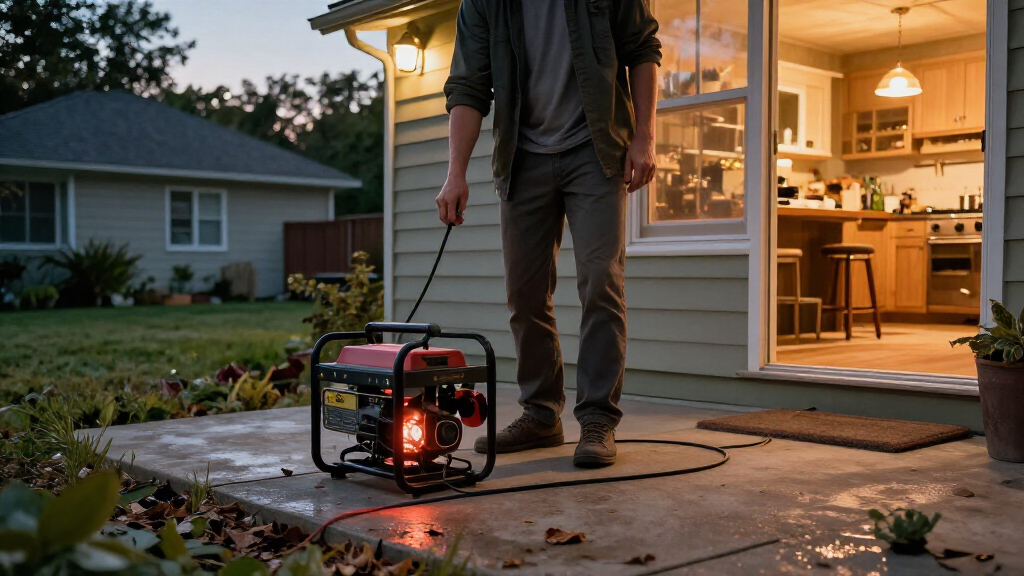
How We Picked
I ranked these portable inverter generators by how well their output, fuel options, outlets, and safety features fit real buyer tasks: keeping essential home devices running, powering an RV, or carrying a unit to a remote site. I gave weight to usable wattage and practical flexibility, not headline output alone. Dual-fuel capability, electric start, CO protection, RV-ready outlets, fuel shutoff, and economy modes mattered when they helped reduce setup or ownership friction.
The order reflects usefulness across more than one scenario, balanced against portability and complexity. Models that appear better suited to one narrow task rank below options with a clearer mix of capability and flexibility; high-output units are not automatically placed first because their size and handling can limit where they make sense. I also treated product naming and stated features as a starting point: buyers should confirm outlet details, running versus starting watts, and manufacturer guidance for their exact application before purchase.
Factors to Consider When Choosing Portable Inverter Generators
Before choosing a generator, I would start with the devices you actually need to run and where the unit will sit. A large wattage figure cannot tell you whether a particular outlet fits your RV, whether the unit is manageable to lift, or how long it can run on a tank. These checks help avoid paying for capacity you cannot use—or choosing a compact model that falls short when several loads start at once.
Match Running Watts and Starting Loads
List the equipment you expect to power, then check both its running draw and any brief startup surge. Refrigerators, pumps, and some air conditioners can demand extra power for a short period, so adding only their steady wattage may leave too little headroom. Do not assume the generator’s largest wattage number is its continuous output; verify the rated and peak figures in the product documentation. If several motor-driven devices may start together, plan for the combined surge or sequence their startup. A smaller generator can be easier to carry and quieter at modest loads, but it may force you to manage what runs at the same time. For home backup, prioritize the circuits or appliances you need most rather than trying to power the whole house from one portable unit.
Choose Fuel Type Around Your Storage and Supply
Gasoline-only models are straightforward when gasoline is easy to obtain and you want to keep the setup simple. Dual-fuel generators add the option of using propane, which can be useful for stored backup fuel or when gasoline is unavailable, but the output and runtime can differ by fuel. Check the manual for fuel-specific ratings and approved connection requirements instead of assuming both fuels deliver identical performance. Think through storage too: fuel age, safe containers, and local rules all affect whether a generator is ready when needed. Dual-fuel capability earns its keep when that second supply path solves a real problem; otherwise, it may add setup steps without much benefit. Never operate a generator indoors or in an enclosed space, regardless of fuel choice.
Check Outlets Before Buying for an RV
An RV-ready label is a useful clue, not a guarantee that the generator connects directly to every trailer. Compare the generator outlet, your RV’s shore-power inlet, and any adapter requirements before ordering. Then check whether the generator can support the appliances you plan to use together, especially air conditioning, cooking equipment, or electric water heating. Some RV owners need only modest power for lights, charging, and a refrigerator, while others need more capacity for high-draw equipment. Confirm whether your planned setup requires a transfer device or other electrician-installed equipment for home use; never connect a generator to household wiring through an ordinary outlet. This basic compatibility check can matter more than choosing between two generators with similar wattage.
Treat Weight, Shape, and Storage as Part of Capacity
A generator that is difficult to move may be less useful than a lower-output model that one person can handle safely. Compare the listed weight with the route from storage to the place of use, including steps, uneven ground, and vehicle loading. Open-frame designs may offer a different balance of access and bulk than enclosed models, so do not judge portability by wattage alone. Check dimensions, handles, wheel availability, and whether the unit can be stored in a dry, ventilated location. Also account for the space needed to operate it outdoors with safe clearance from buildings and openings. If the generator will stay in one place for backup, weight may matter less than if it will travel to campsites or job sites.
Compare Runtime at the Load You Expect
Runtime claims depend on load, fuel, and operating conditions, so a figure without its test conditions can mislead. A unit may run much longer while powering a few lights than while supporting a refrigerator and other equipment. Look for runtime information at a stated load and compare it with your likely use rather than relying on a single maximum-hours claim. Economy modes can reduce fuel use at lighter demand, but they do not replace capacity planning when a motor starts or a heavy appliance cycles on. For emergency use, consider how often you can refuel and whether your stored fuel plan is realistic. A modest generator that runs comfortably at your typical load may be a better fit than a larger model operated near its limits.
Balance Safety Features With Safe Operating Practice
A carbon monoxide sensor or shutdown feature can add a layer of protection, but it does not make indoor, garage, or enclosed operation safe. Place the generator outdoors, away from doors, windows, and vents, and follow the manufacturer’s clearance instructions. Check whether the model includes overload protection and understand what its indicators mean before an outage or trip. Fuel shutoff can help prepare a unit for storage, while electric start may reduce effort during setup, but neither feature replaces routine maintenance. Review the manual for oil checks, break-in guidance, inspection intervals, and seasonal storage steps. Buyers should favor features that match their likely use while keeping safe placement and maintenance at the center of the plan.
Frequently Asked Questions
How much generator capacity do I need for a refrigerator and a few essential devices?
Start by adding the running watts of the refrigerator and every device you expect to power at the same time, then account for the refrigerator’s startup surge. Check appliance labels or manuals rather than relying on typical online estimates, since models differ. Leave some capacity in reserve so a cycling compressor does not push the generator beyond its limits. If you also want to run a pump, heater, or cooking appliance, decide whether those loads must operate simultaneously or can be used one at a time. That plan can point toward a smaller, more portable generator or justify a higher-output model.
Is a dual-fuel inverter generator worth choosing if I already have gasoline?
It can be worthwhile if propane gives you a second fuel source for emergencies or easier storage, but the extra flexibility only helps when you have a safe supply and understand the connection requirements. Compare the generator’s output and runtime on each fuel; they may not match. If gasoline is consistently available and your use is occasional, a gasoline-only model may be simpler to store and operate. If fuel access is uncertain, dual-fuel capability can reduce dependence on one supply. Decide based on your storage plan, likely run time, and willingness to manage two fuel systems.
Can an RV-ready generator run my trailer’s air conditioner?
Possibly, but the RV-ready outlet alone does not answer the question. Confirm the air conditioner’s running and startup requirements, then compare those figures with the generator’s rated and peak output. Check the trailer inlet and generator outlet for a direct match or approved adapter, and account for other appliances that may be running at the same time. Starting the air conditioner after switching off other high-draw devices can help some setups, but it cannot overcome an undersized generator. Use the RV and generator manuals to verify the intended connection and operating limits.
Should I choose a compact generator or a higher-output model for home backup?
Choose based on the backup loads you need, not on the idea that a bigger unit is always safer. A compact generator may handle essentials such as charging, lights, and refrigeration while remaining easier to store and move. A higher-output model makes more sense when your planned loads include larger appliances or several devices at once, but it can bring more weight and handling demands. Map the loads and their startup needs before deciding, then check whether your home setup requires a transfer switch or other approved equipment. A portable generator should never be connected to household wiring through a wall outlet.
What should I check before storing an inverter generator between trips or outages?
Follow the exact storage directions in the owner’s manual, since procedures vary by model and fuel system. Check whether the generator has a fuel shutoff and whether the manufacturer recommends running the carburetor dry, treating fuel, or draining it. Let the unit cool before handling fuel, and store fuel only in approved containers away from living spaces and ignition sources. Keep the generator clean and dry, and review the recommended oil and maintenance schedule before its next use. A short storage routine can reduce starting problems, but it does not replace periodic inspection.
Conclusion
My best overall pick is the WEN DF480iX for buyers seeking a practical balance of output and dual-fuel flexibility. For a simpler, lighter-duty choice, the WEN 2350 is a sensible fit for essential devices and easier handling; buyers comparing value should also look closely at the WEN 56360i and the gasoline-only PowerSmart options against their outlet and capacity needs. The DuroMax XP11000iH is the premium-capacity choice for people who need substantially more output and can accommodate a larger unit. For beginners, I would favor a straightforward model whose rated output, outlets, and operating steps clearly match the planned loads rather than buying excess capacity. RV owners should shortlist the WEN models with RV-ready outlets and verify connection and air-conditioner requirements, while buyers seeking fuel flexibility should focus on the dual-fuel WEN picks. Choose the model that fits your actual loads, fuel plan, and handling limits—not simply the one with the biggest number.