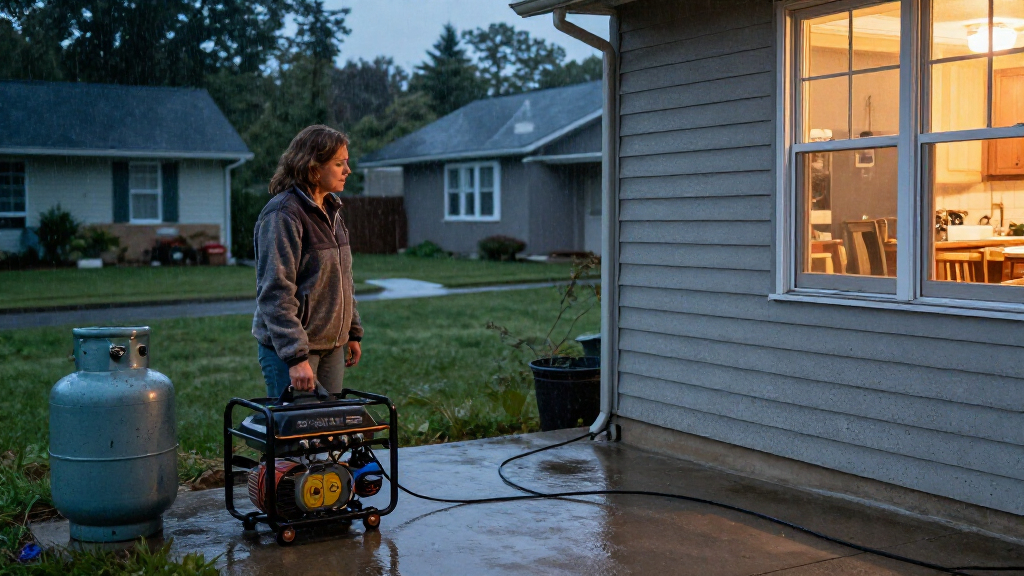

For most households seeking backup power, I’d start with the Westinghouse WGen11500TFc: its tri-fuel flexibility and high output suit broad outage needs, while the Westinghouse iGen5000DFc is a quieter inverter-style alternative and the DuroMax XP13000EH targets buyers prioritizing substantial dual-fuel capacity. The main tradeoff is between the output needed for larger loads and the noise, size, fuel use, and setup demands that come with bigger generators. Propane can simplify stored-fuel planning, but runtime still depends on the load and tank arrangement. I compare all 15 options by outage readiness, usability, and fit for different households below.

Get backup power and energy gear delivered free with Prime
- Fast, free delivery on millions of items
- Prime Video, Amazon Music and more included
- Member-only deals all year
Complete the kit


Key Takeaways
- The WGen11500TFc is the strongest all-around starting point in this lineup because tri-fuel capability pairs high output with more fuel choices during a disruption.
- The WGen20000TFc sits in a different class from portable inverter picks: its very high stated output may suit demanding backup plans, but its scale and operating needs make it excessive for basic essentials.
- Inverter models such as the iGen5000DFc, Champion 4000-Watt, and BILT HARD 4500W favor a more manageable output range and inverter design over the raw capacity of conventional open-frame units.
- Several Westinghouse and DuroMax models cluster around high-output household backup, so fuel flexibility, controls, and the load plan matter more than peak-watt figures alone when separating them.
- Smaller choices like the WGen3600DFcv and XP5500HX suit essentials better than whole-home ambitions; buyers should match running watts and starting surges to actual appliances before choosing a size.
| Westinghouse WGen11500TFc Tri-Fuel Portable Generator, 14,500 Peak Watts |  | Best Overall for Whole-Home Outage Backup | Peak wattage: 14,500 watts | Running wattage: 11,500 watts | Fuel types: Gasoline, propane, and natural gas | VIEW LATEST PRICE | See Our Full Breakdown |
| Westinghouse WGen9500DF Dual Fuel Portable Generator, 12,500 Peak Watts |  | Best Value for High-Capacity Dual-Fuel Backup | Peak wattage: 12,500 watts on gasoline; 11,200 watts on propane | Running wattage: 9,500 watts on gasoline; 8,500 watts on propane | Fuel types: Gasoline and propane | VIEW LATEST PRICE | See Our Full Breakdown |
| Westinghouse WGen3600DFcv Dual-Fuel Portable Generator |  | Best for Essential Circuits and RV Backup | Starting wattage: 4,650 watts | Running wattage: 3,600 watts on gasoline; 3,240 watts on propane | Fuel types: Gasoline and propane | VIEW LATEST PRICE | See Our Full Breakdown |
| Westinghouse iGen5000DFc Dual Fuel Portable Inverter Generator |  | Best Quiet Inverter for Sensitive Electronics | Peak wattage: 5,000 watts on gasoline; 4,500 watts on propane | Running wattage: 3,900 watts on gasoline; 3,500 watts on propane | Fuel types: Gasoline and propane | VIEW LATEST PRICE | See Our Full Breakdown |
| DuroMax XP13000EH 13,000-Watt Dual-Fuel Portable Generator |  | Best Heavy-Duty Output on a Worksite-Style Frame | Starting wattage: 13,000 watts | Running wattage: 10,500 watts | Fuel types: Gasoline and propane | VIEW LATEST PRICE | See Our Full Breakdown |
| BILT HARD 4500W Dual-Fuel Portable Inverter Generator |  | Best Compact Inverter for Outages | Fuel: Gasoline or propane | Peak output: 4,500 watts gasoline; 4,150 watts propane | Engine: 141cc, 4-stroke OHV | VIEW LATEST PRICE | See Our Full Breakdown |
| Westinghouse WGen20000TFc 28,000-Watt Tri-Fuel Portable Generator |  | Best for High-Demand Home Backup | Fuel: Gasoline, propane, or natural gas | Peak output: 28,000 watts | Running output: 20,000 watts | VIEW LATEST PRICE | See Our Full Breakdown |
| Westinghouse WGen11500DFc Dual-Fuel Portable Generator, 14,500 Peak Watts | 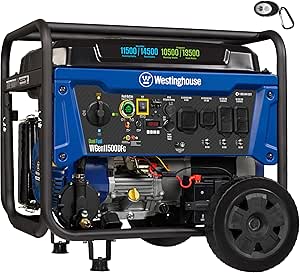 | Best for Balanced Whole-Home Backup | Fuel: Gasoline or propane | Peak output: 14,500 watts | Running output: 11,500 watts | VIEW LATEST PRICE | See Our Full Breakdown |
| Westinghouse WGen9500TFc Tri-Fuel Portable Generator |  | Best Fuel Flexibility for Mid-Range Backup | Fuel: Gasoline, propane, or natural gas | Running output: 9,500 watts gasoline; 8,500 watts propane; 7,500 watts natural gas | Peak output: 12,500 watts gasoline; 11,200 watts propane; 9,500 watts natural gas | VIEW LATEST PRICE | See Our Full Breakdown |
| Champion 4000-Watt Dual-Fuel RV-Ready Portable Inverter Generator |  | Best Lightweight Propane Inverter | Fuel: Gasoline or propane | Starting output: 4,000 watts | Running output: 3,000 watts gasoline; 2,700 watts propane | VIEW LATEST PRICE | See Our Full Breakdown |
| Generac GP9500E Tri-Fuel Portable Generator with Electric Start |  | Best for Multi-Fuel Flexibility | Model: 8063 | Fuel types: Gasoline, liquid propane, natural gas | Running watts: 9,500 W | VIEW LATEST PRICE | See Our Full Breakdown |
| PowerSmart 3800-Watt Dual-Fuel Inverter Generator |  | Best Compact, Quieter Pick | Fuel type: Gasoline and propane | Starting watts: 3,800 W gasoline; 3,500 W propane | Running watts: 3,300 W gasoline; 3,100 W propane | VIEW LATEST PRICE | See Our Full Breakdown |
| DuroStar DS13000MX 13,000-Watt Dual-Fuel Portable Generator |  | Best for High-Load Backup | Model: DS13000MX | Fuel type: Gasoline and propane | Peak power: 13,000 W | VIEW LATEST PRICE | See Our Full Breakdown |
| Westinghouse 6500-Watt Dual-Fuel Portable Generator with CO Sensor |  | Best Midrange Home Backup | Fuel type: Gasoline and propane | Running wattage: 5,300 W gasoline; 4,800 W propane | Peak wattage: 6,500 W gasoline; 5,800 W propane | VIEW LATEST PRICE | See Our Full Breakdown |
| DuroMax XP5500HX 5,500-Watt Dual-Fuel Portable Generator |  | Best for Essential-Circuit Backup | Model: XP5500HX | Fuel type: Gasoline or propane | Starting wattage: 5,500 W | VIEW LATEST PRICE | See Our Full Breakdown |
| propane generators for power outage | Engine | Runtime | Outlets |
|---|---|---|---|
| Westinghouse WGen11500TFc Tri- | 550cc 4-stroke OHV | Up to 19 hours | — |
| Westinghouse WGen9500DF Dual F | 457cc 4-stroke OHV | Up to 12 hours | — |
| Westinghouse WGen3600DFcv Dual | 212cc 4-stroke OHV | Up to 14 hours on gasoline; up to 16.5 hours on a 20 lb propane tank | 120V household duplex, TT-30R 30A, and L5-30R 30A |
| Westinghouse iGen5000DFc Dual | 224cc 4-stroke OHV | Up to 18 hours at 25% load | TT-30R 30A, 5–20R 20A duplex, and two USB ports |
| DuroMax XP13000EH 13,000-Watt | 500cc 4-stroke OHV | 3 hours | — |
| BILT HARD 4500W Dual-Fuel Port | 141cc, 4-stroke OHV | Up to 13 hours | 120V 20A duplex, 120V 30A TT-30R, dual USB, 12V 8A DC |
| Westinghouse WGen20000TFc 28,0 | 999cc, 4-stroke OHV V-twin | Up to 15 hours at 25% load on gasoline | — |
| Westinghouse WGen11500DFc Dual | 550cc, 4-stroke OHV | Up to 19 hours at 25% load on gasoline | 30A L14-30R and 50A 14-50R |
| Westinghouse WGen9500TFc Tri-F | 457cc, 4-stroke OHV | — | — |
| Champion 4000-Watt Dual-Fuel R | 149cc, 4-stroke | — | 120V 25A TT-30R, 120V 20A duplex, 12V automotive-style, and parallel outlets |
| Generac GP9500E Tri-Fuel Porta | 500 cc Generac OHV | — | Two 120V 20A GFCI duplex; one 120/240V 30A L14-30R; one 120/240V 50A 14-50R |
| PowerSmart 3800-Watt Dual-Fuel | 149 cc, 4-stroke | Up to 8 hours at 25% load on gasoline; up to 24 hours with a 20 lb propane tank | 120V 30A L5-30R, 120V 20A 5–20R duplex, 12V 8A DC, two 5V 2.1A USB |
| DuroStar DS13000MX 13,000-Watt | 500 cc 4-stroke OHV | 17 hours (load and fuel conditions not specified) | 5, including a 50-amp transfer-switch-ready outlet |
| Westinghouse 6500-Watt Dual-Fu | 274 cc, 4-stroke OHV | Up to 14.5 hours | 5–20R 120V duplex, TT-30R 30A, L14-30R 30A |
| DuroMax XP5500HX 5,500-Watt Du | 210 cc 4-stroke OHV-V | 15 hours (load and fuel conditions not specified) | — |
More Details on Our Top Picks
Westinghouse WGen11500TFc Tri-Fuel Portable Generator, 14,500 Peak Watts
For a household that wants substantial backup capacity and fuel flexibility, the WGen11500TFc is my strongest all-around pick. Its 11,500 running watts and 240-volt outlets suit larger loads better than the WGen9500DF, while its tri-fuel design can run on gasoline, propane, or natural gas. A natural-gas connection can reduce reliance on stored gasoline during a long outage, though the available output can vary by fuel. Remote and push-button starting also make startup more convenient when weather is poor. The tradeoff is its heavy-duty size: moving it around may take help, and an automatic transfer switch is sold separately. Its less-than-5% THD rating and CO sensor add useful safeguards, but this is a large backup unit, not a compact grab-and-go generator.
Pros:- Runs on gasoline, propane, or natural gas, giving outage planners more fuel options.
- 11,500 running watts and 240-volt outlets support substantial household loads.
- Remote and push-button electric start simplify startup.
- Less than 5% THD, CO sensing, and low-oil shutdown add useful operating safeguards.
Cons:- Its heavy-duty portable design can be difficult to move.
- Automatic transfer switch is sold separately.
- The stated runtime of up to 19 hours is on gasoline, not a guarantee for propane operation.
Best for: Homeowners seeking high output, three fuel choices, and remote starting for extended outages.
Not ideal for: Apartment dwellers or buyers who need a lightweight generator they can move without assistance; an automatic transfer switch is not included.
- Peak wattage:14,500 watts
- Running wattage:11,500 watts
- Fuel types:Gasoline, propane, and natural gas
- Engine:550cc 4-stroke OHV
- Gas tank capacity:9.5 gallons
- Runtime:Up to 19 hours
- Voltage:240 volts
- THD:Less than 5%
- Starting methods:Push-button electric and remote start
Our verdict“Choose the WGen11500TFc if you want high-capacity outage power with three fuel options and can accommodate a heavy generator.”
Westinghouse WGen9500DF Dual Fuel Portable Generator, 12,500 Peak Watts
The WGen9500DF is a practical fit for outage plans that need strong household output without requiring a third fuel source. It delivers 9,500 running watts on gasoline and 8,500 on propane, enough to serve buyers who want to power several essential circuits rather than just a few devices. Compared with the tri-fuel WGen11500TFc, it gives up natural-gas compatibility and some output, but keeps remote, electric, and recoil starting plus a display for voltage, frequency, and hours. That mix gives owners backup starting options and a quick operating readout. Its 6.6-gallon tank supports up to 12 hours on gasoline, though propane runtime is not specified here. The included wheels and handle help, but the generator remains heavy-duty and requires some assembly.
Pros:- Runs on gasoline or propane, with stated running output for both fuels.
- Remote, electric, and recoil starting provide several ways to start it.
- VFT display reports voltage, frequency, and operating hours.
- Wheels, handle, and transfer-switch-ready outlets support home backup use.
Cons:- Offers less running output than the tri-fuel WGen11500TFc.
- Its heavy-duty design can still be difficult to move despite the wheels.
- Requires minimal assembly before use.
Best for: Homeowners who want substantial dual-fuel output, multiple starting methods, and a generator that can connect to transfer-switch equipment.
Not ideal for: Buyers who need natural-gas operation, the higher output of the WGen11500TFc, or a unit that is easy to lift and carry.
- Peak wattage:12,500 watts on gasoline; 11,200 watts on propane
- Running wattage:9,500 watts on gasoline; 8,500 watts on propane
- Fuel types:Gasoline and propane
- Engine:457cc 4-stroke OHV
- Fuel tank capacity:6.6 gallons
- Runtime:Up to 12 hours
- Voltage:120/240 volts
- Starting methods:Remote, electric, and recoil
- Maximum current:50 A
Our verdict“Pick the WGen9500DF for high-output gasoline-or-propane backup if you can accept a heavy unit and do not need natural-gas capability.”
Westinghouse WGen3600DFcv Dual-Fuel Portable Generator
The WGen3600DFcv makes more sense for targeted outage coverage than for running a large home. Its 3,600 gasoline running watts (3,240 on propane) can support selected essentials, while the TT-30R outlet gives RV owners a direct-use option that the larger WGen9500DF does not emphasize. Propane runtime is listed at up to 16.5 hours on a 20-pound tank, a useful planning figure for buyers who keep cylinders on hand. A digital readout and automatic CO and low-oil shutdown add practical monitoring and protection. The tradeoff is capacity: it cannot match the WGen9500DF or WGen11500TFc for simultaneous household loads. Peak output is higher than running output, so buyers should size their appliances around the running-watt figure, not the 4,650-watt starting figure.
Pros:- Dual-fuel operation supports gasoline or propane.
- TT-30R 30A outlet suits RV power needs.
- Propane runtime is specified at up to 16.5 hours on a 20-pound tank.
- Digital readout and automatic CO and low-oil shutdown support monitoring and safety.
Cons:- Running output is limited compared with the WGen9500DF and WGen11500TFc.
- The 4,650-watt starting figure should not be mistaken for continuous output.
- Requires fuel and minimal assembly.
Best for: RV owners and households that need to run a limited set of essential appliances from gasoline or a propane cylinder.
Not ideal for: Families aiming to power numerous large household loads or central systems during an outage; its running output is far below the larger Westinghouse units.
- Starting wattage:4,650 watts
- Running wattage:3,600 watts on gasoline; 3,240 watts on propane
- Fuel types:Gasoline and propane
- Engine:212cc 4-stroke OHV
- Fuel tank capacity:4 gallons
- Runtime:Up to 14 hours on gasoline; up to 16.5 hours on a 20 lb propane tank
- Voltage:120 volts
- Outlets:120V household duplex, TT-30R 30A, and L5-30R 30A
- Safety features:Low-oil and carbon monoxide shutdown; overload protection
Our verdict“Choose the WGen3600DFcv when RV compatibility and essential-load backup matter more than whole-home capacity.”
Westinghouse iGen5000DFc Dual Fuel Portable Inverter Generator
When outage power needs include electronics and a quieter operating profile, the iGen5000DFc is a better match than the open-frame WGen9500DF. Its inverter design has less than 3% THD, and the stated noise level starts as low as 52 dBA, making it a more considerate choice near living areas. It runs on gasoline or propane and includes a TT-30R outlet for RV use, plus remote and electric start. Its main limitation is continuous capacity: 3,900 running watts on gasoline and 3,500 on propane falls well short of the WGen11500TFc for broad household backup. The advertised 18-hour runtime applies only at 25% load, so heavier outage loads will shorten operation. Parallel capability can add capacity, but the kit is sold separately.
Pros:- Less than 3% THD is suited to sensitive electronics.
- Noise level is rated as low as 52 dBA.
- Gasoline or propane operation, remote start, and electric start offer useful flexibility.
- TT-30R outlet supports RV use, and the unit is parallel capable.
Cons:- Running output is much lower than the WGen9500DF and WGen11500TFc.
- The up-to-18-hour runtime applies at only 25% load.
- Parallel kit is sold separately.
Best for: Households or RV owners prioritizing quieter operation and low-THD power for electronics over high whole-home output.
Not ideal for: Buyers who need to run several large household loads at once or expect 18 hours of runtime under heavy demand.
- Peak wattage:5,000 watts on gasoline; 4,500 watts on propane
- Running wattage:3,900 watts on gasoline; 3,500 watts on propane
- Fuel types:Gasoline and propane
- Engine:224cc 4-stroke OHV
- Runtime:Up to 18 hours at 25% load
- Noise level:As low as 52 dBA
- THD:Less than 3%
- Voltage:120 volts
- Outlets:TT-30R 30A, 5–20R 20A duplex, and two USB ports
Our verdict“Pick the iGen5000DFc for quieter, low-THD backup of modest loads, not for powering a whole home.”
DuroMax XP13000EH 13,000-Watt Dual-Fuel Portable Generator
The XP13000EH targets buyers who want high starting capacity in a rugged, open-frame package. Its 10,500 running watts put it in the same broad household-backup class as the Westinghouse WGen9500DF, while its 13,000 starting watts offer headroom for loads with startup surges. It accepts gasoline or propane and includes electric start and a 50-amp transfer-switch-ready outlet. The all-metal frame and no-flat tires favor durability over easy handling, though at 234 pounds this is not a generator most people will want to lift or reposition alone. Runtime is listed as three hours, with a 0.5-gallon tank volume in the supplied specifications; that short stated duration makes fuel planning a major drawback and deserves close checking against the intended setup. Its two listed outlets also offer less connection variety than the WGen9500DF.
Pros:- 10,500 running watts and 13,000 starting watts support substantial loads and startup surges.
- Runs on gasoline or propane.
- Electric start and a 50-amp transfer-switch-ready outlet suit backup setups.
- All-metal frame and no-flat tires are aimed at heavy-duty use.
Cons:- At 234 pounds, it is difficult to move without help.
- Listed runtime is only three hours, making fuel planning a concern.
- Two listed outlets provide less connection variety than the WGen9500DF.
Best for: Homeowners or worksite users who prioritize rugged construction, high starting output, and a 50-amp connection over easy portability.
Not ideal for: Buyers needing long unattended operation, frequent repositioning, or a wide selection of outlets; the listed three-hour runtime and 234-pound weight are limiting.
- Starting wattage:13,000 watts
- Running wattage:10,500 watts
- Fuel types:Gasoline and propane
- Engine:500cc 4-stroke OHV
- Voltage:240 volts
- Runtime:3 hours
- Tank volume:0.5 gallons
- Weight:234 pounds
- Dimensions:30 x 29 x 26 inches
Our verdict“Choose the XP13000EH for rugged, high-output backup when you can manage its weight and verify that its listed runtime fits your outage plan.”
BILT HARD 4500W Dual-Fuel Portable Inverter Generator
For outage backup in a smaller footprint, I’d put the BILT HARD ahead of the Champion 4000-Watt when propane output and a quieter stated noise level matter. It supplies up to 4,150 peak watts on propane, has less than 3% THD for sensitive electronics, and weighs 57.7 pounds, making it a more manageable choice than the large Westinghouse home-backup generators in this group. Its 30A TT-30R outlet adds RV usefulness, while the CO shutdown sensor is a welcome safety feature during emergency use.
The tradeoff is capacity: this is for selected essentials, not whole-home backup or several high-draw appliances at once. The stated 13-hour runtime lacks a load condition, so I wouldn’t compare it directly with runtime figures specified at 25% load. Parallel capability can expand output, but the kit is sold separately.
Pros:- Propane operation provides an alternative to gasoline during outages.
- Less than 3% THD is suited to sensitive electronics.
- 57.7-pound weight is easier to handle than the large open-frame backup models here.
- CO shutdown sensor and 30A RV outlet add practical emergency-use features.
Cons:- Output is limited for large home loads or simultaneous high-draw appliances.
- Parallel kit is not included, adding a separate requirement to expand capacity.
- The 13-hour runtime is not tied to a stated load condition.
Best for: Households powering a refrigerator, lights, communications gear, and sensitive electronics that want a relatively portable propane-capable inverter.
Not ideal for: Buyers seeking whole-home coverage or enough output for multiple large appliances; its propane peak rating is 4,150 watts.
- Fuel:Gasoline or propane
- Peak output:4,500 watts gasoline; 4,150 watts propane
- Engine:141cc, 4-stroke OHV
- Noise level:58 dBA at 23 feet
- Runtime:Up to 13 hours
- Outlets:120V 20A duplex, 120V 30A TT-30R, dual USB, 12V 8A DC
- Weight:57.7 pounds
- THD:Less than 3%
Our verdict“Choose the BILT HARD for modest outage loads and cleaner inverter power in a more portable package, not for whole-home backup.”
Westinghouse WGen20000TFc 28,000-Watt Tri-Fuel Portable Generator
When outage plans include several major household loads, capacity is the deciding advantage: the WGen20000TFc is rated for 20,000 running watts and can use propane, gasoline, or natural gas. That makes it a different class of backup option from the WGen9500TFc, which is easier to fit into a smaller-load plan but has less than half the running output. The remote and push-button electric start can also make startup less demanding when weather or conditions are poor.
This scale brings real costs in space and handling. Wheels and handles help, but the product data still flags maneuvering as difficult, so I’d plan its storage and placement before an outage. A transfer switch is sold separately, and its less-than-5% THD rating is not as low as the less-than-3% ratings on the BILT HARD and Champion inverter models. This is a high-capacity home-backup choice, not a compact or quiet portable pick.
Pros:- 20,000 running watts support a much larger load plan than the smaller generators in this batch.
- Three fuel choices include propane and natural gas for added outage flexibility.
- Remote and push-button electric start simplify starting.
- CO sensing, low-oil shutdown, and overload protection are listed safety features.
Cons:- Large size can make storage and maneuvering difficult.
- Transfer switch is sold separately.
- Less than 5% THD is a higher distortion rating than the inverter models listed here.
Best for: Homeowners with substantial backup loads, room for a large generator, and a plan to connect it through a separately purchased transfer switch.
Not ideal for: Apartment dwellers, buyers with limited storage, or anyone who needs a lightweight generator for frequent repositioning.
- Fuel:Gasoline, propane, or natural gas
- Peak output:28,000 watts
- Running output:20,000 watts
- Engine:999cc, 4-stroke OHV V-twin
- Fuel tank:17.2 gallons
- Runtime:Up to 15 hours at 25% load on gasoline
- THD:Less than 5%
- Starting system:Push-button electric start and remote start
- Warranty:3-year limited residential warranty; lifetime technical support
Our verdict“Pick the WGen20000TFc when you need unusually high backup capacity and can accommodate its size and separate transfer-switch requirement.”
Westinghouse WGen11500DFc Dual-Fuel Portable Generator, 14,500 Peak Watts
The WGen11500DFc lands between the small inverter generators and the oversized WGen20000TFc: 11,500 running watts offers a substantial home-backup reserve without the latter’s 20,000-watt scale. Propane operation, a CO sensor, and remote key-fob or push-button starting suit outage use, while the 30A and 50A outlets make it a stronger fit for a planned home connection than the BILT HARD or Champion inverter models. Its less-than-5% THD rating also supports sensitive electronics, though it does not match those inverter models’ under-3% figure.
The stated up to 19 hours at 25% load on gasoline is useful for planning between refuels, but it is not a propane runtime claim. It is still a heavy-duty generator, so moving and storing it takes more space and effort than the compact inverter options. A transfer switch is not included, which adds a separate step to a home connection plan.
Pros:- 11,500 running watts provide substantial capacity for outage loads.
- Runs on propane or gasoline.
- Remote and push-button starting reduce startup effort.
- 30A and 50A outlets support a planned transfer-switch connection.
Cons:- Transfer switch is sold separately.
- Heavy-duty size can make repositioning and storage difficult.
- The 19-hour runtime applies to gasoline at 25% load, not propane.
Best for: Homeowners who need substantial backup output and 30A/50A connection options but do not need the WGen20000TFc’s much higher capacity.
Not ideal for: Buyers prioritizing easy lifting, compact storage, or inverter-grade THD below 3%.
- Fuel:Gasoline or propane
- Peak output:14,500 watts
- Running output:11,500 watts
- Engine:550cc, 4-stroke OHV
- Fuel tank:9.5 gallons
- Runtime:Up to 19 hours at 25% load on gasoline
- THD:Less than 5%
- Outlets:30A L14-30R and 50A 14-50R
- Starting system:Push-button electric start and remote key fob
Our verdict“Choose this model for substantial dual-fuel home backup and 30A/50A outlets, provided you can manage its bulk and arrange a separate transfer switch.”
Westinghouse WGen9500TFc Tri-Fuel Portable Generator
The WGen9500TFc’s strongest case is three-fuel flexibility at mid-range capacity: it can run on gasoline, propane, or natural gas, with 8,500 running watts on propane. That propane rating gives it more headroom than either small inverter in this batch, while its lower gasoline output than the WGen11500DFc makes it a more restrained choice for households with a defined, shorter list of essentials. Remote, electric, and recoil starting offer alternatives if one starting method is inconvenient.
The tradeoff is that its ratings vary by fuel, so buyers should size their loads against the propane running output rather than the 9,500-watt gasoline rating. Its 6.6-gallon tank and up-to-12-hour runtime are useful details, but runtime is not given by fuel and load condition. This is still a large open-frame generator that needs storage space, and some assembly is required.
Pros:- Three fuel options provide flexibility when gasoline access is uncertain.
- 8,500 running watts on propane suit a wider load plan than the compact inverter models.
- Remote, electric, and recoil starting offer multiple startup methods.
- CO and low-oil shutdown, overload protection, fuel gauge, and hour meter aid operation.
Cons:- Propane running output is lower than its gasoline rating.
- Heavy-duty size requires substantial storage space.
- Some assembly is required, and the runtime figure does not specify fuel or load.
Best for: Households that want propane and natural-gas options, need mid-range backup capacity, and can size their essential loads to 8,500 running watts on propane.
Not ideal for: Buyers requiring the WGen11500DFc’s higher running output, a compact unit, or a clearly specified propane runtime.
- Fuel:Gasoline, propane, or natural gas
- Running output:9,500 watts gasoline; 8,500 watts propane; 7,500 watts natural gas
- Peak output:12,500 watts gasoline; 11,200 watts propane; 9,500 watts natural gas
- Engine:457cc, 4-stroke OHV
- Fuel tank:6.6 gallons
- Maximum runtime:Up to 12 hours
- Starting methods:Remote, electric, and recoil
- Safety and monitoring:CO sensor, low-oil shutdown, fuel gauge, hour meter, overload protection
Our verdict“Choose the WGen9500TFc if fuel choice matters more than maximum output and your outage plan fits its 8,500-watt propane running rating.”
Champion 4000-Watt Dual-Fuel RV-Ready Portable Inverter Generator
For buyers who need outage essentials rather than a house-wide load, this Champion makes a case with dual-fuel inverter power in a unit under 55 pounds. Its less-than-3% THD rating is a better match for sensitive electronics than the less-than-5% ratings on the Westinghouse open-frame models, and CO Shield adds automatic shutdown protection. Compared with the BILT HARD 4500W, the Champion is lighter and gives a clearly stated propane runtime of up to 25 hours at 25% load with a 20-pound tank; the BILT HARD, by contrast, lists a higher propane peak output and lower noise figure.
That runtime comes with limited output: 2,700 running watts on propane is for selected essentials, not large simultaneous loads. Its 64 dBA rating is also higher than the BILT HARD’s stated 58 dBA. The parallel kit is sold separately, so expanding capacity requires another purchase and compatible setup.
Pros:- Under-55-pound weight is comparatively manageable for an inverter generator.
- Less than 3% THD supports sensitive electronics.
- Up to 25 hours at 25% load is specified with a 20-pound propane tank.
- CO Shield and low-oil shutoff add safety protections.
Cons:- Propane running output is 2,700 watts, limiting simultaneous high-draw loads.
- 64 dBA at 23 feet is louder than the BILT HARD’s stated 58 dBA.
- Parallel kit is sold separately.
Best for: Campers or households with a short list of outage essentials who want a lighter dual-fuel inverter and a specified propane runtime.
Not ideal for: Buyers running large appliances together or seeking higher propane output and quieter stated operation than the BILT HARD offers.
- Fuel:Gasoline or propane
- Starting output:4,000 watts
- Running output:3,000 watts gasoline; 2,700 watts propane
- Engine:149cc, 4-stroke
- Runtime on propane:Up to 25 hours at 25% load with a 20-pound tank
- Noise level:64 dBA at 23 feet
- THD:Less than 3%
- Weight:Less than 55 pounds
- Outlets:120V 25A TT-30R, 120V 20A duplex, 12V automotive-style, and parallel outlets
Our verdict“Pick the Champion for lighter, clean-power backup and a stated propane runtime, as long as its 2,700-watt propane running capacity covers your planned loads.”
Generac GP9500E Tri-Fuel Portable Generator with Electric Start
The GP9500E’s three fuel options make it a strong outage pick for households that want alternatives when gasoline is scarce: it can run on gasoline, propane, or natural gas. Its 9,500 running watts and 120/240V outlets offer more capacity for home backup than the PowerSmart 3800-Watt inverter, though the PowerSmart is far easier to move and quieter at light load. Electric start and COsense add useful convenience and safety features, while the included wheels and folding handle help with positioning.
The tradeoff is substantial bulk: at 219 pounds, this is not a generator one person can casually reposition. Gasoline runtime reaches up to 9.5 hours at 50% load, but the 7.5-gallon tank still calls for fuel planning during a long outage. I’d choose it for fuel flexibility and higher loads, not for easy portability.
Pros:- Runs on gasoline, liquid propane, or natural gas
- 9,500 running watts and 120/240V outlets support substantial backup loads
- Electric start, included battery, and COsense
- Low-oil shutdown and GFCI-protected outlets
Cons:- At 219 pounds, relocation can require help despite the wheels
- Gasoline runtime is up to 9.5 hours at 50% load from a 7.5-gallon tank
Best for: Homeowners who want to run several household loads and can connect to natural gas or store propane as an alternative to gasoline.
Not ideal for: People who need a generator they can lift or frequently move alone, or buyers prioritizing long gasoline runtime between refills.
- Model:8063
- Fuel types:Gasoline, liquid propane, natural gas
- Running watts:9,500 W
- Starting watts:12,500 W on gasoline
- Engine:500 cc Generac OHV
- Gasoline runtime:Up to 9.5 hours at 50% load; up to 14 hours at 25% load
- Outlets:Two 120V 20A GFCI duplex; one 120/240V 30A L14-30R; one 120/240V 50A 14-50R
- Weight:219 lbs
- Safety features:COsense, low-oil shutdown, GFCI-protected outlets
Our verdict“Choose the GP9500E if three fuel options and high output matter more than manageable weight and fewer refueling stops.”
PowerSmart 3800-Watt Dual-Fuel Inverter Generator
For an outage plan built around a refrigerator, lights, chargers, and a few other modest loads, the PowerSmart’s 50.7-pound weight is a practical advantage over the much larger Generac GP9500E and DuroStar DS13000MX. Its inverter design and stated 59 dBA at 25% load in Eco Mode suit neighborhoods where a louder open-frame generator may be unwelcome. Propane runtime is listed at up to 24 hours with a 20-pound tank at 25% load, which can reduce attention to refueling during lighter use.
That portability comes with a firm output ceiling: propane running wattage is 3,100 watts, well below the Westinghouse 6500’s 4,800 watts on propane. Its 1.3-gallon gasoline tank also limits gasoline runtime to up to eight hours at 25% load. I’d pick it for lighter loads and easy handling, not whole-home backup.
Pros:- Weighs 50.7 pounds, substantially less than the large open-frame options
- Propane runtime listed up to 24 hours with a 20-pound tank at 25% load
- 59 dBA stated at 25% load in Eco Mode
- CO sensor, low-oil shutdown, and overload and short-circuit protection
Cons:- Propane running output is 3,100 watts, limiting the number of simultaneous loads
- The 1.3-gallon gasoline tank means frequent refueling may be needed
- 120V output does not suit 240V home-backup loads
Best for: Apartment or small-home residents who need portable backup for essential electronics and appliances, with quieter operation and propane compatibility.
Not ideal for: Households planning to run large 240V loads or several power-hungry appliances at once; this is a 120V generator with limited output.
- Fuel type:Gasoline and propane
- Starting watts:3,800 W gasoline; 3,500 W propane
- Running watts:3,300 W gasoline; 3,100 W propane
- Engine:149 cc, 4-stroke
- Noise level:59 dBA at 25% load in Eco Mode
- Runtime:Up to 8 hours at 25% load on gasoline; up to 24 hours with a 20 lb propane tank
- Outlets:120V 30A L5-30R, 120V 20A 5–20R duplex, 12V 8A DC, two 5V 2.1A USB
- Weight:50.7 lbs
- Safety features:CO sensor, overload and short-circuit protection, low-oil shutdown
Our verdict“Pick the PowerSmart for lighter outage loads when low weight and quieter Eco Mode matter more than high capacity.”
DuroStar DS13000MX 13,000-Watt Dual-Fuel Portable Generator
With 10,500 running watts and a 50-amp outlet, the DS13000MX is aimed at buyers who need to support substantial household loads through an appropriate transfer setup. It has more running output than the Generac GP9500E’s 9,500 watts, but unlike that Generac it runs on gasoline or propane, not natural gas. Electric start and a remote control make startup less hands-on, while the CO sensor and low-oil shutdown add useful safeguards during outage use.
The metal frame and high output favor a fixed backup spot over frequent repositioning; the product details give no weight figure, but describe the unit as heavy-duty and less convenient to move. Its 8.3-gallon tank and listed 17-hour runtime provide a longer stated interval than the Westinghouse 6500’s up to 14.5 hours, though runtime depends on load and fuel. This is a capacity-first choice, not a compact one.
Pros:- 10,500 running watts for demanding backup loads
- 50-amp outlet supports transfer-switch connection
- Runs on gasoline or propane
- Electric start, remote control, CO detection, and low-oil shutdown
Cons:- Heavy-duty construction and high output make frequent movement less convenient
- Does not offer natural-gas operation, unlike the Generac GP9500E
- The listed 17-hour runtime does not specify a load or fuel condition
Best for: Homeowners with a transfer-switch setup who need high output for multiple large loads and want the option to use propane.
Not ideal for: Buyers who need natural-gas operation, a lightweight unit, or a clearly specified runtime tied to a particular load and fuel.
- Model:DS13000MX
- Fuel type:Gasoline and propane
- Peak power:13,000 W
- Running power:10,500 W
- Engine:500 cc 4-stroke OHV
- Tank capacity:8.3 gallons
- Runtime:17 hours (load and fuel conditions not specified)
- Outlets:5, including a 50-amp transfer-switch-ready outlet
- Safety features:CO sensor and low-oil shutdown
Our verdict“Choose the DS13000MX for high-load backup through a 50-amp connection if you can accommodate a large, heavy-duty generator.”
Westinghouse 6500-Watt Dual-Fuel Portable Generator with CO Sensor
The Westinghouse 6500 sits between compact options such as the PowerSmart 3800 and heavy high-output machines such as the DuroStar DS13000MX. Its 5,300 running watts on gasoline (4,800 on propane) can cover a useful set of household essentials without stepping up to the weight and scale of a 10,000-watt-class generator. The 120/240V L14-30R outlet supports transfer-switch connections, while the TT-30R makes it more adaptable for RV use than a basic home-only model.
A CO sensor with automatic shutdown, low-oil shutdown, overload protection, a wheel kit, and a propane hose give it practical outage-ready equipment. Its 4.7-gallon tank is smaller than the DuroStar’s 8.3-gallon tank, although the stated gasoline runtime reaches up to 14.5 hours. Assembly is required, and this model offers less headroom than the larger Generac GP9500E.
Pros:- Provides 5,300 running watts on gasoline and 4,800 on propane
- Includes RV-ready TT-30R and transfer-switch-ready L14-30R outlets
- CO sensor with automatic shutdown and low-oil shutdown
- Wheel kit and propane hose support setup and transport
Cons:- Less running output than the Generac GP9500E or DuroStar DS13000MX
- The 4.7-gallon tank may require refueling during extended outages
- Some assembly is required
Best for: Households seeking a middle-capacity dual-fuel generator for essential circuits, with a transfer-switch outlet and occasional RV use.
Not ideal for: Buyers who need to power many high-draw appliances at once or want a larger tank for longer runs without refueling.
- Fuel type:Gasoline and propane
- Running wattage:5,300 W gasoline; 4,800 W propane
- Peak wattage:6,500 W gasoline; 5,800 W propane
- Engine:274 cc, 4-stroke OHV
- Fuel tank capacity:4.7 gallons
- Runtime:Up to 14.5 hours
- Outlets:5–20R 120V duplex, TT-30R 30A, L14-30R 30A
- Voltage:120/240 V
- Safety features:CO sensor with automatic shutdown, low-oil shutdown, overload protection
Our verdict“Choose this Westinghouse for moderate home backup and useful RV connections if you do not need the higher output of the larger models.”
DuroMax XP5500HX 5,500-Watt Dual-Fuel Portable Generator
The XP5500HX is a straightforward middle-capacity choice for buyers who want 4,500 running watts and the option to use propane without stepping up to the Westinghouse 6500 or the much larger DuroStar DS13000MX. Electric start, CO Alert, wheels, and a foldable handle make setup and routine positioning more manageable than the 219-pound Generac GP9500E, although the DuroMax itself still weighs 131 pounds. Its 240V output and eight outlets provide useful connection options for a home backup setup.
The main compromise is capacity: 4,500 running watts is better suited to selected essentials than broad whole-home coverage, and the product details do not state separate wattage figures for propane. The 4-gallon tank and listed 15-hour runtime also lack a stated load condition, so I would not use that runtime as a guarantee for heavy use. It fits buyers who value simplicity over maximum output.
Pros:- Runs on gasoline or propane
- Electric start and CO Alert
- Eight outlets and 240V output offer multiple connection options
- Wheels and a foldable handle aid movement and storage
Cons:- 4,500 running watts provide less headroom than the Westinghouse 6500
- At 131 pounds, it is still heavy to lift or move over uneven ground
- Propane wattage and the load condition for the listed runtime are not specified
Best for: Homeowners who want electric-start, dual-fuel backup for selected essential circuits and can manage a 131-pound generator with its wheels.
Not ideal for: Households that need high simultaneous loads, natural-gas capability, or clearly specified propane output and load-based runtime.
- Model:XP5500HX
- Fuel type:Gasoline or propane
- Starting wattage:5,500 W
- Running wattage:4,500 W
- Engine:210 cc 4-stroke OHV-V
- Starting system:Electric start
- Tank capacity:4 gallons
- Runtime:15 hours (load and fuel conditions not specified)
- Weight:131 lbs
Our verdict“Pick the XP5500HX for essential-circuit backup with electric start and dual-fuel flexibility, but skip it if you need high output across many loads.”
How We Picked
I ranked these propane-capable generators for outage use by weighing usable output, fuel flexibility, ease of starting and connecting, portability, and the practical demands of storing and running each unit. I treated running capacity and the ability to handle appliance startup loads as more useful than peak-watt figures alone, and gave tri-fuel models an advantage when their added fuel choice could make resupply more flexible. Inverter models received credit for buyers who value a more controlled power source and a more manageable format, while larger conventional generators ranked higher for households with heavier backup loads.
The order reflects distinct use cases rather than a claim that one size fits every home. I favored versatile, high-output options near the top, then separated models by capacity, inverter format, and likely setup burden. A generator’s role in an outage also depends on safe outdoor placement, transfer equipment, fuel supply, and maintenance; those needs temper the appeal of raw wattage. I did not treat similarly named models as interchangeable, since fuel configuration and output can change the right choice.
Factors to Consider When Choosing Propane Generators For Power Outages
Choosing a generator for an outage starts with your backup plan, not the largest number on a product label. I’d work through these decisions before comparing models so the generator, fuel supply, and home connection method function as one plan.
Size for running loads and startup surges
List the appliances you expect to run at the same time, then note both their normal draw and any startup surge from motors such as refrigerators, pumps, or air conditioners. A generator can appear large on paper yet struggle when multiple loads start together. Avoid adding every appliance in the home unless you truly plan to run them simultaneously; that can push you toward a heavier, louder unit than your outage routine needs. On the other hand, sizing only for steady running watts can lead to nuisance overloads. If a major motor load is essential, check its starting requirement and leave operating headroom rather than buying right at the limit.
Plan propane supply and runtime around your loads
Propane is useful for stored backup fuel, but the tank you have and the generator’s draw at your expected load shape how long it can run. Published runtime figures may use a particular load and tank size, so they are not a promise for every setup. Think through how you will connect, secure, and refill the supply, especially if roads or deliveries may be disrupted. A larger generator can use fuel quickly when asked to power more equipment, even if it offers comfortable capacity. Avoid choosing by fuel type alone; estimate the hours you need and consider whether keeping another approved fuel source is part of your plan.
Choose inverter or conventional output for the right reason
Inverter generators in this lineup give buyers a compact alternative to the high-output conventional units, but their lower capacity can limit which household loads run together. Their format may be appealing when powering smaller loads or when a more controlled power source is a priority. Conventional generators tend to make more sense when a home needs heavier loads, though size, noise, and handling can be greater concerns. Don’t assume the word inverter alone answers whether a unit suits sensitive electronics; check the manufacturer’s specifications and follow its operating guidance. Match the format to what you need powered, not to a general idea that one type is always better.
Decide how the generator will connect to the home
Portable generators do not automatically provide a safe way to power household circuits. A transfer switch or other approved connection method may be needed, and that work should be planned with a qualified electrician. Never connect a generator to a home circuit through an improvised cord or outlet, because backfeeding can endanger utility workers and damage equipment. If you only need a few plug-in appliances, direct connection may fit your plan; whole-home or selected-circuit backup needs more deliberate setup. Confirm outlet types and connection requirements before purchase so the generator’s capacity is usable in practice.
Account for noise, placement, and safe operation
Output is only part of outage comfort: a large generator may be harder to place and more intrusive near living areas or neighbors. Every portable generator must run outdoors, away from doors, windows, and vents, because carbon monoxide can be deadly. A carbon-monoxide sensor is a useful safety feature, not permission to operate indoors, in a garage, or near an open window. Check the manual for clearances, grounding, and operating instructions, and plan a level location before an outage. Buyers who overlook placement can find that a powerful unit is difficult to run safely where they live.
Weigh portability and maintenance against spare capacity
Wheels and electric start can make a heavy generator easier to handle, but they do not make it lightweight or remove the need for a safe, stable operating spot. Consider who will move it, where it will be stored, and whether the route to its operating location includes steps or uneven ground. A unit with more output than you need may add storage and upkeep burdens without improving your actual outage routine. Read the maintenance schedule and plan periodic checks so the generator is ready when called on. Paying for extra capacity makes more sense when it covers a specific load or gives needed headroom, rather than simply producing a larger headline number.
Frequently Asked Questions
Should I choose a tri-fuel generator over a dual-fuel model for outages?
Tri-fuel is useful when you want more than one backup fuel route and can access the additional fuel type named by the manufacturer. That flexibility may help if propane supplies are limited, but it does not automatically mean better propane performance or easier operation. Compare output on propane, connection requirements, and the fuels you can realistically store or obtain. If propane is your only planned fuel, a dual-fuel model may meet your needs without paying for a capability you will not use. Fuel choice should follow your supply plan, not the number of modes on the label.
Can a 4,000- to 5,000-watt inverter generator power my whole house?
It may support selected essentials, but “whole house” depends on the appliances you run and their startup demands. A refrigerator, lights, chargers, and some smaller equipment can fit a modest load plan; a central air conditioner, electric range, or several motor loads may not. Inverter models such as the Champion 4000-Watt and Westinghouse iGen5000DFc are better compared against a written list of simultaneous loads than against a broad whole-home claim. Check propane-specific output as well as running and surge requirements. If you need household circuits powered, confirm the generator’s capacity and connection plan with an electrician.
Is it worth buying a much larger generator for rare severe outages?
Extra capacity can cover high-startup appliances or let you run more loads at once, but it brings tradeoffs in storage, handling, noise, and fuel use. The WGen20000TFc, for example, serves a different scale of backup need than the smaller inverter options in this roundup. Before sizing up, identify the particular loads the added capacity would support and whether your home connection can use it. If those loads are rarely needed, a smaller unit plus a planned load schedule may be more practical. Buy headroom for a defined need rather than for an unspecified worst case.
Can I run a propane generator in a garage if the door is open?
No. A portable generator must operate outdoors, well away from doors, windows, and vents, since carbon monoxide can build up and enter the home. An open garage door does not make garage operation safe, and a carbon-monoxide sensor does not replace safe placement. Follow the specific manual’s distance and ventilation instructions, and use working carbon-monoxide alarms in the home. Plan the outdoor location before an outage rather than improvising during severe weather. If local conditions make safe placement impossible, do not run the generator there.
Do I need an electrician to connect a portable generator to household circuits?
If you want to power household circuits through a transfer switch or another fixed connection, plan the work with a qualified electrician. The right setup prevents dangerous backfeeding and helps match circuits to the generator’s available capacity. Plugging selected appliances directly into generator outlets is a different arrangement, but it still requires outdoor operation and correctly rated cords used according to the manuals. Do not connect a generator to a wall outlet with a homemade or improvised cord. Check outlet compatibility and connection requirements before choosing a model.
Conclusion
My best overall pick is the Westinghouse WGen11500TFc for buyers who want substantial output and tri-fuel flexibility in one outage-focused option. For a best value balance, I’d compare the Westinghouse WGen9500DF or WGen9500TFc against your load list and fuel plan rather than paying for capacity you will not use. The WGen20000TFc is the best premium fit for unusually heavy backup demands, while the iGen5000DFc is a more approachable choice for buyers who favor an inverter format and can live with lower output. For beginners with modest needs, a smaller dual-fuel model such as the WGen3600DFcv offers a less ambitious starting point; for specific essentials or RV-oriented use, compare the Champion 4000-Watt and other compact inverter options. Before deciding, confirm propane output, startup loads, safe placement, and the home connection method—those details determine whether any of these generators will work for your outage plan.
Fall Picks
fall essentials
As an affiliate, we earn on qualifying purchases.