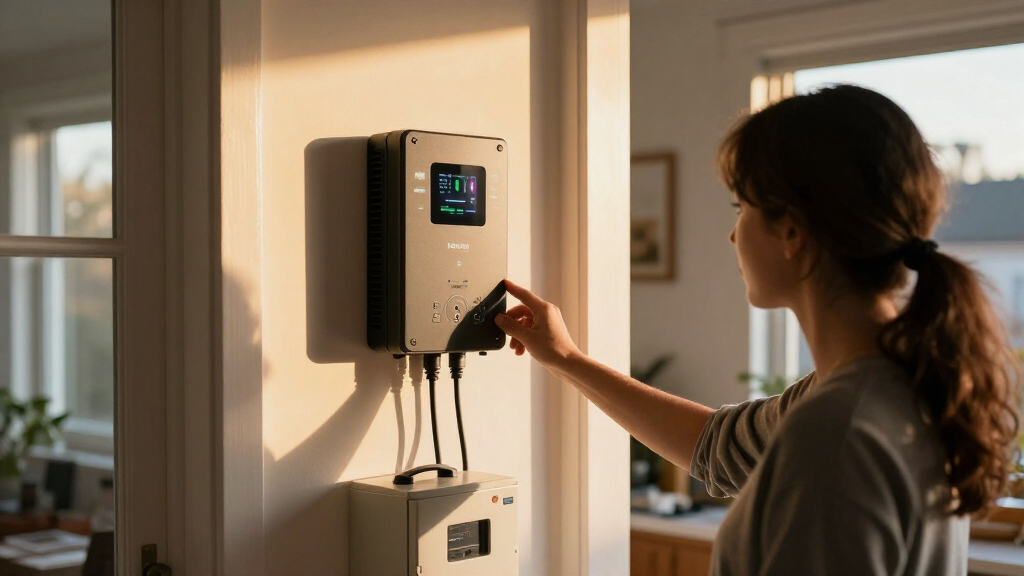
Choosing the right home battery monitor can feel like decoding a language of volts and amps when all you want is to know if your power backup is ready. I have filtered through the noise to find four distinct options that serve different needs. The Renogy Battery Shunt 300 stands out for those who prioritize remote monitoring and historical data via an app, making it ideal for tech-savvy users who want to track trends over time. In contrast, the LiTime 500A Battery Monitor is the go-to for anyone who wants immediate, on-screen clarity without fumbling for a smartphone, offering a robust LCD display that works right out of the box. For smaller setups or budget-conscious builders, the AILI Battery Monitor provides essential metrics in a compact package, though it lacks the high-current capacity of its rivals. The main tradeoffs here revolve around connectivity versus simplicity and capacity limits versus versatility. You must decide whether you need a smart device that logs data or a straightforward gauge that tells you exactly what is happening right now. My goal is to help you match the monitor’s capabilities to your specific battery bank size and lifestyle habits.

Get backup power and energy gear delivered free with Prime
- Fast, free delivery on millions of items
- Prime Video, Amazon Music and more included
- Member-only deals all year
Key Takeaways
- The Renogy Shunt 300 is the only pick in this list that offers full Bluetooth connectivity for remote app monitoring and historical data logging.
- LiTime offers the highest current capacity (500A) among the standalone LCD options, making it suitable for larger home battery banks.
- AILI and CGELE are limited to 100A, making them unsuitable for high-draw systems but perfect for smaller 12V or 24V setups.
- Only the LiTime and AILI monitors feature built-in audible and visual alarms for low voltage or capacity, which is critical for safety.
- CGELE offers the widest voltage range (up to 200V), providing flexibility for high-voltage industrial or specialized solar applications.
| Renogy Battery Shunt 300 Smart Battery Monitor |  | Best for Remote Monitoring and Data Logging | Voltage Range: 8–120 V | Current Capacity: Up to 500 A | Measurement Type: Ammeter | VIEW LATEST PRICE | See Our Full Breakdown |
| LiTime 500A Battery Monitor with M8 Shunt and LCD Display | 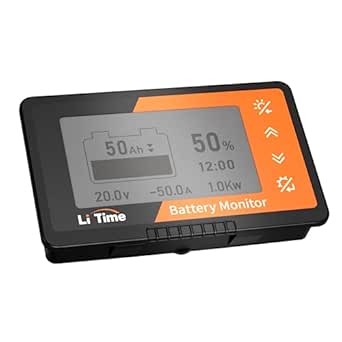 | Best Overall for Large Home Battery Banks | Maximum Current: 500 A | Operating Voltage: 8–120 V DC | Battery Bank Capacity: 0–9999 Ah | VIEW LATEST PRICE | See Our Full Breakdown |
| AILI Battery Monitor with 100A Shunt, 8–120V |  | Best Compact Option for Small Systems | Input Voltage: 8–120V | Supported Systems: 12V, 24V, 36V, 48V | Maximum Current: 100A | VIEW LATEST PRICE | See Our Full Breakdown |
| CGELE DC Multifunction Battery Monitor with Shunt, 0–200V and 0–100A |  | Best for High-Voltage and Industrial Applications | Voltage Range: 0–200 V | Current Range: 0–100 A | Power Range: 0–60000 W | VIEW LATEST PRICE | See Our Full Breakdown |
| home battery monitor | Display | Voltage Range | Weight | Dimensions |
|---|---|---|---|---|
| Renogy Battery Shunt 300 Smart | — | 8–120 V | 0.45 kg | 5.31 × 3.82 × 1.22 inches |
| LiTime 500A Battery Monitor wi | LCD with backlight | — | 11.84 oz | 5.91 × 4.72 × 1.57 in |
| AILI Battery Monitor with 100A | Backlit LCD | — | — | — |
| CGELE DC Multifunction Battery | Backlit LCD | 0–200 V | — | — |
More Details on Our Top Picks
Renogy Battery Shunt 300 Smart Battery Monitor
The Renogy Battery Shunt 300 differentiates itself by moving the interface from the wall to your pocket. Unlike the LiTime 500A, which relies on a physical LCD, the Renogy unit uses Bluetooth connectivity to stream real-time data to the DC Home app. This design choice is significant for homeowners who want to monitor their battery health from another room or even remotely, provided they have the necessary gateway setup. The app provides historical data logging, allowing you to see discharge trends over weeks or months, which is invaluable for diagnosing slow battery degradation. However, this reliance on digital connectivity is a double-edged sword. If your phone battery dies or the Bluetooth connection drops, you lose your primary view of the system, whereas the LiTime and AILI Battery Monitor always show the status on a physical screen. The Renogy also includes a battery temperature sensor, a feature that adds a layer of safety not explicitly detailed in the basic specs of the AILI or CGELE models. It is compatible with a wide range of chemistries, including Lithium Iron Phosphate (LiFePO4) and lead-acid, making it versatile for hybrid setups. Yet, I must note its incompatibility with the Renogy ONE M1, which limits its integration for users already invested in that specific ecosystem. This monitor is best for those who value data analytics over immediate physical readability.
Pros:- Bluetooth connectivity allows for remote monitoring via the DC Home app
- Records historical data and sends abnormal-condition alerts
- Compatible with multiple battery chemistries including LiFePO4 and lead-acid
- Includes a dedicated battery temperature sensor for enhanced safety
Cons:- Not compatible with Renogy ONE M1
- Lacks a built-in physical display, relying entirely on a mobile device
- Requires app setup to view detailed metrics
Best for: Tech-savvy homeowners who want to track battery health trends and monitor status from their smartphone.
Not ideal for: Users who prefer a standalone, always-on display without needing to open an app or manage Bluetooth connections.
- Voltage Range:8–120 V
- Current Capacity:Up to 500 A
- Measurement Type:Ammeter
- Compatible Devices:DC Home App, Renogy ONE
- Weight:0.45 kg
- Dimensions:5.31 × 3.82 × 1.22 inches
- Certifications:CE, FCC, RoHS
- Warranty:1-year material and workmanship warranty
- Included Components:Battery Shunt 300, 3 mounting screws, 2 B+ wires, temperature sensor
Our verdict“The Renogy Shunt 300 is the smart choice for data lovers who want to analyze their battery’s long-term performance rather than just check its current charge.”
LiTime 500A Battery Monitor with M8 Shunt and LCD Display
The LiTime 500A Battery Monitor strikes a balance between robust hardware and user-friendly feedback. Unlike the Renogy Shunt 300, this unit features a dedicated backlit LCD display that shows voltage, current, power, and remaining capacity without needing a smartphone. This makes it superior for quick checks in dimly lit basements or garages. The 500A shunt capacity is identical to the Renogy, meaning it can handle the high current demands of large home battery banks, unlike the AILI or CGELE models which are capped at 100A. A standout feature is the audible and visual alarms for low voltage and low capacity. This proactive warning system is critical for preventing deep discharge that can damage batteries, a feature the Renogy handles via app notifications which may be missed if your phone is elsewhere. The LiTime supports a massive battery bank capacity of up to 9999Ah, offering scalability for expanding home energy systems. However, it is not waterproof, so it must be installed in a dry, protected environment, unlike some marine-grade alternatives. The setup process requires initial calibration to ensure accuracy, which might be a hurdle for beginners compared to plug-and-play devices. Despite this, its combination of high current capacity, clear physical display, and safety alarms makes it the most well-rounded option for serious home energy storage projects.
Pros:- Displays key battery measurements directly on the LCD without an app
- Supports high current loads up to 500A and large battery banks up to 9999Ah
- Includes audible and visual alarms for low voltage and capacity
- Compatible with a wide range of battery types including Lithium and Lead-Acid
Cons:- Not waterproof and unsuitable for marine environments
- Requires initial setup and calibration after installation
- Lacks remote monitoring capabilities without additional hardware
Best for: Homeowners with large battery banks who need reliable, on-screen monitoring and proactive low-voltage warnings.
Not ideal for: Marine applications or outdoor installations where the device might be exposed to moisture.
- Maximum Current:500 A
- Operating Voltage:8–120 V DC
- Battery Bank Capacity:0–9999 Ah
- Compatible Batteries:Lithium-ion, LiFePO4, gel, AGM, and lead-acid
- Display:LCD with backlight
- Alarms:Low-voltage and low-capacity visual and buzzer alarms
- Weight:11.84 oz
- Dimensions:5.91 × 4.72 × 1.57 in
- Operating Temperature:14–140 °F
Our verdict“The LiTime 500A is the most practical choice for large home systems, offering the perfect blend of high-capacity performance and immediate visual feedback.”
AILI Battery Monitor with 100A Shunt, 8–120V
The AILI Battery Monitor is designed for efficiency and simplicity, targeting users with smaller battery setups. While the LiTime and Renogy models can handle 500A, the AILI is capped at 100A, which makes it unsuitable for high-draw appliances or large inverter systems. However, for a standard 12V or 24V home backup system, this limit is rarely an issue. Its compact form factor and low standby power consumption (50–60μA) make it an excellent choice for off-grid cabins or small solar setups where every watt counts. The monitor displays state of charge, voltage, and remaining capacity, providing the essential data needed for daily operation. It includes a 2m extension cable, offering flexibility in where you mount the display relative to the shunt. Compared to the CGELE model, the AILI has a more streamlined interface and better compatibility with standard home battery voltages. The downside is its capacity display limit of 999Ah. If you have a massive battery bank exceeding this capacity, the monitor may not accurately reflect your total usable energy, requiring you to mentally adjust your calculations. This limitation, combined with the lower current rating, positions it firmly as a budget-friendly entry point for small-scale monitoring rather than a heavy-duty industrial solution.
Pros:- Displays state of charge, voltage, and current in real time
- Low standby power consumption extends battery life
- Includes a 100A shunt and a 2m extension cable for flexible installation
- Compatible with multiple battery chemistries and system voltages
Cons:- Designed for systems under 100A, limiting high-power applications
- Capacity display is limited to 999Ah
- Lacks advanced connectivity or remote monitoring features
Best for: Users with smaller 12V or 24V battery banks who need basic monitoring without the cost or complexity of high-amperage models.
Not ideal for: High-draw systems exceeding 100A or battery banks larger than 999Ah.
- Input Voltage:8–120V
- Supported Systems:12V, 24V, 36V, 48V
- Maximum Current:100A
- Programmable Capacity:0.1–999Ah
- Battery Compatibility:LiFePO4, lithium-ion, AGM, gel, sealed lead-acid
- Standby Power:50–60μA
- Display:Backlit LCD
- Cable Length:2m
- Item Dimensions:3.86 × 2.13 × 0.82 inches
Our verdict“The AILI Battery Monitor is the ideal compact solution for small home systems, offering essential metrics with minimal power drain.”
CGELE DC Multifunction Battery Monitor with Shunt, 0–200V and 0–100A
The CGELE DC Multifunction Battery Monitor stands apart due to its extensive measurement capabilities and high voltage range. While the LiTime and Renogy units top out at 120V, the CGELE supports up to 200V, making it suitable for specialized high-voltage solar arrays or industrial battery banks. It displays nine different parameters, including impedance and internal resistance, which are rarely seen on consumer-grade monitors like the AILI. These advanced metrics can help diagnose battery health issues before they lead to failure. The press terminals allow for screw-free wire installation, speeding up the setup process compared to the traditional screw terminals found on the LiTime monitor. However, like the AILI, it is limited to 100A, so it cannot handle the high-current demands of large residential inverter systems. Its minimum operating voltage of 9.99V is also higher than the 8V minimum of the LiTime and Renogy, which could be a constraint if you are monitoring deeply discharged lead-acid batteries. The CGELE is a niche tool for those who need detailed electrical diagnostics and high-voltage compatibility, rather than a general-purpose home monitor. Its 1% measurement accuracy is competitive, but the complexity of its interface may overwhelm casual users who just want to know their remaining runtime.
Pros:- Displays nine measurement parameters including impedance and internal resistance
- Supports a wide voltage range up to 200V
- Press terminals simplify wire installation without screws
- Backlit LCD supports viewing in various lighting conditions
Cons:- Maximum current measurement is limited to 100 A
- Requires a minimum operating voltage of 9.99 V
- Complex interface may be overwhelming for basic users
Best for: Technicians and hobbyists working with high-voltage systems (up to 200V) who need detailed electrical diagnostics.
Not ideal for: Standard 12V/24V home systems with high current draws exceeding 100A or users wanting a simple interface.
- Voltage Range:0–200 V
- Current Range:0–100 A
- Power Range:0–60000 W
- Impedance Range:0–1000 Ω
- Internal Resistance Range:0–999 mΩ
- Capacity Range:0–1000 Ah
- Measurement Accuracy:1%
- Display:Backlit LCD
- Installation:Press terminals, screw-free
Our verdict“The CGELE monitor is a specialized tool for high-voltage applications, offering deep diagnostic insights that standard home monitors lack.”
How We Picked
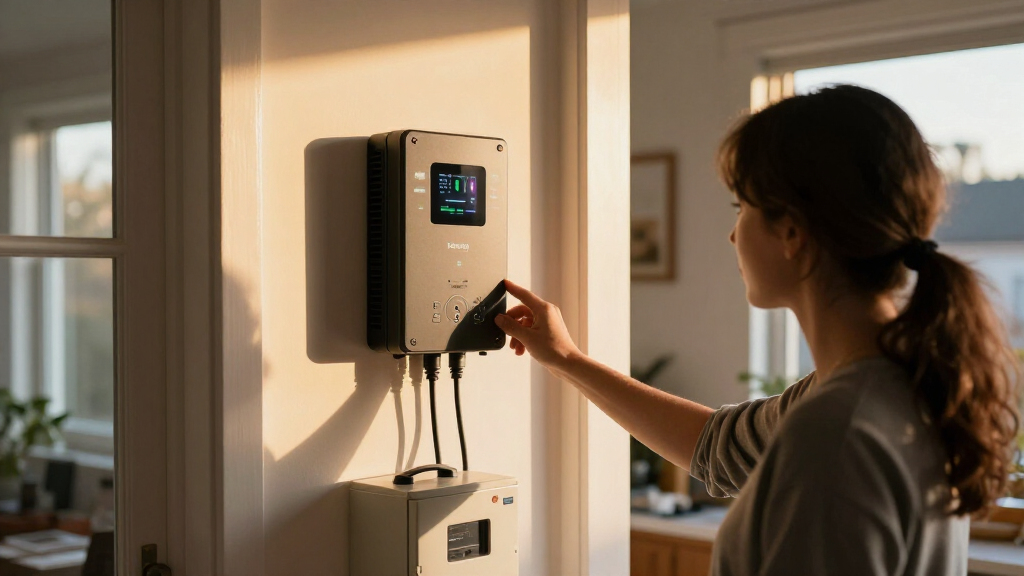
To curate this list, I evaluated each monitor based on three core criteria: measurement accuracy, user interface utility, and system compatibility. I looked for devices that do not just display numbers but provide actionable insights, such as remaining runtime or state of charge. I prioritized units with clear, backlit displays because a home battery monitor often lives in a dimly lit garage or basement. I also weighed the value of smart features against the reliability of standalone hardware. While app-based monitoring offers convenience, I ensured that every pick in this roundup could function reliably even if connectivity fails. I excluded products that lacked basic safety features like temperature sensing or low-voltage alarms, as these are non-negotiable for home energy storage. Finally, I considered the ease of installation, favoring monitors with clear wiring instructions and robust shunt components.
| home battery monitor | Display |
|---|---|
| Renogy Battery Shunt 300 Smart | — |
| LiTime 500A Battery Monitor wi | LCD with backlight |
| AILI Battery Monitor with 100A | Backlit LCD |
| CGELE DC Multifunction Battery | Backlit LCD |
Factors to Consider When Choosing Home Battery Monitors
Understanding the specifications of a battery monitor is key to choosing one that matches your system. Here are the critical factors I considered when evaluating these four products.
Current Capacity (Amperage)
The shunt amperage determines how much current your monitor can safely measure. The Renogy Shunt 300 and LiTime 500A both offer 500A capacity, which is sufficient for most home inverter systems. In contrast, the AILI and CGELE models are limited to 100A. If you plan to run high-wattage appliances like microwaves or air conditioners, you must choose a 500A model to avoid damaging the shunt or getting inaccurate readings.
Voltage Compatibility
Most home battery systems operate at 12V, 24V, or 48V. The LiTime and Renogy monitors support up to 120V, covering all standard residential configurations. The CGELE goes even higher, supporting up to 200V, which is useful for specialized industrial setups. Ensure your monitor’s voltage range matches your battery bank configuration to prevent electrical hazards.
Display vs. Connectivity
Decide whether you want a physical LCD or smart connectivity. The LiTime, AILI, and CGELE models feature built-in screens, providing instant access to data without a phone. The Renogy relies on Bluetooth and an app, which offers better data logging and remote access but requires a smartphone for detailed views. For quick checks, a physical display is often more convenient.
Battery Chemistry Support
All four monitors support a wide range of chemistries, including Lithium Iron Phosphate (LiFePO4), AGM, and lead-acid. This versatility is important if you plan to upgrade your batteries in the future. Always verify that the monitor’s algorithm matches your specific battery type, as lithium and lead-acid batteries have different discharge curves that affect state-of-charge calculations.
Frequently Asked Questions
Do I need a 500A shunt for my home battery system?
You likely need a 500A shunt if your home battery system powers high-draw appliances or if your inverter is rated above 2000 watts. The Renogy and LiTime monitors offer this capacity, ensuring they can handle the surge currents of large devices without overheating or failing. If your system is smaller, such as a 12V setup for lighting and small electronics, the 100A shunts on the AILI and CGELE models are sufficient and more cost-effective. Always check your inverter’s maximum output amperage to ensure the shunt can handle the load.
Can I use these monitors for marine applications?
Generally, no. The LiTime 500A monitor is explicitly not waterproof and is unsuitable for marine environments where moisture is a constant threat. While some of these monitors are rated for outdoor use in RVs, they are not designed for the harsh, wet conditions of a boat. For marine use, you should look for monitors with specific IP67 or higher waterproof ratings, which are not a feature of the four products reviewed here.
How accurate are the state-of-charge readings?
Accuracy depends on proper installation and calibration. The CGELE monitor lists a 1% measurement accuracy, which is quite good for a consumer device. However, state-of-charge calculations also depend on correctly programming the battery capacity into the monitor. The LiTime and Renogy allow for high-capacity programming (up to 9999Ah), which is essential for large banks. If you program the wrong capacity, the percentage readings will be misleading, regardless of the hardware’s precision.
Is the Renogy monitor compatible with all Renogy products?
No, the Renogy Battery Shunt 300 is not compatible with the Renogy ONE M1 gateway. It works with the DC Home app and other compatible Renogy devices, but if you already have an M1 system, this specific shunt may not integrate directly. You should verify compatibility with your existing Renogy ecosystem before purchasing to avoid connectivity issues. This limitation is a significant tradeoff for users already invested in that specific hardware platform.
Can I install these monitors myself?
Yes, but caution is required. The CGELE monitor features press terminals that simplify wiring, making it easier for DIY users. The LiTime and Renogy models require connecting a shunt in line with the negative battery terminal, which involves working with high-current cables. If you are not comfortable with electrical safety protocols, such as disconnecting the battery and ensuring no short circuits, you should hire a professional. Incorrect installation can lead to inaccurate readings or safety hazards.
Conclusion
Choosing the right home battery monitor ultimately comes down to your system size and your preference for data access. If you have a large, high-draw battery bank and want proactive alarms and a clear display, the LiTime 500A is the most balanced and reliable choice. For those who prioritize remote monitoring and detailed historical data logging, the Renogy Shunt 300 offers unmatched smart connectivity, provided you are okay with relying on an app. If your setup is smaller, perhaps a 12V or 24V system for backup lighting and electronics, the AILI Battery Monitor provides excellent value with low power consumption and a compact footprint. Finally, for specialized high-voltage projects or users who need internal resistance diagnostics, the CGELE monitor is the only option in this group that can handle 200V systems. Match the amperage and voltage specs to your actual battery bank, and you will have a monitoring solution that keeps your home power system safe and efficient.
Halloween Picks
halloween
As an affiliate, we earn on qualifying purchases.