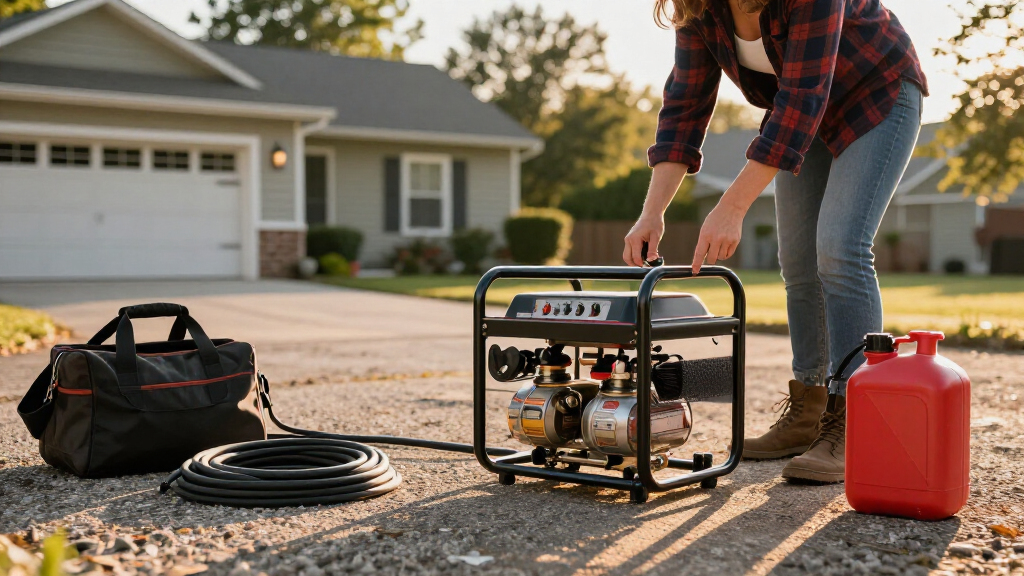
Dual fuel portable generators let you run on gasoline when you need maximum wattage and switch to propane when you want cleaner burning fuel and longer shelf life, which is why they’ve become the default choice for home backup and RV use. After comparing 15 current models, the Westinghouse WGen9500DF stands out as the best overall pick, pairing 12,500 peak watts with a transfer-switch-ready 240V outlet and remote electric start. The WEN DF360iX is the smarter choice for campers and RV owners who prioritize quiet inverter power, while the Westinghouse 14,500-Watt Dual Fuel model covers whole-home backup ambitions that smaller units can’t touch. The main tradeoff in this category is raw conventional wattage versus quiet, electronics-safe inverter output, along with weight, noise, and whether the unit includes modern carbon monoxide shutoff protection. Keep reading for the full breakdown of what separates these 15 generators and which one fits your situation.

Get backup power and energy gear delivered free — and shop member deals
- Fast, free delivery on millions of items
- Access to Prime Big Deal Days deals on October 6–7
- Prime Video, Amazon Music and more included
Complete the kit


Key Takeaways
- Westinghouse dominates the conventional generator side of this roundup with five entries, and the WGen9500DF earns the top spot because it balances 12,500 peak watts, remote start, and transfer-switch readiness better than the higher-wattage DuroStar DS13000MX, which trades portability and price for brute output.
- The inverter picks split cleanly by budget: WEN‘s DF360iX and DF480iX deliver the quietest, cleanest power for RVs and camping, while PowerSmart and BILT HARD undercut them on price at the cost of refinement and brand support.
- Every model in the lineup except the entry-level WEN DF475T includes either a CO shutoff sensor or inverter architecture, making carbon monoxide protection a de facto requirement rather than a premium feature in 2026.
- Propane output consistently runs roughly 10% lower than gasoline output on every dual fuel model here, so buyers sizing for whole-home backup should calculate their needs based on propane numbers, not the headline gas wattage.
- The 4,000-4,500 watt class is the most crowded segment with six competing models, and the Champion 201050 and ERAYAK 4500W separate themselves with true RV-ready 30A outlets and CO shielding, while the WEN DF475T wins on price for occasional emergency use only.
| Westinghouse WGen9500DF 12,500-Watt Dual-Fuel Portable Generator |  | Best Overall | Fuel Type: Gasoline or propane | Running / Peak Watts (Gasoline): 9,500 W / 12,500 W | Running / Peak Watts (Propane): 8,500 W / 11,200 W | VIEW LATEST PRICE | See Our Full Breakdown |
| DuroStar DS13000MX 13,000-Watt 500cc Dual Fuel Portable Generator |  | Best for Whole-Home Backup | Wattage: 13,000 watts | Engine: 500cc | Fuel Types: Gasoline and propane | VIEW LATEST PRICE | See Our Full Breakdown |
| Westinghouse 12,500-Watt Dual-Fuel Portable Generator |  | Best Value for Home Backup | Fuel Types: Gasoline and propane | Peak Watts (Gas / Propane): 12,500 W / 11,200 W | Engine: 457cc 4-stroke OHV | VIEW LATEST PRICE | See Our Full Breakdown |
| WEN DF480iX 4800-Watt Dual-Fuel Portable Inverter Generator |  | Best Inverter for RV and Electronics | Engine: 224cc | Fuel Types: Gasoline and propane | Gasoline Output: 4,000 rated / 4,800 surge watts | VIEW LATEST PRICE | See Our Full Breakdown |
| WEN DF360iX 3600-Watt Dual Fuel RV-Ready Portable Inverter Generator |  | Best Compact Inverter Pick | Fuel Type: Dual fuel (gasoline/propane) | Gasoline Output: 2,900 rated / 3,600 surge watts | Propane Output: 2,600 rated / 3,500 surge watts | VIEW LATEST PRICE | See Our Full Breakdown |
| ERAYAK 4500W Dual-Fuel Portable Inverter Generator, 30A RV Ready, Gas and Propane Powered with CO Sensor |  | Best for Quiet, Clean Power on the Go | Peak Power (Gasoline): 4500W | Peak Power (Propane): 4050W | Weight: 54 lbs | VIEW LATEST PRICE | See Our Full Breakdown |
| Westinghouse 14500 Peak Watt Dual Fuel Home Backup Portable Generator | 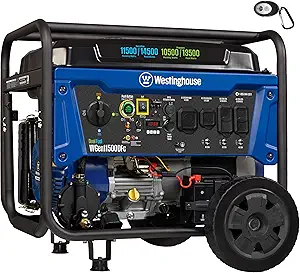 | Best Whole-Home Backup Powerhouse | Peak Watts (Gasoline): 14,500 W | Running Watts (Gasoline): 11,500 W | Peak Watts (Propane): 13,500 W | VIEW LATEST PRICE | See Our Full Breakdown |
| PowerSmart 3800-Watt Dual-Fuel Inverter Generator |  | Best Value Inverter Pick | Starting Watts (Gasoline): 3,800 W | Running Watts (Gasoline): 3,300 W | Starting Watts (Propane): 3,500 W | VIEW LATEST PRICE | See Our Full Breakdown |
| Champion Power Equipment 201050 4000-Watt Dual Fuel RV Ready Portable Inverter Generator with CO Shield |  | Best for RV Owners | Starting Watts: 4000 W | Running Watts (Gasoline): 3000 W | Running Watts (Propane): 2700 W | VIEW LATEST PRICE | See Our Full Breakdown |
| PowerSmart 4400-Watt Dual-Fuel Portable Inverter Generator |  | Best Mid-Size Workhorse | Starting Wattage: 4,400W | Fuel Tank Capacity: 1.6 gallons | Runtime: Up to 11 hours at 25% load | VIEW LATEST PRICE | See Our Full Breakdown |
| Westinghouse WGen5300DFcv Dual-Fuel Portable Generator with CO Sensor |  | Best Mid-Size Home Backup | Model: WGen5300DFcv | Fuel Type: Gasoline or propane | Running Watts (Gasoline): 5,300 W | VIEW LATEST PRICE | See Our Full Breakdown |
| WEN DF680iX 6800-Watt Dual Fuel RV-Ready Electric Start Portable Inverter Generator |  | Best High-Capacity Inverter | Engine: 224cc dual-fuel | Surge Watts (Gasoline): 6800 W | Surge Watts (Propane): 6000 W | VIEW LATEST PRICE | See Our Full Breakdown |
| WEN DF8000X 8000-Watt 120V/240V Dual Fuel Portable Generator with Electric Start, CO Watchdog |  | Best Whole-House Power on a Budget | Model: DF8000X | Engine: 340cc | Fuel Type: Dual fuel (gasoline/propane) | VIEW LATEST PRICE | See Our Full Breakdown |
| BILT HARD 4500W Dual-Fuel Portable Inverter Generator |  | Best Budget Quiet Inverter | Fuel Type: Gasoline or propane | Engine: 141cc 4-cycle OHV air-cooled | Peak Output (Gasoline): 4500 watts | VIEW LATEST PRICE | See Our Full Breakdown |
| WEN DF475T Dual Fuel Portable Generator with Wheel Kit and Electric Start |  | Best Value Starter Generator | Model: DF475T | Fuel Types: Gasoline and propane | Gasoline Output: 4,750 surge / 3,800 running watts | VIEW LATEST PRICE | See Our Full Breakdown |
| dual fuel portable generator | Runtime | Engine | Warranty |
|---|---|---|---|
| Westinghouse WGen9500DF 12,500 | Up to 12 hours on gasoline | 457cc 4-stroke OHV | 3-year limited |
| DuroStar DS13000MX 13,000-Watt | — | 500cc | — |
| Westinghouse 12,500-Watt Dual- | Up to 12 hours | 457cc 4-stroke OHV | 3-year limited service, labor, and parts |
| WEN DF480iX 4800-Watt Dual-Fue | Up to 7 hrs (gas, half load); up to 20 hrs (20-lb LPG, half load) | 224cc | 3-year limited |
| WEN DF360iX 3600-Watt Dual Fue | — | — | 3 years |
| ERAYAK 4500W Dual-Fuel Portabl | Up to 16 hrs on gas, 20+ hrs on propane at 25% load | — | — |
| Westinghouse 14500 Peak Watt D | — | — | — |
| PowerSmart 3800-Watt Dual-Fuel | Up to 8 hrs on gas; up to 24 hrs on 20-lb propane tank | — | 2-year limited; lifetime technical support |
| Champion Power Equipment 20105 | Up to 10 hrs on gas; up to 25 hrs on propane at 25% load | — | — |
| PowerSmart 4400-Watt Dual-Fuel | Up to 11 hours at 25% load | — | — |
| Westinghouse WGen5300DFcv Dual | — | 274 cc 4-stroke OHV | — |
| WEN DF680iX 6800-Watt Dual Fue | — | 224cc dual-fuel | 3-year limited |
| WEN DF8000X 8000-Watt 120V/240 | Up to 10.5 hours at half load | 340cc | 3 years |
| BILT HARD 4500W Dual-Fuel Port | 13 hours | 141cc 4-cycle OHV air-cooled | — |
| WEN DF475T Dual Fuel Portable | Up to 11 hours at half load | 224cc 4-stroke OHV | 2 years |
More Details on Our Top Picks
Westinghouse WGen9500DF 12,500-Watt Dual-Fuel Portable Generator
This model earns the top spot because it balances raw power with genuine flexibility better than anything else in this lineup. The 9,500 running watts on gasoline (8,500 on propane) is enough to run a transfer-switch-fed essential circuit panel, and the 50A 14-50R outlet means RV owners and home backup buyers are both covered without adapters. Compared with the DuroStar DS13000MX, it gives up roughly 500 watts of claimed output but gains a remote start fob and a slightly more manageable footprint — a fair trade for most households. Runtime is a real strength here: up to 12 hours on the 6.6-gallon tank, which means overnight refueling is rarely necessary. The tradeoff is weight and assembly — this is a two-person lift onto a truck bed, and the wheels help but don’t make it a tailgating unit.
Pros:- Genuine whole-home backup capacity with 50A transfer-switch-ready outlet
- Three starting methods including remote fob for bad-weather starts
- Up to 12 hours of runtime reduces overnight refueling
- Full outlet selection covering household, RV, and 240V needs
Cons:- Requires assembly out of the box
- Very heavy; difficult to move without help despite wheels and handle
Best for: Homeowners who want transfer-switch-ready whole-circuit backup with the flexibility to switch to propane during fuel shortages
Not ideal for: Campers and tailgaters — at over 200 pounds, this is backup power, not portable power
- Fuel Type:Gasoline or propane
- Running / Peak Watts (Gasoline):9,500 W / 12,500 W
- Running / Peak Watts (Propane):8,500 W / 11,200 W
- Engine:457cc 4-stroke OHV
- Fuel Tank:6.6 gallons
- Runtime:Up to 12 hours on gasoline
- Starting Methods:Remote, electric, recoil
- Outlets:2x 120V 20A GFCI, 120V 30A L14-30R, 120/240V 50A 14-50R
- Warranty:3-year limited
Our verdict“If you want one generator that handles home backup and RV duty without compromise, this is the pick.”
DuroStar DS13000MX 13,000-Watt 500cc Dual Fuel Portable Generator
Where the Westinghouse WGen9500DF stops at 9,500 running watts, this DuroStar keeps going — its 500cc engine and 13,000-watt output put it closest to true whole-house territory in this roundup, enough to run a well pump, HVAC startup loads, and kitchen appliances together. The CO Alert auto-shutdown is a meaningful safety layer that cheaper open-frame units skip, and the all-metal steel frame with a reinforced power panel is built for job-site abuse, not just garage storage. The honest tradeoff is portability: this is the least movable generator here, and in gasoline mode it’s loud and emissions-heavy. Think of it as a stationary backup plant on wheels rather than a portable power source. If your priority is maximum output for a transfer switch, that trade is worth making; if you ever need to load it into a truck solo, look at the WEN inverter models instead.
Pros:- Highest output in this lineup at 13,000 watts with a 50A transfer-switch-ready outlet
- CO Alert auto-shutdown adds a real safety layer
- All-metal steel frame construction stands up to job-site conditions
- Push-button electric and remote start
Cons:- Largest and heaviest option here; poor portability
- Gasoline mode is louder and produces more emissions than propane
Best for: Rural homeowners and contractors who need maximum wattage for well pumps, job sites, or full essential-load backup
Not ideal for: Anyone who needs to move the generator frequently — the size and weight make solo transport impractical
- Wattage:13,000 watts
- Engine:500cc
- Fuel Types:Gasoline and propane
- Start Type:Push-button electric with remote
- Key Outlet:50A transfer-switch-ready
- Safety:CO Alert auto-shutdown
- Construction:All-metal steel frame, reinforced power panel
Our verdict“The right choice when output matters more than portability — buy it for the transfer switch, not the tailgate.”
Westinghouse 12,500-Watt Dual-Fuel Portable Generator
This model delivers the same core powertrain as the WGen9500DF — identical 457cc engine, identical wattage, identical 12-hour runtime — while adding automatic low-oil and carbon monoxide shutdown as standard safety features. That makes it the smarter buy for buyers who want the WGen9500DF’s capability with a more complete safety package, and a cheaper path to big backup power than the DuroStar DS13000MX if you don’t need that extra 500 watts. The triple-start system (remote, electric, recoil) means a dead battery never leaves you stranded during an outage. It’s not flawless: minimal assembly is required out of the box, and units may arrive with residual oil or fuel odor from factory testing — cosmetic annoyances, but worth knowing before delivery day. For a buyer who wants maximum whole-home readiness per dollar, this is the strongest value argument in the lineup.
Pros:- Full 12,500 peak watts with transfer-switch-ready 30A and RV-ready 50A outlets
- Automatic low-oil and CO shutdown included as standard
- Three starting methods including remote
- 12-hour runtime on a 6.6-gallon tank
Cons:- Requires assembly before first use
- May ship with residual oil or fuel odor from factory testing
Best for: Budget-conscious homeowners who want 12,500-watt backup capability plus low-oil and CO shutdown safety without paying for the DuroStar’s extra output
Not ideal for: Apartment dwellers or occasional users — this much generator is overkill for occasional camping or DIY projects
- Fuel Types:Gasoline and propane
- Peak Watts (Gas / Propane):12,500 W / 11,200 W
- Engine:457cc 4-stroke OHV
- Fuel Tank:6.6 gallons
- Runtime:Up to 12 hours
- Starting Methods:Remote, electric, recoil
- Safety Features:Low-oil and CO auto-shutdown
- Warranty:3-year limited service, labor, and parts
Our verdict“The best wattage-per-dollar home backup option here, as long as you can live with a little assembly.”
WEN DF480iX 4800-Watt Dual-Fuel Portable Inverter Generator
This is where the lineup shifts from brute-force backup to refined, electronics-safe power. With total harmonic distortion under 1.2% even at full load, the DF480iX produces power clean enough for laptops, TVs, and CPAP machines — something the open-frame Westinghouse units simply can’t claim. At 62 dB at quarter load, it’s quiet enough for campgrounds that ban conventional generators. The propane story is compelling: up to 20 hours at half load on a 20-pound tank, roughly triple the gasoline runtime, which makes propane the smart default fuel. Compared with its smaller sibling, the WEN DF360iX, the extra 900 rated watts and the included wheel kit and telescoping handle make it the better fit for travelers who move their generator often. The tradeoff is the parallel kit being sold separately, and 4,000 rated watts still can’t run a whole house — this is an RV and essential-circuits machine.
Pros:- Clean inverter power with THD under 1.2% at full load, safe for sensitive electronics
- Up to 20 hours runtime on a 20-lb propane tank
- Wheels and telescoping handle make it genuinely portable
- CO shutdown sensor and overload protection included
Cons:- Parallel connection kit sold separately
- Output drops to 3,600 rated watts on propane
Best for: RV owners and remote workers who need quiet, clean power for sensitive electronics with long propane runtime
Not ideal for: Homeowners expecting whole-house backup — 4,000 rated watts covers essentials only
- Engine:224cc
- Fuel Types:Gasoline and propane
- Gasoline Output:4,000 rated / 4,800 surge watts
- Propane Output:3,600 rated / 4,320 surge watts
- Noise Level:62 dB at quarter load
- Runtime:Up to 7 hrs (gas, half load); up to 20 hrs (20-lb LPG, half load)
- Outlets:4x 120V 5-20R, TT-30R RV, 12V DC, 2x USB
- Warranty:3-year limited
Our verdict“The best travel-ready inverter here — buy it for the RV, not for the breaker panel.”
WEN DF360iX 3600-Watt Dual Fuel RV-Ready Portable Inverter Generator
As the lightest-duty generator in this batch, the DF360iX fills a specific gap: buyers who want clean inverter power and dual-fuel flexibility at the smallest practical size. It pairs well against its bigger sibling, the WEN DF480iX — you give up roughly 1,100 surge watts and the built-in wheel kit, but you get a more compact unit that’s easier to stow in an RV basement or trunk. The RV-ready TT-30R outlet plus two USB ports makes it a natural companion for smaller travel trailers and campervans where the priority is charging batteries, running a fridge, and keeping phones alive. Propane mode does cost you output (2,600 rated watts versus 2,900 on gasoline), so air conditioner users should calculate their startup loads carefully. The CO Watchdog sensor matches the safety features of larger models, which is respectable at this size.
Pros:- Compact and lighter than the DF480iX for easier storage and transport
- Quiet operation comparable to normal conversation
- Clean inverter power safe for phones, laptops, and CPAP devices
- CO Watchdog auto-shutdown and RV-ready TT-30R outlet
Cons:- Output drops noticeably on propane (2,600 rated watts)
- No wheel kit — awkward to move despite moderate weight
Best for: Campervan and small-trailer owners who want lightweight, quiet, clean power without hauling a mid-size generator
Not ideal for: Owners of larger RVs with 15,000 BTU air conditioners — the surge output won’t reliably start them
- Fuel Type:Dual fuel (gasoline/propane)
- Gasoline Output:2,900 rated / 3,600 surge watts
- Propane Output:2,600 rated / 3,500 surge watts
- Outlets:2x 120V three-prong, TT-30R RV, 12V DC, 2x USB
- Safety Features:CO Watchdog shutdown, fuel shut-off
- Warranty:3 years
Our verdict“The right size for minimalist travelers who value portability and clean power over raw wattage.”
ERAYAK 4500W Dual-Fuel Portable Inverter Generator, 30A RV Ready, Gas and Propane Powered with CO Sensor
The ERAYAK 4500PD stands out for combining pure sine wave output with a genuinely portable 54-pound frame — a pairing most competitors in this wattage class don’t manage. Where the Champion 201050 is lighter on running watts at 3000, the ERAYAK pushes 3500 rated watts on gasoline, enough to run an RV air conditioner alongside basics. Its 58 dBA noise level makes it quieter than both the Champion and far quieter than the PowerSmart 4400, which matters at campgrounds with quiet hours. Auto fuel switching is a convenience usually reserved for pricier units. The tradeoff: propane mode drops rated output to 3150W, and fuel burn at full load is high at 0.561 gallons per hour, so heavy users will be refueling often.
Pros:- Pure sine wave output safe for laptops and sensitive electronics
- Lightest-in-class 54 lb design with auto fuel switching
- 58 dBA operation is among the quietest here
- 3-year warranty with US-based support
Cons:- Rated power drops to 3150W on propane
- Fuel consumption of 0.561 gal/hr at full load is high
- Must cool completely before refueling
Best for: RV owners and campers who need clean power for sensitive electronics without disturbing neighbors
Not ideal for: Anyone running near-maximum loads on propane for long stretches — output drops and fuel consumption climbs
- Peak Power (Gasoline):4500W
- Peak Power (Propane):4050W
- Weight:54 lbs
- Noise Level:58 dBA at 23 ft (quarter load)
- Runtime:Up to 16 hrs on gas, 20+ hrs on propane at 25% load
- Outlets:2x 120V/20A, 30A L5-30P RV, USB-A, 18W USB-C
- THD:0.2%–1.2%
- Safety Features:CO sensor with auto shutdown, circuit breakers
Our verdict“This pick makes the most sense for campers and RV travelers who prioritize quiet, electronics-safe power in a package one person can lift.”
Westinghouse 14500 Peak Watt Dual Fuel Home Backup Portable Generator
When the priority is keeping a household running through an outage, this Westinghouse outmuscles everything else in this batch. With 11,500 running watts on gasoline, it triples the output of inverter models like the ERAYAK 4500PD and clears even the DuroStar DS13000MX in peak capacity. The transfer switch readiness is what separates it from smaller dual-fuel units — this is meant to be wired into your home, not carried to a campsite. A 9.5-gallon tank delivers up to 19 hours of runtime, so overnight outages don’t mean mid-sleep refueling. Compared with lighter units, though, portability essentially disappears, and propane mode costs you 1,000 running watts, which narrows the gap to lesser generators when running on tank fuel.
Pros:- 11,500 running watts on gas can power most household circuits
- Transfer switch ready for permanent home backup installation
- Up to 19 hours of runtime on a 9.5-gallon tank
- Copper windings and cast iron sleeve engine built for longevity
Cons:- Heavy and impractical to move without wheels and planning
- Propane mode drops output by 1,000 running watts
Best for: Homeowners preparing for extended outages who plan to connect via a transfer switch
Not ideal for: Campers and anyone without help moving it — this is a wheel-and-plan-ahead machine, not a grab-and-go unit
- Peak Watts (Gasoline):14,500 W
- Running Watts (Gasoline):11,500 W
- Peak Watts (Propane):13,500 W
- Running Watts (Propane):10,500 W
- Runtime (Gasoline):Up to 19 hours on 9.5 gal tank
- Starting:Remote electric start
- Transfer Switch Ready:Yes
Our verdict“This model is better suited to whole-home backup duty than any portable-camping use — buy it for outages, not for the campsite.”
PowerSmart 3800-Watt Dual-Fuel Inverter Generator
This PowerSmart earns its spot by doing the basics well without padding. It matches or beats the WEN DF360iX on output (3,300 running watts on gas versus the WEN’s smaller class) while adding a 24-hour propane runtime on a standard 20-pound tank — the standout number here. Run it on propane during an outage and you can go a full day without touching it, something the gasoline-only figure of 8 hours at quarter load can’t approach. Eco Mode keeps noise to 59 dBA, competitive with the ERAYAK 4500PD. The tradeoff is capacity: 3,100 running watts on propane means no large RV air conditioner plus heavy loads simultaneously. Compared with the Champion 201050, you trade a little raw wattage for longer propane endurance and a certified safety suite.
Pros:- Up to 24 hours runtime on a 20-lb propane tank
- Quiet 59 dBA Eco Mode operation
- Meets ANSI/PGMA G300 and ANSI/UL2201 certifications
- Full safety suite including CO sensor and low-oil shutdown
Cons:- Only 8 hours runtime on its small 1.3-gallon gas tank
- Propane output drops to 3,100 running watts
Best for: Budget-conscious buyers who want inverter-clean power and multi-day propane runtime for essentials
Not ideal for: Households needing to run large appliances — 3,100 running watts on propane fills up fast
- Starting Watts (Gasoline):3,800 W
- Running Watts (Gasoline):3,300 W
- Starting Watts (Propane):3,500 W
- Noise Level:59 dBA at 25% load in Eco Mode
- Runtime:Up to 8 hrs on gas; up to 24 hrs on 20-lb propane tank
- Outlets:120V 30A L5-30R, 120V 20A duplex, 12V DC, dual USB
- Warranty:2-year limited; lifetime technical support
Our verdict“A sensible value pick for buyers who mostly want long, quiet propane runtime for fridges, lights, and devices rather than heavy appliances.”
Champion Power Equipment 201050 4000-Watt Dual Fuel RV Ready Portable Inverter Generator with CO Shield
The Champion 201050 is built around a single question: what does an RV traveler actually need? The answer starts with a dedicated TT-30R RV outlet — no adapter dongles like the ERAYAK’s L5-30P setup — plus the EZ Start dial that makes fuel switching painless for first-time owners. At under 55 pounds with a built-in handle, it’s as portable as the ERAYAK but friendlier to novices. The 25-hour propane runtime at quarter load edges out even the PowerSmart 3800’s headline figure. Real tradeoffs exist: at 64 dBA it’s louder than both ERAYAK and PowerSmart, the parallel kit for doubling capacity is sold separately, and all runtime figures assume a light 25% load that real RV use rarely respects. Still, for the target buyer, the balance is hard to beat.
Pros:- True RV-ready TT-30R outlet with no adapters needed
- Under 55 lbs with built-in handle for one-person loading
- Up to 25 hours runtime on propane at quarter load
- CO Shield auto shutoff plus 3-year warranty and lifetime tech support
Cons:- 64 dBA is louder than comparable inverter units
- Parallel kit for adding capacity sold separately
- Rated runtimes assume only 25% load
Best for: RV owners and first-time generator buyers who want a plug-and-play unit with a true RV outlet
Not ideal for: Boondockers running air conditioning all day — 3,000 running watts and 25% load runtimes won’t sustain that
- Starting Watts:4000 W
- Running Watts (Gasoline):3000 W
- Running Watts (Propane):2700 W
- Weight:Under 55 lbs
- Noise Level:64 dBA at 23 ft
- Runtime:Up to 10 hrs on gas; up to 25 hrs on propane at 25% load
- Outlets:120V 25A TT-30R, 120V 20A duplex, 12V DC, parallel outlets
Our verdict“The most RV-friendly choice in this batch — buy it if you tow or drive an RV and want simplicity over maximum wattage.”
PowerSmart 4400-Watt Dual-Fuel Portable Inverter Generator
This PowerSmart 4400 positions itself between the lightweight camping inverters and the big home-backup brutes. With 4,400 starting watts and 3,600 rated, it out-powers the Champion 201050 and PowerSmart 3800 while staying liftable at 61 pounds — unlike the Westinghouse 14500, which belongs in a different portability universe. Eleven hours of runtime at quarter load from a 1.6-gallon tank is respectable for this class, and the standard safety trio of CO detection, low-oil shutdown, and overload protection is all present. The honest drawback is noise: at 76 dBA it’s the loudest inverter-style unit here, noticeably louder than the ERAYAK’s 58 dBA. This option stands out for job sites and backyard projects where output matters more than library-quiet operation.
Pros:- 4,400W starting / 3,600W rated output leads its weight class
- Up to 11 hours runtime at 25% load
- Full safety suite: CO detection, low-oil shutdown, overload protection
- 61-lb frame is still portable for its output
Cons:- 76 dBA noise level is loud for an inverter generator
- 1.6-gallon tank needs refueling during extended heavy use
Best for: DIYers and job-site users who need near-4,000-watt clean power for tools and can tolerate some noise
Not ideal for: Campers and close-quarter neighbors — 76 dBA will draw complaints anywhere quiet is expected
- Starting Wattage:4,400W
- Fuel Tank Capacity:1.6 gallons
- Runtime:Up to 11 hours at 25% load
- Noise Level:76 dB at 23 ft and 25% load
- Weight:61.29 lbs
- Safety Features:CO detection, low-oil shutdown, overload protection
Our verdict“A solid middle-weight for tool-running and backup basics — pick it for watts-per-pound, skip it if noise is a dealbreaker.”
Westinghouse WGen5300DFcv Dual-Fuel Portable Generator with CO Sensor
This option stands out for striking a rare balance between output and runtime in the crowded 5,000-watt class. The 4.7-gallon tank delivers up to 14.5 hours of operation on gasoline, which outlasts the WEN DF475T by roughly three hours at comparable loads — meaning fewer midnight refuels during an outage. The transfer-switch-ready L14-30R outlet makes it a legitimate whole-panel candidate for essential circuits, not just an RV or jobside unit. Compared with the WEN DF8000X, it gives up about 1,200 running watts but is easier to move and store. The tradeoff: it’s a conventional open-frame generator, so it’s louder than inverter models like the WEN DF480iX, and propane mode drops output to 4,800 running watts. Some assembly is required out of the box.
Pros:- Up to 14.5 hours of runtime on its 4.7-gallon gasoline tank
- RV-ready and transfer-switch-ready 30A outlets in one panel
- Automatic low-oil and carbon monoxide shutdown
- 3-year limited warranty
Cons:- Requires some assembly before first use
- Output and runtime drop noticeably when running on propane
Best for: Homeowners who want transfer-switch-ready backup for essential circuits without the bulk of an 8,000-watt unit
Not ideal for: Campers or tailgaters — the open-frame design is too loud and heavy for recreational use
- Model:WGen5300DFcv
- Fuel Type:Gasoline or propane
- Running Watts (Gasoline):5,300 W
- Peak Watts (Gasoline):6,500 W
- Engine:274 cc 4-stroke OHV
- Fuel Tank Capacity:4.7 gallons
- Maximum Runtime:Up to 14.5 hours
- Safety Features:Automatic low-oil and carbon monoxide shutdown
Our verdict“The strongest pick for homeowners who need long-running, transfer-switch-ready backup at a manageable size.”
WEN DF680iX 6800-Watt Dual Fuel RV-Ready Electric Start Portable Inverter Generator
Most inverter generators in this roundup max out around 4,000–4,800 watts, which makes the DF680iX unusual: it pairs inverter-clean power with 6,800 surge watts, closing the gap with conventional units like the Westinghouse WGen5300DFcv while staying quieter at 64 dB. The 240V bonded-neutral output even supports low-rate Level 2 EV charging — something no other pick here can do — and sub-1.2% THD at full load makes it safe for laptops, TVs, and CPAP machines. The tool-free propane quick-connector is a genuinely convenient touch compared with threaded-fuel-line rivals. Tradeoffs are real, though: it’s heavy for its class, the parallel kit costs extra, and the 2.9-gallon tank means shorter gasoline runtimes than the Westinghouse.
Pros:- Clean inverter power with very low THD safe for sensitive electronics
- 240V bonded-neutral configuration supports low-power Level 2 EV charging
- Tool-free LPG quick-connector for easy propane hookup
- CO Watchdog sensor plus low-oil, low-fuel, and overload shutdowns
Cons:- Parallel connection kit sold separately
- Relatively heavy for a portable inverter at this wattage
- Short gasoline runtime of 6.1 hours at half load
Best for: RV owners and remote workers who need inverter-clean power at high wattage, plus occasional EV top-up capability
Not ideal for: Buyers prioritizing light weight — it’s noticeably heavier than smaller inverters like the WEN DF360iX
- Engine:224cc dual-fuel
- Surge Watts (Gasoline):6800 W
- Surge Watts (Propane):6000 W
- Noise Level:64 dB at quarter load
- Fuel Tank Capacity:2.9 gallons
- Run Time:6.1 hrs at half load (gas); 9 hrs at half load (20 lb LPG)
- Receptacles:L14-30R, 2x 5-20R, TT-30R, 12V DC, 2x USB
- Start Type:Keyless electric start with recoil backup
- Warranty:3-year limited
Our verdict“The go-to choice if you want big-wattage output without giving up quiet, electronics-safe inverter power.”
WEN DF8000X 8000-Watt 120V/240V Dual Fuel Portable Generator with Electric Start, CO Watchdog
When the priority is raw capacity, the DF8000X delivers 8,000 surge watts — nearly 1,500 more than the Westinghouse WGen5300DFcv and far beyond any inverter in this lineup. The 340cc engine and 6.7-gallon tank make it a genuine whole-house essentials machine, running a well pump, fridge, furnace blower, and lights simultaneously. Its outlet panel is unusually generous, with four 120V receptacles alongside RV and transfer-switch connections. The compromises are the usual ones for big conventional generators: it’s heavy enough that the wheel kit is mandatory rather than optional, it’s loud, and propane mode trims output to 7,200 surge / 5,850 running watts. Compared with the DuroStar DS13000MX, it sacrifices peak wattage but costs meaningfully less to own and feed.
Pros:- 8,000 surge watts on gasoline with 240V twist-lock output
- Electric start with recoil backup
- RV-ready and transfer-switch-compatible outlets
- CO Watchdog carbon monoxide shutoff sensor
Cons:- Heavy unit that relies on a wheel kit for any transport
- Output drops to 5,850 running watts on propane
- Open-frame design is loud compared with inverter models
Best for: Homeowners who want to power most household essentials during an extended outage without buying a standby unit
Not ideal for: Campers, tailgaters, or anyone who needs to carry it by hand — it’s a heavy, loud open-frame machine
- Model:DF8000X
- Engine:340cc
- Fuel Type:Dual fuel (gasoline/propane)
- Surge Watts (Gasoline):8000 W
- Surge Watts (Propane):7200 W
- Fuel Tank Capacity:6.7 gallons
- Runtime:Up to 10.5 hours at half load
- Start Type:Electric start with recoil backup
- Warranty:3 years
Our verdict“The most practical high-wattage option here for serious home backup where noise and weight are acceptable tradeoffs.”
BILT HARD 4500W Dual-Fuel Portable Inverter Generator
This model makes the list for one reason: it’s among the quietest dual-fuel options here at 58 dBA, undercutting the WEN DF680iX by six decibels while covering the basics well. Clean inverter power under 3% THD means laptops and phones are safe, and the 13-hour runtime from its small tank is impressive for the class — it beats the larger WEN on endurance despite costing a fraction of the capacity. The RV-ready TT-30R outlet rounds out a sensible panel. The honest caveat is in the fine print: 4,500 watts is peak, not running, and actual continuous gasoline output is 3,500 watts. Compared with the Champion 201050, it offers similar output with a longer runtime claim, but you’ll need to buy the parallel kit separately if you want to scale up later.
Pros:- Very quiet operation at 58 dBA measured at 23 feet
- Clean inverter power with less than 3% THD
- Up to 13 hours of runtime
- CO sensor with automatic engine shutdown
Cons:- Running output is only 3,500 watts on gasoline despite the 4,500W peak claim
- Parallel kit not included
Best for: Budget-conscious campers and RV owners who want quiet, electronics-safe power for moderate loads
Not ideal for: Home backup buyers — 3,500 running watts won’t run a well pump or whole appliance set
- Fuel Type:Gasoline or propane
- Engine:141cc 4-cycle OHV air-cooled
- Peak Output (Gasoline):4500 watts
- Peak Output (Propane):4150 watts
- Noise Level:58 dBA at 23 feet
- Runtime:13 hours
- Outlets:120V 20A duplex, TT-30R 30A, dual USB, 12V 8A DC
- Features:CO sensor, parallel capable, ECO mode
Our verdict“A smart low-cost pick for quiet, clean power at campsites, as long as you understand the real 3,500-watt running limit.”
WEN DF475T Dual Fuel Portable Generator with Wheel Kit and Electric Start
For a first dual-fuel purchase, the DF475T keeps things simple: electric start, a pre-installed wheel and handle kit, an included propane hose, and a bottle of oil in the box. That out-of-the-box completeness is where it beats the BILT HARD 4500W, which sells its parallel kit separately, and the Westinghouse WGen5300DFcv, which requires assembly. The switchable 120V/240V output with an L14-30R twist lock is a nice surprise at this price, making it transfer-switch compatible in a pinch. Realistically, 3,800 running watts on gasoline covers a fridge, some lights, and a window AC unit — but not a well pump. Propane drops that to 3,500 running watts, the warranty is a year shorter than WEN’s larger models, and there’s no carbon monoxide shutoff sensor here, which the DF8000X does include.
Pros:- Electric start with wheel and handle kit included
- Switchable 120V/240V output with transfer-switch-compatible twist lock
- Up to 11 hours of runtime at half load on gasoline
- Includes 47-inch LPG hose and oil in the box
Cons:- No carbon monoxide shutoff sensor
- Running wattage drops to 3,500 on propane
- Shorter 2-year warranty than most competitors
Best for: First-time generator buyers who want a complete, ready-to-roll package for basic outage essentials
Not ideal for: Buyers who want modern safety features — it lacks the CO shutoff sensor found on most rivals here
- Model:DF475T
- Fuel Types:Gasoline and propane
- Gasoline Output:4,750 surge / 3,800 running watts
- Propane Output:4,350 surge / 3,500 running watts
- Engine:224cc 4-stroke OHV
- Starting Method:Electric start
- Gasoline Tank Capacity:4 gallons
- Runtime:Up to 11 hours at half load
- Warranty:2 years
Our verdict“The easiest entry point into dual-fuel ownership, provided you accept the absence of a CO shutoff sensor.”
How We Picked
I evaluated each generator through the lens of what actually changes a buying decision: usable wattage on both fuels, power quality (inverter versus conventional), safety features, starting convenience, and portability. Wattage was always checked on propane, not just gasoline, because propane output is the number that matters during an extended outage when gasoline has gone stale. Models with carbon monoxide sensors, electric or remote start, and 30A RV outlets earned credit for features that reduce friction and risk in real use, while units missing them were flagged as better suited to occasional, supervised use.
The ranking also weighs fit over raw specs. A 13,000-watt giant like the DuroStar scores high on power but poorly on portability, so it slots into a whole-home role rather than near the top overall. Conversely, inverter models like the WEN DF360iX rank high for campers and RV owners even though their wattage is modest, because noise levels and clean power matter more in that context. Where two models overlap almost exactly, as with the PowerSmart 3800W and 4400W inverters, the tiebreaker came down to outlet configuration, warranty support, and feature completeness.
Factors to Consider When Choosing Dual Fuel Portable Generators
Before settling on a specific model, it helps to understand the bigger decisions that shape any dual fuel generator purchase. These are the factors that cause the most buyer regret when skipped.Size for Propane, Not Gasoline
The headline wattage on every dual fuel generator is the gasoline figure, and propane output on the same machine typically lands about 10% lower. That gap matters most when you’re running near capacity, since overloading on propane trips breakers or bogs the engine down even though the spec sheet says you have headroom. The mistake I see most often is buyers adding up their essential loads, matching them to the gas rating, and then discovering the shortfall mid-outage. Write down the starting watts of your biggest loads, your refrigerator, well pump, or air handler, and compare that total against the propane rating. If the numbers are tight, move up a size class. The Westinghouse 14,500-watt model exists precisely for buyers who keep discovering this problem after the fact.
Inverter Versus Conventional Power
A conventional generator produces raw power that’s fine for power tools and appliances but risky for laptops, TVs, and anything with sensitive circuitry. Inverter generators, like every WEN iX model and both PowerSmart units in this roundup, produce clean sine-wave power and run quieter because the engine throttles down when demand drops. The tradeoff is cost per watt: inverter models deliver roughly half the wattage at a given price and size. If your plan is whole-home backup through a transfer switch, conventional is the pragmatic route. If you’re camping, tailgating, or running electronics, the inverter premium pays for itself in peace of mind and neighbor-friendly noise levels.
Why Dual Fuel Actually Matters
The real advantage of dual fuel isn’t flexibility on day one, it’s fuel longevity during a prolonged outage. Gasoline degrades within months, absorbs moisture, and is notoriously hard to find during regional emergencies when stations lose power. A 20-pound propane tank stores indefinitely and can be refilled or swapped anywhere. Smart owners start their generator on gasoline for maximum output during the first hours of an outage, then switch to stored propane for the long haul. If you don’t already own propane tanks, factor two or three of them into your total budget, because a dual fuel generator with only gasoline on hand is just a regular generator with extra plumbing.
Carbon Monoxide Safety Is Non-Negotiable
Portable generators are a leading cause of accidental carbon monoxide poisoning, and the industry has responded with automatic shutoff sensors that kill the engine when CO levels climb. In this lineup, Westinghouse’s sensors, Champion’s CO Shield, and WEN’s CO Watchdog all serve the same purpose. My position is that any generator purchased in 2026 should have this feature, full stop, because the price difference between models with and without it has shrunk to almost nothing. If you’re considering a legacy unit without a sensor, budget for battery-powered CO alarms in your home as a partial mitigation. Never run any of these machines in a garage, under a deck, or within 20 feet of a window, sensor or not.
Portability and Weight Tradeoffs
Anything above roughly 6,000 watts is going to weigh 150 pounds or more and needs a wheel kit and handle to be moved by one person. The Westinghouse WGen9500DF and DuroStar DS13000MX both qualify as ‘portable’ only in the sense that they move, not that you’d carry them. Think honestly about where the generator will live and how often it will travel. If it’s rolling out of the garage twice a year for outages, weight is a minor annoyance. If it’s loading into a truck bed for camping trips, the sub-60-pound inverter models like the WEN DF360iX or ERAYAK 4500W are the realistic choices. Also check tire quality on the big conventional units, since solid rubber tires survive years of garage storage better than pneumatic ones that go flat.
Starting System and Outlet Configuration
Recoil start works fine in warm weather, but cold propane engines and stiff arms on a freezing January morning make electric start worth every penny for backup use. Remote start, which several Westinghouse models include, adds convenience but also another battery to maintain with a trickle charger between uses. Outlet selection deserves equal scrutiny: a true RV-ready 30A TT-30 outlet means you plug your camper in directly instead of juggling adapters, and a 240V twist-lock outlet is mandatory if you plan to connect through a transfer switch to your home panel. Count your actual plug needs before buying, because a generator with the right watts but the wrong outlets still needs adapters and extension cords scattered everywhere.
Frequently Asked Questions
Does a dual fuel generator produce less power on propane than on gasoline?
Yes, on virtually every dual fuel model, including all 15 in this roundup, propane output runs roughly 10% below gasoline output. Propane burns less energy-dense than gasoline, so the engine simply makes less power on it. The gap is small enough that most users never notice it for typical loads, but if you’re running near the generator’s ceiling on gasoline, propane can push you over the edge and trip the overload. The practical advice is to size your purchase based on propane watts, since propane is the fuel you’ll rely on during extended outages when gasoline is stale or unavailable. Manufacturers print both figures in the manual, so check them before committing to a model.
Can I run my whole house on a dual fuel portable generator?
You can run most of one, but probably not everything simultaneously. A 12,500 to 14,500-watt unit like the Westinghouse WGen9500DF or the 14,500-watt Westinghouse model can handle a well pump, refrigerator, furnace blower, lights, and electronics at the same time, but central air conditioning changes the math entirely, since a 3-ton AC compressor alone can demand 6,000+ starting watts. The right setup is a manual transfer switch with a generator-ready breaker panel, letting you pick which circuits stay live rather than stretching extension cords through windows. Anything below about 9,000 running watts is really ‘essential circuits only’ territory. Add up your must-have loads with their starting watts before assuming a whole-house claim on the box holds up.
Are inverter generators worth the extra cost over conventional models?
It depends entirely on what you’re powering and where. Inverter models like the WEN DF680iX or Champion 201050 produce clean, stable power safe for laptops, phones, and modern TVs, and they run dramatically quieter, often at conversation volume versus the 70+ decibels typical of conventional units. For camping, tailgating, or job sites with power tools, conventional models deliver more watts per dollar and the power quality doesn’t matter. The middle ground is a large inverter like the DF680iX, which offers enough clean power for an RV and moderate home backup. If your use is purely emergency home backup with motor-driven appliances, save the money and go conventional.
How long will a dual fuel generator run on a 20-pound propane tank?
Expect roughly 5 to 10 hours on a single 20-pound tank at moderate load, with smaller inverter models like the WEN DF360iX stretching toward the high end because they throttle down when demand is low. A large conventional unit like the DuroStar DS13000MX at half load will burn through a tank closer to the low end of that range. The bigger planning point is tank inventory: most owners want at minimum two or three 20-pound tanks, or a single 100-pound tank, for a multi-day outage. Propane’s advantage is that stored tanks don’t degrade, so unlike gasoline you can stash them for years without fuel stabilizer. Run time on gasoline is usually longer per fill, which is why many owners start on gas and switch to propane once the gas runs out.
What maintenance does a dual fuel generator need if it sits unused most of the year?
The two biggest killers of idle generators are stale gasoline and dead starter batteries. If you run gasoline at all, either empty the carburetor using the fuel shutoff valve (which most WEN and Westinghouse models include) before storage, or add fuel stabilizer and run the engine long enough to circulate it. Run the generator for 20 to 30 minutes every couple of months under some load, which charges the battery, exercises the engine, and reveals problems before an emergency does. On models with electric start, keep the battery on a trickle charger. An annual oil change and air filter check round it out. Owners who run primarily on propane skip most of the fuel-related headaches, which is a genuinely underrated reason to choose dual fuel in the first place.
Conclusion
Matching the right generator to your situation comes down to honesty about your use case. For best overall, the Westinghouse WGen9500DF hits the sweet spot of serious whole-home-capable wattage, dual fuel flexibility, remote start, and transfer-switch readiness without the DuroStar’s extremes. The best premium pick is the Westinghouse 14,500-watt model for buyers who refuse to compromise on backup capacity, with the DuroStar DS13000MX as the alternative for maximum raw output on a 500cc platform. For best value, the WEN DF475T delivers legitimate dual fuel emergency power with an electric start at a price point that leaves room for propane tanks, and the PowerSmart 3800W inverter is the value play for clean power. Beginners and campers should start with the WEN DF360iX or Champion 201050, both quiet, light, RV-ready, and forgiving of first-time mistakes. For RV owners specifically, the WEN DF680iX offers the best blend of inverter capacity and a true 30A outlet, while the ERAYAK 4500W and BILT HARD 4500W cover the budget-conscious middle. Whatever you choose, size against propane watts, keep CO safety features on your must-have list, and store fuel before you need it, not after the lights go out.
Fall Picks
fall essentials
As an affiliate, we earn on qualifying purchases.