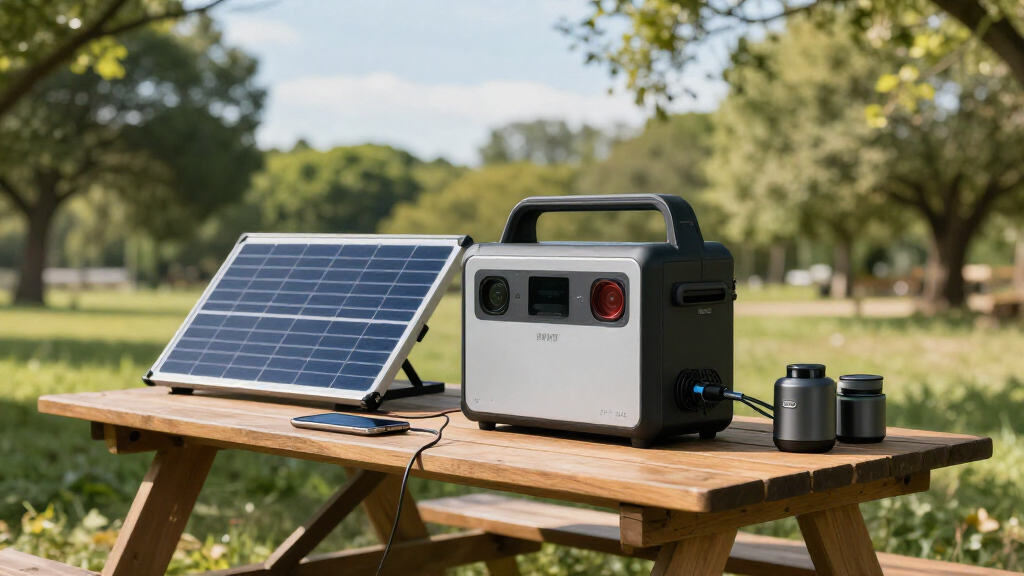
Portable solar power stations promise the same thing — quiet, fuel-free electricity wherever you need it — but the 13 models compared here land in very different places on capacity, battery chemistry, and value. The Anker SOLIX C1000 Gen 2 takes the top spot for balancing a 1056Wh capacity with some of the fastest recharging in the category. The BLUETTI AC180 stands out for its 1800W output and durable LiFePO4 battery at a mid-tier size, while the Jackery Explorer 300 with 40W panel is the easiest entry point for casual campers. The core tradeoff in this category is weight versus capability: bigger stations run refrigerators and power tools but stop being backpack-friendly, while compact units excel at phones and laptops but can’t touch home backup. Battery chemistry is the second dividing line — LiFePO4 models last years longer but often weigh more per watt-hour. Read on for the full breakdown of which station fits which buyer.

Get backup power and energy gear delivered free — and shop member deals
- Fast, free delivery on millions of items
- Access to Prime Big Deal Days deals on October 6–7
- Prime Video, Amazon Music and more included
Complete the kit


Key Takeaways
- The mid-size 1000Wh class (Anker C1000, Jackery 1000 v2, BLUETTI AC180) offers the best cost-per-usable-watt-hour for most buyers; the 300W budget units sacrifice whole-device runtime to hit a low price point.
- Every top-ranked model in this roundup uses LiFePO4 battery chemistry or fast recharging (under 2 hours); the lower-ranked picks lag on one or both, which directly affects daily usability on multi-day trips.
- Bundled solar panels rarely keep pace with the station they ship with — the 40W and 60W kits included with budget generators can take a full sunny day or more to recharge their stations, so panel wattage matters as much as battery capacity.
- Peak versus rated output is the most common spec trap: the BLUETTI AC180’s 2700W surge rating handles power-hungry appliance startups that would shut down the GRECELL 500W despite similar-looking marketing claims.
- Built-in solar panels like the BROWEY 1600W’s are convenient but far less efficient than separate folding panels, making that model a fit only for buyers who refuse to carry two pieces of gear.


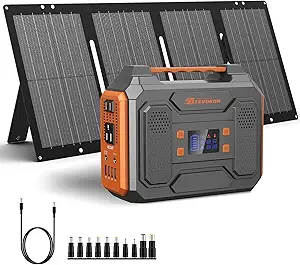


| portable solar power station | Battery type | Weight | Battery capacity |
|---|---|---|---|
| Jackery Explorer 1000 v2 Porta | LFP | 23.8 lbs | 1070Wh |
| Anker SOLIX C1000 Gen 2 Portab | LiFePO4 | 11.3 kg | 1024Wh |
| BLUETTI Portable Power Station | LiFePO4 | — | 1152Wh |
| 1000W Portable Power Station 1 | LiFePO4 | 27.73 lbs | 1024Wh |
| Jackery Explorer 300 Portable | — | 7.5 lbs | 292Wh |
| GRECELL Portable Power Station | Lithium | — | 519Wh |
| Anker SOLIX S2000 Portable Pow | LFP (Lithium Iron Phosphate) | 35.7 lbs | — |
| Jackery Solar Generator 1000 V | LFP | 23.8 lbs | — |
| Portable Solar Generator 300W | — | — | — |
| Jackery Explorer 300 Portable | LiFePO4 | 7.5 lbs | — |
| BROWEY 1600W Portable Power St | LiFePO4 (3000+ cycles) | — | — |
| Portable Solar Generator with | — | — | 280Wh lithium-ion |
| ALLWEI Portable Power Station | LiFePO4, 3000 cycles | 6.4 lbs | — |
More Details on Our Top Picks
Jackery Explorer 1000 v2 Portable Power Station, 1070Wh, 1500W
The Jackery Explorer 1000 v2 balances a useful amount of stored energy with a manageable 23.8 lb carry weight, making it my strongest all-round choice for campsites and short outages. Its 1070Wh battery and 1500W AC output give it more room for household essentials than the smaller Jackery Explorer 300, while its fast one-hour charging can shorten the wait before a trip. Three AC outlets and USB ports also cover a mix of devices without relying on a single connection type. The tradeoff is that solar charging requires specific Jackery panels, which limits panel choice compared with the solar-compatible BLUETTI AC180. At this size, it is portable for loading into a car, but a long walk from the car is a different proposition.
Pros:- 1070Wh capacity offers substantially more runtime than compact 292Wh-class units
- 1500W AC output supports a broad range of small appliances
- One-hour fast charging can reduce recharge downtime
- LFP battery is rated for 4000 charge cycles
Cons:- Solar charging requires specific Jackery panels
- At 23.8 lb, it is less suited to extended carrying than the Explorer 300
- No solar panel is listed as included
Best for: Campers and outage-conscious households who want roughly 1kWh of storage in a unit they can load into a vehicle
Not ideal for: Buyers who want to choose from a wide range of solar panels or carry a power station far on foot
- Battery capacity:1070Wh
- AC output:1500W
- Surge peak:3000W
- Weight:23.8 lbs
- Battery type:LFP
- Charge cycles:4000
- Charging time:1 hour (fast charging)
- Ports:3 AC, 2 USB-C, 1 USB-A, 1 DC car
- App control:Yes
Our verdict“Choose the Explorer 1000 v2 for a versatile, vehicle-portable power source with more capacity than compact camping units.”
Anker SOLIX C1000 Gen 2 Portable Power Station
The Anker SOLIX C1000 Gen 2 is a strong fit when a portable station needs to return to service quickly. Its 49-minute AC recharge is faster than the one-hour figures listed for the Jackery Explorer 1000 v2 and BLUETTI AC180, a useful advantage when a brief grid window separates outages or departure times. The 1,024Wh battery and 2,000W output also give it more output headroom than the 1000W generic station in this lineup, while listed solar recharge takes 1.8 hours. At 11.3 kg, however, it is no featherweight; the compact dimensions help with packing, not carrying over distance. I’d favor it for car camping or backup at home, and skip it if minimum carry weight or abundant capacity matters more than recharge speed.
Pros:- 49-minute AC recharge is the fastest stated time among these 1kWh-class picks
- 2000W output offers more continuous power than the 1000W generic model
- Solar recharge is listed at 1.8 hours
- UPS backup supports use with critical equipment
Cons:- 11.3 kg weight makes it a vehicle-portable choice rather than an easy long-distance carry
- 1024Wh capacity is close to other mid-size options rather than a high-capacity backup system
- No solar panel is listed as included
Best for: Car campers and backup planners who may need to recharge a 1kWh-class station quickly between uses
Not ideal for: Hikers seeking a light carry or households needing substantially more than 1kWh of stored energy
- Battery capacity:1024Wh
- Battery type:LiFePO4
- Continuous output:2000W
- Peak output:3000W
- AC recharge time:49 minutes
- Solar recharge time:1.8 hours
- Weight:11.3 kg
- Dimensions:15.1 × 8.2 × 9.6 in
- Total power outlets:9
Our verdict“Pick the C1000 Gen 2 if quick recharge matters more to you than low carry weight or extra battery capacity.”
BLUETTI Portable Power Station AC180, 1152Wh LiFePO4 Battery Backup
For buyers who expect to recharge away from the grid, the BLUETTI AC180 stands out with a specified 500W solar input and a 2.8–3.3-hour solar charging estimate. That makes its solar setup easier to plan than the Jackery Explorer 1000 v2, whose listing requires specific Jackery panels but does not state a solar charging time. The AC180 also carries 1152Wh, the largest battery among these three roughly 1kWh models, and delivers 1800W continuously. Its limit is connection flexibility: only two AC outlets are listed, fewer than the Jackery’s three. It suits a camp or outage setup where solar replenishment and stored energy matter more than plugging in several AC appliances at once.
Pros:- 1152Wh capacity is higher than the other listed 1kWh-class stations
- 500W solar input and stated solar recharge time help plan off-grid use
- 1800W continuous output covers more load than the 1000W generic option
- One-hour AC charging supports faster turnaround
Cons:- Only two AC outlets are listed
- Solar charging time depends on compatible panels and conditions
- No solar panel is listed as included
Best for: Off-grid campers and outage planners who can use compatible panels and want a defined solar input and recharge estimate
Not ideal for: Buyers who need several AC sockets at once or want solar panels included without checking the package
- Battery capacity:1152Wh
- Battery type:LiFePO4
- Continuous AC power:1800W
- Peak power:2700W
- AC outlets:2
- AC charge time:1 hour
- Solar input:500W
- Solar charge time:2.8–3.3 hours
Our verdict“Choose the AC180 when solar recharge planning and a little extra battery capacity outweigh the need for more AC outlets.”
1000W Portable Power Station 1024Wh LiFePO4 for Outdoor & Home
This 1024Wh station is the straightforward pick for powering lights, phones, and modest appliances without paying for the higher output of the Anker SOLIX C1000 Gen 2 or BLUETTI AC180. Its 1000W continuous output sets a clear ceiling: it can handle less demanding loads, but it has less headroom than those alternatives for appliances that draw more power. Solar input tops out at 300W, so replenishing the battery from panels takes more planning than with the AC180’s 500W input. At 27.73 lb, it is also the heaviest option here by a noticeable margin despite the portability framing. The LiFePO4 battery is rated for 3000+ cycles, and the USB-C port supports up to 60W. I’d choose it for stationary camp or backup use, not frequent carrying.
Pros:- 1024Wh LiFePO4 battery provides substantial stored energy for modest loads
- 300W solar input supports panel charging off-grid
- 60W USB-C PD port can charge compatible devices directly
- Battery is rated for 3000+ cycles
Cons:- 1000W continuous output is lower than the Anker C1000 Gen 2 and BLUETTI AC180
- 27.73 lb weight makes repeated carrying inconvenient
- 300W maximum solar input is lower than the AC180’s listed 500W
Best for: Budget-focused campers and homeowners powering lights, phones, and small appliances near a vehicle or shelter
Not ideal for: People who need to power high-draw appliances, recharge quickly from solar, or carry the unit often
- Battery capacity:1024Wh
- Continuous output:1000W
- Battery type:LiFePO4
- Weight:27.73 lbs
- Maximum solar input:300W
- AC outlets:2 × 110V
- USB-C output:60W PD
- USB-A ports:2
- Cycle life:3000+ cycles
Our verdict“This model makes sense for buyers who want 1kWh of storage for modest loads and can accept lower output and slower solar replenishment.”
Jackery Explorer 300 Portable Power Station, 292Wh
The Jackery Explorer 300 trades long runtime for a much easier carry: at 7.5 lb, it is a better match for short trips and small device loads than the 23.8 lb Explorer 1000 v2. Its 292Wh battery can keep phones, lights, and other modest electronics going, but it is not in the same class for running appliances through an outage. Two AC outlets and USB ports make it versatile for its size, while the 600W peak figure does not change the listing’s 300W rated output limit. The product information also conflicts on battery chemistry: the description says LiFePO4, while the specs say lithium ion, so I would verify the exact version before treating the stated cycle life as a LiFePO4 rating. Solar panels are not listed as included.
Pros:- 7.5 lb weight is easier to carry than the 1kWh-class stations
- 292Wh capacity suits short trips and modest electronics
- Two AC outlets plus USB-C, USB-A, and car ports offer varied connections
- 600W peak surge is specified for brief startup demands
Cons:- 300W rated output limits the appliances it can run
- 292Wh capacity is far below the Explorer 1000 v2 for extended use
- Battery chemistry is inconsistent in the product information, and no panel is listed as included
Best for: Weekend campers and day-trip users who prioritize a light carry for charging phones, lights, and small electronics
Not ideal for: Households seeking outage backup for appliances or campers who need multi-day power without frequent recharging
- Battery capacity:292Wh
- Weight:7.5 lbs
- Peak surge:600W
- Outlets:2 AC, 1 USB-C PD, 2 USB-A, 1 car port
- Charge cycles:Over 4000
- Charge time:4 hours
- Dimensions:15.43 × 9.92 × 11.89 in
- Battery cell type:Lithium ion (listed; description says LiFePO4)
Our verdict“Choose the Explorer 300 for a lighter station serving small electronics on short trips, not for substantial appliance backup.”
GRECELL Portable Power Station 500W, 519Wh Solar Generator
The GRECELL 519Wh sits in the sweet spot between the entry-level Jackery Explorer 300 and full-size units like the BLUETTI AC180 — enough capacity for a weekend of phone, laptop, and small appliance use without the weight or cost of a big LFP unit. Its pure sine wave inverter means laptops and CPAP machines run cleanly, something the cheaper 300W generators in this roundup can’t always promise. The wireless charging pad on top is a genuinely useful extra for camping tables cluttered with cables.
The tradeoff is speed: 6-9 hours of solar recharging trails the Jackery 1000 V2’s fast-charge capability by a wide margin, and the 500W ceiling rules out kettles, hair dryers, and most microwaves. The solar panel is also sold separately, so budget accordingly.
Pros:- 519Wh capacity comfortably runs phones, laptops, and small appliances simultaneously
- Pure sine wave AC output is safe for sensitive electronics like CPAP machines
- Unusually wide port selection including wireless charging and 60W USB-C PD
- Built-in Battery Management System adds protection at a budget-friendly tier
Cons:- 500W output ceiling excludes most kitchen appliances and power tools
- Solar panel sold separately, adding to the real cost
- Slow recharging — up to 9 hours via solar
Best for: Campers and emergency preppers who need multi-device weekend power without paying for a premium brand name
Not ideal for: Anyone hoping to run heating appliances or power tools — the 500W limit is a hard ceiling
- Power Output:500W
- Battery Capacity:519Wh
- Battery Type:Lithium
- AC Outlets:2 pure sine wave
- USB-C PD:60W
- USB-A Ports:3 QC3.0 (18W max)
- Car Port:12V/10A
- Wireless Charger:10W
- Recharge Time:6-7 hours (wall), 6-9 hours (solar)
Our verdict“A smart pick for buyers who want weekend-capacity power and port variety at a lower price point, as long as their devices stay under 500W.”
Anker SOLIX S2000 Portable Power Station, 2010Wh, 1500W
When the grid goes down for a day or more, capacity is what matters, and the SOLIX S2000’s 2010Wh nearly doubles the Jackery Solar Generator 1000 V2 while staying genuinely portable at 35.7 lbs — lighter than many 1,000Wh-class competitors. The standout is the LFP battery rated for 10,000 cycles, which translates to roughly 15 years of daily use before meaningful degradation. That chemistry choice makes this a whole-home-backup investment rather than a camping toy.
Two caveats shape who should buy it. There’s no 12V DC car port, which will frustrate RV owners who rely on that outlet, and the 1500W continuous output — while fine for fridges and most appliances — won’t start some power-hungry tools the way the BLUETTI AC180’s higher surge rating can.
Pros:- 2010Wh capacity powers essentials for extended outages — up to 35 hours claimed runtime
- 10,000-cycle LFP battery offers roughly 15 years of service life
- Compact and lightweight for its class at 35.7 lbs
- Four recharging options including solar, AC, generator, and car
Cons:- No 12V DC car port limits compatibility with RV and vehicle accessories
- 1500W continuous ceiling excludes some high-draw appliances and tools
Best for: Homeowners in outage-prone areas who want days of fridge, router, and device power in a movable package
Not ideal for: RV owners and van lifers who depend on 12V DC outputs for their rig’s wiring
- Capacity:2010Wh
- Continuous Power:1500W
- Peak Power:3000W
- Battery Type:LFP (Lithium Iron Phosphate)
- Battery Lifespan:10,000 cycles
- Dimensions:8.2 x 11.1 x 12.7 inches
- Weight:35.7 lbs
- Recharging Options:AC, solar, generator, car outlet
Our verdict“The pick for buyers prioritizing maximum runtime and battery longevity over raw wattage or DC versatility.”
Jackery Solar Generator 1000 V2 with 200W Solar Panel, 1070Wh, 1500W AC
This is the only product in this batch that arrives as a true solar generator bundle — a 1070Wh station paired with a 200W panel — which removes the most common surprise cost in this category. The one-hour fast charge is the headline spec: where the GRECELL 500W needs 6-7 hours on wall power, the Jackery 1000 V2 goes from empty to full faster than most people spend setting up camp. With 1500W of output, it runs the same appliance load as the larger Anker SOLIX S2000 in a lighter 23.8 lb package.
The annoyances are real but manageable. Fast charging requires the app to activate, which feels like unnecessary friction, and the unit can’t ship to PO Boxes — a genuine problem for rural buyers. Compared with the Anker, you get less total capacity for your money.
Pros:- Bundle includes a 200W solar panel, unlike most competitors that sell panels separately
- One-hour fast charging dramatically shortens downtime between uses
- 1500W AC output handles most portable appliances with 3000W surge headroom
- LFP battery designed for over a decade of regular use
Cons:- Fast charging must be activated through the companion app
- Less total capacity than similarly positioned rivals like the Anker SOLIX S2000
- Cannot ship to PO Box addresses
Best for: Campers and road-trippers who want everything in one purchase and need fast turnarounds between stops
Not ideal for: Rural buyers with PO Box addresses — shipping restrictions make delivery impossible
- Capacity:1070Wh
- AC Output:1500W
- Surge Peak:3000W
- Battery Type:LFP
- Weight:23.8 lbs
- Ports:2 USB-C, 1 USB-A, 1 DC car port, 3 AC
- Charging Time:1 hour (fast), 3 hours (600W charger), 6 hours (200W solar)
Our verdict“The most convenient turnkey option for anyone who wants solar power working out of the box with minimal waiting.”
Portable Solar Generator 300W with 60W Solar Panel
For first-time buyers, this kit answers the biggest question — ‘do I even need a solar generator?’ — at the lowest barrier to entry in this roundup. The 60W foldable panel is included, so unlike the GRECELL or Jackery Explorer 300, nothing extra needs to be purchased. The 20.5% monocrystalline conversion efficiency is respectable for a bundled panel at this tier, and the built-in flashlight with SOS mode makes it a sensible glovebox emergency unit rather than just a camping toy.
Its limits define who should skip it. At 300W, it powers phones, lights, and a fan — not a mini fridge, unlike the GRECELL’s 500W output. And the junction box isn’t waterproof, so the panel needs attention in bad weather that pricier kits wouldn’t demand. Think of it as a trial run before committing to a 1000Wh-class unit.
Pros:- Solar panel included in the box — a complete off-grid starter kit
- 20.5% monocrystalline panel efficiency is strong for this price tier
- Built-in flashlight with SOS mode adds genuine emergency utility
- BMS protection and cooling fan keep operation safe during sustained use
Cons:- 300W ceiling restricts use to phones, lights, and small gadgets
- Junction box is not waterproof, limiting wet-weather reliability
- Battery performance declines if the unit sits uncharged for long periods
Best for: First-time buyers and casual campers testing whether solar generation fits their lifestyle before spending more
Not ideal for: Anyone running anything beyond small electronics — 300W won’t touch a fridge or heating device
- Power Output:300W
- Solar Panel:60W foldable monocrystalline
- AC Outlets:2 x 300W max
- USB Ports:3 x 5V/3A, 1 x quick charge 5V/3A, 9V/2A
- DC Port:9V-12.6V/10A max
- Charging Methods:AC, solar, car
- Conversion Efficiency:20.5%
- Included Accessories:AC adapter, car charging cable, solar panel kit, user manual
Our verdict“The cheapest credible way to get started with solar power, provided expectations stay at the phone-and-flashlight level.”
Jackery Explorer 300 Portable Power Station with 40W Solar Panel
At 7.5 lbs with an integrated handle, the Explorer 300 is the lightest credible power station in this roundup — less than a third of the Anker SOLIX S2000’s weight and easy to clip to a pack. For hikers, kayakers, and anyone whose power needs are genuinely modest, that weight savings matters more than any capacity number. The 100W USB-C PD port is a standout at this size, fast-charging modern laptops that the generic 300W generator in this lineup can only trickle-charge.
The 292Wh capacity means roughly a quarter of the Jackery 1000 V2’s runtime, so this is a one-device-at-a-time machine. The bundled 40W panel is also slow — expect long sunny days for a full recharge. And the 300W AC ceiling rules out anything with a heating element. It earns its place on portability alone, not versatility.
Pros:- Featherweight 7.5 lb design with integrated handle for genuine backcountry carry
- 100W USB-C PD port fast-charges laptops — rare at this capacity tier
- LiFePO4 battery rated for over 4,000 charge cycles
- 40W solar panel included for off-grid top-ups
Cons:- 292Wh capacity limits runtime to small devices and short sessions
- 300W output ceiling excludes nearly all household appliances
- 40W panel recharges slowly relative to larger bundled kits like the Jackery 1000 V2’s 200W array
Best for: Hikers, paddlers, and minimalist travelers who prioritize carry weight and need laptop-class USB-C charging
Not ideal for: Anyone needing multi-device or overnight appliance power — 292Wh runs out fast under real loads
- Capacity:292Wh
- AC Outlets:2 (300W rated)
- USB-C PD Port:1 (100W)
- USB-A Ports:2
- Car Port:120W
- Battery Type:LiFePO4
- Charge Cycles:Over 4,000
- Weight:7.5 lbs
- Solar Panel Power:40W
Our verdict“The right choice when every ounce counts and your power needs fit in a backpack rather than a campsite.”
BROWEY 1600W Portable Power Station with Built-in Solar Panel
Most power stations in this roundup make you buy panels separately, which pushes the true cost and hassle up. The BROWEY 1600W sidesteps that entirely with a built-in solar panel and MPPT controller, so it works as a genuinely self-contained renewable kit straight out of the box. Its 1024Wh capacity and 1600W pure sine wave output put it in the same class as the BLUETTI AC180, though BLUETTI gives you slightly more headroom at 1800W. Where BROWEY pulls ahead is convenience: no extra cables, no guessing at panel compatibility. The LiFePO4 battery rated for 3000+ cycles means years of camping trips and outage coverage. The tradeoff is bulk — this is a lug-to-the-car unit, not a backpack option, and 1024Wh disappears fast if you run space heaters or power tools.
Pros:- Built-in solar panel with MPPT eliminates separate panel purchases
- 1600W output with 3200W peak handles most appliances and tools
- LiFePO4 battery rated for over 3000 charge cycles
- Fast recharge reaching 80% in about 3 hours
Cons:- Heavy and bulky compared to smaller stations in this guide
- 1024Wh capacity drains quickly under high-wattage loads
- Solar charging performance depends heavily on weather and sunlight
Best for: Campers and emergency preppers who want a complete solar solution without shopping for separate panels
Not ideal for: Backcountry hikers or anyone prioritizing light weight — it’s heavy and bulky compared to sub-300Wh units
- Power Output:1600W (3200W peak)
- Capacity:1024Wh
- Battery Type:LiFePO4 (3000+ cycles)
- Charging Time:3 hours to 80%
- Ports:8 (AC/DC/USB-C PD 100W)
- Solar:Built-in panel with MPPT controller
- Charging Options:Solar, AC wall, 12V car
Our verdict“Buy this if you want a one-box solar power kit with real appliance-grade output; skip it if portability is your priority.”
Portable Solar Generator with Panel, 300W Power Station and 40W Foldable Solar Panel
This bundle pairs a 300W power station with a 40W foldable solar panel, making it one of the cheapest ways to get into solar-powered off-grid living. Compared with the Jackery Explorer 300 with 40W panel, the concept is nearly identical — small battery, modest panel, everything you need for phones, lights, fans, and laptops. The difference here is value positioning: this kit targets first-time buyers who don’t want to invest in a Jackery-level brand name. The built-in LED flashlight with SOS mode adds a nice emergency-readiness touch that some rivals skip. Be realistic about limits: 280Wh and a 300W ceiling rule out anything with a heating element, and roughly seven hours of runtime at full load means you’ll be recharging daily on longer trips. Compared with the ALLWEI 300W, you at least get the panel included rather than sold separately.
Pros:- Complete kit with foldable 40W solar panel included
- Multiple outlets covering AC, USB, and DC charging needs
- Built-in LED flashlight with SOS mode for emergencies
- Lightweight and easy to pack for car camping
Cons:- 280Wh capacity limits runtime to roughly 7 hours at full load
- Cannot support high-power appliances or tools
- 40W panel recharges slowly on its own
Best for: Budget-conscious first-time campers who want a complete generator-plus-panel kit for phones, lights, and small devices
Not ideal for: Anyone running appliances over 300W — hair dryers, kettles, and water pumps are simply off the table
- Power Output:300W continuous, 550W starting
- Battery Capacity:280Wh lithium-ion
- Included Solar Panel:40W foldable
- Total Power Outlets:4
- Runtime:Approximately 7 hours at full load
- Frequency:60 Hz
- Extras:Built-in LED flashlight with SOS mode
Our verdict“A sensible entry point for casual campers testing the solar waters — just don’t expect appliance-level power.”
ALLWEI Portable Power Station 300W, 256Wh Solar Generator LiFePO4 Battery
The ALLWEI 300W makes this list on one strength: battery chemistry. While most budget mini-stations — including the similar 280Wh generator kit above — use standard lithium-ion cells, ALLWEI ships a LiFePO4 battery rated for 3000 cycles, which roughly triples the usable lifespan of the unit. At 6.4 pounds and roughly nine inches wide, it’s genuinely grab-and-go, sitting comfortably next to the Jackery Explorer 300 in the compact class. Port selection is solid for the size, with a USB-C PD 60W port that fast-charges modern laptops — something several small rivals still fumble. The catch: the solar panel is sold separately, so off-grid charging costs extra, and 256Wh is strictly a devices-and-lights capacity. For emergency drawers and weekend trips where lifespan matters more than raw wattage, this pick makes the most sense.
Pros:- LiFePO4 battery rated for 3000 charge cycles for long-term value
- USB-C PD 60W port fast-charges laptops
- Compact 6.4 lb build is easy to store and carry
- Flexible recharging including dual AC plus solar input
Cons:- Solar panel sold separately, unlike bundled kits in this guide
- 256Wh capacity won’t run larger appliances
- Heavier than some rivals in the ultra-compact class
Best for: Emergency-preparedness buyers who want a small, long-lived backup battery for phones, radios, and laptops
Not ideal for: Off-grid campers wanting out-of-the-box solar charging — the panel is a separate purchase
- Capacity:256Wh
- Power Output:300W continuous, 600W peak
- Battery Type:LiFePO4, 3000 cycles
- Weight:6.4 lbs
- Dimensions:9.25 × 5 × 6.81 inches
- Output Ports:1 AC, 2 DC5521, 1 car port, 1 USB-A 18W, 1 USB-C PD 60W
- Recharging:AC wall, 12V car, solar, or dual AC + solar
- Extras:LED light with SOS mode
Our verdict“Choose this compact station if battery lifespan and laptop charging matter more than bundled solar gear.”
How We Picked
My ranking starts with usable capacity and output matching real loads — a station needs enough watt-hours to run a buyer’s actual devices (fridge, CPAP, laptop, lights) and enough rated wattage to handle them simultaneously without overload shutdowns. From there I weighed battery chemistry and cycle life, since LiFePO4 models rated for thousands of cycles justify their cost over older NMC cells that degrade in a few years. Recharge speed was the third filter: a station that takes eight hours to refill via solar or wall power limits how useful it is on consecutive off-grid days, which is why the fast-charging Anker and BLUETTI models rank above similarly sized competitors.
Finally, I scored each pick on portability, included solar input options, and versatility — whether the bundle ships with a panel, how heavy it is to move, and whether the port selection covers AC, USB-C, and DC needs. Budget models weren’t punished for being small; they were judged on whether they deliver honest value at their size. That’s why a well-built 300W unit outranks a mediocre 1000W one, and why the overall ordering reflects a mix of capability, durability, and fit-for-purpose rather than raw specifications alone.
| portable solar power station | Battery type |
|---|---|
| Jackery Explorer 1000 v2 Porta | LFP |
| Anker SOLIX C1000 Gen 2 Portab | LiFePO4 |
| BLUETTI Portable Power Station | LiFePO4 |
| 1000W Portable Power Station 1 | LiFePO4 |
| Jackery Explorer 300 Portable | — |
| GRECELL Portable Power Station | Lithium |
| Anker SOLIX S2000 Portable Pow | LFP (Lithium Iron Phosphate) |
| Jackery Solar Generator 1000 V | LFP |
| Portable Solar Generator 300W | — |
| Jackery Explorer 300 Portable | LiFePO4 |
| BROWEY 1600W Portable Power St | LiFePO4 (3000+ cycles) |
| Portable Solar Generator with | — |
| ALLWEI Portable Power Station | LiFePO4, 3000 cycles |
Factors to Consider When Choosing Portable Solar Power Stations
Before settling on a specific model, it helps to understand the patterns that shaped this ranking. The factors below are where buyers most often miscalculate — and where a little planning changes which station is the right answer.Size Your Battery to Real Runtime, Not Marketing Numbers
The most common mistake is buying capacity based on the box number without doing the math. A 1000Wh station will not run a 100W device for ten hours in practice — inverter inefficiency and battery reserve limits typically shave 15–20% off theoretical runtime. Write down the wattage of the two or three devices you actually need to run and multiply by the hours you need them; that number, plus a 20% buffer, is your minimum capacity. Buyers who skip this step either overspend on capacity they never use or end up with a station that dies before morning. It’s also worth remembering that a bigger battery with a slow solar input is just a heavier paper weight after day one — capacity and recharge rate need to be planned together.
Battery Chemistry Determines How Long the Purchase Lasts
Older NMC lithium batteries typically hold their rated capacity for around 500 charge cycles before degrading, while LiFePO4 chemistry is routinely rated for 3,000 or more. For a weekend camper, that difference may never matter. For anyone using a station as home backup or for frequent van-life duty, LiFePO4 effectively means the unit lasts the better part of a decade instead of two or three years. The tradeoff is weight and cold-weather performance — LiFePO4 cells are heavier per watt-hour and shouldn’t be charged below freezing without a heating feature. Match the chemistry to your usage frequency rather than defaulting to whichever spec sheet looks more impressive.
Solar Input Is the Spec Buyers Undervalue Most
A station’s maximum solar input wattage dictates how fast it can refill off-grid, and it varies wildly across this category — from under 100W on budget units to 400W-plus on the mid-tier flagships. If you plan multi-day trips, low input means the battery only ever depletes. Panel pairing matters just as much: a 40W panel included with a budget generator can barely offset phone charging, while a 200W panel can meaningfully refill a 1000Wh station in a sunny afternoon. My advice is to budget for panel wattage of at least a quarter of your battery capacity if solar is your primary recharge method, and to treat bundled panels on cheap kits as starters rather than solutions.
Rated Watts Versus Surge Watts — Know the Difference
Manufacturers love advertising peak numbers, but the rated (continuous) wattage is what your devices actually live with. Anything with a motor — refrigerators, fans, power tools, air compressors — draws a startup surge that can be two to three times its running wattage. A station with a 500W rating may run a 450W device fine until the compressor kicks and trips the inverter. Check both numbers against your most demanding appliance before buying, and look for stations with higher surge ratings or a power-lifting mode if you plan to run inductive loads. This single spec mismatch accounts for most buyer disappointment in this category.
Weight and Form Factor Decide Whether You Actually Carry It
A 1000Wh station generally weighs 25–35 pounds — manageable for car camping, miserable for a campsite far from the vehicle. Compact 300Wh units weigh a fraction of that and handle phones, cameras, drones, and laptops for a weekend. Be honest about how the station will move: if it lives in a trunk and gets carried twenty feet, weight barely matters; if it joins you on a portage or a rooftop tent ladder, every pound counts. Also check handle design and whether the unit can be charged while in use (pass-through charging), which many campers discover they need only after buying.
When to Pay More — and When Not To
Paying up makes sense when you get faster charging, LiFePO4 chemistry, higher inverter quality, and better warranties — the mid-tier models in this roundup earn their price through those features, not brand polish. Paying up for capacity you’ll never use is the reverse mistake: a 2000Wh station purchased for occasional phone and laptop charging is wasted money and wasted shoulders. Entry-level buyers should also resist solar bundles that double the price of a small station when a standalone panel bought later offers better value and flexibility. The sweet spot for most first-time buyers in this comparison is the 1000Wh class with fast charging — big enough for real emergencies, small enough to carry, and priced below the premium tier.
Frequently Asked Questions
Can a 300Wh power station really run a camping trip, or do I need 1000Wh?
For light loads, a 300Wh unit like the Jackery Explorer 300 or ALLWEI 300W covers a long weekend easily — think phone charges, a camera battery, LED lights, and a few laptop top-ups. The math breaks down around anything with heat or a compressor: an electric blanket, portable fridge, or kettle will drain 300Wh in a few hours or less. If your trip involves refrigeration or you’re sharing power with a group, step up to the 1000Wh class. A good compromise is pairing a small station with a folding panel, which stretches the small battery indefinitely for modest loads. The buyers who regret small stations are almost always those who discovered mid-trip they wanted to run a fridge.
Is it better to buy a solar generator kit or purchase the station and panel separately?
Kits make sense when the bundled panel is genuinely matched to the station’s input capacity — the Jackery Solar Generator 1000 V2 with its 200W panel is a good example of a pairing that actually recharges the battery in a reasonable day. Budget kits are the opposite story: a 40W or 60W panel on a 300Wh station means most of a sunny day just to refill, and you’re often locked into a proprietary connector. Buying separately gives you the freedom to size the panel to your real needs and even mix brands with a compatible charge controller. My general rule is to buy a kit only when the included panel wattage is at least a quarter of the station’s capacity; otherwise, piece it together yourself.
How much of a difference does fast recharging actually make?
More than most buyers expect, because recharge speed compounds over a trip. A station that refills from the wall in an hour, like the Anker SOLIX C1000, can be topped off during a lunch stop on a road trip and be full by the time you reach camp. A slower unit needing six to eight hours may never fully recover between uses, so you start each day at partial charge and the deficit grows. For home backup, fast recharge matters after an outage ends — you want the unit ready for the next event, not still charging a day later. It also improves solar efficiency, since a fast-charging station can capture more of a short window of peak sunlight.
Are LiFePO4 battery stations worth the extra weight and cost?
If you’ll cycle the station regularly — van life, frequent camping, or routine home backup use — LiFePO4 chemistry pays for itself because the battery is rated for thousands of cycles instead of roughly 500. Over five years of weekly use, an NMC station may need replacing while a LiFePO4 unit is still going strong. If your station sits in a closet for occasional outages and gets cycled a dozen times a year, chemistry matters far less, and a lighter or cheaper NMC model is a reasonable choice. The other consideration is safety and stability: LiFePO4 cells tolerate heat and deep discharges better, which suits gear that lives in a hot vehicle. Just note that many LiFePO4 units shouldn’t be charged below freezing unless they include a low-temperature protection feature.
Can one of these stations actually back up my home during an outage?
Yes, but with firm expectations about scope. A 1000Wh station can keep a refrigerator running for 8–14 hours, run a CPAP all night with plenty to spare, keep phones and a router alive for days, and power LED lighting — but it won’t run an air conditioner, electric heat, or a whole house. The BLUETTI AC180 and Anker SOLIX S2000 sit at the top of this list for home backup because their higher output ratings handle multiple devices or a surge-heavy appliance at once. For true multi-day outages, you’ll need solar input to recharge during the event, which is where a 200W panel and high solar input ratings become part of your backup plan rather than camping accessories. Treat these as essential-circuits backup, not generator replacement.
Conclusion
The right choice here depends less on specs and more on how you’ll actually use the station. For the best overall pick, the Anker SOLIX C1000 Gen 2 balances capacity, rapid recharging, and portability in a way that suits campers and home-backup buyers alike. The best value award goes to the BLUETTI AC180 — its 1800W output and LiFePO4 battery deliver near-premium capability at a mid-tier size, and the generic 1000W LiFePO4 pick is a solid alternative for buyers who prioritize capacity above brand polish. If money is less of a constraint, the Anker SOLIX S2000 is the premium choice, with enough capacity for multi-day outages and serious off-grid living.
For beginners and casual campers, the Jackery Explorer 300 with its 40W panel is the least intimidating entry point — small, simple, and enough for phones, cameras, and lights. Specific needs round out the map: the GRECELL 500W and ALLWEI 300W fit budget-conscious day-trippers, the Jackery Solar Generator 1000 V2 bundle suits buyers who want everything in one box, and the BROWEY 1600W with its built-in panel serves travelers who refuse to manage separate gear. Whatever you choose, match capacity to your real device list and pair it with enough panel wattage to refill it — that combination matters more than any single model choice.
Fall Picks
fall essentials
As an affiliate, we earn on qualifying purchases.