
TL;DR
Listen free for 30 days with Audible
Thousands of audiobooks and originals — cancel anytime.
Start your free trialAs an affiliate, we earn on qualifying purchases.
NASA is building a ‘laundry gun’ to clean spacecraft efficiently in space. While primarily for space missions, experts are exploring if this technology could someday be adapted for home cleaning. The development is ongoing, with many technical and safety questions remaining.
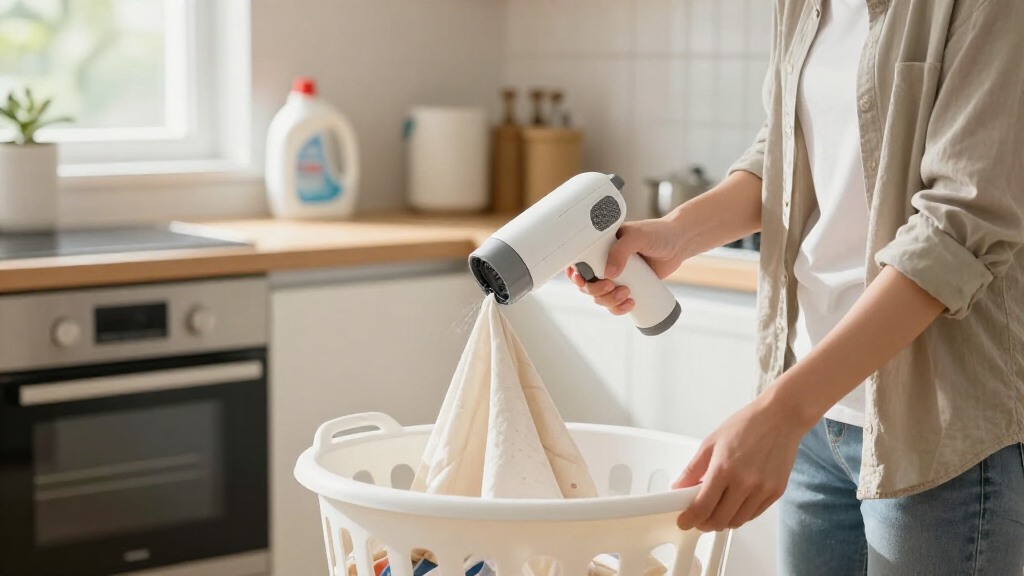
NASA is designing a device known as a ‘laundry gun’ to clean spacecraft efficiently in space environments. The innovative tool aims to address the challenge of removing debris and contaminants from spacecraft surfaces without traditional water or chemical cleaners. While the primary goal is space application, the development has sparked interest in whether similar technology could be adapted for household cleaning in the future.
The ‘laundry gun’ is a high-velocity cleaning device currently under development by NASA, intended to operate in microgravity environments. It uses a focused jet of compressed air or other propellants to dislodge dirt, dust, and debris from spacecraft surfaces, which is difficult to clean with conventional methods in space. NASA officials have confirmed that the device is in the prototype stage, with testing planned in simulated space conditions.
According to sources familiar with the project, the laundry gun could significantly reduce the need for astronauts to perform manual cleaning or rely on complex chemical procedures, thereby saving time and resources during missions. The technology is designed to be compact, safe, and effective in zero-gravity conditions. NASA has not announced a specific timeline for deployment but emphasizes the potential for future space missions, including lunar or Mars exploration.
Meanwhile, experts and consumers are debating whether such a device could be adapted for use in homes. Proponents suggest that a scaled-down, safe version could make household cleaning more efficient, especially for hard-to-reach areas or delicate surfaces. Critics raise concerns about safety, cost, and practicality, noting that the current prototype is tailored for space conditions and may not be suitable for everyday environments.
Potential Impact of Space Tech on Household Cleaning
The development of NASA’s laundry gun highlights how space technology can inspire innovations that may eventually benefit everyday life. If adapted for home use, such a device could revolutionize cleaning routines by offering a chemical-free, waterless method for removing dirt and grime. This could be especially valuable for households aiming to reduce chemical exposure or water consumption. However, significant engineering, safety, and regulatory hurdles remain before consumer versions could become available.
Moreover, the project underscores the broader trend of space agencies and private companies exploring advanced cleaning technologies. These innovations could influence future cleaning tools, making them more efficient, eco-friendly, and suitable for various environments. Still, the transition from space prototypes to household appliances involves complex challenges that are not yet fully understood.
Why NASA Is Developing a Space-Specific Cleaning Device
NASA has long faced the challenge of maintaining spacecraft cleanliness in microgravity, where traditional cleaning methods are ineffective. Dust, debris, and potential contaminants can impair equipment and pose risks to crew health. Existing solutions often involve manual wiping or chemical cleaners, which are less effective and more cumbersome in space. To address this, NASA began exploring innovative cleaning methods, leading to the development of the ‘laundry gun.’
The concept emerged from the need for a safe, efficient, and waterless cleaning system suitable for space missions, especially as NASA plans longer journeys to the Moon and Mars. The device’s design leverages high-velocity jets to dislodge particles without damaging sensitive equipment. While still in prototype stages, the laundry gun reflects NASA’s broader push toward advanced, autonomous maintenance tools for future exploration.
Interest in this technology has surged amid broader coverage of space innovation, though official details remain limited. The development aligns with ongoing efforts to reduce reliance on water and chemicals in space, which are costly and difficult to manage in microgravity.
Unanswered Questions About Space Cleaning Tech Adoption
It remains unclear whether the laundry gun technology will be scaled down or modified for household use. The current prototype is tailored for space conditions, and adapting it for consumer safety, cost, and practicality involves complex engineering challenges. Additionally, regulatory approval and market demand are still unknowns. The timeline for potential commercial availability has not been announced, and experts emphasize that significant testing and safety evaluations are needed before any consumer product could emerge.
Next Steps in Development and Potential Consumer Testing
NASA plans to continue testing the laundry gun prototype in simulated space environments to refine its effectiveness and safety. If successful, the agency may explore partnerships with private companies to develop scaled-down versions suitable for consumer markets. Researchers and engineers will need to address safety standards, cost considerations, and ease of use before any commercial product could reach homes. Meanwhile, public interest and media coverage are likely to grow as the technology progresses.
Key Questions
What is the laundry gun designed to do in space?
The laundry gun is designed to clean spacecraft surfaces by using high-velocity jets to dislodge dirt, dust, and debris without water or chemicals, especially in microgravity environments.
Could this technology be used in my home someday?
While the concept is promising, adapting space-specific cleaning technology for household use involves many safety and engineering challenges. It is too early to say when or if this will become a consumer product.
What are the main advantages of a waterless cleaning device?
Waterless cleaning devices could reduce water consumption, eliminate the need for harsh chemicals, and reach difficult areas more easily, making cleaning more efficient and environmentally friendly.
When might a consumer version of the laundry gun be available?
There is no confirmed timeline. The project is still in prototype testing, and significant development, safety validation, and regulatory approval are needed before any commercial product could be released.
Are there safety concerns with high-velocity cleaning devices?
Yes, safety is a primary concern, especially for consumer use. Devices must be designed to prevent injury, damage to surfaces, and misuse, which requires rigorous testing and regulatory oversight.
Source: rss
Flea & tick season Picks
flea and tick prevention
As an affiliate, we earn on qualifying purchases.