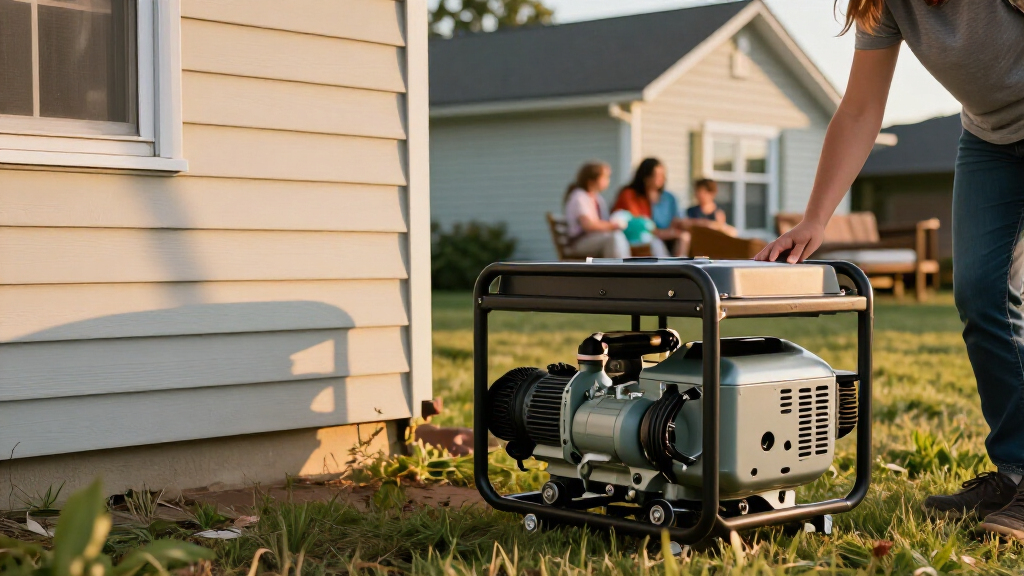
When power outages strike, a reliable standby generator can keep your home running smoothly. The best models offer seamless automatic operation, fuel efficiency, and smart connectivity, but they also come with tradeoffs like cost and installation complexity. The Generac 22 kW Whole-Home Standby Generator stands out for its dependable performance and cellular monitoring, making it a top choice for most homeowners. For those seeking affordability, the Westinghouse WGen9500DF offers impressive power at a lower price point, though it requires manual setup. Continue reading for a detailed comparison to find the right backup solution for your home needs.

Get backup power and energy gear delivered free with Prime
- Fast, free delivery on millions of items
- Prime Video, Amazon Music and more included
- Member-only deals all year
Complete the kit


Key Takeaways
- Top models combine automatic operation with smart connectivity for seamless power management.
- Dual-fuel options provide flexibility but often come with higher installation costs and complexity.
- Size and power output should match your home’s energy demands to avoid underperformance or overspending.
- Price varies widely, with premium models offering advanced features and basic models focusing on core functionality.
- Installation considerations, including transfer switch compatibility, significantly impact overall cost and convenience.
| Westinghouse WGen11500TFc Tri-Fuel Portable Generator with CO Sensor |  | Best Overall Portable Generator for Home Backup | Fuel types: Gasoline, propane, natural gas | Starting wattage: 14,500 watts | Running wattage: 11,500 watts (gasoline); 10,500 watts (propane); 9,500 watts (natural gas) | VIEW LATEST PRICE | See Our Full Breakdown |
| Generac 10kW Whole Home Standby Generator with Transfer Switch and Cellular Connectivity |  | Best Entry-Level Whole-Home Standby with Remote Monitoring | Wattage: 10,000 watts | Fuel type: Natural gas or liquefied petroleum gas | Power source: Fuel powered | VIEW LATEST PRICE | See Our Full Breakdown |
| Westinghouse WGen11500DFc Dual Fuel Portable Generator, 14,500 Peak Watts | 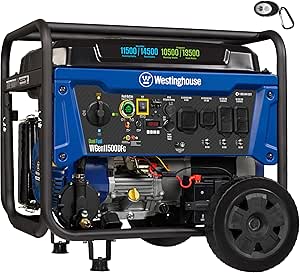 | Best Dual-Fuel Portable Generator for Home Backup | Peak wattage: 14,500 watts | Running wattage: 11,500 watts (gasoline); 10,500 watts (propane) | Fuel types: Gasoline, propane, natural gas | VIEW LATEST PRICE | See Our Full Breakdown |
| Generac 22 kW Whole-Home Standby Generator with Cellular Connectivity |  | Best Large Capacity Whole-Home Backup with Remote Monitoring | Power output: 22 kW | Wattage: 22,000 watts | Fuel type: Natural gas or propane | VIEW LATEST PRICE | See Our Full Breakdown |
| Generac 26kW Whole Home Standby Generator with Cellular Monitoring | | Best Power for Large Homes with Advanced Remote Features | Wattage: 26,000 watts | Power source: Natural gas or propane | Fuel type: Fuel-powered | VIEW LATEST PRICE | See Our Full Breakdown |
| Generac 24 kW Whole-Home Standby Generator with 200-Amp Transfer Switch and Cellular Connectivity |  | Best Overall for Full-Home Backup with Remote Monitoring | Power output: 24 kW | Starting wattage: 24,000 watts | Running wattage: 24 kW | VIEW LATEST PRICE | See Our Full Breakdown |
| Generac 22 kW Whole-Home Standby Generator with Automatic Transfer Switch and Cellular Connectivity | | Best for Slightly Smaller Homes Needing Reliable Power | Power output: 22 kW | Starting wattage: 22,000 watts | Running wattage: 22 kW | VIEW LATEST PRICE | See Our Full Breakdown |
| Generac 14 kW Whole-Home Standby Generator with 200-Amp Transfer Switch and Cellular Connectivity | | Best for Smaller Homes or Supplementary Backup | Wattage: 14,000 watts | Running wattage: 14,000 watts | Fuel type: Propane or natural gas | VIEW LATEST PRICE | See Our Full Breakdown |
| Oxseryn 4400-Watt Gasoline Inverter Generator |  | Best Portable Backup for Small Loads and Camping | Peak Output: 4400 watts | Running Output: 3400 watts | Fuel type: Gasoline | VIEW LATEST PRICE | See Our Full Breakdown |
| Generac 14 kW Whole-Home Standby Generator with Cellular Connectivity |  | Best for Compact, Remote-Managed Whole-Home Backup | Wattage: 14,000 watts | Power source: Natural gas or propane | Recommended use: Residential | VIEW LATEST PRICE | See Our Full Breakdown |
| Generac GP9500E Tri-Fuel Portable Generator with Electric Start |  | Best for Fuel Flexibility | Model: 8063 | Fuel types: Gasoline, liquid propane, and natural gas | Running wattage: 9,500 watts | VIEW LATEST PRICE | See Our Full Breakdown |
| DuroMax XP13000HX 13,000-Watt Dual-Fuel Portable Generator |  | Best for High Running Output | Starting wattage: 13,000 watts | Running wattage: 10,500 watts | Fuel types: Gasoline and propane | VIEW LATEST PRICE | See Our Full Breakdown |
| DuroStar DS13000MX 13,000-Watt Dual-Fuel Portable Generator |  | Best for Extended Gasoline Runtime | Model: DS13000MX | Peak wattage: 13,000 watts | Running wattage: 10,500 watts | VIEW LATEST PRICE | See Our Full Breakdown |
| Westinghouse WGen9500DF Dual Fuel Portable Generator, 12,500 Peak Watts |  | Best for Convenient Starting | Fuel types: Gasoline or propane | Running wattage: 9,500 watts on gasoline; 8,500 watts on propane | Peak wattage: 12,500 watts on gasoline; 11,200 watts on propane | VIEW LATEST PRICE | See Our Full Breakdown |
| standby generators for home backup | Running wattage | Engine | Voltage |
|---|---|---|---|
| Westinghouse WGen11500TFc Tri- | 11,500 watts (gasoline); 10,500 watts (propane); 9,500 watts (natural gas) | 550cc 4-stroke OHV | 240 volts |
| Generac 10kW Whole Home Standb | — | — | 120 volts |
| Westinghouse WGen11500DFc Dual | 11,500 watts (gasoline); 10,500 watts (propane) | 550cc 4-stroke OHV | 240 volts |
| Generac 22 kW Whole-Home Stand | — | — | — |
| Generac 26kW Whole Home Standb | — | — | 240 volts |
| Generac 24 kW Whole-Home Stand | 24 kW | — | 240 volts |
| Generac 22 kW Whole-Home Stand | 22 kW | — | 240 V |
| Generac 14 kW Whole-Home Stand | 14,000 watts | — | 240 volts |
| Oxseryn 4400-Watt Gasoline Inv | — | 4-stroke | — |
| Generac 14 kW Whole-Home Stand | — | Internal combustion | 240 volts |
| Generac GP9500E Tri-Fuel Porta | 9,500 watts | 500cc Generac OHV | — |
| DuroMax XP13000HX 13,000-Watt | 10,500 watts | 500cc OHV, 4-stroke | — |
| DuroStar DS13000MX 13,000-Watt | 10,500 watts | 500cc, 4-stroke OHV | — |
| Westinghouse WGen9500DF Dual F | 9,500 watts on gasoline; 8,500 watts on propane | 457cc, 4-stroke OHV | — |
More Details on Our Top Picks
Westinghouse WGen11500TFc Tri-Fuel Portable Generator with CO Sensor
This tri-fuel portable generator stands out for its ability to run on gasoline, propane, or natural gas, offering versatility that is especially useful during prolonged outages. Unlike the Generac 10kW standby models, it provides high peak wattage up to 14,500 watts, making it suitable for powering multiple appliances or a whole house with careful load management. The remote and push-button electric start simplify operation, while the CO sensor adds a layer of safety. However, its large size and weight can pose challenges for mobility and storage, and propane runtime is limited to around 7 hours on a typical tank. Compared to standby units, this portable model is more flexible but less integrated into home infrastructure.
Pros:- Supports three fuel types for maximum flexibility
- High peak wattage suitable for whole-home or major appliance backup
- Remote and electric start for easy operation
- Supports sensitive electronics with low THD
Cons:- Heavy and bulky, making transportation and storage difficult
- Propane runtime limited to about 7 hours on a 20 lb. tank
Best for: Homeowners who need a flexible, portable backup power solution capable of supporting essential appliances during outages
Not ideal for: Those seeking a permanent, fully integrated home backup system, as portability limits convenience and ease of use for daily needs
- Fuel types:Gasoline, propane, natural gas
- Starting wattage:14,500 watts
- Running wattage:11,500 watts (gasoline); 10,500 watts (propane); 9,500 watts (natural gas)
- Engine:550cc 4-stroke OHV
- Gas tank capacity:9.5 gallons (36 liters)
- Runtime:Up to 19 hours on gasoline; up to 7 hours on a 20 lb. propane tank
- Voltage:240 volts
- Features:CO sensor, electric start, remote start, fuel gauge, hour meter, low-oil shutdown
Our verdict“This generator is ideal for users who want portable, versatile backup power with high capacity, accepting tradeoffs in mobility.”
Generac 10kW Whole Home Standby Generator with Transfer Switch and Cellular Connectivity
This 10,000-watt standby generator offers automatic power backup, making it a solid choice for those wanting a plug-and-play solution. Unlike the smaller Generac 14kW models, its 10kW capacity is suitable for average-sized homes, but it’s less capable of supporting extensive or high-demand appliances. Its built-in cellular connectivity allows remote monitoring and alerts, adding convenience—though this feature requires a premium subscription, unlike the more straightforward operation of the Westinghouse models. While it’s heavy at 384 pounds, it’s designed for permanent installation, saving space and reducing the need for manual setup during outages. This makes it a reliable choice for homeowners seeking automatic, hands-off backup power.
Pros:- Automatically activates during power outages for seamless backup
- Supports natural gas or propane fuel options
- Cellular connectivity enables remote monitoring and alerts
- Includes a 5-year limited warranty
Cons:- Remote features require a premium subscription
- Heavy weight may require professional installation
Best for: Homeowners wanting a fully automatic standby generator with remote monitoring for moderate backup needs
Not ideal for: Those with larger homes or high power demands requiring more capacity or higher wattage backup
- Wattage:10,000 watts
- Fuel type:Natural gas or liquefied petroleum gas
- Power source:Fuel powered
- Recommended use:Residential
- Voltage:120 volts
- Warranty:5-year limited warranty
Our verdict“This generator suits homeowners seeking automatic, remotely monitored backup power for average-sized homes, with some added cost for connectivity features.”
Westinghouse WGen11500DFc Dual Fuel Portable Generator, 14,500 Peak Watts
This dual-fuel generator offers a similar peak wattage as the Westinghouse WGen11500TFc but adds the ability to run on propane, which can be advantageous during long outages when gasoline may not be available. Its electric start with remote key fob simplifies operation, and the 9.5-gallon tank provides comparable runtime to the tri-fuel model—up to 19 hours on gasoline. The low-THD output ensures compatibility with sensitive electronics, making it a versatile choice for backup needs. Compared with the tri-fuel version, this model emphasizes fuel flexibility, but its bulk and limited propane runtime (around 7 hours) are potential drawbacks for portability and extended use.
Pros:- Supports gasoline, propane, and natural gas for flexibility
- High peak wattage suitable for whole-house backup
- Remote electric start for convenience
- Low-THD output for sensitive electronics
Cons:- Bulky and heavy, challenging for portability
- Propane runtime limited to around 7 hours on a 20 lb. tank
Best for: Users who want a portable, high-capacity generator with fuel flexibility and occasional use for home backup
Not ideal for: Homeowners seeking a more compact or lightweight generator, or those relying heavily on propane for extended outages
- Peak wattage:14,500 watts
- Running wattage:11,500 watts (gasoline); 10,500 watts (propane)
- Fuel types:Gasoline, propane, natural gas
- Engine:550cc 4-stroke OHV
- Fuel tank capacity:9.5 gallons
- Runtime:Up to 19 hours on gasoline; about 7 hours on propane
- Voltage:240 volts
- Features:CO sensor, electric start, remote key fob
Our verdict“This dual-fuel model offers flexible fuel options and high capacity, making it suitable for mobile backup needs with some tradeoffs in size and propane runtime.”
Generac 22 kW Whole-Home Standby Generator with Cellular Connectivity
This 22kW standby generator offers substantial power for large homes, with automatic transfer switch support and cellular remote monitoring. Unlike the smaller 10kW models, it can support high-demand appliances and entire household circuits, but it comes with a heavier weight of 451 pounds, requiring professional installation. Its built-in cellular connectivity enables remote monitoring and management, though accessing these features requires a premium subscription, similar to other Generac models like the 26kW version. The fully enclosed design and low-oil shutdown enhance durability and reliability during extended outages. If your home has high power needs and you want a fully integrated, automatic backup system, this model is a strong candidate.
Pros:- Automatically switches on during outages for seamless backup
- Supports natural gas or propane fuel sources
- Cellular connectivity enables remote monitoring and alerts
- Includes features like oil-level monitoring and cold-start support
Cons:- Remote monitoring requires a premium subscription
- Heavy and requires professional installation
Best for: Large homes with high power demands seeking a fully automatic, remotely monitored backup system
Not ideal for: Small or medium-sized homes with modest backup needs, where a smaller or less expensive generator would suffice
- Power output:22 kW
- Wattage:22,000 watts
- Fuel type:Natural gas or propane
- Use:Residential
- Engine type:Internal combustion
- Warranty:5-year limited warranty
Our verdict“This generator provides robust, whole-home backup capability for large residences, with the convenience of remote monitoring and automatic operation, at the cost of size and complexity.”
Generac 26kW Whole Home Standby Generator with Cellular Monitoring
The 26kW Generac model stands out for its ability to support the most demanding homes, with enough capacity to run multiple high-power appliances simultaneously. Its automatic operation and built-in cellular connectivity make it a convenient, hands-off solution. Similar to the 22kW model, but with higher wattage, it can handle larger loads, yet it shares the same weight of over 520 pounds, requiring professional installation. The remote monitoring capabilities, requiring a subscription, add value for those wanting to keep tabs on their system. Compared with the smaller options, this model is better suited for large households or homes with extensive backup needs, though its size and cost may be prohibitive for smaller residences.
Pros:- Supports extensive home backup with high wattage capacity
- Automatic operation for seamless power transfer
- Cellular remote monitoring and alerts
- Includes cold-start and oil-level monitoring
Cons:- Premium subscription required for remote features
- Heavy and requires expert installation
Best for: Large households or high-demand properties needing maximum backup power with remote management
Not ideal for: Smaller homes or users on a tight budget, due to its higher cost and installation complexity
- Wattage:26,000 watts
- Power source:Natural gas or propane
- Fuel type:Fuel-powered
- Voltage:240 volts
- Warranty:5-year limited warranty
- Material:Aluminum and steel
Our verdict“This model is suited for large homes requiring maximum backup power with remote management but involves higher upfront investment and installation effort.”
Generac 24 kW Whole-Home Standby Generator with 200-Amp Transfer Switch and Cellular Connectivity
This generator stands out for supporting the largest home loads among standby options, with a robust 24 kW output that can handle demanding appliances and multiple circuits. Its built-in cellular connectivity enables remote monitoring and control via the Mobile Link app, making it easier to manage during outages—although the premium subscription adds to ongoing costs. Compared to the 22 kW model, it offers a higher power capacity, making it ideal for larger homes, but it also weighs more at 461 pounds, which complicates installation. The inclusion of cold-start support and a 5-year warranty provides peace of mind, yet the heavy weight and reliance on a premium app subscription are tradeoffs. This pick makes the most sense for homeowners seeking maximum capacity and remote oversight, willing to invest in installation and monitoring.Pros:- Supports whole-home backup power capability.
- Built-in cellular connectivity for remote monitoring and control.
- Includes cold-start support and a 5-year warranty.
Cons:- Heavy at 461 pounds, requiring professional installation.
- Remote app features require a premium subscription, increasing ongoing costs.
Best for: Large households with high power demands and a desire for remote management.
Not ideal for: Homeowners with limited space or budget constraints who prefer simpler, lower-cost backup options.
- Power output:24 kW
- Starting wattage:24,000 watts
- Running wattage:24 kW
- Voltage:240 volts
- Power source:Natural gas or LP
- Transfer switch:200 amp
- Connectivity:Built-in cellular; Mobile Link premium subscription required
- Engine type:Internal combustion
- Weight:461 pounds
Our verdict“This generator offers maximum capacity and remote control features, making it ideal for large homes with a need for comprehensive backup power.”
Generac 22 kW Whole-Home Standby Generator with Automatic Transfer Switch and Cellular Connectivity
This 22 kW model balances power and manageability, making it suitable for medium-sized homes that need more than minimal backup but don’t require the maximum capacity of the 24 kW unit. It shares many features with the 24 kW, including cellular connectivity and a 5-year warranty, but supports a slightly lower load capacity, which can be advantageous for easier installation and potentially lower costs. Compared to the 14 kW generator, it offers significantly more power, but it isn’t as compact or lightweight as portable options. The remote monitoring enhances convenience, yet the need for a premium subscription and its weight of 451 pounds means professional installation remains essential. This generator is best suited for families who want reliable, remote-managed backup power without over-specifying for their needs.Pros:- Supports automatic power restoration during outages.
- Cellular connectivity for remote monitoring and control.
- Includes cold-start support and a 5-year warranty.
Cons:- Requires a premium subscription for remote app features.
- Heavy at 451 pounds, needing professional installation.
Best for: Homeowners with medium-sized residences who want reliable, remotely monitored backup power.
Not ideal for: Small homes or budget-conscious buyers seeking a lower-cost, less powerful backup solution.
- Power output:22 kW
- Starting wattage:22,000 watts
- Running wattage:22 kW
- Voltage:240 V
- Fuel source:Natural gas or LP
- Transfer switch:Automatic 200 A
- Connectivity:Built-in cellular; Mobile Link premium subscription required
- Engine type:Internal combustion
- Weight:451 pounds
Our verdict“A balanced choice for medium-sized homes that value remote management and dependable backup power without the extra capacity of larger units.”
Generac 14 kW Whole-Home Standby Generator with 200-Amp Transfer Switch and Cellular Connectivity
This 14 kW generator offers a practical balance of power for smaller households or as a supplementary backup system for critical circuits. Its features—cellular connectivity, cold-start, and oil-level monitoring—are comparable to larger units, but its lower wattage means it might struggle with larger homes or high-power appliances during extended outages. Compared with portable options like the Oxseryn inverter, it provides more seamless, automatic backup, but at a significantly higher installation complexity and cost. The 391-pound weight, while lighter than larger models, still requires professional setup. This unit makes sense for homeowners who want automatic backup but don’t need to support a whole large house, especially with limited space.Pros:- Automatically starts during power outages.
- Supports natural gas or propane fuel sources.
- Cellular connectivity with cold-start and oil monitoring.
Cons:- Remote features require a premium subscription.
- Limited to 14 kW, not suitable for large homes.
Best for: Small households or critical circuit backup for larger homes, prioritizing automatic operation.
Not ideal for: Homes with high power needs or those seeking portable, lightweight backup solutions.
- Wattage:14,000 watts
- Running wattage:14,000 watts
- Fuel type:Propane or natural gas
- Voltage:240 volts
- Transfer switch:Automatic 200 amp
- Connectivity:Built-in cellular
- Engine type:Internal combustion
- Weight:391 pounds
Our verdict“This generator fits small to medium homes needing automatic backup power with remote monitoring, without the capacity for whole-house loads.”
Oxseryn 4400-Watt Gasoline Inverter Generator
The Oxseryn inverter generator provides a compact, lightweight option for portable backup needs, with 4,400 peak watts and 3,400 running watts. Its open-frame design makes it easy to transport and store, perfect for camping or small emergencies, but it’s not designed for whole-home backup—unlike the larger Generac models. It offers a long runtime of up to 14 hours at low loads, ideal for keeping essential devices powered during short outages. However, its open-frame construction means it’s more vulnerable to weather and damage, requiring careful handling. This generator makes the most sense for those needing portable power for RVs, camping, or small emergency use, rather than permanent home backup.Pros:- Lightweight at only 57 pounds for easy portability.
- Provides up to 14 hours of runtime at 25% load.
- Includes overload protection and low-oil shutdown.
Cons:- Open-frame design reduces weather resistance and durability.
- Not suitable for permanent or whole-home backup needs.
Best for: Campers, RV owners, or homeowners needing portable power for small appliances during outages.
Not ideal for: Homeowners seeking a permanent, whole-house backup solution or high-power appliances.
- Peak Output:4400 watts
- Running Output:3400 watts
- Fuel type:Gasoline
- Fuel tank capacity:2 gallons
- Runtime:Up to 14 hours at 25% load
- Outlets:2 × 120V AC, 1 × 30A RV, 1 × 12V DC
- Engine:4-stroke
- Weight:57 pounds
Our verdict“A strong choice for portable, on-the-go backup power where size and weight matter more than continuous high capacity.”
Generac 14 kW Whole-Home Standby Generator with Cellular Connectivity
This 14 kW generator offers reliable automatic backup for smaller to medium homes, with the added benefit of cellular connectivity for remote monitoring and management. Its compact size and weight of 391 pounds make it more manageable to install than larger models like the 24 kW version, while still supporting essential circuits during outages. The inclusion of cold-start support and oil-level sensors ensures readiness, but the need for a Mobile Link subscription for remote features can add ongoing costs. Compared to portable generators like the Oxseryn, it provides seamless, automatic operation, making it ideal for those wanting a set-it-and-forget-it solution for backup power. However, it’s not suited for homes with very high power demands.Pros:- Automatic start during power outages.
- Supports natural gas or propane fuels.
- Cellular remote management with cold-start and oil monitoring.
Cons:- Remote updates and alerts require a Mobile Link premium subscription.
- Heavy at 391 pounds, requiring professional installation.
Best for: Small to medium homes or critical circuit backup with remote oversight.
Not ideal for: Homes with high power loads or those preferring portable or manual backup options.
- Wattage:14,000 watts
- Power source:Natural gas or propane
- Recommended use:Residential
- Voltage:240 volts
- Engine:Internal combustion
- Connectivity:Built-in cellular; Mobile Link app
Our verdict“This generator provides dependable, remotely managed backup power for smaller homes or critical circuits, balancing size and automation.”
Generac GP9500E Tri-Fuel Portable Generator with Electric Start
The Generac GP9500E is the most adaptable fuel choice among these portable picks: it can run on gasoline, propane, or natural gas. That flexibility gives homeowners more options if one fuel is difficult to obtain, while its 9,500 running watts and 50-amp outlet support substantial backup loads and transfer-switch connection. Compared with the dual-fuel DuroMax XP13000HX, the Generac adds natural-gas capability, though the DuroMax supplies more running wattage. Electric start and COsense shutdown add convenience and a layer of carbon-monoxide protection, but this is still a portable generator—not an automatic standby system. Its 219-pound weight makes movement a two-person task for many households, and the 7.5-gallon tank limits gasoline run time between refills. I’d choose it for fuel options, not for hands-off whole-home backup.
Pros:- Three fuel options provide flexibility during supply disruptions.
- 9,500 running watts and a 50-amp outlet suit substantial backup loads.
- Electric start comes with a 12V battery.
- COsense automatic shutdown and GFCI-protected outlets add safety features.
Cons:- At 219 pounds, moving it over uneven ground can be difficult.
- Gasoline operation is limited by the 7.5-gallon tank and requires refueling.
- It needs regular oil changes and is not an automatic standby system.
Best for: Homeowners who want a portable backup generator that can use gasoline, propane, or a compatible natural-gas connection.
Not ideal for: Buyers seeking automatic outage response or an easy-to-move generator; it requires setup and weighs 219 pounds.
- Model:8063
- Fuel types:Gasoline, liquid propane, and natural gas
- Running wattage:9,500 watts
- Starting wattage:12,500 watts on gasoline
- Engine:500cc Generac OHV
- Fuel tank capacity:7.5 gallons
- Runtime:Up to 9.5 hours at 50% load or 14 hours at 25% load on gasoline
- Starting system:Push-button electric start with included 12V battery
- Weight:219 pounds
Our verdict“Choose the GP9500E if three-fuel flexibility matters more than maximum output or automatic standby operation.”
DuroMax XP13000HX 13,000-Watt Dual-Fuel Portable Generator
For households prioritizing capacity in a portable unit, the DuroMax XP13000HX leads this group with 10,500 running watts and 13,000 starting watts. That extra running capacity over the Generac GP9500E can leave more headroom for simultaneous household loads, while its 50-amp connection supports transfer-switch use. It runs on gasoline or propane and includes electric start, a digital display, and CO Alert. The tradeoff is a hefty 245-pound frame, which makes its wheels useful but does not make it lightweight to position. The supplied data lists a 0.5-gallon tank alongside a 17-hour runtime, so I would verify tank details and the conditions behind that runtime before planning fuel needs. Like the other portable options here, it needs manual setup and cannot match an installed standby generator’s automatic response.
Pros:- 10,500 running watts provide the highest stated running output among these four models.
- Gasoline and propane operation offers two fuel choices.
- Electric start and CO Alert are included.
- A 50-amp outlet supports transfer-switch connection.
Cons:- Its 245-pound weight makes placement and transport challenging.
- The listed 0.5-gallon tank volume conflicts with the stated 17-hour runtime and merits verification.
- Portable operation requires manual setup, refueling, and safe outdoor placement.
Best for: Homeowners who need high portable-generator running capacity and plan to connect a 50-amp transfer switch.
Not ideal for: People who need a clearly documented fuel-tank capacity or want automatic backup without manual deployment.
- Starting wattage:13,000 watts
- Running wattage:10,500 watts
- Fuel types:Gasoline and propane
- Engine:500cc OHV, 4-stroke
- Starting system:Electric start
- Runtime:Listed as 17 hours
- Tank volume:Listed as 0.5 gallons
- Outlets:4 total, including a 50-amp transfer-switch-ready outlet
- Weight:245 pounds
Our verdict“Pick the XP13000HX if stated running wattage is your priority and you can manage its weight and confirm its fuel details.”
DuroStar DS13000MX 13,000-Watt Dual-Fuel Portable Generator
The DuroStar DS13000MX pairs 10,500 running watts with an 8.3-gallon tank, making it a practical match for buyers who want substantial portable backup and fewer gasoline refills. Its stated runtime is 17 hours, although the supplied details do not specify the load for that figure, so I would not treat it as a guarantee for heavy household use. Against the similar-output DuroMax XP13000HX, the DS13000MX provides a clearly stated larger tank and includes a remote control, but both are heavy, manual-deployment machines rather than installed standby systems. It also offers gasoline or propane, electric start, a 50-amp connection, and automatic CO shutdown. The metal construction and large engine support a substantial unit, not an easy carry; plan where it will be stored and how it will be moved.
Pros:- 10,500 running watts and 13,000 peak watts support substantial backup loads.
- 8.3-gallon tank gives gasoline operation a defined fuel capacity.
- Gasoline and propane operation with electric and remote starting.
- CO sensor with automatic shutdown and a 50-amp transfer-switch-ready outlet.
Cons:- Large 500cc engine and metal construction make it bulky to move.
- The stated 17-hour runtime does not specify the load condition.
- Fuel must be stored and replenished, and operation requires manual setup.
Best for: Homeowners who want high portable output, a substantial gasoline tank, and remote starting for backup use.
Not ideal for: Buyers who need a lightweight generator or automatic, permanently installed outage coverage.
- Model:DS13000MX
- Peak wattage:13,000 watts
- Running wattage:10,500 watts
- Engine:500cc, 4-stroke OHV
- Fuel types:Gasoline and propane
- Tank volume:8.3 gallons
- Runtime:Listed as 17 hours; load condition not specified
- Starting system:Electric start and remote control
- Safety features:CO sensor with automatic shutdown and low-oil shutdown
Our verdict“Choose the DS13000MX if you want high portable output, remote starting, and a clearly specified 8.3-gallon tank.”
Westinghouse WGen9500DF Dual Fuel Portable Generator, 12,500 Peak Watts
The Westinghouse WGen9500DF is the easiest of these four to start in different ways: it offers remote, electric, and recoil starting. That choice is useful when the battery is ready and you want to start from a distance, or when you need a manual backup method. It delivers 9,500 running watts on gasoline, below the 10,500 watts listed for the DuroMax XP13000HX, but its 6.6-gallon tank is paired with a stated run time of up to 12 hours. Gasoline and propane support add fuel flexibility, with lower listed output on propane. Household, transfer-switch-ready, and RV-ready outlets make it adaptable, though it remains a heavy portable unit that needs outdoor placement and manual connection during an outage. I’d favor this Westinghouse for starting options, not for the highest output or hands-off home backup.
Pros:- Remote, electric, and recoil starting provide several ways to start the unit.
- Runs on gasoline or propane, with output figures stated for both fuels.
- Up to 12 hours of listed gasoline runtime from a 6.6-gallon tank.
- Includes household, transfer-switch-ready, and RV-ready outlets.
Cons:- Gasoline running output of 9,500 watts is below the DuroMax models’ stated 10,500 watts.
- Heavy-duty portable construction can make moving and positioning it difficult.
- Requires manual setup and does not provide automatic standby operation.
Best for: Homeowners who want gasoline or propane operation and multiple starting methods for portable outage backup.
Not ideal for: Buyers whose main priority is maximum running wattage or an installed generator that starts automatically when power fails.
- Fuel types:Gasoline or propane
- Running wattage:9,500 watts on gasoline; 8,500 watts on propane
- Peak wattage:12,500 watts on gasoline; 11,200 watts on propane
- Engine:457cc, 4-stroke OHV
- Fuel tank capacity:6.6 gallons
- Maximum runtime:Up to 12 hours
- Starting methods:Remote, electric, and recoil
- Outlets:6, including transfer-switch-ready and RV-ready outlets
- Warranty:3-year limited
Our verdict“Choose the WGen9500DF if multiple starting methods and dual-fuel operation matter more than class-leading running output.”

How We Picked
To evaluate standby generators for home backup, I focused on performance reliability, ease of use, build quality, and long-term value. The ability to automatically start and connect with smart home systems was prioritized, as these features ensure peace of mind during outages. Installation complexity and costs were also considered, since some models require professional setup with transfer switches and permits. I compared power output to typical household needs, ensuring each option could handle essential appliances. The ranking reflects a balanced view of features, durability, and overall value for different types of homeowners.Factors to Consider When Choosing Standby Generators For Home Backup
Choosing the right standby generator involves weighing multiple factors beyond just wattage. Size and power output should align with your home’s energy needs to prevent underperformance or unnecessary expense. Ease of installation and compatibility with existing electrical systems influence long-term costs and convenience. Fuel type—gasoline, propane, or dual-fuel—affects running costs and flexibility, especially during prolonged outages. Additionally, smart features like cellular monitoring and automatic transfer switches enhance reliability but may add to initial costs. Considering these broader factors helps ensure you select a generator that fits both your budget and your backup power expectations.Power Capacity and Sizing
Matching the generator’s power output to your home’s essential load is key. Oversizing results in unnecessary costs and space use, while undersizing risks insufficient backup during outages. Calculate your critical appliances and systems, then select a model that comfortably meets or exceeds that demand. Remember, it’s often wise to have some headroom for future expansion or additional loads like a new refrigerator or HVAC system. Proper sizing ensures you get reliable backup without overspending on unnecessary capacity.
Installation and Transfer Switch Compatibility
Installation complexity can significantly impact total cost and setup time. Automatic transfer switches provide seamless transition during outages but may require professional installation and additional wiring. Manual switches are cheaper but need user intervention to start the generator. Verify that the generator is compatible with your home’s electrical system and that your chosen switch matches your home’s transfer requirements. Poor installation or incompatible equipment can lead to safety hazards or operational failures, so investing in proper setup is essential.
Fuel Type and Efficiency
The choice of fuel—gasoline, propane, or dual-fuel—affects ongoing costs, availability, and convenience. Gasoline models are generally less expensive but require more frequent refueling and storage considerations. Propane offers cleaner burning and longer storage life, ideal for backup during extended outages. Dual-fuel generators combine both options, providing flexibility but at a higher price. Consider your local fuel availability, storage capacity, and expected outage duration when selecting fuel types to maximize efficiency and reliability.
Smart Features and Connectivity
Modern standby generators often include smart features like cellular monitoring, remote diagnostics, and automatic load management. These capabilities enhance reliability, allowing you to receive alerts and control the generator remotely. However, they can also add to upfront costs and complexity. Determine whether these features align with your comfort level and backup needs. For many homeowners, smart connectivity offers peace of mind, especially if they are frequently away or want to automate maintenance alerts.
Budget and Long-Term Value
While initial costs are a major consideration, evaluate the long-term value of each model. Higher-priced units often include durability, smarter features, and better support, which can reduce maintenance costs over time. Conversely, more affordable models may meet basic backup needs but lack advanced features or may require more frequent repairs. Balance your budget against your backup expectations, and consider additional costs like installation, permits, and maintenance to make an informed decision.
Frequently Asked Questions
How do I determine the right size generator for my home?
Calculating the right size involves listing all essential appliances and their wattage, then summing these loads to find your minimum required capacity. It’s advisable to add a buffer—around 20-25%—to account for future needs or unexpected loads. Consulting a professional electrician can help verify your calculations and ensure the selected generator can handle your household’s critical power demands safely and reliably.
Are automatic transfer switches worth the extra cost?
Automatic transfer switches provide the convenience of seamless power transfer during outages, activating the generator without manual intervention. This feature is especially valuable if power outages are frequent or prolonged, or if you have critical medical equipment. While they increase upfront costs, the added convenience and reduced risk of user error often justify the investment for most homeowners. Manual switches are cheaper but require you to be present and attentive during outages.
What maintenance is required for standby generators?
Regular maintenance includes checking and changing oil, inspecting filters, and testing the system periodically to ensure readiness. Fuel system checks and battery inspections are also important. Many models offer remote diagnostics or alerts for maintenance needs, reducing unexpected failures. Proper maintenance extends the lifespan and reliability of your generator, making it a worthwhile ongoing investment. Always follow the manufacturer’s recommended schedule for best results.
Can I install a standby generator myself?
While some homeowners with electrical experience might handle simple installations, most standby generators require professional installation due to the complexity and safety considerations. Proper wiring, transfer switch hookup, and adherence to local codes are critical to safe operation. Incorrect installation can lead to safety hazards, code violations, or damage to your electrical system. Hiring a licensed electrician ensures compliance, safety, and optimal functioning of your backup system.
How reliable are dual-fuel generators during extended outages?
Dual-fuel generators offer significant flexibility, allowing you to switch between fuel types based on availability and cost. They are generally reliable, provided they receive regular maintenance and proper fuel storage. During extended outages, propane or dual-fuel models tend to perform better because propane can be stored longer without degradation. However, managing multiple fuel sources adds complexity, and some models may be more prone to maintenance issues if not properly cared for. Regular testing and upkeep are essential for dependable performance.
Conclusion
For most homeowners seeking a reliable backup, the Generac 22 kW Whole-Home Standby Generator offers a solid balance of power, convenience, and smart features, making it the best overall choice. Budget-conscious buyers will appreciate the Westinghouse WGen9500DF for delivering dependable performance at a lower price. Those prioritizing ease of installation and future upgrades might prefer premium models with automatic transfer switches and cellular monitoring. If you’re new to backup power solutions, a straightforward, manual model could be your best first step. Finally, for large households or those with critical medical equipment, investing in a premium, high-capacity generator ensures peace of mind during extended outages.
As an affiliate, we earn on qualifying purchases.Fall Picks

eufy Security Essential Alarm System, 7-Piece