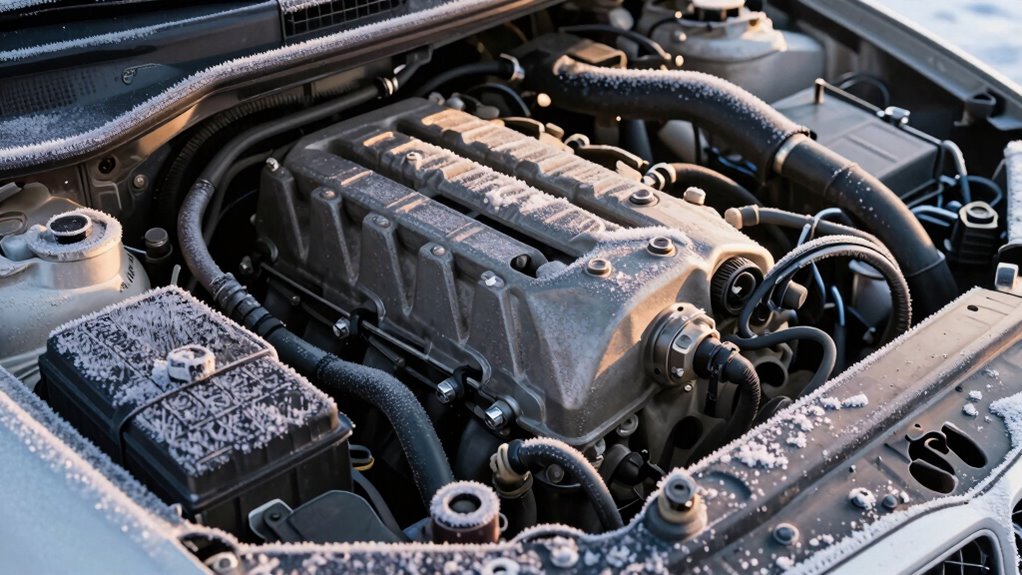
Cold weather weakens your car’s battery, making it harder to start the engine. It also causes fuel to thicken, which makes it tougher for the pump to deliver and for the engine to vaporize the fuel properly. Corrosion on terminals and worn spark plugs further decrease efficiency. When oil thickens and moisture builds up, it adds to the problem. Want to know how to prevent these issues and start your vehicle smoothly? Keep going for more tips.
Key Takeaways
- Cold temperatures slow down chemical reactions in the battery, reducing its ability to start the engine.
- Fuel becomes more viscous in cold weather, making it harder for the pump to deliver and vaporize properly.
- Corrosion on battery terminals hampers electrical flow, leading to weaker engine starts.
- Thickened engine oil and worn spark plugs decrease engine efficiency during cold starts.
- Moisture buildup in the fuel tank can freeze, blocking fuel flow and causing starting issues.
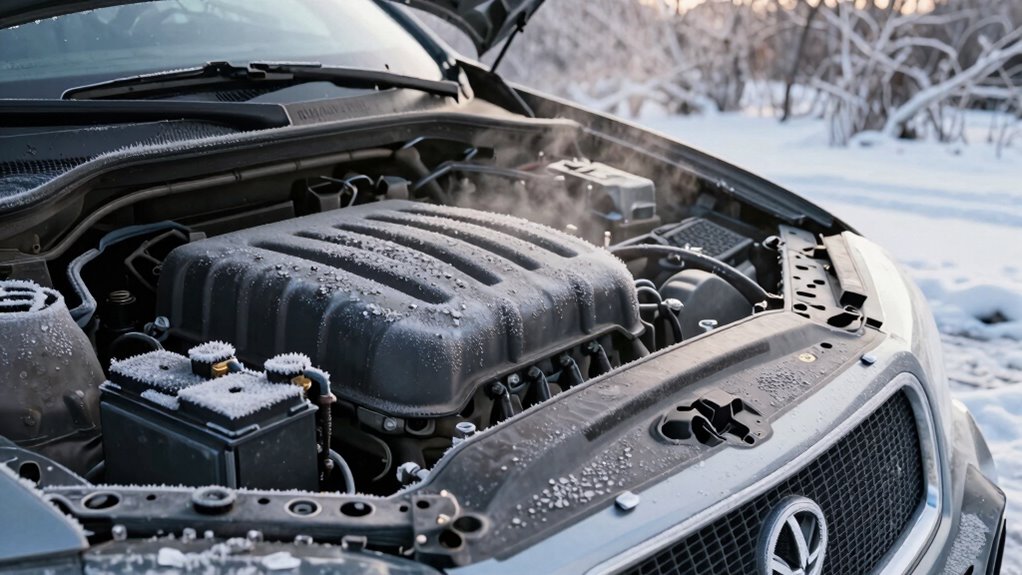
When temperatures drop, starting your vehicle can become a challenge, especially if it’s been sitting overnight or for several hours. Cold weather affects your car’s ability to turn over smoothly, and understanding why can help you troubleshoot and prevent those frustrating hard starts. One of the main culprits is the battery. In cold conditions, your battery’s chemical reactions slow down, reducing its capacity to produce the power needed to start the engine. If your battery has any corrosion on the terminals, this problem worsens. Battery corrosion, which appears as a white or bluish crust around the terminals, hampers the flow of electricity. This makes it even harder for your battery to deliver the necessary spark to ignite the engine. Regularly inspecting and cleaning the terminals can prevent corrosion from building up and ensure a better flow of current during cold starts. Utilizing landscaping techniques around your driveway, such as windbreaks or insulation, can also help protect your vehicle from extreme cold exposure.
Another factor that complicates starting your vehicle in cold weather is fuel viscosity. As temperatures drop, fuel becomes thicker and more resistant to flow. This increased viscosity means your fuel pump has to work harder to deliver gasoline to the engine, and the fuel itself may not vaporize as easily within the combustion chambers. When fuel doesn’t vaporize properly, the engine struggles to receive the right mixture of air and fuel, leading to difficult starts or rough idling. To combat this, some drivers add fuel additives formulated for cold weather, which help lower fuel viscosity and improve flow. Also, keeping your gas tank at least a quarter full can prevent moisture buildup and ensure there’s enough fuel available to start the engine more easily.
Beyond these factors, cold weather also affects other engine components like the oil, which thickens and resists circulation, and the spark plugs, which may be less effective if they’re worn or dirty. But focusing on the battery and fuel system often yields the most immediate improvements. A well-maintained battery with clean terminals and proper charge, combined with fuel that flows smoothly, makes a significant difference when trying to start your vehicle on cold mornings. Being proactive by inspecting your battery, cleaning corrosion, and using appropriate fuel treatments can make cold starts less stressful. Remember, in icy conditions, every little preparation counts toward getting your engine to turn over smoothly and reliably.
Top picks for "caus hard start"
Open Amazon search results for this keyword.
As an affiliate, we earn on qualifying purchases.
Frequently Asked Questions
How Can I Tell if My Battery Is Failing in Cold Weather?
You can tell if your battery is failing in cold weather by checking for signs like slow engine cranking or dim headlights. Inspect for battery corrosion around terminals, which hampers power flow. If your car struggles to start or if you notice frequent alternator issues, it’s a sign the battery might be weak. Testing your battery with a voltmeter or having a professional do a load test can confirm its condition.
Do Engine Oil Types Affect Cold Starts?
Yes, engine oil types do affect cold starts. Thinner oil with lower oil viscosity flows more easily at low temperatures, making engine start-up smoother and quicker. Using oil with high viscosity in cold weather can cause sluggish starts because it resists flow. For cold conditions, choose a synthetic oil with a lower engine viscosity rating, which guarantees proper lubrication and easier engine cranking during cold starts.
Can Cold Weather Impact My Car’s Fuel Efficiency?
Cold weather can definitely impact your car’s fuel efficiency. As temperatures drop, your engine may require a richer fuel mixture to run smoothly, which uses more fuel. Additionally, lower tire pressure in cold conditions increases rolling resistance, making your engine work harder and consuming more fuel. To optimize efficiency, keep your tires properly inflated and consider using a fuel additive or adjusting your driving habits during colder months.
What Are Signs of a Failing Starter Motor?
A failing starter motor often shows itself through slow cranking or a clicking sound when you turn the key, much like trying to start a car with a weak handshake. You might also notice dimmer headlights or the engine not turning over at all. These signs point to starter motor issues or ignition system faults. If ignored, your vehicle may refuse to start altogether, emphasizing the importance of timely repairs.
How Often Should I Perform Maintenance Before Winter?
You should perform maintenance before winter at least once a month. Check your tire pressure, ensuring it’s at the recommended level to prevent flats and improve fuel efficiency. Inspect your windshield wipers for wear and replace them if needed, so they clear your windshield effectively in snow and rain. Also, test your battery and charging system, and top off fluids, including antifreeze, to prevent hard starts during cold weather.
Conclusion
In the end, understanding what causes hard starts in cold weather isn’t just about fixing a car—it’s about reading the silent language of your engine. When temperatures drop, your vehicle whispers warnings through sluggish starts and dim lights, urging you to pay attention. Ignoring these signs is like turning a blind eye to a brewing storm. Stay proactive, and you’ll navigate winter’s chill with confidence, turning potential breakdowns into mere whispers of the past.