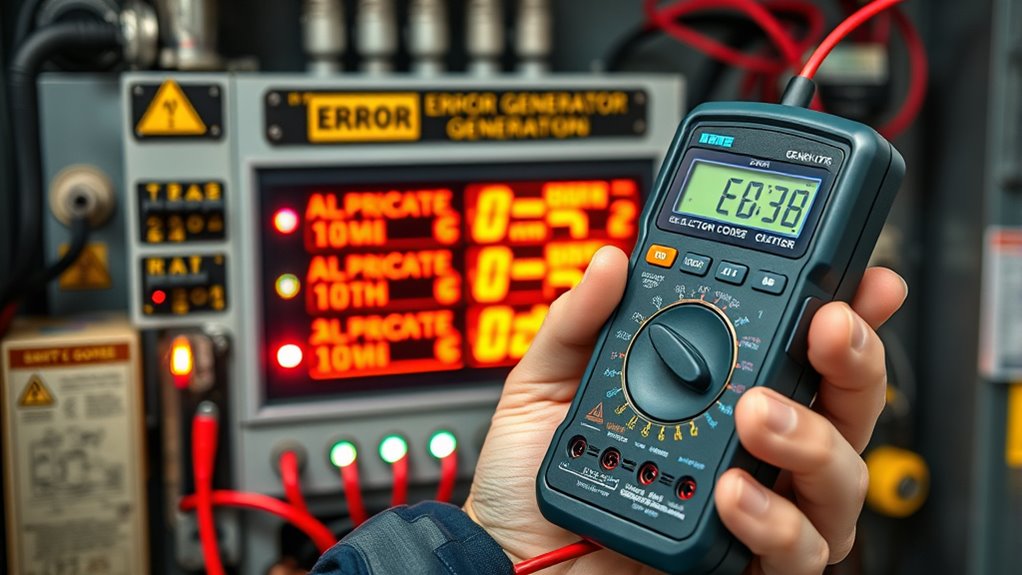

Understanding generator error codes helps you quickly identify issues that impact performance and fuel efficiency. When a code appears, it signals that something in your generator needs attention, like clogged filters or misfires. Recognizing these signs early lets you troubleshoot problems before they lead to costly repairs or downtime. Regular maintenance and paying attention to error codes can keep your generator running smoothly and efficiently; stay tuned to learn more about interpreting these codes effectively.
Key Takeaways
- Generator error codes indicate issues affecting performance, efficiency, and fuel consumption.
- Recognizing error codes helps identify problems like misfires or uneven combustion early.
- Regular maintenance reduces the likelihood of errors and improves generator reliability.
- Troubleshooting based on error codes can prevent engine damage and save repair costs.
- Proper understanding of codes supports proactive maintenance, extending generator lifespan.

Have you ever faced a generator error code and wondered what it means? When your generator displays an error, it’s easy to feel frustrated or overwhelmed. But understanding what these codes signify can help you troubleshoot effectively and keep your generator running smoothly. One of the first things to consider is how the error might relate to your generator’s fuel efficiency. Many error codes indicate issues that cause your unit to consume more fuel than necessary, which can lead to higher operating costs and unnecessary wear on components. For example, if your generator is experiencing a misfire or uneven combustion, it might run less efficiently, burning more fuel to produce the same power. Recognizing signs like decreased runtime or fluctuating output can hint at underlying problems that need addressing.
To prevent these issues from escalating, it’s essential to stick to a proper maintenance schedule. Regularly scheduled maintenance helps identify potential problems early, ensuring your generator remains fuel-efficient and reliable. Maintenance schedules typically include tasks like checking and replacing filters, inspecting spark plugs, and ensuring the fuel system is clean and functioning correctly. When error codes pop up, consulting your maintenance logs can help you determine whether the issue stems from overdue service, dirty filters, or worn components. Neglecting routine maintenance often leads to errors that could have been avoided, resulting in decreased fuel efficiency and increased downtime. By following your manufacturer’s recommended maintenance intervals, you reduce the likelihood of running into persistent errors that compromise performance.
Additionally, understanding how error codes relate to maintenance can save you money in the long run. For instance, an error indicating a clogged fuel filter may seem minor, but if ignored, it can cause the engine to run poorly, consume more fuel, and even damage other parts. Regular maintenance allows you to catch such issues early, keeping your generator operating at peak fuel efficiency. It’s also worth noting that some error codes are designed to alert you when routine maintenance is overdue. Paying attention to these alerts can help you stay proactive, rather than reactive, in your generator care. As a result, you’ll extend the lifespan of your unit and maintain ideal fuel efficiency. Additionally, understanding the role of maintenance in preventing errors can help you avoid costly repairs and downtime.
Frequently Asked Questions
How Often Should I Check Generator Error Codes?
You should check generator error codes regularly as part of your preventive maintenance routine, ideally at least once a month. This helps you catch potential issues early and follow troubleshooting steps before problems worsen. By staying proactive, you guarantee your generator runs smoothly and avoids unexpected breakdowns. Consistent error code checks also keep your equipment in prime condition, saving you time and money on costly repairs down the line.
Can Error Codes Indicate Minor Issues or Only Major Failures?
Did you know that over 60% of generator failures could be traced back to minor issues? Error codes can indicate both minor problems and major failures, so don’t ignore them. Their significance lies in diagnostic importance—early detection of small issues can prevent costly breakdowns. Always pay attention to error codes, as they help you assess whether maintenance is needed now or later, ensuring reliable power and safety.
Are There Universal Error Codes Across All Generator Brands?
No, there aren’t universal standards for generator error codes because brand variations lead to different codes and meanings. You’ll find that each manufacturer often has its own system, so you need to consult your generator’s manual to interpret the codes accurately. While some common themes exist, the specifics can vary widely, making it essential to understand your particular generator’s error codes to troubleshoot effectively.
What Safety Precautions Should I Take When Diagnosing Error Codes?
Like a seasoned sailor steering treacherous waters, you should wear safety gear such as gloves, goggles, and ear protection when diagnosing error codes. Always follow emergency procedures, including disconnecting power if needed. Keep a fire extinguisher nearby, and guarantee proper ventilation. Never work alone, and stay alert for signs of electrical hazards. Your safety is paramount; cautious steps prevent accidents and keep your generator’s troubleshooting safe and effective.
How Do Environmental Factors Affect Generator Error Codes?
Environmental factors like poor air quality and temperature fluctuations can considerably impact generator error codes. You might see errors triggered by dust, dirt, or pollutants clogging filters or sensors, leading to false alarms or malfunctions. Temperature swings can cause components to expand or contract, resulting in faults or misreads. To prevent this, make sure proper ventilation, regular maintenance, and monitor environmental conditions around your generator to avoid false error codes and guarantee reliable operation.
Conclusion
Think of your generator like a trusted friend who occasionally sends warning signals. When those error codes flash, it’s like hearing your friend call for help—prompt attention can prevent bigger problems. I once ignored a small warning, only to face a costly breakdown later. By understanding those codes now, you’re arming yourself with the knowledge to keep your generator running smoothly, ensuring your home stays powered and safe, no matter what surprises come your way.