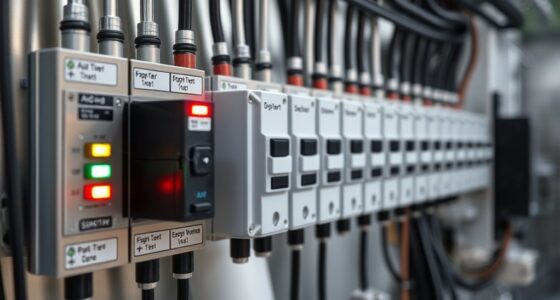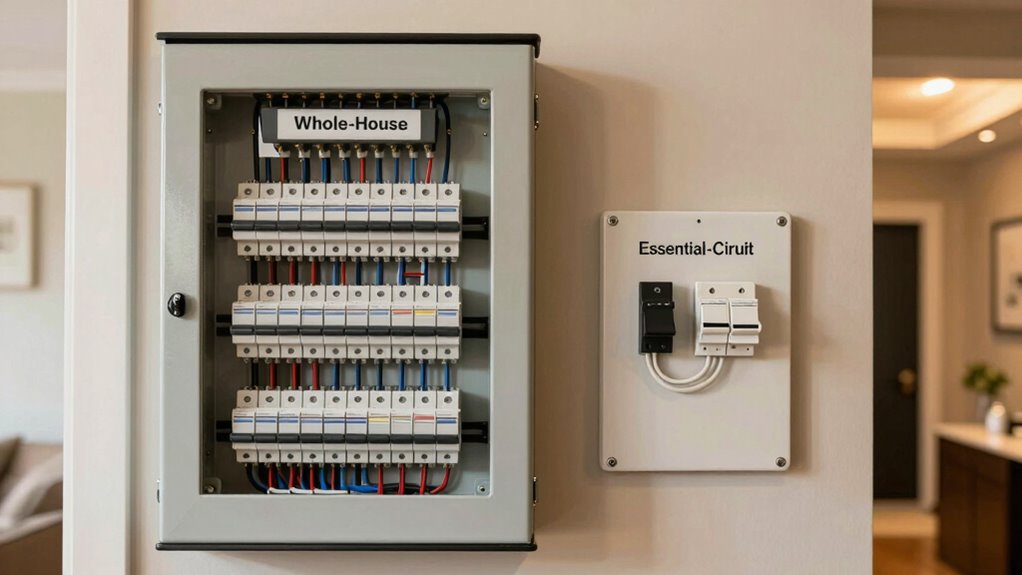
When choosing between whole-house and essential-circuit transfer systems, consider your power needs, budget, and safety priorities. Whole-house systems offer thorough coverage and are ideal for extended outages but require professional installation and higher costs. Essential-circuit transfers target only critical appliances, making them more affordable and easier to manage. Think about your home’s specific demands and safety considerations. Keep in mind, understanding these factors will help you make the best choice for reliable backup power.
Key Takeaways
- Assess household needs to determine whether comprehensive backup (whole-house) or targeted backup (essential-circuit) suits your priorities.
- Consider installation complexity and costs, with whole-house systems requiring professional setup and higher investment.
- Prioritize safety by ensuring proper installation, circuit labeling, and load management for both transfer types.
- Evaluate power source options and size the system correctly to prevent overloads and ensure reliable operation during outages.
- Consult qualified professionals to plan, design, and install the system tailored to your safety, budget, and comfort requirements.
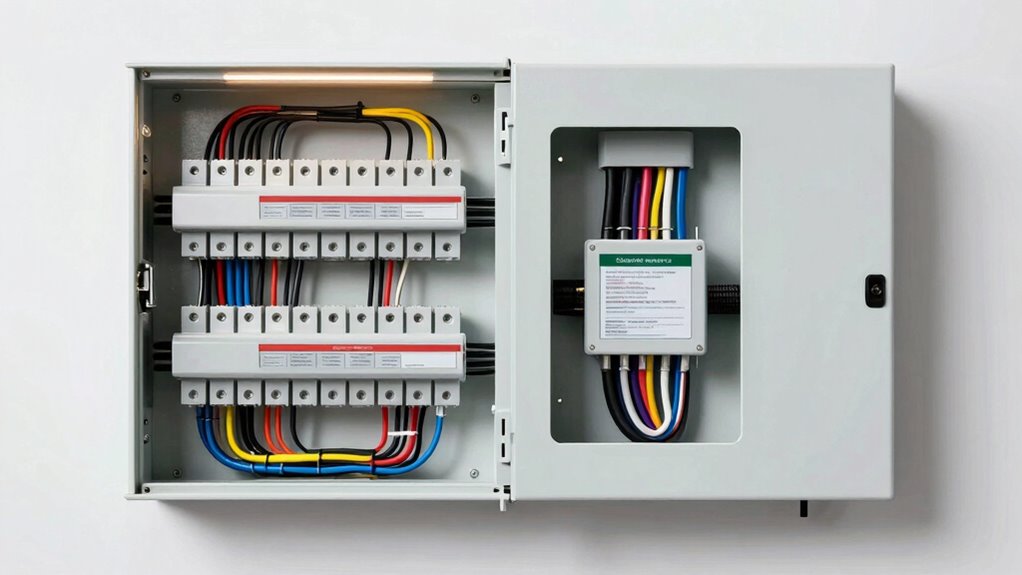
When planning an electrical transfer during a power outage or system upgrade, choosing between whole-house transfer and essential-circuit transfer can considerably impact your convenience and safety. Whole-house transfer systems power everything in your home, offering maximum comfort and security, especially during extended outages. However, they require a more complex setup and can be more expensive. Essential-circuit transfer, on the other hand, focuses on powering only the most important appliances and systems, making it a more affordable and manageable option for many homeowners.
Your decision should start with appliance prioritization—figuring out which devices and systems you need most during an outage. For instance, if you rely heavily on refrigeration, medical equipment, or heating and cooling systems, a whole-house transfer can ensure all these are operational simultaneously. But if your main concern is keeping critical appliances running, like a refrigerator, sump pump, or essential lights, then an essential-circuit transfer might be enough. This approach allows you to selectively power key appliances, reducing the load on your generator and making the entire process more efficient. Properly understanding electrical load management** can help you optimize your setup. Additionally, understanding system design can assist in creating a seamless transfer process that minimizes downtime. Incorporating load calculation techniques is essential to prevent overloads** and ensure your system is appropriately sized.
Furthermore, understanding power source options, such as generators or batteries, can help in selecting the most suitable backup system for your needs. Safety considerations are also crucial. Whole-house transfer systems require proper installation by qualified professionals to prevent backfeeding and electrical hazards. These systems often involve transfer switches that disconnect your home from the grid, ensuring that utility workers are safe when repairing power lines. For essential-circuit transfers, safety is equally important, especially since only certain circuits are energized. You need to ensure the transfer switch is correctly installed and labeled so that you avoid accidentally energizing circuits that could pose risks or damage sensitive equipment.
Another safety factor involves load management. With whole-house transfer, you must consider the capacity of your generator to avoid overloads, which can cause damage or failure. Essential-circuit transfer allows you to manage your load better, focusing on critical circuits and preventing overloads. It also minimizes the risk of powering unnecessary appliances that could drain your generator quickly. Additionally, understanding somatic therapy and body-based methods can help in managing stress and anxiety related to power outages and emergency preparedness, promoting overall safety and well-being.
Ultimately, your choice depends on your specific needs, budget, and safety considerations. Whole-house transfer offers comprehensive coverage but demands more investment and careful installation. Essential-circuit transfer provides a targeted, cost-effective solution with a focus on safety, appliance prioritization, and efficient power use. Whichever option you choose, make sure to work with qualified professionals to ensure your system is safe, reliable, and tailored to your household’s needs. Proper planning and installation are key to maintaining safety and comfort during any power interruption.
Top picks for "whole house essential"
Open Amazon search results for this keyword.
As an affiliate, we earn on qualifying purchases.
Frequently Asked Questions
How Do I Determine Which Transfer Method Is Best for My Home?
You should evaluate your electrical load and the importance of transfer efficiency to choose the best method. If your home has a high electrical load or needs seamless power, a whole-house transfer switch is ideal for complete coverage. For lighter loads or backup power for specific circuits, an essential-circuit transfer switch works well. Consider your power needs, budget, and whether you prioritize ease of use or transfer efficiency to make the right choice.
What Are the Cost Differences Between Whole-House and Essential-Circuit Transfers?
The cost comparison shows that essential-circuit transfers are generally more affordable upfront since they involve fewer circuits, while whole-house transfers cost more due to the extensive wiring and components needed. An efficiency analysis reveals that whole-house transfers may save you more in the long run by providing seamless power, but initial expenses are higher. Your choice depends on your budget and the level of convenience you desire.
How Long Does Each Transfer Process Typically Take?
Ever wonder how long it takes to switch your power setup? Typically, the transfer process duration for whole-house systems can span several hours, as it involves rerouting main power lines. Essential-circuit transfers are quicker, often completed within an hour, since they focus on specific circuits. Your transfer timeline depends on system complexity and installer efficiency, but generally, essential-circuit transfers are faster due to their limited scope.
Can I Combine Both Transfer Methods in One Home?
Yes, you can combine both transfer methods in your home. First, consider appliance compatibility to guarantee your devices work with the chosen transfer approach. Then, plan transfer timing carefully so essential circuits are prioritized, minimizing disruptions. Combining methods allows flexibility, but you’ll need to coordinate the process to avoid overloads or delays. A professional electrician can help design a seamless plan tailored to your home’s specific electrical setup.
What Safety Precautions Should I Consider During Transfer Planning?
Prioritize protection by practicing proper electrical safety and preparing for emergencies. You should double-check all connections, switch off power sources before working, and avoid live wires to prevent shocks. Keep emergency contacts handy, and verify fire extinguishers are accessible. Be vigilant for potential hazards, and confirm that your transfer plan considers safe shutdown procedures. Staying cautious and prepared guarantees a safer, smoother transfer process, minimizing risks and safeguarding your home and loved ones.
Conclusion
In the end, choosing between whole-house and essential-circuit transfer planning isn’t just a small decision—it’s the difference between being stranded in a blackout and maintaining your entire home’s power like a fortress. You’ll want to assess your needs carefully, but remember, a well-planned transfer could be the lifeline that keeps your world spinning smoothly, no matter what disaster strikes. Don’t leave your comfort and safety to chance—plan wisely and stay empowered!