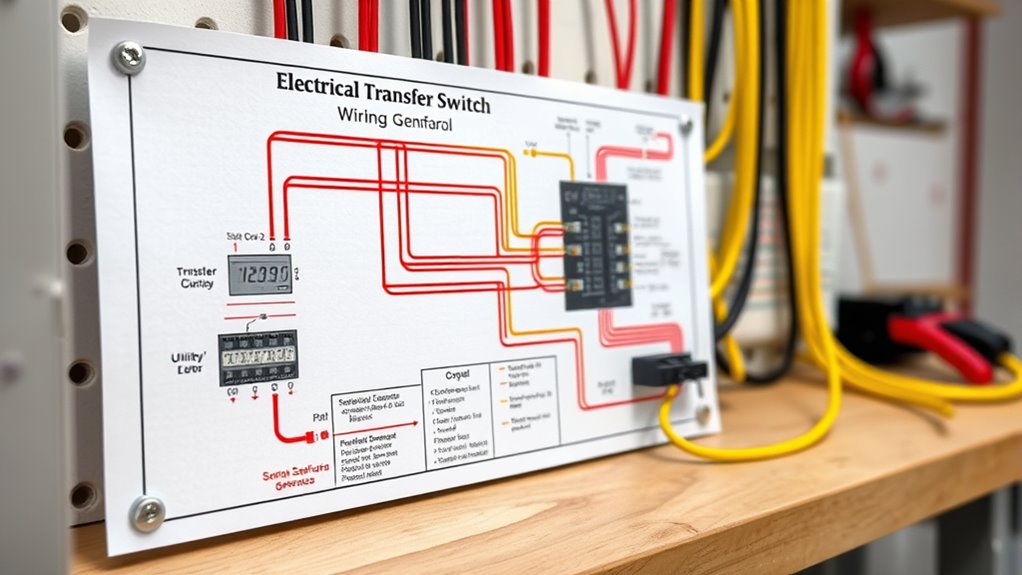

Transfer switch wiring diagrams show you how to connect your generator safely to your home’s electrical system. They highlight the key components like the transfer switch, generator, and home circuits, using color-coded lines for hot, neutral, and ground wires. Following these diagrams helps guarantee correct wiring, prevent backfeeding, and meet safety standards. If you want to understand how each part fits together and how to do it properly, there’s more to explore below.
Key Takeaways
- Transfer switch wiring diagrams illustrate how to connect generator power safely to your home’s electrical system.
- They specify component placement, wiring paths, and color-coded lines for hot, neutral, and ground wires.
- Diagrams help ensure compliance with electrical codes, proper grounding, and safety standards during installation.
- Proper understanding prevents wiring errors like backfeeding, electrical shocks, or fires, safeguarding personnel and equipment.
- Always verify connections against the diagram, follow safety practices, and adhere to local regulations before powering up.
A transfer switch wiring diagram is indispensable for safely connecting your generator to your home’s electrical system. It acts as a blueprint, guiding you through the proper connections to guarantee your setup operates smoothly and safely. When working with electrical systems, generator safety should always be your top priority. Incorrect wiring can lead to dangerous situations, such as electrical shocks or fires, especially if you ignore electrical codes. These codes, established by local and national authorities, dictate how wiring should be installed to prevent hazards and guarantee compatibility with your electrical system. Following them isn’t just about legality; it’s about protecting yourself, your family, and your property.
Understanding the wiring diagram helps you see how each component fits together. Typically, it shows the generator’s output connections, the transfer switch, and how power flows when switching between utility and generator power. You’ll notice color-coded lines or labels indicating hot, neutral, and ground wires, which are essential for maintaining electrical safety standards. Properly wiring these connections prevents backfeeding, a dangerous scenario where power from your generator could flow back into the utility lines, risking harm to utility workers and damaging the grid. A detailed diagram makes it clear where to connect each wire, reducing errors that could compromise generator safety. Additionally, it helps ensure compliance with electrical codes, which are crucial for safety and legal reasons.
A wiring diagram shows generator connections, color-coded wires, and how to prevent backfeeding for safe, reliable power switching.
When following a wiring diagram, it’s indispensable to adhere to electrical codes, which often specify wire gauge, circuit capacity, grounding requirements, and safety devices like circuit breakers or fuses. These codes are designed to handle the load your generator will supply without overheating or causing electrical faults. For example, the diagram will show the correct placement of disconnects and protective devices, which are essential for safety and compliance. Skipping these steps or wiring incorrectly can lead to electrical faults, damage to your equipment, or safety hazards. Always double-check your wiring against the diagram and local electrical codes before powering up.
Frequently Asked Questions
Can I Install a Transfer Switch Myself Without Professional Help?
You can attempt a DIY installation of a transfer switch, but you need to prioritize safety considerations. Make sure you have a solid understanding of electrical systems and follow all local codes. Turn off the main power before starting, and use proper tools and safety gear. If you’re unsure or uncomfortable with electrical work, it’s best to hire a professional to avoid hazards and guarantee everything is wired correctly and safely.
What Safety Precautions Should I Take When Wiring a Transfer Switch?
You should prioritize electrical safety and follow wiring best practices when wiring a transfer switch. Always turn off the main power before starting, wear insulated gloves, and use tools with proper insulation. Double-check connections for accuracy, avoid working in wet conditions, and make certain the circuit breaker is off. If you’re unsure, consult a professional. These precautions help prevent shocks, shorts, or fire hazards during installation.
How Do I Troubleshoot a Transfer Switch That Isn’T Functioning Properly?
When your transfer switch isn’t working properly, start by checking for a power outage or circuit overload that might be causing the issue. Make certain the switch is receiving power and that no circuit breakers have tripped. Test the switch with a multimeter to verify proper voltage flow. If you find faults or suspect wiring issues, turn off the power and consider consulting a professional to prevent safety hazards.
Are There Different Wiring Diagrams for Manual and Automatic Transfer Switches?
Imagine your transfer switch as a busy crossroads, guiding power flow smoothly. Yes, there are different wiring diagrams for manual and automatic transfer switches. Manual switches require straightforward wiring, like a simple map guiding you step-by-step. Automatic switches, however, have complex wiring diagrams that include sensors and control circuits, like a detailed blueprint. Understanding these wiring diagram differences helps guarantee you connect everything correctly for safe, reliable operation.
What Is the Typical Cost of Professional Transfer Switch Installation?
The typical cost estimate for professional transfer switch installation ranges from $300 to $1,500, depending on installation factors like the switch size, location, and electrical system complexity. You should consider these factors because they influence labor and materials needed. To get an accurate cost estimate, consult a licensed electrician who can assess your specific setup and provide a detailed quote tailored to your home’s requirements.
Conclusion
Understanding transfer switch wiring diagrams helps you guarantee a safe and reliable power transfer during outages. By following proper wiring practices, you reduce the risk of electrical hazards. Did you know that installing a correctly wired transfer switch can prevent over 80% of electrical accidents during power outages? Taking the time to learn and properly wire your transfer switch not only protects your home but also keeps your loved ones safe. Stay informed and prioritize safe electrical setups!