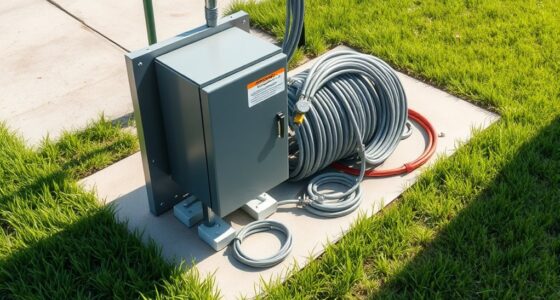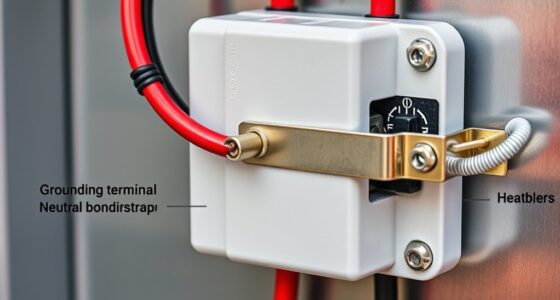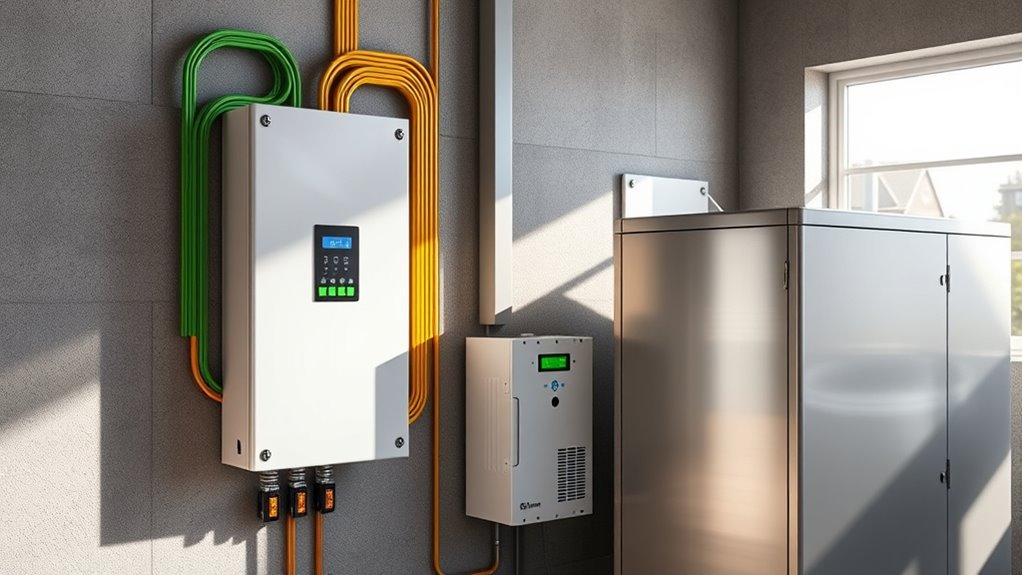

Integrating transfer switches with solar and storage systems helps you manage power smoothly during outages or grid fluctuations. Automatic transfer switches detect changes instantly and switch power sources without your intervention, ensuring continuous supply and system stability. Manual switches give you control but require active management. Compatibility and performance depend on your setup, and choosing the right transfer switch can maximize efficiency and resilience. To find out how this integration can work best for you, explore more details below.
Key Takeaways
- Transfer switches connect solar and storage systems to the main power grid, ensuring seamless energy flow during outages or supply changes.
- Automatic transfer switches detect grid issues and switch power sources instantly, maintaining continuous, reliable energy supply.
- Manual transfer switches require active management to control energy source prioritization, suitable for non-critical applications.
- Compatibility with battery technologies and real-time monitoring enhances system efficiency and optimizes energy utilization.
- Proper integration minimizes downtime, reduces power surges, and improves overall energy resilience in solar and storage setups.
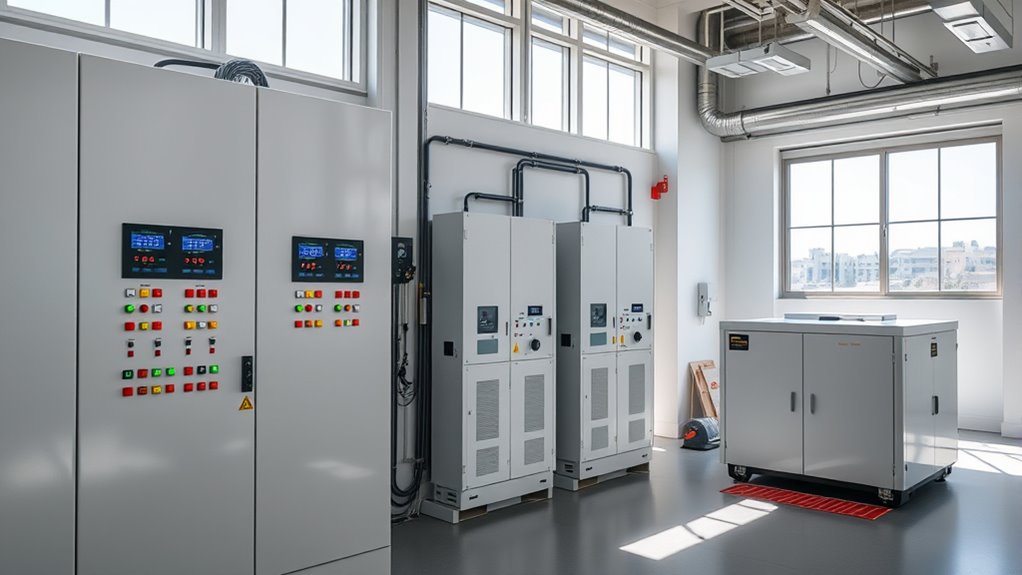
If you’re integrating solar and storage systems into your home or business, transfer switches play a pivotal role in guaranteeing a seamless power shift. These devices act as the critical link between your renewable energy sources and your electrical system, managing how power flows during different scenarios. One key aspect to contemplate is whether you want an automatic transfer switch or a manual switching setup. An automatic transfer switch detects outages or changes in power supply and switches seamlessly without your intervention. It’s designed to respond instantly, so your appliances and essential systems stay powered without interruption. This setup is ideal if you prioritize convenience and reliability, especially during sudden blackouts or grid fluctuations. With automatic transfer switches, the transition occurs smoothly, reducing downtime and minimizing the risk of power surges or disruptions. Understanding battery technologies is also essential when integrating storage systems, as it influences the compatibility and performance of your entire setup.
On the other hand, manual switching requires you to actively manage the transfer process. When you need to switch between your solar, storage, or grid power, you’ll do so manually, often through a designated switch or panel. While manual systems might seem less sophisticated, they give you direct control over your power sources. This can be advantageous in situations where you want to prioritize certain energy sources or want to avoid automatic switching during specific conditions. However, manual switching demands your attention and timing, which might not be suitable for critical applications where continuous power is essential. Whether you choose automatic transfer or manual switching depends on your specific needs, budget, and comfort level with managing your energy system.
Moreover, integrating these transfer switch types with solar and storage enhances your energy resilience. Automatic transfer switches work well with advanced monitoring systems that track your energy production and consumption in real time. This guarantees that when solar panels generate excess power, or when storage batteries are ready to supply energy, the switch directs power accordingly, optimizing your system’s efficiency. Conversely, manual switches might require you to monitor your system more closely and make informed decisions about when to switch sources, which could be less practical for daily operation but offers more control when needed.
Frequently Asked Questions
Can Transfer Switches Handle Multiple Energy Sources Simultaneously?
Yes, transfer switches can handle multiple energy sources simultaneously through multi-source switching. They prioritize loads based on your settings, ensuring essential systems stay powered first. With load prioritization, you can control which energy source supplies power during outages or peak times. Modern transfer switches are designed to manage solar, storage, and grid inputs together, providing seamless switching and reliable power supply without manual intervention.
What Are the Maintenance Requirements for Transfer Switches in Solar Systems?
Regular maintenance guarantees your transfer switch stays reliable, with studies showing that proper upkeep reduces failure rates by up to 50%. You should check voltage compatibility to prevent overloads and ensure it matches your system’s specifications. Follow safety standards by inspecting connections and testing the switch periodically. Keep the area clean and free of debris, and schedule professional inspections annually to maintain ideal performance and safety in your solar system.
How Do Transfer Switches Impact Overall System Efficiency?
Transfer switches enhance your system’s efficiency by enabling load prioritization, ensuring critical loads get power first during outages or switching. This improves overall system reliability and optimizes energy use. When properly integrated, they reduce downtime and prevent overloads, making your solar and storage system run more smoothly. By managing power flow effectively, transfer switches help you maximize renewable energy utilization and maintain consistent supply, boosting your system’s performance and dependability.
Are Transfer Switches Compatible With All Types of Batteries?
Transfer switches are generally compatible with most battery types, but you should verify battery compatibility for specific models. Make sure the switch configurations are suitable for your battery’s voltage and capacity. Some switches are designed for lead-acid batteries, while others work better with lithium-ion. Always verify manufacturer specifications to ensure seamless integration, preventing potential issues and optimizing your solar and storage system’s performance.
What Is the Typical Lifespan of a Transfer Switch in Solar Installations?
A transfer switch typically lasts 10 to 20 years in solar installations, depending on its durability and usage. You should consider lifespan considerations like quality, environment, and maintenance to guarantee longevity. Regular inspections and timely upgrades can extend its service life. Choosing a high-quality transfer switch and following manufacturer guidelines will help you maximize its durability, providing reliable switching between your solar system and backup power when needed.
Conclusion
By integrating transfer switches with your solar and storage system, you guarantee seamless power transitions during outages, boosting your home’s reliability. Did you know that homes with integrated transfer switches experience 30% faster response times in power restoration? This quick switch minimizes disruption and keeps your essential devices running smoothly. Embracing this technology not only enhances safety but also maximizes your renewable energy investments. Stay ahead by choosing smart, integrated solutions for a more resilient and efficient energy future.