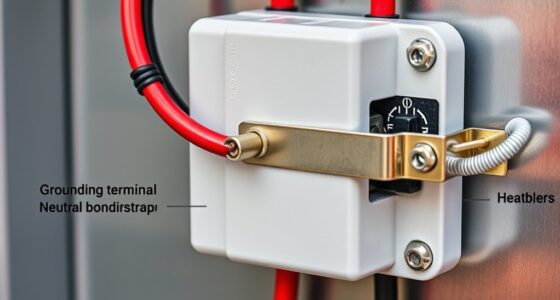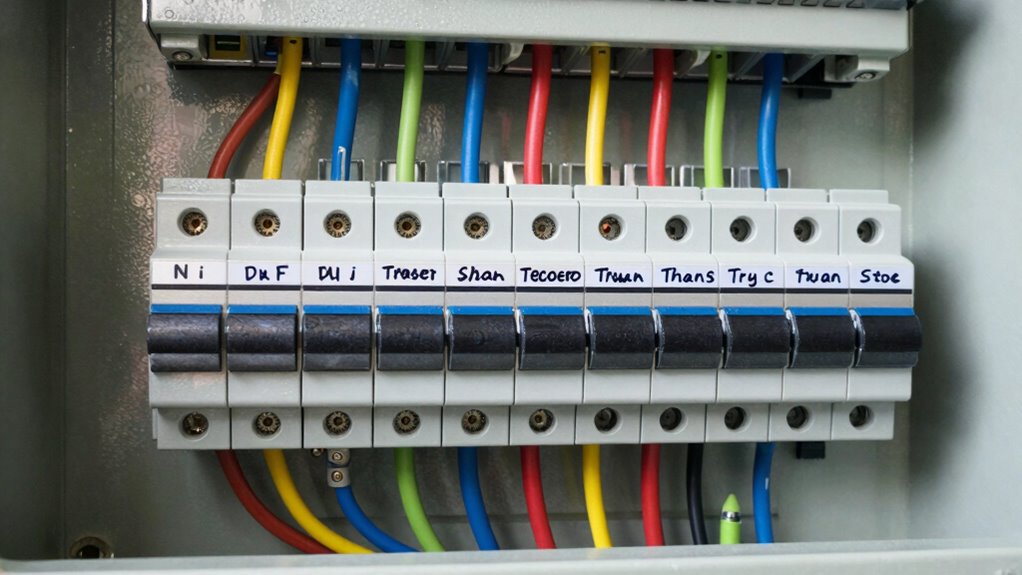

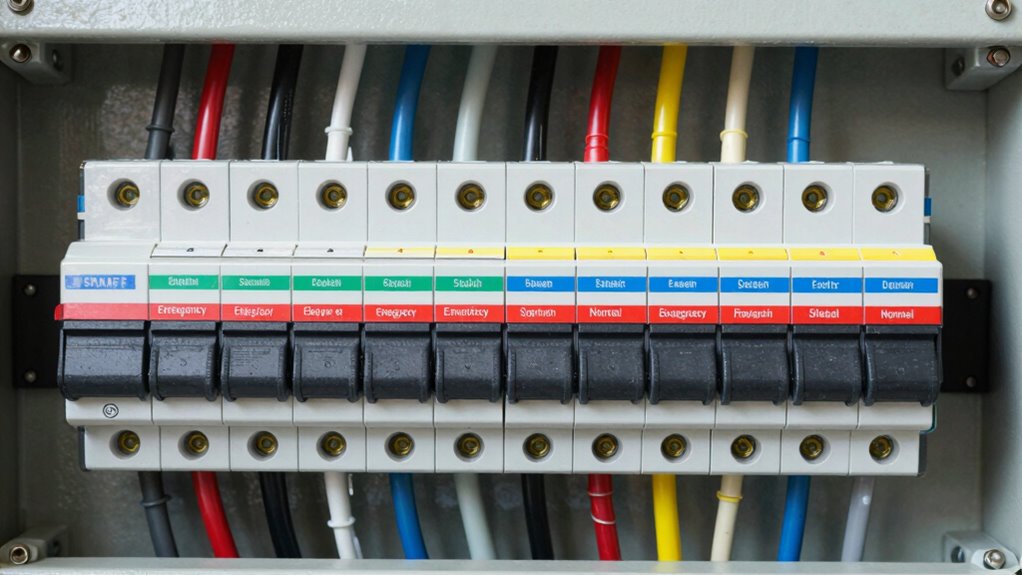
To label transfer switch circuits clearly, use large, easy-to-read fonts on durable, weather-resistant labels. Incorporate color coding—red for emergency, green for essential loads, and blue for non-critical ones—to quickly identify circuits. Include specific details like circuit number, load description, and power source, and position labels near switches or connection points. Double-check labels after installation and update them regularly to guarantee accuracy. Keep your labels organized for simple troubleshooting and safety—more tips await if you continue.
Key Takeaways
- Use large, legible fonts and color coding to distinguish different circuit types easily.
- Include specific details like circuit number, load description, and power source on each label.
- Position labels near switches or connection points for quick identification.
- Double-check and verify labels after installation or modifications for accuracy.
- Regularly review and update labels to reflect system changes and maintain clarity.
When working with transfer switch circuits, clear and accurate labeling is essential to guarantee safe and reliable operation. Proper labels guide you through the system, helping prevent errors during installation, maintenance, or emergency switching. If labels are confusing or missing, you risk unsafe situations, damage to equipment, or prolonged outages. Especially when it comes to generator safety, precise labels ensure you know exactly which circuits are powered by the generator and which are connected to the utility grid. This clarity is crucial for avoiding dangerous back feeds that could harm personnel or damage the generator itself.
Clear labeling in transfer switch systems ensures safety, prevents errors, and protects equipment during emergencies and maintenance.
Effective labeling also streamlines circuit troubleshooting. When a problem arises, clear labels allow you to quickly identify the affected circuit, saving you time and reducing guesswork. Instead of tracing wires or flipping switches blindly, you can rely on labels to direct your attention accurately. This minimizes the risk of accidental disconnections or improper re-energizing, which could lead to further complications or hazards. When labels are specific and easy to read, troubleshooting becomes a straightforward process, maintaining safety and efficiency. Using durable, weather-resistant labels is especially important to ensure long-term visibility and legibility in various conditions.
To start, use durable, weather-resistant labels that won’t fade or peel over time. Clear, large fonts make reading labels easier from a distance, especially during emergencies or in low-light conditions. Color coding can also help differentiate circuits quickly. For instance, use red for emergency circuits, green for essential loads, and blue for non-critical loads. Consistent color schemes across your system prevent confusion and reinforce a logical, easy-to-follow layout. When labeling, include essential details such as circuit number, load description, and whether the circuit is powered by the generator or utility. If your system is complex, consider creating a diagram or legend that correlates with the labels. Keep this documentation accessible for quick reference during troubleshooting or maintenance. Additionally, accurate labeling practices help ensure compliance with safety standards and regulations. Regularly review and update labels to reflect any changes, maintaining clarity and safety.
Always double-check your labels after installation or any modifications. Confirm that each label accurately reflects the circuit it’s attached to, and verify that labels are correctly positioned near switches or connection points. When labeling, avoid abbreviations or vague terms; instead, be explicit so anyone can understand the circuit’s purpose without needing additional explanation. Proper labeling isn’t a one-time task—it’s an ongoing process that guarantees ongoing safety, simplifies circuit troubleshooting, and keeps your transfer switch system operating reliably. Taking the time to do it right now saves headaches later, especially when quick action is needed during power outages or emergencies. It’s also important to regularly review and update labels to accommodate any changes in your system or load requirements. Scheduled reviews ensure labels remain accurate and effective, reducing the risk of misidentification.
Top picks for "label transfer switch"
Open Amazon search results for this keyword.
As an affiliate, we earn on qualifying purchases.
Frequently Asked Questions
What Tools Are Best for Labeling Transfer Switch Circuits?
You should use a durable, fine-tip permanent marker or a pre-printed label maker to clearly mark transfer switch circuits. These tools guarantee legibility and withstand electrical safety conditions. Adhere to labeling standards by using consistent, clear labels that specify circuit functions. Proper labeling helps prevent confusion during maintenance or emergencies and ensures compliance with electrical safety regulations, making your system safer and easier to manage.
How Often Should Transfer Switch Labels Be Updated?
You should update transfer switch labels whenever you make modifications or repairs to guarantee label durability and regulatory compliance. Regularly reviewing labels every few years also helps catch wear or fading that could compromise clarity. Staying proactive ensures your labeling remains accurate, safe, and compliant with regulations. Consistent updates prevent confusion during emergencies, making sure everyone knows the circuit functions correctly, especially if changes occur.
Can I Label Circuits Myself or Hire a Professional?
You can definitely label circuits yourself if you follow proper electrical safety and adhere to labeling standards. However, hiring a professional guarantees the job is done safely and accurately, especially for complex systems. Professionals understand electrical safety protocols and proper labeling standards, reducing risks of errors. If you’re confident and knowledgeable about electrical work, DIY labeling is feasible, but when in doubt, consulting an expert guarantees clear, compliant circuit identification.
Are There Specific Color Codes for Transfer Switch Labels?
Yes, there are specific color codes for transfer switch labels to help identify circuits easily. Using consistent color coding improves clarity and safety, making it easier to distinguish between different circuits. Also, choose labels with high durability to withstand environmental factors like heat and moisture. Proper color coding combined with durable labels guarantees your transfer switch circuits remain clearly marked and easy to read over time.
How Do I Ensure Labels Withstand Environmental Conditions?
To guarantee labels withstand environmental conditions, you need to prioritize durability testing and choose weatherproof materials. Test labels against moisture, UV rays, and temperature fluctuations to confirm they won’t fade or peel. Use weatherproof tapes, laminated labels, or durable plastic tags designed for outdoor use. Applying these materials and performing durability testing guarantees your labels stay clear, intact, and reliable, even in harsh conditions.
Conclusion
Think of labeling your transfer switch circuits like mapping a treasure hunt—you want every clue clear so you never lose your way. When each circuit is properly labeled, it’s like having a bright lantern guiding you through the dark. This clarity guarantees safety and efficiency, preventing confusion when you need to switch power sources quickly. With clear labels, you’ll navigate your electrical setup confidently, just like a seasoned explorer finding their way home without hesitation.