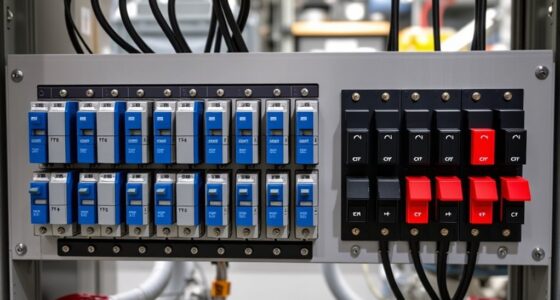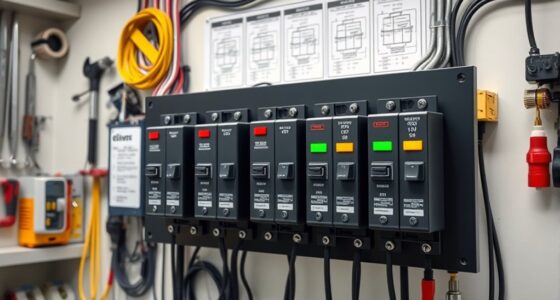

To effectively commission and accept an ATS, you should first review its installation and wiring to guarantee compliance with manufacturer standards and local codes. Conduct thorough testing by simulating power outages and restorations, verifying smooth transfer and system alerts. Prioritize safety by following proper procedures and using PPE. Check communication with connected systems and document all results. Continuing with these steps will help you confirm the ATS’s reliability and compliance for seamless operation.
Key Takeaways
- Review installation, wiring, and configuration to ensure compliance with manufacturer specifications and local electrical codes before testing.
- Simulate power outages and restorations to verify automatic transfer switch response and load transfer seamlessness.
- Conduct safety protocols, including system de-energization, PPE use, and lockout/tagout procedures during testing.
- Verify alarms, indicators, communication signals, and timing sequences to confirm proper system operation and integration.
- Document all test results, identify anomalies, rectify issues, and confirm system readiness for final acceptance.

Commissioning and acceptance testing of an Automatic Transfer Switch (ATS) are critical steps to guarantee the system operates reliably and meets all performance standards. When you undertake this process, your goal is to ensure seamless system integration, confirming that the ATS functions correctly within your broader power infrastructure. Proper testing verifies that the switch can automatically transfer loads between power sources without interruption, which is crucial for maintaining continuous power supply. As you prepare for commissioning, it’s necessary to thoroughly review the installation, wiring, and configuration of the ATS, making sure everything aligns with manufacturer specifications and local codes. This careful preparation helps avoid potential issues during testing and ensures the system’s integrity.
During the testing phase, safety protocols come to the forefront. You must prioritize safety at every step, including de-energizing the system before making adjustments, wearing appropriate personal protective equipment, and following lockout/tagout procedures. Safety protocols are not just formalities; they are indispensable to protect you and others working on or near the system from electrical hazards. Conducting tests in a controlled environment reduces the risk of accidents and equipment damage. When testing the ATS’s transfer functions, you simulate power outages and restorations to observe how well the switch responds, ensuring it transfers loads smoothly and promptly. You also verify that alarms, indicators, and control signals operate correctly to alert personnel of system status.
A key aspect of successful acceptance testing is verifying system integration. You want to confirm that the ATS communicates effectively with other system components, such as generators, control panels, and monitoring systems. This integration guarantees that all parts work harmoniously during actual power failure events, minimizing downtime and preventing system malfunctions. During testing, pay close attention to timing sequences, relay operations, and the accuracy of feedback signals. Document all test results meticulously, noting any anomalies and rectifying issues before final acceptance. This documentation serves as proof that the system has been thoroughly evaluated and meets the specified standards. Additionally, understanding the power requirements for the ATS and ensuring compatibility with existing electrical infrastructure is essential for safe and efficient operation.
Finally, once all tests are complete and the system operates as intended, you can proceed with acceptance, signifying that the ATS installation is ready for real-world operation. This process ensures that your system is not only compliant with technical and safety standards but also reliable under operational conditions. By meticulously following system integration checks and safety protocols during commissioning and testing, you protect your investment and secure a dependable power backup solution for critical loads.
Frequently Asked Questions
What Are the Common Challenges Faced During ATS Commissioning?
You might face challenges like guaranteeing smooth system integration, where different components work seamlessly together. Documentation review can also be tricky, as incomplete or outdated records may cause delays. You need to coordinate closely with vendors and engineers, troubleshoot unexpected issues quickly, and verify that all systems meet safety and operational standards. Addressing these challenges proactively helps ensure successful ATS commissioning and minimizes future operational risks.
How Long Does the Entire ATS Acceptance Testing Process Typically Take?
The testing duration for ATS acceptance testing usually spans from a few days to several weeks, depending on system complexity and project scope. You’ll find the process timeline involves thorough planning, detailed inspections, and exhaustive testing phases. Typically, you can expect around 2 to 4 weeks for the full process, but it varies. Staying organized and prepared helps guarantee the testing proceeds smoothly and within your planned schedule.
What Are the Key Criteria for Successful ATS Acceptance?
Think of a smoothly running orchestra; your ATS acceptance hinges on flawless system integration and meticulous documentation standards. You succeed when all components harmonize seamlessly, with clear, thorough documentation backing every note. Attention to detail ensures the system performs reliably, meets specifications, and aligns with operational needs. Clear communication and thorough testing act as the conductor’s baton, guiding your project toward a triumphant performance.
How Is Safety Ensured During Commissioning and Testing?
You guarantee safety during commissioning and testing by strictly following safety protocols and conducting thorough risk assessments beforehand. You identify potential hazards, implement control measures, and make sure all personnel are trained and aware of safety procedures. Using proper protective gear and maintaining clear communication helps prevent accidents. Regular safety audits during testing also ensure that safety standards are upheld, keeping everyone safe throughout the process.
Who Are the Main Stakeholders Involved in ATS Acceptance?
Think of ATS acceptance stakeholders as the key players in a relay race. Your main stakeholders include project managers, engineers, vendors, and client representatives. You depend on stakeholder collaboration to ensure smooth communication, and thorough documentation review to verify all requirements are met. By working together, you can identify issues early, streamline the process, and ensure the ATS system is ready for operational use, meeting all safety and performance standards.
Conclusion
As you complete the commissioning and acceptance testing of the ATS, remember you’re tuning the heartbeat of a crucial system. Like a craftsman shaping a masterpiece, your careful attention ensures seamless operation and reliability. Every test you conduct is a brushstroke adding to the masterpiece’s perfection. When done right, you’re not just commissioning equipment—you’re setting the stage for dependable performance that will stand the test of time. Your diligence seeds success in every future heartbeat of the system.