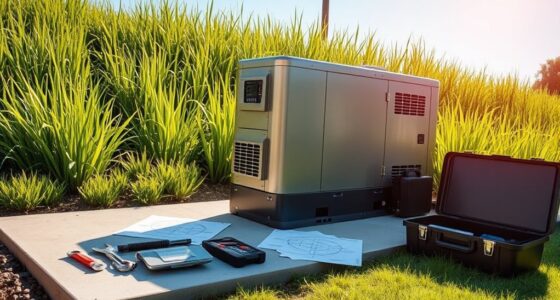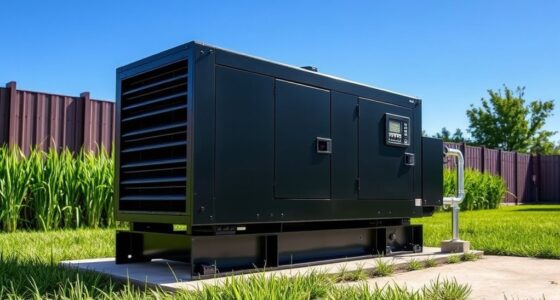
Many believe that bigger standby generators always provide better backup power, but that’s a common myth. Oversized units can wear out faster and waste fuel, costing you more long-term. Proper sizing depends on your actual power needs, load demands, and environmental factors to guarantee safety and efficiency. Installing a generator correctly is equally important—following safety tips like proper ventilation, grounding, and distance from living spaces is essential. Keep exploring to learn how to choose and install your generator correctly.
Key Takeaways
- Proper generator sizing prevents unnecessary wear, fuel waste, and extends lifespan by matching capacity to actual power needs.
- Oversized generators operate inefficiently at low loads, leading to higher costs and reduced durability.
- Accurate load assessment, including starting and running watts, ensures safe and reliable backup power.
- Safe installation requires proper ventilation, distance from living spaces, and correct grounding to prevent hazards.
- Understanding power quality and environmental factors enhances generator safety, efficiency, and longevity.
Common Misconceptions About Generator Capacity
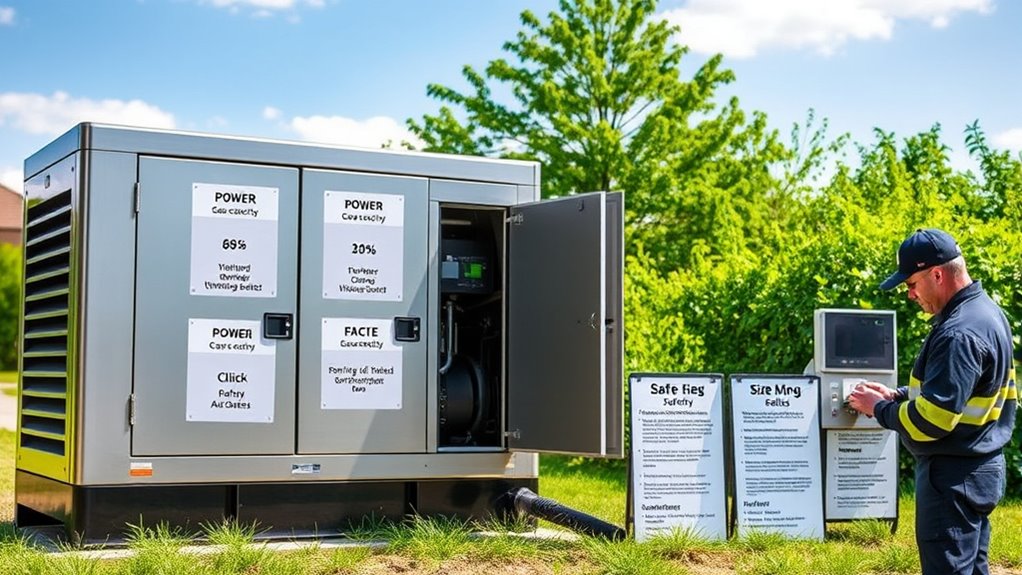
Many people assume that choosing a larger generator always means better backup power, but this isn’t necessarily true. Bigger isn’t always better if you want ideal generator durability and fuel efficiency. Oversized generators tend to run at lower loads, which can cause unnecessary wear and tear over time, reducing their lifespan. They may also consume more fuel than needed, increasing operational costs and reducing efficiency. On the other hand, a properly sized generator ensures you’re not overloading it, helping maintain its durability and keeping fuel consumption in check. Remember, a generator that matches your power needs will perform better, last longer, and save you money in the long run. Size matters, but so does choosing the right capacity for your specific requirements. Additionally, understanding the importance of home security systems can provide peace of mind and prevent potential losses during power outages.
Essential Factors for Proper Generator Sizing
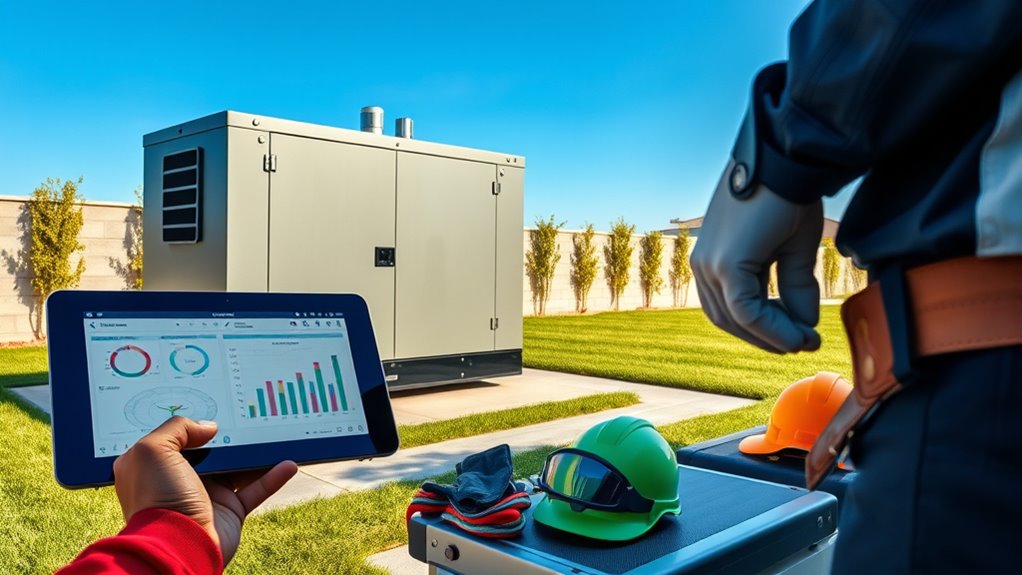
To size a generator accurately, you need to contemplate several vital factors that directly impact its performance and longevity. First, determine your total load demand, including starting and running watts. Consider fuel efficiency to guarantee cost-effective operation over time. Noise levels are also essential; a quieter generator benefits your comfort and neighbors. Additionally, analyze the power factor of your appliances, as it affects sizing. Maintenance requirements and the environment where the generator will operate influence durability. Properly assessing these factors prevents under or over-sizing, optimizing performance and lifespan. Here’s a quick overview:
| Factor | Impact | Considerations |
|---|---|---|
| Load Demand | Determines generator size | Peak vs. continuous load |
| Fuel Efficiency | Affects operating costs | Fuel consumption rates |
| Noise Levels | Impacts comfort and safety | Residential vs. commercial use |
| Environment | Affects durability | Temperature, humidity |
Understanding power quality is crucial, as poor power quality can lead to equipment damage or inefficient operation.
Safety Precautions and Best Practices During Installation
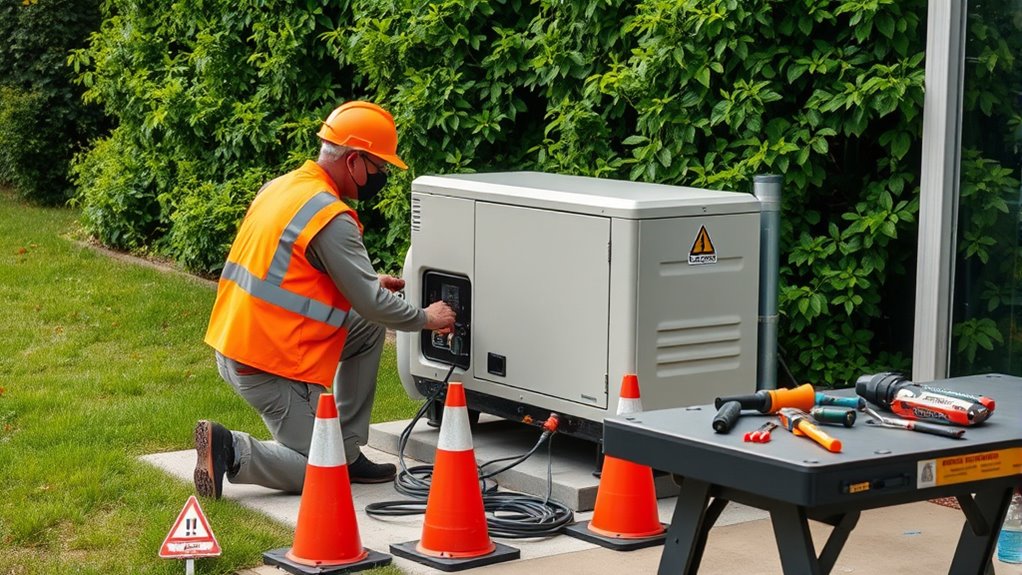
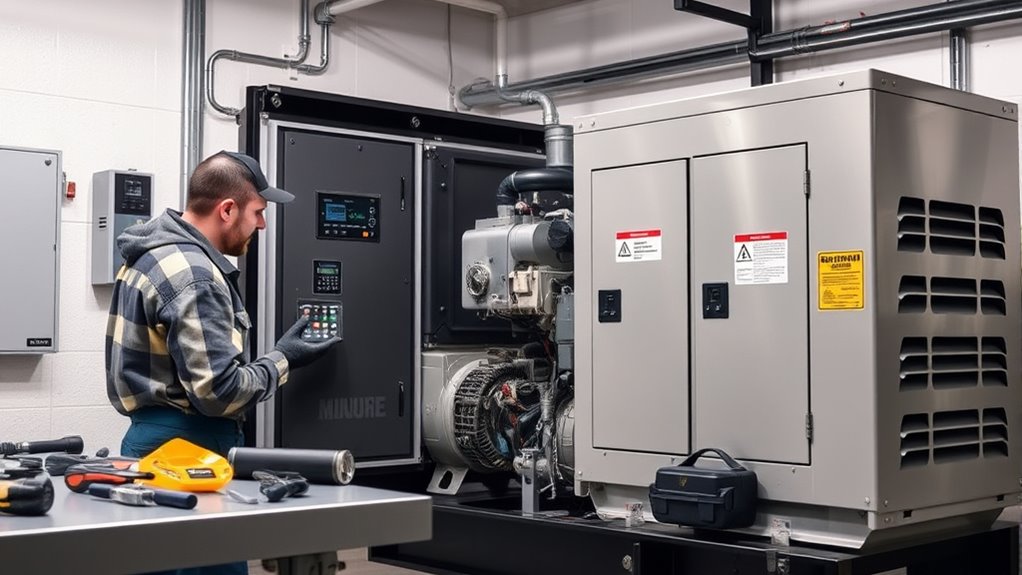
Proper installation of a standby generator is essential to guarantee safe and reliable operation. To ensure safety and ideal performance, follow these best practices:
- Select a well-ventilated location to improve fuel efficiency and reduce exhaust noise.
- Keep the generator away from windows and vents to prevent dangerous carbon monoxide buildup.
- Use proper grounding techniques to prevent electrical hazards and ensure noise reduction.
- Follow manufacturer instructions carefully during setup, paying attention to fuel lines and load connections.
Frequently Asked Questions
How Often Should I Perform Maintenance on My Standby Generator?
You should perform maintenance on your standby generator at least every 6-12 months, depending on usage. Follow a regular maintenance schedule that includes performance checks, oil changes, and inspecting parts for wear. If you use it frequently or in harsh conditions, consider more frequent checks. Staying consistent with maintenance helps guarantee reliable operation during power outages and extends your generator’s lifespan.
Can I Install a Generator Myself Without Professional Help?
You can attempt a DIY installation of your standby generator, but it’s not recommended. Professional assistance guarantees the setup is safe, code-compliant, and reliable. Without proper knowledge, you risk electrical hazards, improper connections, or voiding warranties. Hiring a licensed technician guarantees your generator operates efficiently and safely during power outages. Trusting experts minimizes risks and gives you peace of mind, especially for such a critical and complex project.
What Are the Environmental Impacts of Running a Standby Generator?
Ever wonder if your standby generator is secretly a planet villain? It does emit pollutants that can harm the environment, and noise pollution isn’t just annoying—it disrupts wildlife and your neighbors. While modern models meet emission standards, running it excessively can still impact air quality. So, if you’re eco-conscious, use it judiciously, maintain it properly, and consider quieter, cleaner options to keep your environmental footprint minimal.
How Does Fuel Type Affect Generator Size and Performance?
Fuel type directly impacts your generator’s size and performance. Gasoline generators are typically smaller but less fuel-efficient, producing higher emissions that may not meet strict standards. Diesel generators are larger but offer better fuel efficiency and lower emissions, complying with emission standards more easily. You should consider your power needs, fuel availability, and environmental goals when choosing the right fuel type to guarantee peak performance and compliance.
What Are the Insurance Considerations for Home Generators?
You should know that home generators can impact your insurance coverage. Insurance claims might be affected if damage occurs due to improper installation or use. Coverage limitations could apply if your insurer finds negligence or non-compliance with safety standards. To avoid surprises, check your policy and consult with your insurer before installing a generator. Proper installation and maintenance help guarantee your coverage remains intact in case of an emergency.
Conclusion
Understanding generator sizing is vital for safety and efficiency. Did you know that improper sizing can lead to over 50% of generator failures? By debunking myths and considering essential factors, you guarantee your generator runs smoothly and safely. Always follow best practices during installation and operation. Remember, a correctly sized generator not only protects your appliances but also keeps you safe during power outages. Stay informed and prioritize safety to get the most reliable backup power.