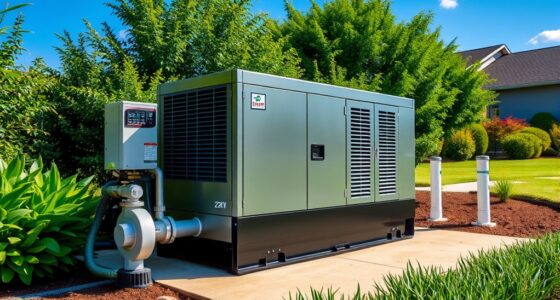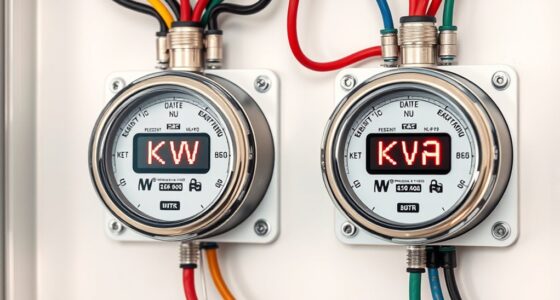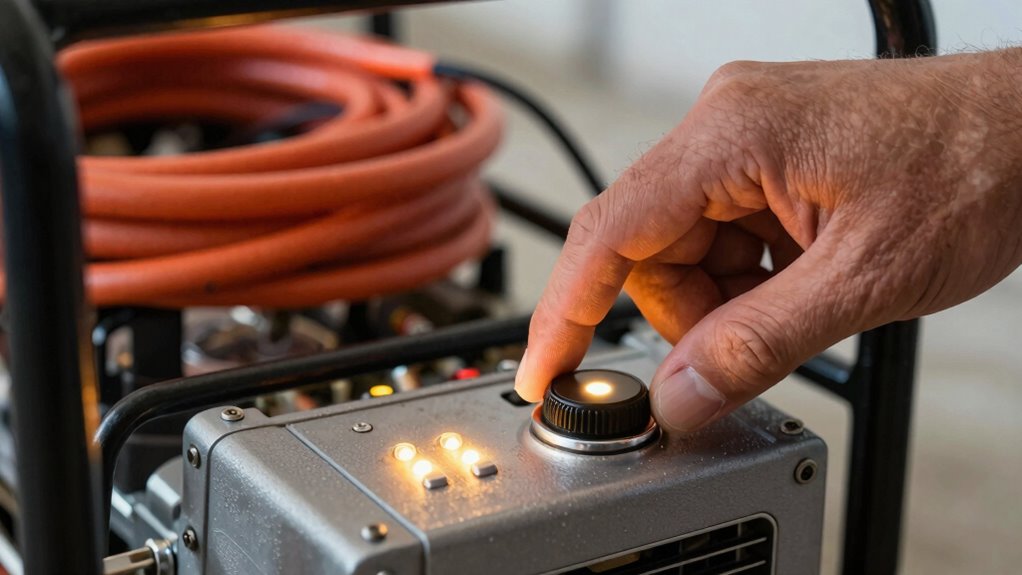

Many homeowners overlook how essential it is to manage startup loads when turning on a generator. Jumping to power multiple high-demand appliances at once can overload the system, cause surges, and reduce your generator’s lifespan. Properly planning and staggering appliance activation helps prevent issues like voltage drops and early wear. If you keep these details in mind, you’ll guarantee your generator runs smoothly and lasts longer. Want to discover more ways to optimize your generator’s performance?

Get backup power and energy gear delivered free — and shop member deals
- Fast, free delivery on millions of items
- Access to Prime Big Deal Days deals on October 6–7
- Prime Video, Amazon Music and more included
Key Takeaways
- Homeowners often overlook the importance of planning for high inrush currents from appliances during startup.
- They underestimate the impact of simultaneous startup loads on generator capacity and performance.
- Many fail to stagger appliance activation, risking overloads and voltage drops.
- Regular maintenance routines are sometimes neglected, reducing the generator’s ability to handle initial surges effectively.
- Homeowners may not consider load management devices that help distribute startup power efficiently.
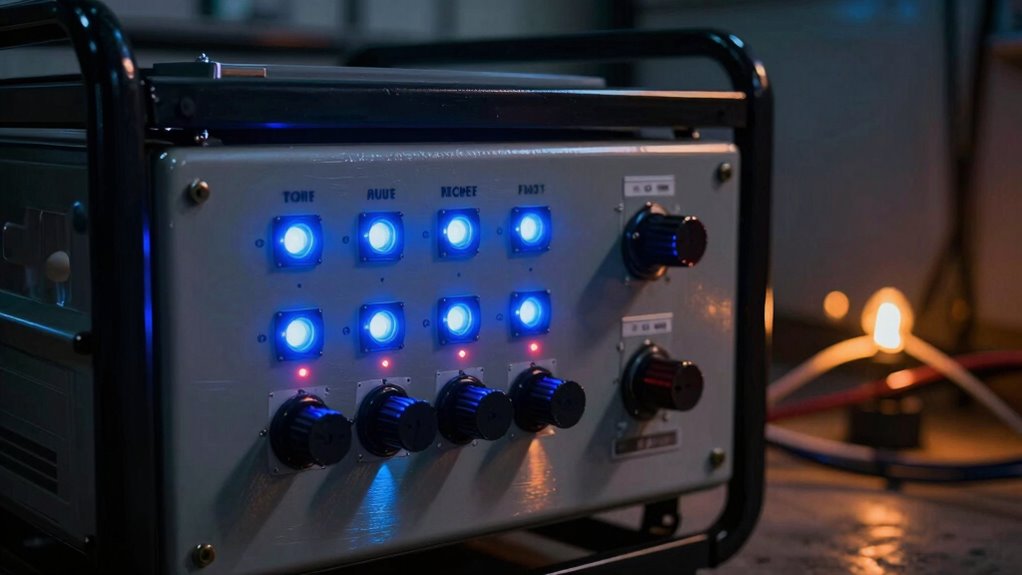
Starting a generator involves more than just flipping a switch; it requires understanding the initial loads that the generator will handle. When you turn on your generator, you might think it’s as simple as powering up your appliances, but the true challenge lies in managing those early loads that can impact its performance and longevity. Many homeowners overlook how essential these startup loads are, often assuming the generator will handle everything seamlessly. In reality, those initial surges can strain the system if not properly managed, leading to issues with fuel efficiency and increased wear over time.
Starting a generator requires managing initial loads to prevent strain and ensure reliable performance over time.
One common mistake is underestimating the importance of planning for the startup loads. These loads include appliances and devices with high inrush currents, like refrigerators, sump pumps, or HVAC systems. When these devices kick on simultaneously, they draw a much larger current than during normal operation. If your generator isn’t prepared for this, it can cause a drop in voltage or even overload, which hampers fuel efficiency and stresses the engine. Over time, repeatedly pushing the generator through these surges without adequate consideration can lead to more frequent maintenance needs and reduced lifespan.
Understanding your generator’s capacity and how it handles these initial loads is key. You should familiarize yourself with the startup wattage of your appliances and ensure your generator can comfortably handle the combined load. This not only helps prevent overloads but also promotes better fuel efficiency because your generator isn’t working harder than necessary. Properly managing startup loads might involve staggering appliance activation or using load management devices, which can make a significant difference in performance and fuel savings. Recognizing the importance of generator capacity and how it influences handling startup loads can help you make more informed decisions. Additionally, knowing the initial load demands of your appliances can help you plan better and avoid unexpected shutdowns.
Another aspect that homeowners often miss is the role of consistent maintenance routines. Regular upkeep guarantees your generator runs smoothly during startup loads and beyond. Changing filters, checking oil levels, and inspecting connections keep the system operating at peak efficiency, reducing the risk of unexpected failures or fuel wastage. These routines also help identify potential problems early, so you avoid costly repairs or replacements down the line. Moreover, understanding proper maintenance can extend the lifespan and reliability of your generator, especially during critical moments like power outages. It’s also beneficial to familiarize yourself with load management techniques, which can help distribute power more evenly and prevent overloads during startup. In addition, understanding how to manage startup surges effectively can significantly improve your generator’s overall performance and durability.
In essence, understanding and managing the initial startup loads isn’t just about avoiding immediate issues—it’s about maintaining overall efficiency and longevity. When you pay attention to these details and stick to proper maintenance routines, your generator will perform more reliably, consume fuel more efficiently, and serve you well during power outages. Recognizing what often gets overlooked enables you to operate your generator smarter, saving you time, money, and frustration in the long run.
Frequently Asked Questions
How Do Startup Loads Differ From Running Loads?
Startup loads differ from running loads because they are higher and cause power fluctuations when appliances first turn on. You might notice your generator struggling initially, especially with appliances like refrigerators or air conditioners. This is due to the surge in appliance efficiency needed during startup. Once the startup load stabilizes, the running load maintains steady power, preventing continuous fluctuations and ensuring your appliances operate smoothly.
What Is the Typical Duration of Startup Loads?
Think of startup loads as a sudden burst of energy, like a sprinter launching from the blocks. They typically last just a few seconds to a minute, depending on your generator’s size and load. To optimize efficiency considerations, make certain your generator is well-maintained with regular maintenance tips, like checking oil levels and load capacity. This helps prevent overloads and keeps startup loads brief, smooth, and reliable for your home’s power needs.
Can Startup Loads Damage My Generator?
Startup loads can potentially damage your generator if not managed properly. Sudden, high demands can strain the engine, affecting generator efficiency and risking overload. To prevent this, guarantee proper load balancing during startup, gradually increasing loads to avoid stress. Regular maintenance and monitoring help your generator handle startup loads safely, extending its lifespan and ensuring reliable power during outages.
How Do I Calculate My Home’s Startup Load Requirements?
To calculate your home’s startup load requirements, start with load estimation by listing all appliances and their wattage. Prioritize essential appliances, then add their startup wattage, which is typically 2-3 times their running wattage. Use manufacturer labels or online calculators for accurate numbers. This process helps guarantee your generator can handle the initial surge, preventing overloads and ensuring smooth power delivery during outages.
Do All Appliances Contribute Equally to Startup Loads?
Not all appliances contribute equally to startup loads because of differences in appliance efficiency and power surges. Larger appliances like refrigerators or air conditioners typically draw more power during startup, causing bigger surges. Smaller or more efficient appliances have lower startup demands. So, when planning your generator, consider these variations to make certain it handles the highest startup loads without issues, preventing potential power surges and ensuring smooth operation.
Conclusion
Just like Pandora opening her box, startup loads can release surprises that catch you off guard if you’re not prepared. Remember, understanding these initial demands isn’t just about avoiding trouble—it’s about mastering control over your power. When you anticipate the surge, you’re the hero in your own story, ensuring your generator runs smoothly through any storm. Stay vigilant, keep learning, and let your home’s heartbeat remain steady, no matter what the future holds.
Fall Picks
fall essentials
As an affiliate, we earn on qualifying purchases.