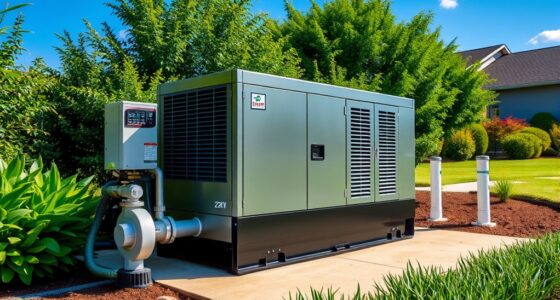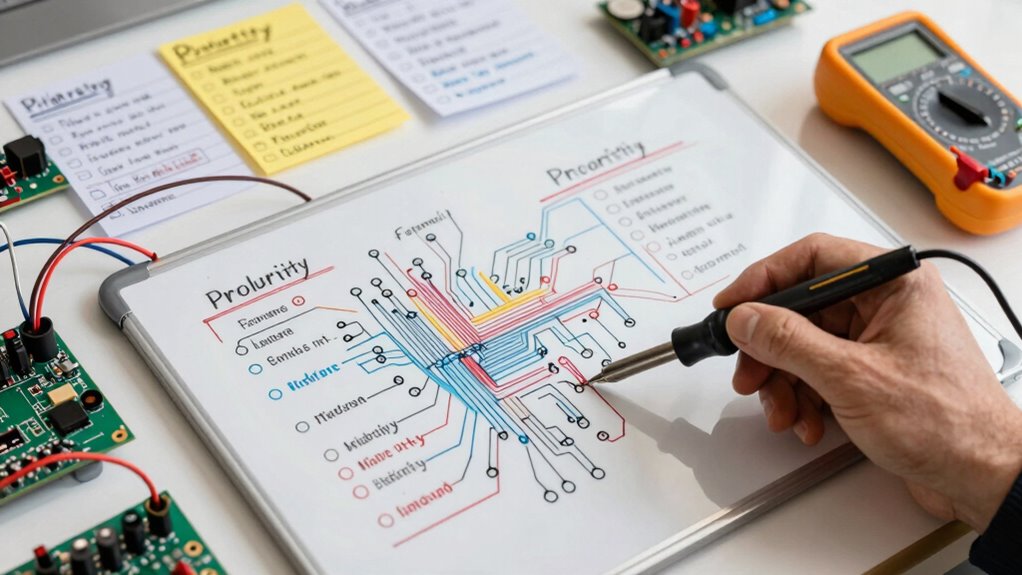

To build a circuit priority list, start by identifying all circuits and evaluating their importance for safety, control, and auxiliary functions. Rank them based on criticality, with emergency shutdowns at the top, then move to safety systems, communication, and less essential circuits. Consider interactions and dependencies between circuits, and regularly review and update your list as system needs change. Keep these steps in mind to create a reliable, efficient plan that supports safe and smooth operation. If you want more detailed guidance, continue exploring.

Get backup power and energy gear delivered free with Prime
- Fast, free delivery on millions of items
- Prime Video, Amazon Music and more included
- Member-only deals all year
Key Takeaways
- Identify and classify circuits based on safety, critical function, and operational importance.
- Rank circuits by priority, placing emergency shutdowns and safety systems at the top.
- Consider interactions between circuits to adjust their priority levels accordingly.
- Regularly review and update the list to reflect system changes and evolving needs.
- Document the priority list clearly to guide troubleshooting, maintenance, and upgrades.
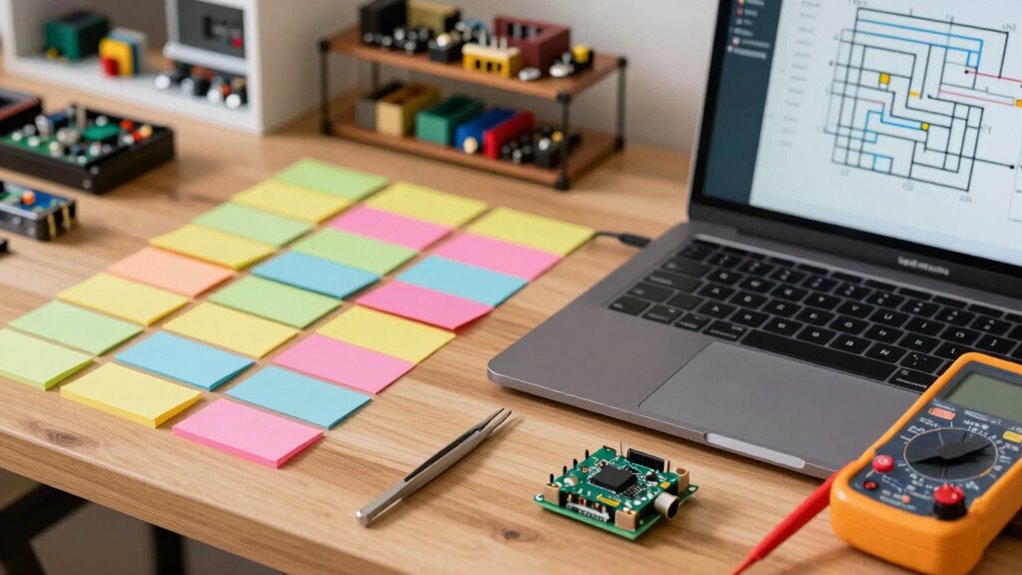
Are you struggling to manage multiple circuits and determine which ones need attention first? Building a circuit priority list can help you stay organized and ensure your systems operate smoothly. The key to creating this list starts with effective component selection and power management. Choosing the right components for each circuit is crucial because it directly impacts performance and reliability. You want to select components that match the specific needs of each circuit—consider voltage ratings, current capacities, and thermal tolerances. High-quality components may cost more upfront, but they prevent failures and reduce maintenance later, making your power management more efficient overall.
Effective component selection ensures reliable performance and reduces future maintenance needs.
Power management plays a vital role in your circuit priority list because it helps you allocate resources effectively. You need to understand which circuits are most critical and ensure they receive sufficient power first. This involves assessing each circuit’s purpose, load demands, and operational importance. For example, safety systems or essential controls should always take precedence over lighting or auxiliary functions. To manage power efficiently, consider incorporating power regulators, fuses, or circuit breakers that protect your circuits from overloads. This not only preserves your components but also minimizes downtime caused by failures or shorts.
Once you’ve selected appropriate components and set up your power management system, you can start organizing your circuits based on priority. Make a list that ranks circuits by their importance, factoring in their roles, safety implications, and how critical they are to your overall system. For instance, emergency shutdown circuits should always top your list, followed by control systems, communication lines, and then auxiliary functions. As you build this list, think about how each circuit interacts with others. Sometimes, a less critical circuit can become a priority if it supports more vital systems or if its failure could cause cascading issues.
Regularly review and update your circuit priority list to keep pace with changes in your setup or operational requirements. Reassessing component choices and power management strategies ensures your system remains reliable and efficient. Remember, a well-structured priority list not only streamlines troubleshooting but also helps you plan maintenance and upgrades effectively. By focusing on component selection and power management from the start, you create a foundation that makes managing multiple circuits less stressful and more predictable. This proactive approach ultimately saves you time, money, and headaches, keeping your entire system running smoothly and safely.
Frequently Asked Questions
What Tools Are Needed to Create a Priority List?
You need essential tools like a pen and paper or digital software for your tools overview and priority assessment. A calculator helps in weighing the urgency and impact of each circuit. A spreadsheet simplifies organizing and updating your list efficiently. Additionally, a ruler or measuring tape can be useful for physical circuit assessments. These tools streamline creating a clear, effective priority list, ensuring you focus on the most critical circuits first.
How Often Should the Priority List Be Updated?
You should update your priority list regularly, at least once a quarter, to stay ahead of shifting needs. Prioritization techniques demand that you reassess based on project urgency, resource availability, and emerging issues. Ignoring timely updates can lead to missed opportunities or bottlenecks. Keep a close eye on your circuit demands, and adjust your list as new challenges or priorities arise—staying flexible ensures peak performance and responsiveness.
Can Priority Lists Be Shared Across Multiple Projects?
Yes, you can share priority lists across multiple projects, especially when they involve similar resource allocation and stakeholder engagement. Doing so helps streamline decision-making, align objectives, and optimize resource use. However, guarantee each project’s unique needs are considered, and regularly update the list to reflect changing priorities. Clear communication is key, so stakeholders across projects stay informed and engaged, making collaboration more effective.
What Common Mistakes Should Be Avoided?
You should avoid common mistakes like neglecting task delegation and poor deadline management. Don’t assign too many tasks at once or ignore priorities, which can cause delays. Make sure you clearly define each task’s urgency and delegate responsibilities effectively to team members. Failing to set realistic deadlines can lead to missed milestones. Keep communication open, regularly review progress, and adjust priorities as needed to stay on track.
How to Handle Conflicting Priority Tasks?
When handling conflicting priority tasks, you should assess task dependencies to understand which tasks rely on others and address those first. Consider urgency versus importance to determine what needs immediate attention versus long-term value. If conflicts persist, communicate with stakeholders to clarify priorities, and be flexible to adjust your list accordingly. Focus on balancing urgent needs with meaningful progress, ensuring critical dependencies are resolved without neglecting essential tasks.
Conclusion
Creating a circuit priority list helps you manage project tasks efficiently. By ranking components and steps, you guarantee critical parts get addressed first, preventing delays. Did you know that 70% of project failures are due to poor planning? That’s why a clear priority list is essential—it keeps you on track and saves time. With this strategy, you’ll build circuits more effectively and avoid costly mistakes, making your projects smoother and more successful.
Columbus Day / Indigenous Peoples' Day Picks
long weekend sales
As an affiliate, we earn on qualifying purchases.