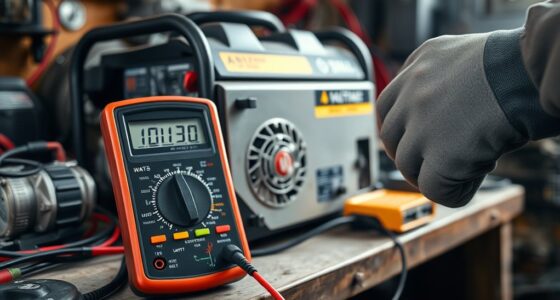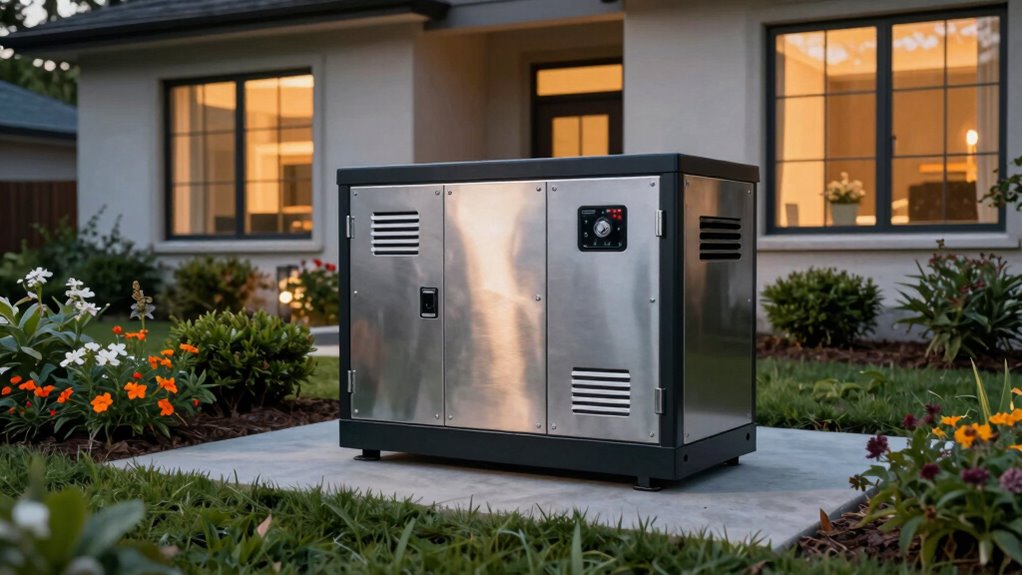
To pick the right whole house standby generator without overspending, start by evaluating your power needs to choose a model that matches your home’s requirements. Prioritize fuel-efficient generators with advanced engine technology and smart controls to save money on fuel and reduce emissions. Consider tank size and runtime to avoid costly refueling during outages. Balancing these features with your budget ensures you get reliable backup power without overspending—stay tuned to learn more about making smart choices.
Key Takeaways
- Determine your home’s essential power needs to select an appropriately sized generator without overspending.
- Compare fuel efficiency ratings and tank capacities to balance operational costs and runtime.
- Opt for models with smart controls and innovative features that optimize fuel use and performance.
- Assess long-term costs, including maintenance and fuel consumption, to ensure budget-friendly operation.
- Prioritize reputable brands with reliable performance and warranty support for lasting value.
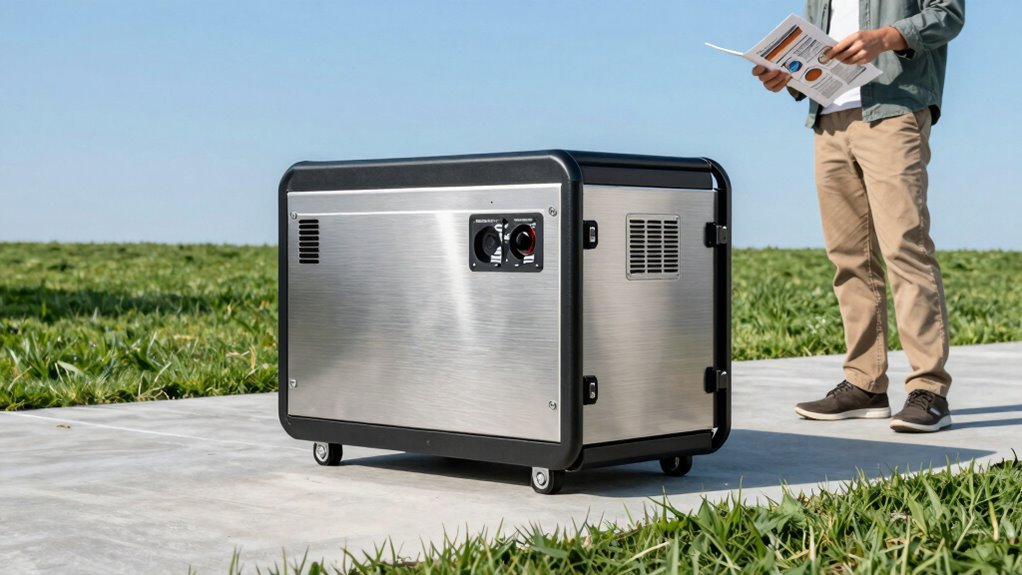
Choosing the right whole house standby generator can guarantee your home stays powered during outages, but with so many options available, it’s essential to understand what factors matter most. One of the key considerations is fuel efficiency. A generator with high fuel efficiency uses less fuel to produce the same amount of power, which can save you money over time, especially if outages are frequent. It also reduces the need for constant refueling, making it more convenient and environmentally friendly. When evaluating models, look for those with larger fuel tanks or advanced engine designs that maximize efficiency. This fuel efficiency can significantly impact your ongoing operating costs and environmental footprint. Additionally, understanding the technology behind fuel-efficient generators can help you select a model that offers better performance and longevity. Implementing innovative features such as smart controls can further optimize fuel use and extend the lifespan of your generator. This way, you guarantee your generator runs longer on less fuel, providing reliable backup power without skyrocketing operating costs.
Top picks for "pick right whole"
Open Amazon search results for this keyword.
As an affiliate, we earn on qualifying purchases.
Frequently Asked Questions
How Long Does a Standby Generator Typically Last?
Standby generators typically last around 10 to 30 years, depending on usage and maintenance. You’ll want to take into account fuel efficiency to extend lifespan and reduce running costs, while paying attention to noise levels for neighborly peace. Regular servicing keeps your generator in prime condition, ensuring it powers through storms and outages reliably. Proper care and choosing a quality model can maximize your generator’s longevity, giving you dependable backup power for years to come.
Are There Any Tax Incentives for Installing a Standby Generator?
Yes, there are tax incentives available for installing a standby generator. You might qualify for tax credits that help offset installation costs, making the upgrade more affordable. These incentives vary depending on your location and the type of generator installed. To maximize savings, check with local government programs or consult a tax professional. Taking advantage of these tax incentives can substantially reduce your overall investment while ensuring reliable power during outages.
Can I Install a Generator Myself or Should I Hire a Professional?
You shouldn’t try installing a generator yourself, as generator safety is paramount—mistakes can cause serious harm or damage. Professional installation guarantees proper wiring and adherence to safety codes, which can impact installation costs. Imagine a skilled electrician carefully connecting your generator, ensuring it functions flawlessly when power fails. Hiring a professional minimizes risks, guarantees safety, and often saves you money in the long run by preventing costly errors.
How Noisy Are Standby Generators During Operation?
Standby generators can be quite noisy during operation, with noise levels typically ranging from 60 to 80 decibels, comparable to a busy street or vacuum cleaner. To reduce sound, look for models with sound insulation or enclosures designed to dampen noise. Proper placement away from bedrooms and living areas also helps, ensuring your home remains comfortable without constant generator noise disrupting your daily life.
What Maintenance Is Required for a Standby Generator?
Did you know regular maintenance can extend your generator’s life by up to 30%? You should check and change the oil every 100-200 hours, replace filters annually, and keep it clean. This guarantees maximum fuel efficiency and keeps noise levels manageable. Also, test the system monthly and schedule professional inspections annually. Proper upkeep guarantees your generator runs smoothly when you need it most, saving you money in the long run.
Conclusion
Choosing the right whole house standby generator doesn’t have to break the bank. By understanding your energy needs and comparing features, you can find a reliable option that fits your budget. Did you know that power outages cost the U.S. economy over $150 billion annually? Ensuring your home stays powered during emergencies not only protects your family but also saves you money and stress. Invest wisely, and you’ll enjoy peace of mind for years to come.