Conducting tabletop drills for power outages helps you test your team’s response plans and communication systems in a safe environment. These exercises improve coordination, identify weaknesses, and guarantee everyone knows their roles during an emergency. You’ll practice managing resources, relay critical information, and use backup tools effectively. Regular drills build confidence and resilience for real incidents. Keep exploring to discover ways to maximize your emergency preparedness and response strategies effectively.
Key Takeaways
- Develop realistic outage scenarios to test team response and communication protocols effectively.
- Involve all relevant staff to practice their roles and clarify responsibilities during power failures.
- Use backup communication tools like radios and messaging apps to ensure reliable information flow.
- Assess resource availability, such as emergency kits and backup power, to identify gaps and improve allocation.
- Conduct regular drills to enhance coordination, response time, and overall preparedness for actual outages.
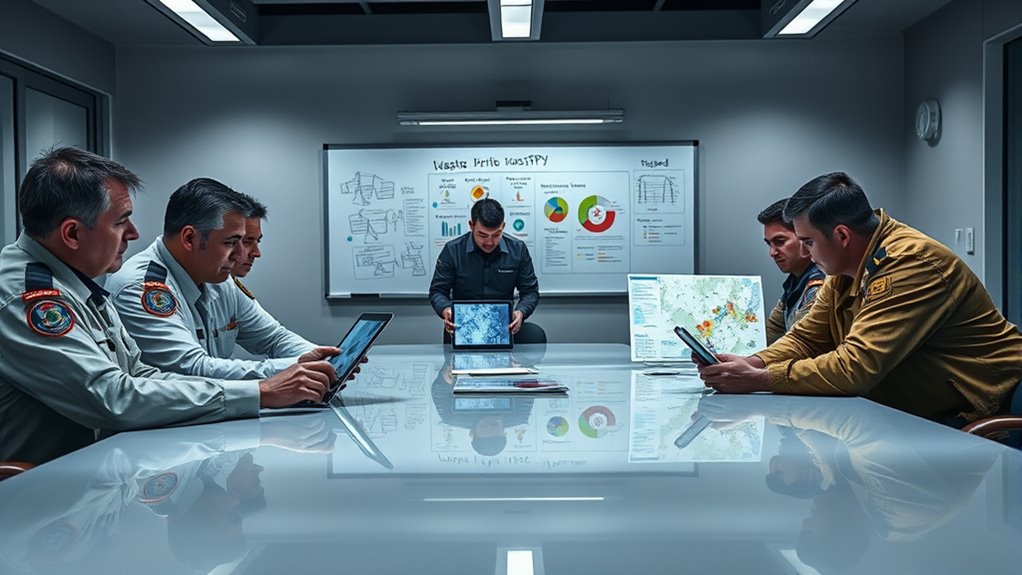
Power outages can strike unexpectedly, disrupting operations and posing safety risks. When the lights go out, it’s essential to have a well-rehearsed plan in place. Conducting tabletop drills for power outages helps your team prepare for these situations, guaranteeing everyone knows their roles and responsibilities. These drills are an indispensable part of your overall emergency preparedness strategy. During a simulated outage, you can test how effectively your team communicates, manages resources, and responds to the crisis. This preparation enables you to identify gaps in your response plan before an actual outage occurs.
One of the key aspects of a tabletop drill is practicing emergency communication. Clear, timely communication can be the difference between a smooth response and chaos. During the drill, you’ll want to simulate scenarios where team members need to relay critical information quickly. This includes notifying staff and emergency services, updating stakeholders, and providing instructions to customers or clients. Practicing these communication flows ensures that everyone understands the chain of command and knows how to access the right channels of information. It also highlights the importance of having reliable communication tools in place, such as backup radios or messaging apps, to maintain contact if primary systems fail. Additionally, understanding the role of technology in projectors can help ensure your communication equipment supports your emergency plans effectively.
Resource allocation is another essential component of your drill. When the power goes out, you need to efficiently allocate resources like backup power supplies, emergency kits, and personnel. Conducting tabletop exercises helps you test your resource management strategies. For instance, you can simulate scenarios where certain backup generators fail or supplies are limited, forcing your team to make quick decisions about prioritizing critical operations. This process reveals whether your current resource allocation plan is sufficient or if adjustments are needed. It also encourages team members to think creatively and collaboratively, ensuring they’re ready to adapt in real-life situations.
Frequently Asked Questions
How Often Should Tabletop Drills Be Conducted for Maximum Effectiveness?
You should conduct tabletop drills for power outages at least twice a year to guarantee maximum effectiveness. Regular frequency planning helps identify weaknesses and improve response times. By scheduling drills consistently, you keep your team prepared and confident during actual outages. Adjust the drill scheduling based on your organization’s size and risk level, but staying proactive with frequent exercises ensures your team remains ready for unexpected power disruptions.
What Are Common Mistakes to Avoid During a Tabletop Drill?
Avoid arrogance and amateurishness by steering clear of common mistakes during your tabletop drill. You might stumble if you ignore miscommunication pitfalls or create unrealistic scenarios that don’t reflect real-life challenges. Stay sharp, communicate clearly, and keep scenarios credible. Don’t let complacency cloud your judgment—prepare thoroughly, encourage participation, and make certain everyone understands their roles to maximize your drill’s effectiveness.
How Do You Evaluate the Success of a Power Outage Drill?
You evaluate the success of a power outage drill by reviewing your evaluation criteria and success metrics. You look at how well team members follow procedures, how quickly they respond, and their ability to communicate effectively. You also consider whether all critical systems are accounted for and if any issues arose. By analyzing these factors, you gain insights to improve your response plan and guarantee preparedness for real outages.
What Roles Should Participants Assume During the Drill?
During the drill, you should assign clear roles to participants to guarantee smooth execution. Assign roles such as Incident Commander, Communications Coordinator, and Safety Officer, so everyone knows their responsibilities. Participant responsibilities include following protocols, communicating effectively, and providing feedback. Role assignment helps simulate real-life scenarios, encourages active engagement, and identifies gaps in your response plan. Make sure each participant understands their responsibilities before the drill begins for maximum effectiveness.
How Can Drills Be Customized for Different Organizational Sizes?
Did you know that organizations with tailored emergency drills are 40% more effective? To customize drills for different organizational scales, you should consider your size’s complexity and resource availability. For small organizations, focus on simple scenarios and quick decision-making, while larger ones can simulate multi-department coordination. Adjust the scope, scenarios, and participant roles to guarantee the drill challenges your team appropriately, enhancing preparedness regardless of your organizational scale.
Conclusion
As you finish your tabletop drill, remember that preparedness is the lighthouse guiding you through stormy nights. Just as a lighthouse stands tall amid darkness, your readiness shines as a beacon of hope and resilience when power fails. Every practiced step strengthens your team’s confidence, ensuring you’re not lost in the storm. Keep refining your plans, for in the shadows, your preparedness illuminates a path forward, turning uncertainty into safety and strength.