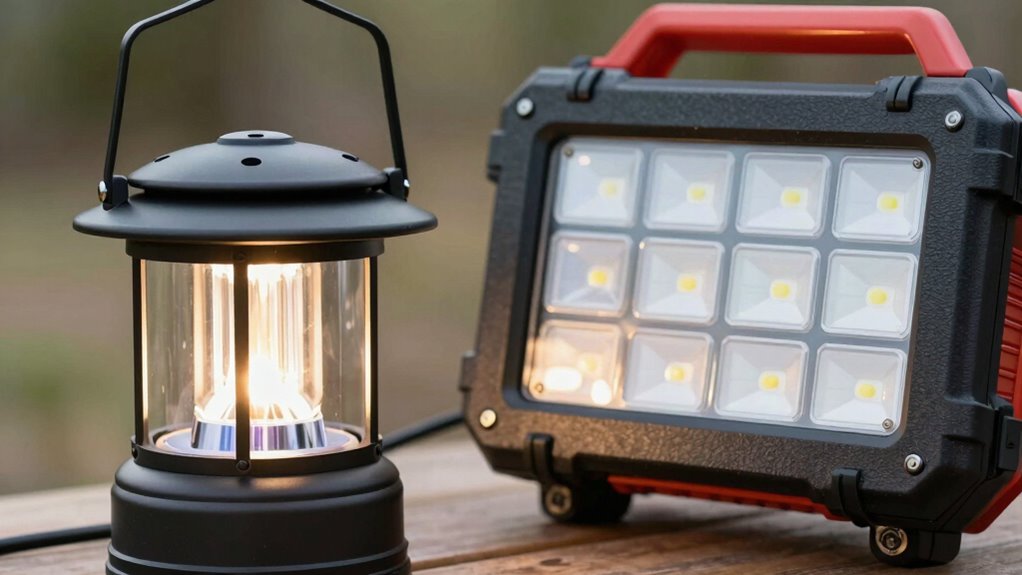

When power outages strike, having a reliable rechargeable lantern kit can make all the difference. The best options combine long-lasting batteries, weather resistance, and versatile charging features. The Glocusent LED Rechargeable Camping Lantern stands out for its high-capacity battery and bright illumination, making it a solid overall choice. The LETMY 4 Pack Camping Lantern offers an excellent balance of solar and USB charging, perfect for eco-conscious users. However, tradeoffs often involve deciding between brightness, battery life, and price. Continue reading for a detailed breakdown of the top models and what makes each one unique.

Get backup power and energy gear delivered free with Prime
- Fast, free delivery on millions of items
- Prime Video, Amazon Music and more included
- Member-only deals all year
Key Takeaways
- High-capacity batteries, like 5000mAh or more, significantly extend runtime during outages.
- Multiple charging options, including solar and USB, add versatility but can affect cost and size.
- Collapsible and portable designs excel for easy storage and transport in emergencies or camping.
- Waterproof ratings like IP44 or higher are important for outdoor or storm-prone environments.
- Models with built-in power banks offer extra utility but often come at a higher price point.
| Glocusent LED Rechargeable Camping Lantern with 5000mAh Battery |  | Best Overall for Versatile Outdoor Use | Light Source Type: LED | Power Source: Battery Powered | Light Output: 1500 lumens | VIEW ON AMAZON | See Our Full Breakdown |
| LETMY 4 Pack Camping Lantern, Rechargeable LED Lanterns with Solar, USB, and Battery Power |  | Best Value for Multi-Power Flexibility | Light Source: LED | Power Source: Rechargeable Battery & Solar Powered | Battery: Rechargeable 18650 lithium-ion battery, 3 AA batteries (not included) | VIEW ON AMAZON | See Our Full Breakdown |
| Collapsible Portable LED Camping Lantern 4-Pack |  | Best for Compact, Indoor and Outdoor Use | Light Source: LED | Power Source: USB charging & Solar charging | Battery: Nickel-Metal Hydride, 1600mAh | VIEW ON AMAZON | See Our Full Breakdown |
| LED Camping Lantern Rechargeable, 1800LM, 4 Light Modes, 4400mAh Power Bank, IP44 Waterproof (2 Pack) |  | Best for Bright, High-Output Lighting with Power Bank Function | Light Output: 1800 lumens | Battery Capacity: 4400mAh | Water Resistance Level: IP44 | VIEW ON AMAZON | See Our Full Breakdown |
| 4-Pack Solar Camping Lanterns, Rechargeable LED with USB/Solar/AA Battery, Magnetic Base, Hanging Hook, Collapsible, Waterproof for Emergency, Hiking, Hurricane, Campsites, Power Outages | 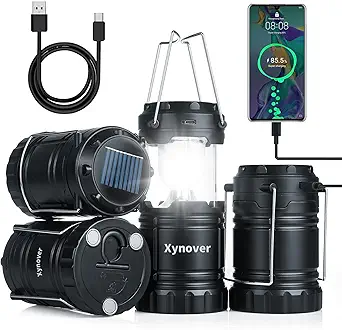 | Best for Multi-Use Durability and Flexibility | Light Source: LED | Power Source: Solar, USB Rechargeable, AA Batteries | Battery Description: 3 AA batteries, Solar, USB | VIEW ON AMAZON | See Our Full Breakdown |
| Glocusent 1200LM LED Camping Lantern Rechargeable |  | Best Overall for Versatile Power and Brightness | Light Source: LED | Power Source: Battery Powered | Light Output: 1200 lumens | VIEW ON AMAZON | See Our Full Breakdown |
| Consciot 1000LM Battery Powered LED Camping Lantern with 4 Light Modes and Dimmable Feature | 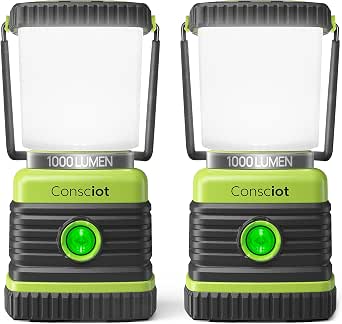 | Best Value for Adjustable Brightness and Durability | Brightness: 1000 lumens | Light Modes: 4 (cool white, warm white, combined white, strobe) | Power Source: 3 D-cell batteries | VIEW ON AMAZON | See Our Full Breakdown |
| Lichamp Collapsible Portable Solar Camping Lantern, USB Rechargeable LED Flashlight – 4-Pack |  | Best for Portability and Solar Recharging | Light Source: LED | Power Source: Solar and USB Rechargeable | Maximum Light Output: 300 lumens | VIEW ON AMAZON | See Our Full Breakdown |
| LED Camping Lantern with 1800 Lumens and Multiple Modes | 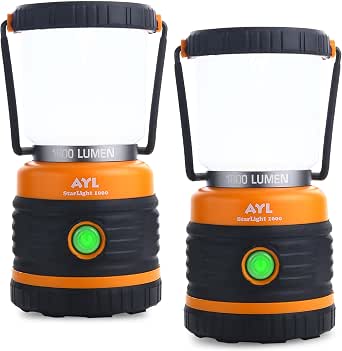 | Best for Bright Maximum Output and Heavy-Duty Use | Light Output: 1800 lumens | Number of Light Sources: 46 | Power Source: 3 D-batteries | VIEW ON AMAZON | See Our Full Breakdown |
| Lichamp 4-Pack Solar Camping Lantern with USB Rechargeable LED Lights |  | Best Multi-Power and Charging for Emergency Preparedness | Light Source: LED | Power Source: Solar, USB, Batteries | Maximum Lumens: 600 lumens | VIEW ON AMAZON | See Our Full Breakdown |
| rechargeable lantern kits for outage | Power Source | Water Resistance Level | Light Output | Light Source |
|---|---|---|---|---|
| Glocusent LED Rechargeable Cam | Battery Powered | IP45 | 1500 lumens | — |
| LETMY 4 Pack Camping Lantern | Rechargeable Battery & Solar Powered | Water Resistant | 600 lumens | LED |
| Collapsible Portable LED Campi | USB charging & Solar charging | — | — | LED |
| LED Camping Lantern Rechargeab | — | IP44 | 1800 lumens | — |
| 4-Pack Solar Camping Lanterns | Solar, USB Rechargeable, AA Batteries | — | 100 lumens | LED |
| Glocusent 1200LM LED Camping L | Battery Powered | Waterproof | 1200 lumens | LED |
| Consciot 1000LM Battery Powere | 3 D-cell batteries | — | — | — |
| Lichamp Collapsible Portable S | Solar and USB Rechargeable | Water Resistant | — | LED |
| LED Camping Lantern with 1800 | 3 D-batteries | Waterproof | 1800 lumens | — |
| Lichamp 4-Pack Solar Camping L | Solar, USB, Batteries | Water Resistant | — | LED |
More Details on Our Top Picks
Glocusent LED Rechargeable Camping Lantern with 5000mAh Battery
This lantern stands out for its impressive 360° illumination powered by 135 LEDs, making it ideal for both camping and emergency situations. Compared with the LETMY 4 Pack, it offers longer battery life—up to 200 hours—thanks to its large 5000mAh capacity, which reduces the need for frequent recharging. Its waterproof IP45 rating offers decent outdoor durability, though it may not withstand heavy rain or prolonged submersion. The inclusion of SOS and emergency phone charging features enhances its versatility, but the absence of an adapter means an extra purchase. Its compact size and lightweight design make it easy to carry but limit its brightness in super high mode, which is only sustained for four minutes. Overall, this model is best suited for users who want reliable, long-lasting light with emergency capabilities without sacrificing portability.
Pros:- Bright 360° illumination with multiple brightness and color modes
- Long-lasting battery up to 200 hours on low setting
- Includes SOS strobe and emergency phone charging features
- Compact, lightweight, and waterproof for outdoor adventures
Cons:- Adapter not included, requiring an additional purchase
- Limited to only 4 minutes at maximum brightness
Best for: Hikers, campers, or emergency prepper households needing a durable, multi-function lantern with long battery life
Not ideal for: Heavy-duty outdoor use in extreme weather, such as heavy rain or prolonged submersion, due to its IP45 rating
- Light Source Type:LED
- Power Source:Battery Powered
- Light Output:1500 lumens
- Water Resistance Level:IP45
- Beam Angle:360 degrees
- Item Dimensions:3.43″L x 3.43″W x 7.28″H
- Item Weight:299 g
Our verdict“This lantern is a top choice for those seeking a versatile, long-lasting emergency light with practical features.”
LETMY 4 Pack Camping Lantern, Rechargeable LED Lanterns with Solar, USB, and Battery Power
This set offers a practical mix of power options—solar, USB, and AA batteries—making it highly adaptable for different emergency and outdoor scenarios. Unlike the Glocusent, which relies solely on rechargeable batteries, the LETMY lanterns can be powered via solar or traditional batteries, providing redundancy. Their 600 lumens output ensures sufficient brightness for most outdoor needs, and their durable, water-resistant ABS construction makes them suitable for rough weather. However, the necessity of purchasing batteries separately can add to the upfront cost, and the maximum brightness may not sustain long-term use without draining batteries quickly. These lanterns are best for budget-conscious users who want versatility and portability in a multi-power setup.
Pros:- Multiple power options including solar, USB, and batteries
- Bright 600 lumens with 360° illumination
- Durable, water-resistant design
- Collapsible and lightweight for portability
Cons:- Batteries are not included, requiring additional purchase
- Maximum brightness can deplete batteries quickly
Best for: Families or outdoor enthusiasts needing flexible power sources for short-term emergencies and camping
Not ideal for: Extended use in severe weather conditions or for large-area lighting, due to limited brightness and battery life
- Light Source:LED
- Power Source:Rechargeable Battery & Solar Powered
- Battery:Rechargeable 18650 lithium-ion battery, 3 AA batteries (not included)
- Light Output:600 lumens
- Water Resistance Level:Water Resistant
- Battery Life:12 hours
- Material:ABS
Our verdict“This set delivers versatile power options at a good value, suitable for short-term outdoor and emergency use.”
Collapsible Portable LED Camping Lantern 4-Pack
This lightweight, waterproof lantern is designed for portability, with a simple collapsible form factor that makes it ideal for camping, emergencies, or indoor outages. While it offers 360° brightness and adjustable levels, its 25-hour battery life and limited brightness adjustment may not satisfy those needing prolonged or intense illumination. Compared with the LED Camping Lantern Rechargeable, 1800LM, which provides brighter output, this model excels in size and ease of transport but sacrifices some runtime and maximum brightness. Its dual solar and USB charging options add convenience, but the need for batteries (included but possibly needing replacement) can be a drawback for continuous use. It’s a good pick for users prioritizing portability and versatility over high lumen output.
Pros:- Bright 360° lighting with adjustable brightness
- Lightweight and collapsible for portability
- Dual solar and USB charging options
- Durable and water-resistant
Cons:- Battery life may vary with usage
- Limited brightness adjustment options
Best for: Campers and outdoor enthusiasts who value compactness and dual charging methods for short outings or emergency kits
Not ideal for: Large-area lighting or prolonged illumination needs, where brightness and runtime are critical
- Light Source:LED
- Power Source:USB charging & Solar charging
- Battery:Nickel-Metal Hydride, 1600mAh
- Water Resistance:Waterproof
- Battery Life:25 hours
- Wattage:4 watts
Our verdict“This lantern is ideal for portability-focused users who need reliable light in compact form for camping or emergencies.”
LED Camping Lantern Rechargeable, 1800LM, 4 Light Modes, 4400mAh Power Bank, IP44 Waterproof (2 Pack)
This set offers powerful illumination with up to 1800 lumens and four adjustable modes, making it suitable for outdoor activities requiring intense light. Compared with the Glocusent, which prioritizes battery life over brightness, this model emphasizes high lumen output and versatility, including a built-in power bank for device charging. The 4400mAh battery supports up to 12 hours of runtime, but its bulkier size and requirement for two batteries (not included) may make storage and handling less convenient for casual users. Its waterproof IP44 rating offers some outdoor protection, though it’s not fully submersible. This pick is best for users who need a bright, reliable light source that can also power devices during outages.
Pros:- Bright 1800 lumens with multiple modes
- Built-in 4400mAh power bank for device charging
- Water-resistant and suitable for outdoor conditions
- Adjustable light modes for different needs
Cons:- Requires 2 lithium polymer batteries, not included
- Bulkier size for easy storage
Best for: Hikers, outdoor workers, or emergency responders needing high lumen output and device charging capability
Not ideal for: Users seeking lightweight, compact lanterns for casual camping or prolonged use in heavy rain
- Light Output:1800 lumens
- Battery Capacity:4400mAh
- Water Resistance Level:IP44
- Number of Light Modes:4
- Weight:1.16 kg
- Dimensions:5.25″L x 5.25″W x 5.25″H
Our verdict“This lantern excels in delivering high brightness and device charging, ideal for serious outdoor or emergency scenarios.”
4-Pack Solar Camping Lanterns, Rechargeable LED with USB/Solar/AA Battery, Magnetic Base, Hanging Hook, Collapsible, Waterproof for Emergency, Hiking, Hurricane, Campsites, Power Outages
This set combines multiple charging options—solar, USB, and AA batteries—making it highly adaptable, though it requires 3 AA batteries (not included), which can add to ongoing costs. While the Glocusent offers longer runtime at 200 hours, this set’s 12-hour runtime is sufficient for most short-term outages and outdoor uses. Its waterproof, shockproof, and collapsible design makes it durable and easy to pack, but its relatively low lumen output of 100 limits its effectiveness in large or dark areas. The magnetic base and hanging hook add convenience for different mounting options, making it versatile for various scenarios. This kit is best for users prioritizing multi-source charging and rugged portability over high lumen output.
Pros:- Multiple charging options including solar, USB, and batteries
- Durable, waterproof, shockproof construction
- Collapsible for easy storage and transport
- Built-in power bank for device charging
Cons:- Requires 3 AA batteries, not included
- Light output limited to about 100 lumens
Best for: Emergency kits, hikers, or outdoor users needing a durable, multi-charging lantern set for short-term outages
Not ideal for: Large space illumination or extended outages requiring high lumen levels and long runtimes
- Light Source:LED
- Power Source:Solar, USB Rechargeable, AA Batteries
- Battery Description:3 AA batteries, Solar, USB
- Light Output:100 lumens
- Beam Angle:360 degrees
- Materials:ABS, Metal
- Item Dimensions:2.5″L x 2″W x 2″H
- Item Weight:10.88 ounces
Our verdict“This set offers durable, multi-source charging for versatile outdoor and emergency use, especially where portability matters most.”
Glocusent 1200LM LED Camping Lantern Rechargeable
This lantern stands out for its impressive 1200 lumens output and multiple lighting modes, including SOS, making it highly adaptable for both emergencies and outdoor activities. Compared to the Lichamp 4-Pack, it offers a higher maximum brightness and serves as a power bank, which can be crucial during outages. Its long runtime of up to 400 hours in low mode means fewer recharges, but the battery capacity might fall short for prolonged outages without recharging. The controls, while versatile, could feel complex to some users. Its waterproof feature adds durability, though the exact level isn’t specified beyond ‘waterproof’. This model suits those needing bright, multi-functional lighting with backup power capability.
Pros:- Bright 1200 lumens with adjustable brightness levels
- Multiple lighting modes including SOS and night light
- Serves as a power bank for USB devices
Cons:- Battery capacity may be limited for very long outages without recharging
- Controls can be somewhat complex for casual users
Best for: Families or outdoor enthusiasts who want a powerful, multi-mode lantern with charging versatility for extended outages.
Not ideal for: Users seeking ultra-lightweight, minimal gear — at 325 grams, it’s heavier than some compact options and might feel bulky for backpackers.
- Light Source:LED
- Power Source:Battery Powered
- Light Output:1200 lumens
- Water Resistance Level:Waterproof
- Number of Batteries:1
- Item Dimensions:3.74″L x 3.5″W x 7.28″H
Our verdict“This lantern offers a high level of brightness and power bank functionality, ideal for those who prioritize versatility and long runtime during outages.”
Consciot 1000LM Battery Powered LED Camping Lantern with 4 Light Modes and Dimmable Feature
This lantern provides ample 1000 lumens of brightness with four adjustable modes, including dimming, making it flexible for different lighting needs. Its water resistance (IPX4) and shockproof rubber construction make it well-suited for outdoor use, and its hanging and ceiling mounting options add versatility. Compared with the Lichamp solar lanterns, it relies on D-cell batteries, which might lead to higher ongoing costs and inconvenience for some users. The absence of included batteries means additional upfront expense. Its 12-hour runtime is decent but less than some higher-capacity models. This pick is best for users who value durability, adjustable lighting, and straightforward operation.
Pros:- Bright 1000 lumens with four adjustable modes
- Water-resistant and shockproof for outdoor reliability
- Flexible hanging and ceiling mounting options
Cons:- Requires 3 D-cell batteries (not included)
- Battery replacement costs can add up over time
Best for: Outdoor adventurers or homeowners seeking a reliable, adjustable lantern that handles tough conditions without needing recharge via solar or USB.
Not ideal for: Those looking for solar or rechargeable options to minimize ongoing battery purchases, since it requires D-cell batteries not included.
- Brightness:1000 lumens
- Light Modes:4 (cool white, warm white, combined white, strobe)
- Power Source:3 D-cell batteries
- Water Resistance:IPX4
- Battery Life:Up to 12 hours
Our verdict“This lantern is a durable, versatile choice for those who want adjustable brightness and rugged outdoor capability without relying on rechargeable power sources.”
Lichamp Collapsible Portable Solar Camping Lantern, USB Rechargeable LED Flashlight – 4-Pack
This 4-pack of collapsible lanterns offers excellent portability with their foldable design, making them ideal for emergencies and outdoor activities. Each unit features solar and USB rechargeable power options, emphasizing independence from traditional batteries. While they provide a modest 300 lumens, the 360° beam angle ensures broad coverage. Compared to the heavier, battery-dependent LED Lantern, these are lighter and easier to pack, but the need for 3 AAA batteries for some modes can be inconvenient during outages. The larger size when expanded might be less suitable for tight spaces. This set is best suited for hikers, campers, or emergency kits where lightweight, dual power options, and portability matter most.
Pros:- Portable, lightweight, and foldable design
- Dual solar and USB rechargeable power sources
- Durable, water-resistant ABS construction
Cons:- Requires 3 AAA batteries for certain modes
- Limited brightness at 300 lumens
Best for: Hikers, campers, or preppers who prioritize solar rechargeability and compact storage for outages or outdoor adventures.
Not ideal for: Those needing very bright illumination or long-lasting power during extended outages, since each lantern maxes out at 300 lumens and depends on small AAA batteries for some modes.
- Light Source:LED
- Power Source:Solar and USB Rechargeable
- Maximum Light Output:300 lumens
- Batteries:3 AAA batteries (included)
- Water Resistance Level:Water Resistant
- Features:Rechargeable via Solar and USB, Overcharge Protection, USB Output Port
Our verdict“This set offers reliable, eco-friendly lighting for mobile outdoor use, making it perfect for those who value portability and solar power but need higher brightness for prolonged outages.”
LED Camping Lantern with 1800 Lumens and Multiple Modes
This lantern delivers an impressive 1800 lumens, making it one of the brightest options in this lineup, suitable for large outdoor spaces or dimly lit rooms during outages. Its 46 LED bulbs allow for detailed control over white and daylight modes, similar to the Glocusent but with even higher brightness. Its waterproof design and slip-proof handle add to its outdoor durability. However, the reliance on 3 D-batteries and no included batteries can be a drawback for emergency preparedness—additional cost and effort are involved. The wattage listed as 225 watts may be confusing, but it reflects the LED count rather than power draw. This model fits users who need maximum brightness and robust waterproofing for demanding outdoor conditions.
Pros:- Maximum output of 1800 lumens with multiple modes
- Waterproof and slip-proof for rugged outdoor use
- Adjustable and dimmable modes for versatile lighting
Cons:- Requires 3 D-batteries, which may need frequent replacement
- No batteries included, increasing upfront cost
Best for: Homeowners or outdoor enthusiasts needing an extremely bright, durable lantern for large spaces or serious emergencies.
Not ideal for: Backpackers or those seeking lightweight or battery-efficient options, since it is bulkier and relies on D-cell batteries.
- Light Output:1800 lumens
- Number of Light Sources:46
- Power Source:3 D-batteries
- Water Resistance Level:Waterproof
- Wattage:225 watts
Our verdict“This high-brightness, durable lantern is suited for heavy-duty outdoor use and large spaces during power outages, at the expense of portability.”
Lichamp 4-Pack Solar Camping Lantern with USB Rechargeable LED Lights
This four-pack emphasizes versatility with solar, USB, and battery power options, making it highly adaptable for various outage scenarios. Each lantern’s 600 lumens capacity is modest but sufficient for close-range tasks or ambient lighting. The inclusion of a USB output port and power bank function adds value, especially during extended outages. Compared to the Glocusent or Consciot models, its brightness is lower, but the multiple charging options and pack size make it appealing for multi-person households or outdoor groups. The reliance on 3 AA batteries for some modes could add inconvenience, and the bulkier design limits portability. This set works best for households or groups seeking reliable, multi-source power and lighting in emergencies.
Pros:- Multiple power sources including solar, USB, and batteries
- Weather-resistant and durable design
- Doubles as a power bank for devices
Cons:- Requires 3 AA batteries for some modes
- Limited brightness at 600 lumens
Best for: Preppers or families wanting a multi-lantern kit with solar and USB rechargeability for reliable power during outages.
Not ideal for: Individuals needing maximum brightness or compact, lightweight lanterns for backpacking, as it is bulkier and limited to 600 lumens.
- Light Source:LED
- Power Source:Solar, USB, Batteries
- Maximum Lumens:600 lumens
- Batteries Required:3 AA batteries
- Water Resistance Level:Water Resistant
- Features:Rechargeable via Solar and USB, Overcharge Protection, USB Output Port
Our verdict“This 4-pack offers flexible, multi-source power options ideal for households needing dependable lighting and charging during outages.”

How We Picked
These lantern kits were evaluated based on battery capacity, charging versatility, durability, ease of use, and overall value. Emphasis was placed on models that deliver reliable performance during extended outages, balancing brightness with battery life. We considered user reviews for durability and usability, and selected options that cover a range of budgets and needs. The ranking reflects a combination of performance, practicality, and affordability, helping buyers find the best fit for different emergency scenarios.| rechargeable lantern kits for outage | Water Resistance Level |
|---|---|
| Glocusent LED Rechargeable Cam | IP45 |
| LETMY 4 Pack Camping Lantern | Water Resistant |
| Collapsible Portable LED Campi | — |
| LED Camping Lantern Rechargeab | IP44 |
| 4-Pack Solar Camping Lanterns | — |
| Glocusent 1200LM LED Camping L | Waterproof |
| Consciot 1000LM Battery Powere | — |
| Lichamp Collapsible Portable S | Water Resistant |
| LED Camping Lantern with 1800 | Waterproof |
| Lichamp 4-Pack Solar Camping L | Water Resistant |
Factors to Consider When Choosing Rechargeable Lantern Kits For Outages
Choosing the right rechargeable lantern kit involves weighing several key factors to ensure it meets your needs during power outages or outdoor adventures. A good lantern should offer a balance of brightness, battery life, and charging flexibility. Durability and weather resistance are critical for outdoor use, while portability affects storage and transport. Understanding these factors can prevent common pitfalls like overspending on unnecessary features or selecting a model that underperforms in real conditions.Battery Capacity and Runtime
The size of the battery directly impacts how long your lantern can operate during outages. Larger batteries, such as those with 5000mAh or more, provide extended use but often increase size and weight. Consider how long you typically need illumination and choose a capacity that matches your usage patterns. Keep in mind that higher capacity batteries may also mean longer recharging times, so balance your need for runtime with practicality.
Charging Options and Versatility
Multi-source charging, including solar, USB, and traditional batteries, adds flexibility, especially in prolonged outages or outdoor settings. Solar panels are eco-friendly but depend on sunlight, while USB charging is reliable and fast. Some lanterns also double as power banks, providing extra utility for charging devices. Be cautious of models that rely solely on one method, as this can limit usability in certain situations.
Durability and Weather Resistance
If your lantern will be exposed to the elements, look for waterproof or water-resistant ratings like IP44 or higher. Durable construction with impact-resistant materials ensures longevity in rough conditions. Collapsible and lightweight designs are convenient but may compromise some durability; weigh these factors based on your environment. Remember, a fragile lantern can become a liability during storms or outdoor activities.
Brightness and Light Modes
Brightness levels and multiple light modes can extend battery life and adapt illumination to your needs. Brightness is measured in lumens; higher lumens mean more light. However, very high brightness consumes more power, reducing runtime. Features like dimming or adjustable modes allow for better energy management and comfort. Consider whether you need intense illumination or softer, ambient light for your situation.
Size, Portability, and Storage
Portability matters, especially if you plan to move or store your lantern kit easily. Collapsible models save space and are lightweight, but may sacrifice some robustness. Larger, more durable lanterns typically offer more light and longer runtime but can be cumbersome to carry or store. Think about your storage options and how often you’ll need to transport the lantern during emergencies or outdoor use.
Price and Value
While higher-priced models often have better batteries, durability, and features, many mid-range options deliver excellent performance at a lower cost. Prioritize features that align with your primary needs—long runtime, waterproofing, or multiple charging methods—rather than paying for extras you won’t use. A well-chosen lantern kit balances cost with the reliability and performance you require during outages.
Frequently Asked Questions
How long do rechargeable lanterns typically last during a power outage?
Battery life varies widely depending on the model and brightness setting. Most quality lanterns offer between 8 to 20 hours of continuous use at moderate brightness. Higher-capacity batteries or lower light modes can extend this significantly. Considering your typical outage duration, choosing a lantern with a runtime that exceeds your needs can prevent frustration, especially if recharging options are limited.
Are solar rechargeable lanterns reliable enough for extended outages?
Solar lanterns can be effective, especially when paired with USB charging, but their reliability depends on sunlight availability and panel size. During prolonged outages, solar charging alone might not sustain the lantern unless it has a large panel and high-capacity battery. Combining solar with other charging methods offers a more dependable solution, ensuring your lantern remains functional regardless of weather conditions.
Should I prioritize brightness or battery life when choosing a lantern?
Balancing brightness and battery life is key. Higher lumens deliver more light but drain the battery faster, reducing runtime. For general use during outages, moderate brightness with longer battery life can be more practical. If you need maximum illumination for tasks, select a model that offers adjustable modes, so you can optimize for brightness or extended use based on your immediate needs.
How durable should my lantern be for outdoor use during storms?
For outdoor use in stormy conditions, look for lanterns with waterproof ratings of IP44 or higher, which resist splashes and light rain. Impact-resistant materials and rugged construction add to longevity. Collapsible models may be less durable, so if you expect rough handling or extreme weather, prioritize sturdier, more rugged designs that can withstand drops and harsh environments.
Is it worth paying more for a lantern with a built-in power bank?
Models with integrated power banks can add significant utility during outages, allowing you to charge phones or small devices. However, they tend to be more expensive and slightly bulkier. If you often face extended outages or outdoor activities where device charging is critical, investing in a lantern with this feature can be worthwhile. For occasional emergency use, a simpler model may suffice and save money.
Conclusion
For general emergency preparedness, the Glocusent LED Rechargeable Camping Lantern offers a reliable balance of brightness, battery life, and durability—making it ideal for most households. Budget-conscious shoppers will appreciate the LETMY 4 Pack Camping Lantern for its versatility and solar charging options. Those seeking premium features, like power banks and rugged waterproofing, should consider higher-end models, especially if they need dependable outdoor performance. Beginners or casual users will find straightforward, lightweight options suitable, while outdoor enthusiasts may prioritize durability and multiple charging methods for extended use. Tailor your choice based on how you plan to use the lantern and your specific needs during outages or outdoor adventures.
As an affiliate, we earn on qualifying purchases.Fall Picks
fall essentials