

When choosing between battery backups and generators for outage playbooks, consider your needs. Battery systems provide instant power, are quiet, eco-friendly, and ideal for short-term outages and critical devices, especially when paired with solar. Generators can supply large amounts of electricity for longer periods, powering entire homes but require ongoing fuel and maintenance. To determine which fits your situation best, explore the detailed benefits and considerations in the upcoming overview.
Key Takeaways
- Battery backups are ideal for short-term outages and critical device support, while generators suit prolonged power failures.
- Batteries paired with solar are environmentally friendly, silent, and low-maintenance; generators emit noise, fumes, and require ongoing fuel.
- Batteries provide immediate power and are highly efficient, but their capacity is limited; generators can power entire homes for extended periods.
- Battery systems demand minimal maintenance and no fuel logistics, whereas generators need regular upkeep and fuel supply planning.
- Long-term cost-effectiveness favors batteries with renewable energy, but generators might be necessary for high-capacity, extended outages.
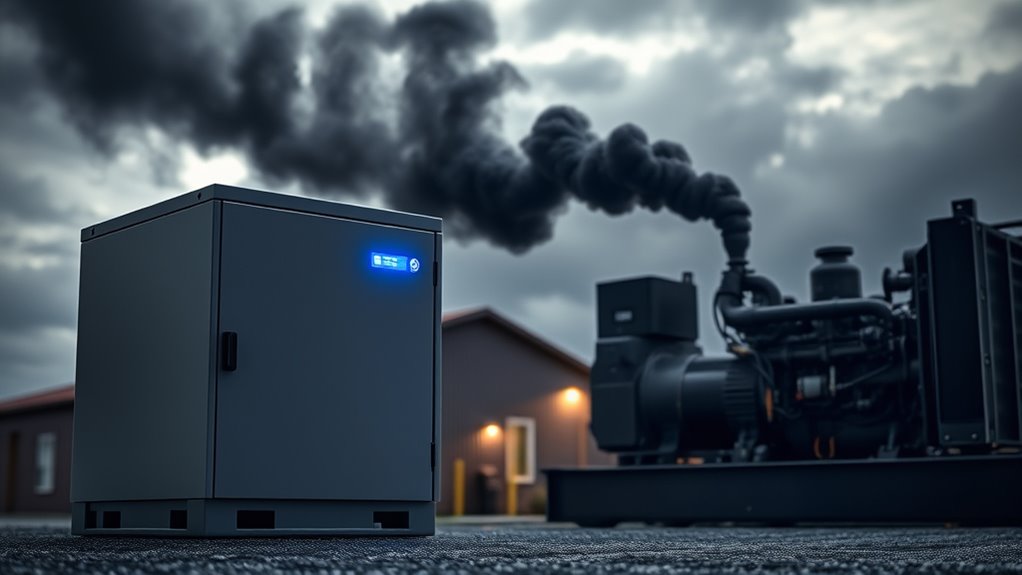
When choosing a power backup solution, you need to contemplate whether a battery backup or a generator best suits your needs. This decision hinges on several factors, including the type of outage, your energy requirements, and your environmental priorities. Battery backups have become increasingly popular, especially with the rise of solar options that allow you to harness renewable energy. These systems store excess solar power generated during the day, enabling you to run critical appliances during outages without relying on fossil fuels. If you’re committed to reducing your carbon footprint, a battery backup paired with solar panels offers a clean, silent, and low-maintenance solution. Moreover, battery systems are highly efficient at providing immediate power, with no need for fuel refills or maintenance schedules that generators demand. They’re ideal for short-term outages or backup for essential devices like medical equipment or communication systems. Additionally, advancements in energy storage technology continue to improve the capacity and cost-effectiveness of battery systems, making them an even more attractive option for many households.
In contrast, generators often excel in longer outages or situations where your power needs far exceed what a battery backup can deliver. Traditional gas or diesel generators can produce large amounts of electricity, making them suitable for powering entire homes or multiple appliances simultaneously. Fuel efficiency varies widely among generator models; some are designed to maximize output while minimizing fuel consumption, but they generally require ongoing fuel supplies, which can be a logistical challenge during prolonged outages. You need to consider how much fuel you’ll need to keep the generator running during extended power failures, which adds to your overall costs and logistical planning. Additionally, generators emit noise and exhaust fumes, which can be disruptive or hazardous, especially in densely populated areas. They also require regular maintenance to ensure reliable operation, and their operation isn’t as environmentally friendly as battery-backed solar solutions.
Ultimately, your choice depends on your priorities and circumstances. If you’re looking for a quiet, eco-friendly, low-maintenance backup that integrates seamlessly with renewable energy sources, a battery backup with solar options is a compelling choice. It offers impressive fuel efficiency in terms of energy use and environmental impact, especially when paired with clean energy sources. However, if your priority is powering larger loads for extended periods and you have the capacity to manage fuel supplies, a generator might be more appropriate. Remember, your choice should align with your specific outage scenarios, budget, and environmental commitments, ensuring you’re prepared when the power goes out.
Frequently Asked Questions
How Long Can Battery Backups Sustain Power During Outages?
Battery backups can typically sustain power for several hours during outages, depending on your system’s solar efficiency and battery capacity. Usually, a well-maintained battery lasts around 4 to 8 hours, but this varies based on usage. Keep in mind that battery lifespan influences performance over time, so regular maintenance guarantees your backup remains reliable. Planning ahead ensures you’re prepared for longer outages, maximizing your system’s effectiveness.
Are Generators Suitable for Long-Term Power Outages?
Generators are suitable for long-term outages because they provide continuous power, with some models running for days on fuel. Did you know that modern generators can achieve up to 90% fuel efficiency? If you combine generators with solar energy, you reduce fuel dependency and extend run times. This makes generators a reliable choice for sustained outages, especially when paired with renewable energy sources and proper maintenance.
What Are the Maintenance Costs for Battery Backups Versus Generators?
You’ll find that battery backups generally have lower maintenance costs compared to generators, which need regular inspections, oil changes, and fuel management. When considering cost comparison, batteries require minimal upkeep, making them more budget-friendly over time. Additionally, batteries have a lower environmental impact since they produce no emissions during operation, unlike generators that emit pollutants. Overall, batteries are more cost-effective and eco-friendly for consistent, low-maintenance power backup.
Can Battery Backups Handle High-Power Appliances?
You might think battery backups can handle high-power appliances, but in reality, they often can’t, especially during peak demand. While renewable energy sources and portable solutions make batteries appealing, their capacity limits their ability to power heavy appliances like refrigerators or HVAC systems. For reliable backup power during outages, you may need a generator, which can handle high loads, whereas batteries are better suited for smaller devices and short-term use.
What Safety Concerns Exist With Generators During Outages?
You should be aware of safety concerns with generators during outages, especially regarding fuel safety and carbon monoxide risks. Always operate generators outdoors, away from windows and vents, to prevent deadly carbon monoxide buildup. Store fuel properly in approved containers and keep them away from heat sources. Regular maintenance and proper ventilation are essential to prevent accidents and guarantee safe operation during power outages.
Conclusion
When choosing between battery backups and generators, think of batteries as your quick, reliable spark of energy—like a flashlight in a dark room—ready instantly but limited in power. Generators are more like a steady floodlight, providing sustained energy but taking time to turn on. Consider your needs carefully; sometimes, a battery backup is your immediate spark, while a generator is the steady glow that keeps everything running smoothly in the long run.