
To change your generator’s oil and filters safely, turn off the unit and let it cool down to avoid burns. Wear gloves and eye protection, then locate and remove the old filters carefully, inspecting them for damage. Drain the used oil into designated containers, avoiding spills on the ground. Replace filters securely, add fresh oil, and check for leaks. Following these steps guarantees a safe process; keep going to discover more helpful tips.
Key Takeaways
- Turn off and cool down the generator before beginning oil or filter replacement.
- Wear gloves and eye protection to prevent contact with oil and debris.
- Follow manufacturer instructions for proper removal and installation of filters.
- Use designated containers for disposing of used oil and filters responsibly.
- Ensure filters are securely fitted and check for leaks after completing maintenance.
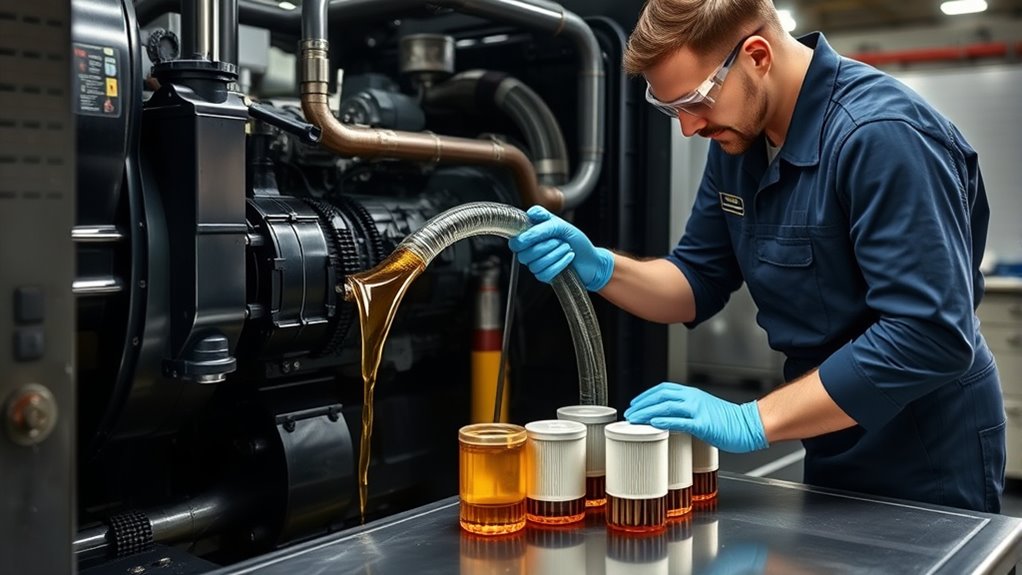
Regularly changing your generator’s oil and filters is essential to keep it running smoothly and efficiently. Proper oil disposal is a critical part of this process, so you need to handle used oil responsibly to protect the environment. Never pour old oil down the drain or onto the ground. Instead, use a designated oil disposal container or take it to a recycling center that accepts used motor oil. This ensures hazardous substances don’t contaminate water sources or soil. Always double-check local regulations for disposal procedures, as they can vary by location. By managing oil disposal correctly, you help prevent environmental damage and stay compliant with safety standards.
Filter maintenance plays a vital role in your generator’s performance. When you change the oil, it’s also a good idea to replace or clean the air filter and fuel filter, if applicable. Air filters trap dust, dirt, and debris, preventing them from entering the engine. A clogged filter restricts airflow, reducing engine efficiency and increasing fuel consumption. Regular filter maintenance ensures your generator breathes properly, runs more efficiently, and lasts longer. When replacing the filter, inspect it for damage or excessive dirt. If it looks worn or dirty, swap it out for a new one. This simple step can prevent costly engine repairs down the line.
When it’s time to change the filters, make sure your generator is turned off and cooled down to avoid burns or accidents. Wear gloves and eye protection to avoid contact with used oil or debris. Remove the old filter carefully, following your manufacturer’s instructions, and dispose of it properly. Be cautious not to spill oil or debris onto the ground or nearby surfaces. Once the new filter is installed, double-check that it’s secured properly and that there are no leaks. This ensures your generator operates at peak performance and prevents contaminants from entering the system.
Throughout this process, remember that proper oil disposal and diligent filter maintenance are interconnected. Maintaining clean filters helps your oil stay cleaner longer, reducing the frequency of oil changes and waste. Oil disposal and proper filter maintenance are key components of responsible generator upkeep. Consistently managing these tasks not only prolongs your generator’s lifespan but also keeps it running reliably during power outages or emergencies. Taking the time to dispose of oil responsibly and maintaining your filters correctly might seem small, but it’s a crucial part of keeping your generator in top shape. Stay attentive to these details, and your generator will serve you well for years to come.
Frequently Asked Questions
How Often Should I Check My Generator’s Oil Levels?
You should check your generator’s oil level at least once a month to guarantee proper oil level maintenance. Regular generator inspection helps detect any leaks or low oil situations early. Before running the generator, always verify the oil level and top it off if needed. Consistent checks prevent engine damage, extend your generator’s lifespan, and guarantee reliable performance during power outages. Make oil level maintenance a routine part of your generator care.
Can I Use Synthetic Oil in My Generator?
Yes, you can use synthetic oil in your generator. Synthetic oil benefits include better lubrication, improved temperature resistance, and longer intervals between oil changes. However, always check your generator’s manual for compatibility, as some generators may have specific oil requirements. Using synthetic oil can enhance performance and extend the lifespan of your generator, making it a smart choice when compatible with your model.
What Safety Gear Is Recommended During Oil Changes?
Did you know over 50% of injuries during oil changes happen from splashes or debris? You should always wear protective gloves and eye protection when changing your generator’s oil. Gloves keep harmful chemicals off your skin, while eye protection shields you from splashes. Taking these precautions helps prevent injuries and keeps you safe while maintaining your generator. Always prioritize safety gear to guarantee a smooth, risk-free oil change.
How Do I Dispose of Used Oil and Filters Properly?
You should take used oil and filters to a recycling center or an authorized collection site that accepts oil recycling. Pour the oil into a sealed, leak-proof container and avoid spills. For filter disposal, check if your local waste facility allows drum or container recycling. Never pour oil down drains or onto the ground. Proper disposal guarantees environmental safety and complies with local regulations, protecting both you and the environment.
Are There Signs Indicating My Oil Filter Needs Replacement Sooner?
You can tell your oil filter needs replacement sooner if you notice signs of a clogged filter, like reduced engine performance, increased oil pressure, or dirty oil. Keep an eye on the oil filter lifespan, which varies by usage, but typically, filters should be replaced every 3,000 to 5,000 miles or as recommended. Regular inspection helps catch these signs early, ensuring your generator runs smoothly and efficiently.
Conclusion
Regularly changing your generator’s oil and filters can extend its lifespan and guarantee reliable power when you need it most. Did you know that neglecting oil changes can reduce a generator’s efficiency by up to 30%? By following proper procedures, you prevent costly repairs and keep your generator running smoothly. Stay proactive with maintenance, and your backup power source will be ready whenever an outage strikes. It’s a small effort for big peace of mind.