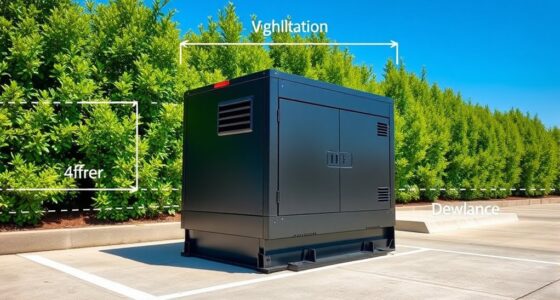
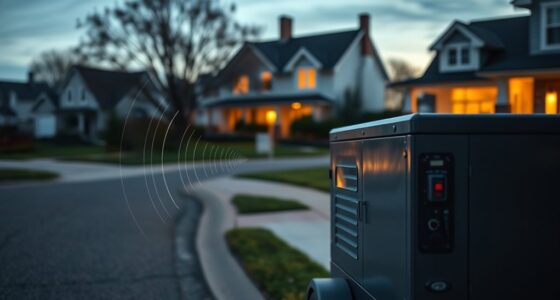
To choose the right spot for your standby generator, consider noise reduction by placing it away from sleeping areas and outdoor living spaces. guarantee proper ventilation and exhaust dispersion by selecting an open area clear of obstructions. Make accessibility easy for maintenance and refueling, ideally near your main transfer switch. Follow local safety codes, elevate it on a concrete pad, and protect it from weather elements. For more tips on securing the best location, keep exploring these essential guidelines.
Key Takeaways
- Place the generator away from windows, patios, and living areas to reduce noise and exhaust exposure.
- Ensure proper ventilation and sufficient clearance for exhaust dispersion to prevent health hazards.
- Position the unit for easy access during maintenance, refueling, and troubleshooting.
- Follow local codes for minimum distance from property lines and structures, and protect from weather elements.
- Select a site with adequate space for safe operation, airflow, and future upgrades or repairs.
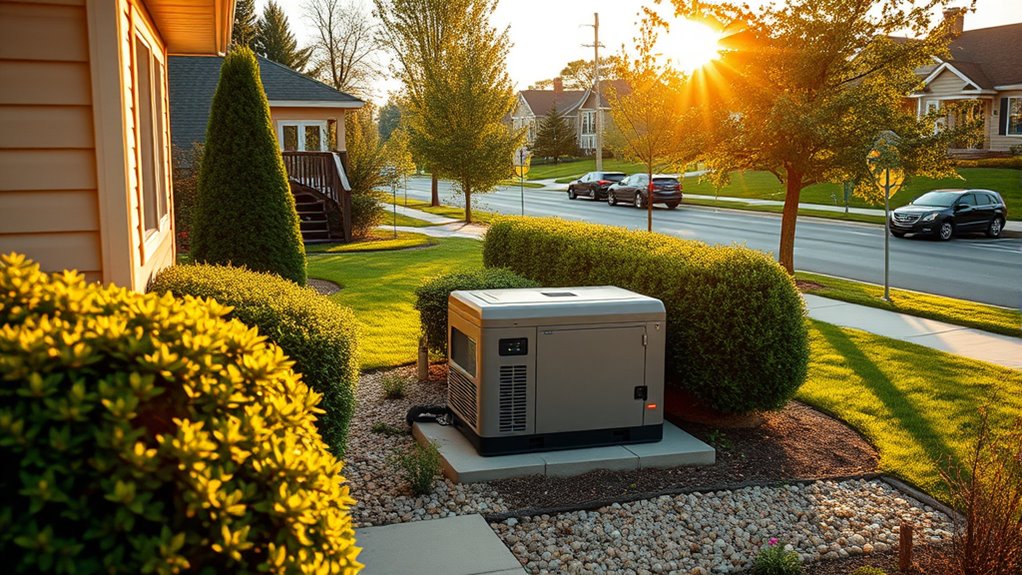
Choosing the right location for your standby generator is vital to guarantee its efficient operation and safety. The placement directly impacts how well the generator performs, how much noise it produces, and whether it adheres to safety regulations. When selecting a spot, you need to consider noise levels carefully. Generators can be loud, and if you place yours too close to living spaces, it can disrupt your daily activities or become a nuisance to neighbors. To minimize noise disturbances, position your generator as far away as possible from bedrooms, patios, or outdoor living areas. You might also consider installing sound barriers or enclosures designed to dampen noise, but make sure these do not compromise ventilation or airflow. Proper placement planning can significantly improve overall performance and safety. Ventilation requirements are just as critical as noise considerations. Generators produce exhaust gases that can be harmful if they accumulate indoors or in enclosed spaces. Hence, you must choose a location that allows for proper airflow and exhaust dispersion. An outdoor site with ample clearance around the generator ensures fresh air intake and safe exhaust venting. Avoid placing it under eaves, near windows, or in enclosed areas where exhaust fumes could seep into your home or create health hazards. Adequate ventilation not only keeps you safe but also prevents overheating, which can reduce the lifespan of your generator. Another key factor is accessibility. You want your generator situated where it’s easy to access for routine maintenance, refueling (if applicable), and inspections. Avoid tight spots or areas that are difficult to reach, especially during emergencies. Also, consider the proximity to your electrical system’s main transfer switch; the shorter the connection, the easier it is to install and troubleshoot. Keep in mind local codes and regulations, which often specify minimum distances from property lines, utility connections, or structures, ensuring compliance and avoiding potential fines. Weather protection is equally important. While outdoor placement is common, you should shield your generator from harsh elements like heavy rain, snow, or direct sunlight. Covering it with a weather-resistant enclosure provides protection but still allows for proper ventilation and noise control. Elevating the unit on a concrete pad prevents flooding and reduces vibration, helping it operate smoothly over time.
Frequently Asked Questions
How Close Can the Generator Be to Neighboring Properties?
You should keep your generator at least 5-10 feet away from neighboring properties to minimize noise and safety risks. Consider the generator’s height and placement to guarantee proper ventilation and compliance with local codes. Also, think about fuel source options—such as natural gas or propane—to determine the best distance for safe operation. Proper placement helps avoid disturbances while maximizing efficiency and safety for everyone nearby.
Are There Specific Local Codes Governing Generator Placement?
Think of local codes as the map guiding your generator’s journey. You must check permitting requirements and zoning restrictions, as they dictate where your generator can sit. Many areas have specific rules about setbacks, noise levels, and fire safety. Failing to adhere to these could lead to fines or rework. Always consult your local building department before installation to ensure your generator’s placement complies with all regulations.
What Are the Noise Level Restrictions for Outdoor Generators?
You need to check local noise ordinances and sound level restrictions for outdoor generators. Most areas set maximum sound levels, usually between 55 and 75 decibels, to prevent noise disturbance. You should verify your generator’s sound levels stay within these limits, especially during nighttime hours. To be safe, consult your local regulations and consider installing sound barriers or enclosures to reduce noise and comply with noise ordinances.
How Does Outdoor Weather Affect Generator Placement Choices?
Imagine a storm rolling in as you decide where to place your generator. You’ll want a spot with weather resilience, protected from heavy rain, snow, and wind. Shade considerations matter too—placing it under a canopy prevents overheating while avoiding moisture buildup. By choosing a well-ventilated, sheltered location, you guarantee your generator runs smoothly and lasts longer, even when unpredictable weather strikes.
Can Trees or Landscaping Impact the Generator’s Performance?
Trees and landscaping can definitely impact your generator’s performance. Tree shading might cause temperature fluctuations, affecting efficiency, while overgrown landscaping can block airflow or restrict access. Make certain you maintain adequate landscaping clearance around the generator to ensure proper ventilation and ease of maintenance. Avoid planting or allowing trees too close, as their roots or branches could interfere with the unit’s operation or cause damage over time.
Conclusion
Think of your standby generator as the heart of your home’s safety, beating steadily in the right spot. Just like a heart needs a strong, protected place to keep you alive and well, your generator needs careful placement to serve you best. Choose wisely, and it’ll stand ready, silent but crucial, ready to spring into action when you need it most. A good location isn’t just about convenience — it’s about securing your home’s resilience for years to come.