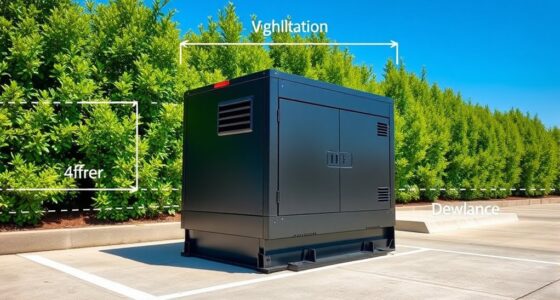
Integrating generators into your microgrid guarantees reliable and flexible power delivery, especially when renewable sources fluctuate. You’ll want to coordinate their operation with solar and wind, using load management strategies to prevent overloads and maintain stability. Advanced control systems can optimize fuel use and extend equipment lifespan, while energy storage helps balance supply and demand. To create a seamless, sustainable energy ecosystem, understanding how to integrate these components effectively is key—discover more tips on achieving this balance.
Key Takeaways
- Incorporate control algorithms that coordinate generator output with renewable sources and storage for seamless energy flow.
- Implement load management strategies to balance demand and prevent generator overloads or underutilization.
- Use real-time monitoring systems to adjust generator operation dynamically based on load fluctuations and renewable generation.
- Integrate energy storage to buffer short-term fluctuations and enhance overall system stability during source transitions.
- Design flexible configurations that prioritize critical loads and enable smooth transitions between generators and renewable sources.
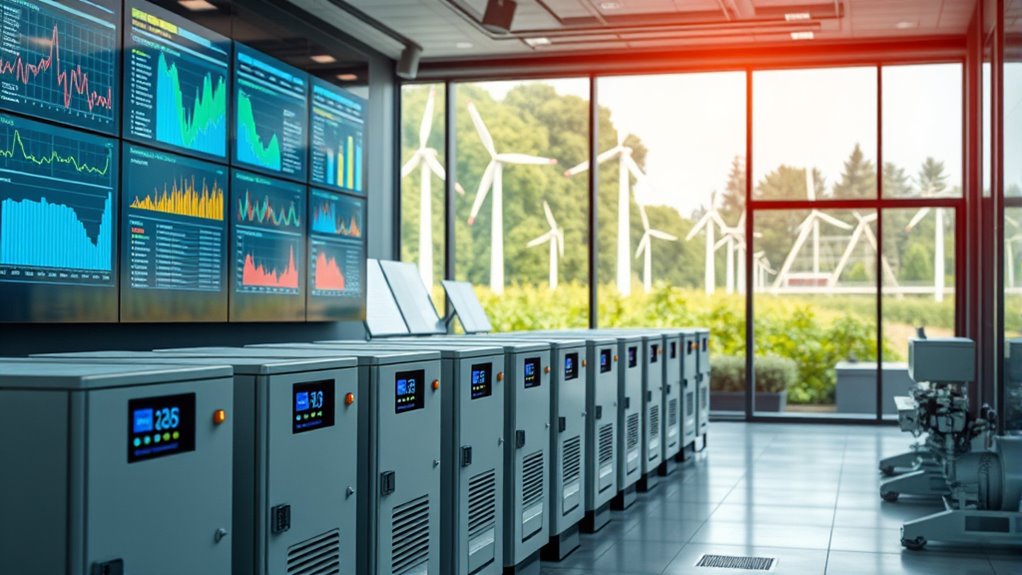
Integrating generators into microgrid configurations is essential for ensuring reliable and flexible power supply, especially in remote or off-grid areas. When you incorporate generators into your microgrid setup, you’re taking a vital step toward maintaining power stability, which is pivotal for both everyday operations and critical applications. Generators act as backup sources or primary power providers, depending on your system design, offering resilience during outages or low renewable energy production. To achieve this, effective load management becomes a key factor. You need to balance power demand with the generator’s capacity, ensuring it doesn’t become overloaded or underutilized, which could lead to inefficiencies or equipment wear.
Power stability hinges on your ability to regulate the load on the generator and coordinate its operation with other energy sources, such as solar or wind. When demand spikes unexpectedly, your generator must respond swiftly without causing voltage fluctuations or power interruptions. Proper load management strategies involve real-time monitoring and control systems that can adjust generator output dynamically, aligning supply with fluctuating demand. This means setting thresholds for load levels, integrating smart controllers, and designing your microgrid to prioritize critical loads during peak times or generator outages. By doing so, you prevent power instability, which can disrupt operations and harm sensitive equipment. Additionally, incorporating energy storage systems**** can further enhance stability by smoothing out short-term fluctuations.
Furthermore, integrating generators into your microgrid isn’t just about adding a backup; it’s about creating a harmonious energy ecosystem. You should consider how the generator interacts with renewable sources, storage systems, and the overall load profile. For instance, during periods of low renewable energy output, your generator can ramp up to fill the gap, ensuring continuous power delivery. Conversely, during high renewable generation, it can be throttled down to conserve fuel and extend generator lifespan. Managing these transitions smoothly requires advanced control algorithms that optimize generator operation, reduce fuel consumption, and prolong equipment life—all while maintaining consistent power quality.
Frequently Asked Questions
How Do Generators Impact Microgrid Cybersecurity?
Generators can introduce cybersecurity vulnerabilities if not properly secured, as they often connect to your microgrid’s network. Hackers might exploit weak points, gaining access to sensitive data or disrupting operations. To protect your system, you should implement robust data encryption and regularly update security protocols. Keeping generator firmware current and monitoring network activity helps prevent cyberattacks, ensuring your microgrid remains resilient and secure against threats.
What Are the Environmental Benefits of Generator Integration?
By integrating generators into your microgrid, you promote renewable synergy, making it easier to incorporate cleaner energy sources. This helps you reduce emissions considerably, especially when using renewable or low-carbon fuels. Additionally, generators can optimize energy use, lowering your reliance on fossil fuels and decreasing your carbon footprint. Overall, this integration supports a more sustainable environment while ensuring reliable power supply for your community or facility.
How Do Generators Affect Microgrid Cost-Effectiveness?
Imagine you install a generator in your microgrid, and it improves your system’s fuel efficiency, reducing operational costs. While installation costs can be high initially, the savings on fuel and maintenance over time boost overall cost-effectiveness. This setup guarantees reliable power, minimizes outages, and lowers long-term expenses, making your microgrid more economically sustainable. Properly evaluating these factors helps you maximize benefits and justify the upfront investment.
What Are the Maintenance Challenges for Integrated Generators?
You’ll face maintenance challenges like guaranteeing fuel efficiency and noise reduction. Regularly checking fuel systems helps optimize efficiency and prevents downtime. Managing noise levels from generators requires soundproofing or buffer zones, especially in sensitive areas. You must also monitor wear and tear, schedule routine inspections, and keep spare parts handy. Addressing these challenges ensures reliable operation, prolongs equipment lifespan, and maintains environmental standards within your microgrid.
How Do Generators Influence Microgrid Scalability?
Generators act like the backbone of your microgrid, directly influencing its scalability. They determine your power capacity, allowing you to expand or reduce energy output as needed. This flexibility makes it easier to adapt to changing demands, much like stretching or shrinking a rubber band. By integrating reliable generators, you enhance your system’s flexibility, ensuring your microgrid can grow smoothly without hitting capacity limits or encountering stability issues.
Conclusion
Integrating generators into microgrid setups boosts reliability and efficiency. Did you know that microgrids with integrated generators can reduce energy costs by up to 30%? By carefully designing these systems, you guarantee continuous power even during outages, keeping your operations running smoothly. So, embracing generator integration isn’t just smart—it’s essential for a resilient and cost-effective energy future. Take charge and harness the full potential of your microgrid today!