When sizing your propane tank for a standby generator, avoid common myths like bigger always means better, which can lead to safety issues and higher costs. Instead, focus on your generator’s actual fuel needs, considering factors like consumption rate, load, and environmental conditions. Proper sizing balances efficiency and safety, preventing costly mistakes or outages. Stick with proven guidelines, and you’ll be well on your way to reliable power—more tips await as you explore further.
Key Takeaways
- Proper tank size balances safety, cost, and generator fuel needs; bigger isn’t always better.
- Know your generator’s fuel consumption rate to estimate required propane capacity accurately.
- Larger tanks don’t guarantee longer runtime; consider load demand and efficiency instead.
- Follow safety standards and local regulations to prevent hazards during installation and operation.
- Avoid common mistakes like overestimating needs or ignoring maintenance for optimal performance.
Common Myths About Propane Tank Sizes Debunked
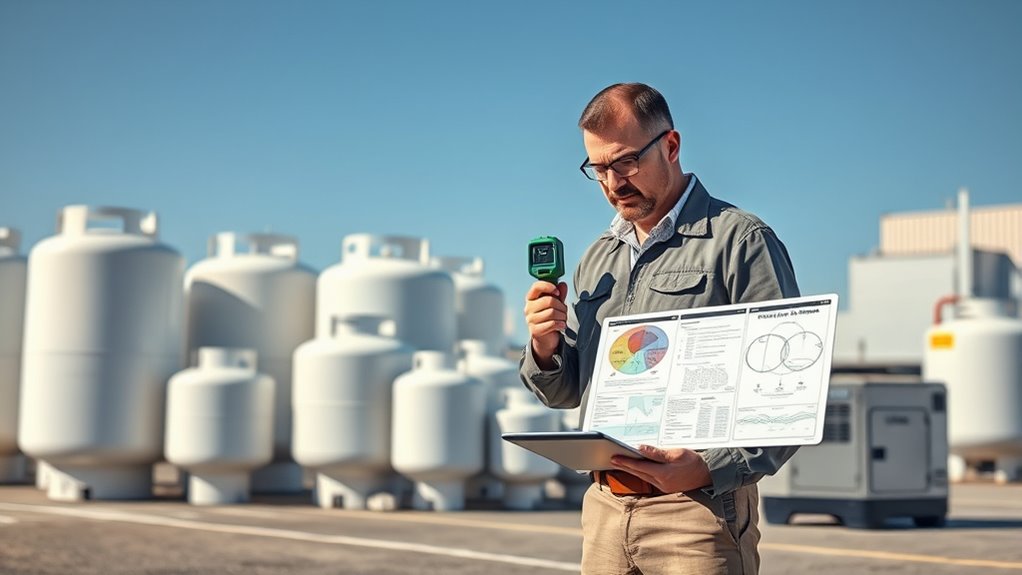
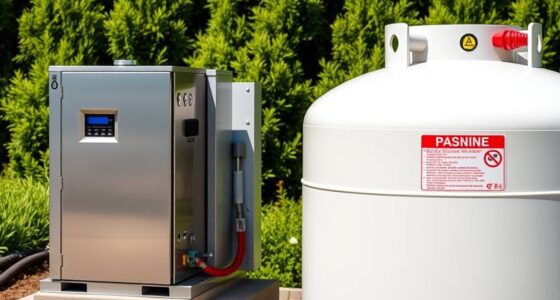
Many people believe that larger propane tanks are always better, but this isn’t necessarily true. While bigger tanks might seem like a safer choice, they can pose tank safety risks if not installed or maintained properly. Oversized tanks may also lead to unnecessary costs, as they often come with higher upfront expenses and increased maintenance. It’s important to weigh your actual fuel needs rather than just opting for the largest tank available. Smaller tanks can be perfectly adequate for standby generators, especially when you factor in proper installation and safety precautions. Proper sizing helps you avoid potential hazards while keeping your budget in check. Additionally, understanding tank material and construction is crucial for ensuring safety and longevity of the propane system.
How Much Fuel Does Your Generator Really Need?
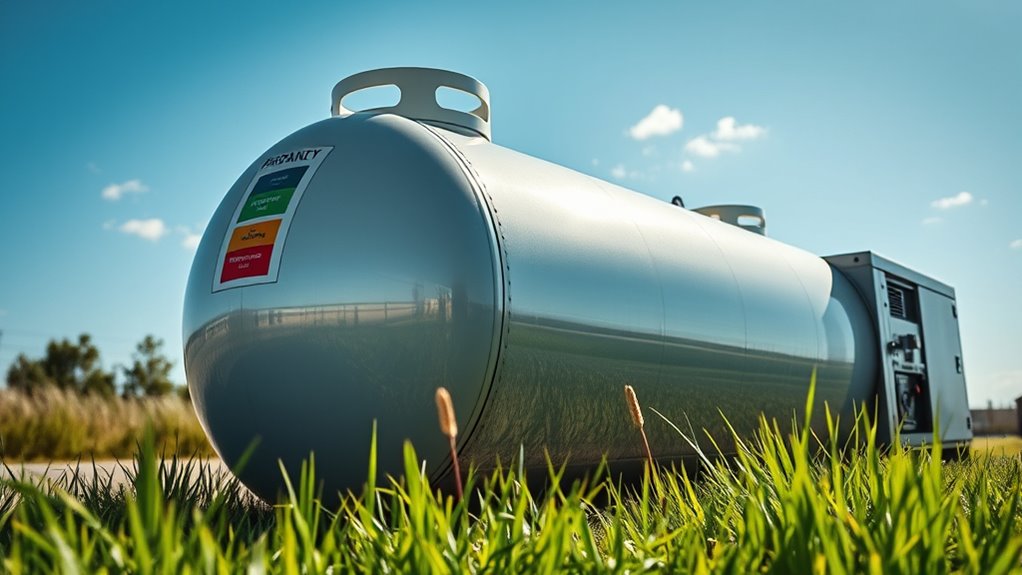
Choosing the right propane tank size depends on understanding how much fuel your generator actually needs. To do this, consider your generator’s fuel efficiency—how much propane it consumes per hour at different loads. This helps you estimate the tank capacity required to run during outages without overbuying. Remember, a larger tank isn’t always better if your generator’s fuel needs are minimal, so avoid unnecessary size. Regular tank maintenance, like checking for leaks and ensuring proper connections, helps optimize fuel use and prevents waste. Knowing your generator’s consumption rate allows you to select a tank that balances capacity with efficiency, ensuring reliable power during emergencies without excessive costs or storage issues. Additionally, understanding your generator’s fuel consumption rate can help you better plan for long-term energy needs and storage solutions. Proper sizing and maintenance keep your system running smoothly and efficiently.
Factors That Affect Propane Consumption During Power Outages
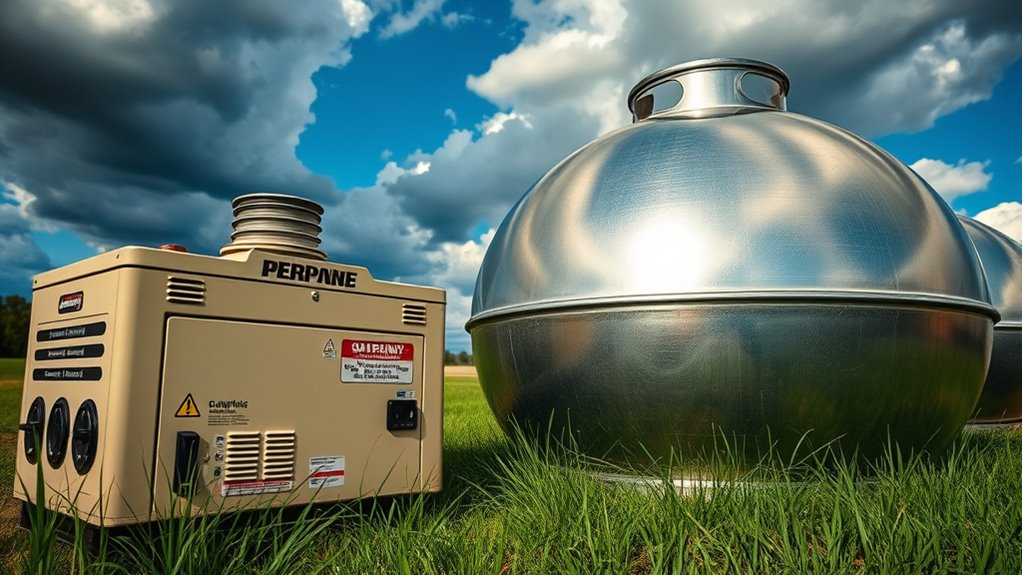
Several factors influence how much propane your generator consumes during power outages. Your generator’s storage capacity determines how long it can run before needing a refill, but the consumption rate is equally important. A higher consumption rate means more propane is used per hour, reducing runtime on the same tank size. The load demand also plays a role; running your generator at full capacity consumes more fuel than operating at a lower load. Environmental conditions, such as extreme temperatures, can affect efficiency and fuel usage. Additionally, the age and maintenance of your generator impact its performance—well-maintained units tend to run more efficiently, conserving propane. Proper projector setup and regular maintenance can also help optimize performance and fuel efficiency, especially in portable models. Understanding these factors helps you better estimate your propane needs during outages and select an appropriately sized tank.
Quick Tips for Accurate Propane Tank Sizing
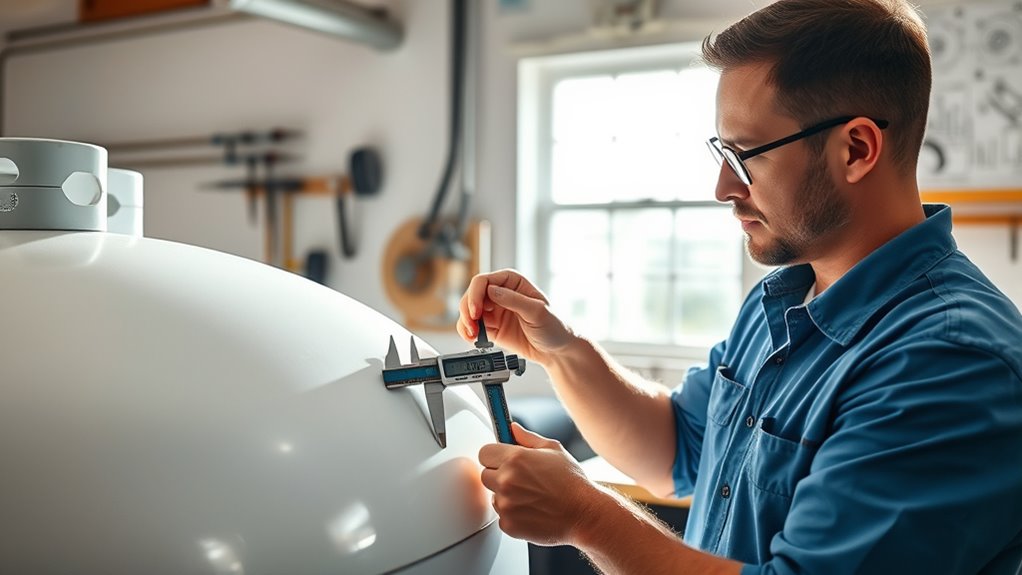
Accurately sizing your propane tank is essential to guarantee you have enough fuel during outages without overspending on excess capacity. Proper sizing also ensures tank safety and ideal operation. Here are quick tips to help you get it right:
- Assess your generator’s fuel consumption to determine the required capacity for your typical outage duration.
- Consult with a trusted supplier to evaluate tank safety standards and receive expert advice on size options.
- Consider future needs—if you plan to upgrade your generator, size your tank accordingly.
- Verify local regulations to ensure your tank size complies with safety and zoning codes.
Following these tips helps you achieve accurate tank sizing while prioritizing safety and choosing the right supplier.
Mistakes to Avoid When Choosing a Propane Tank for Your Generator
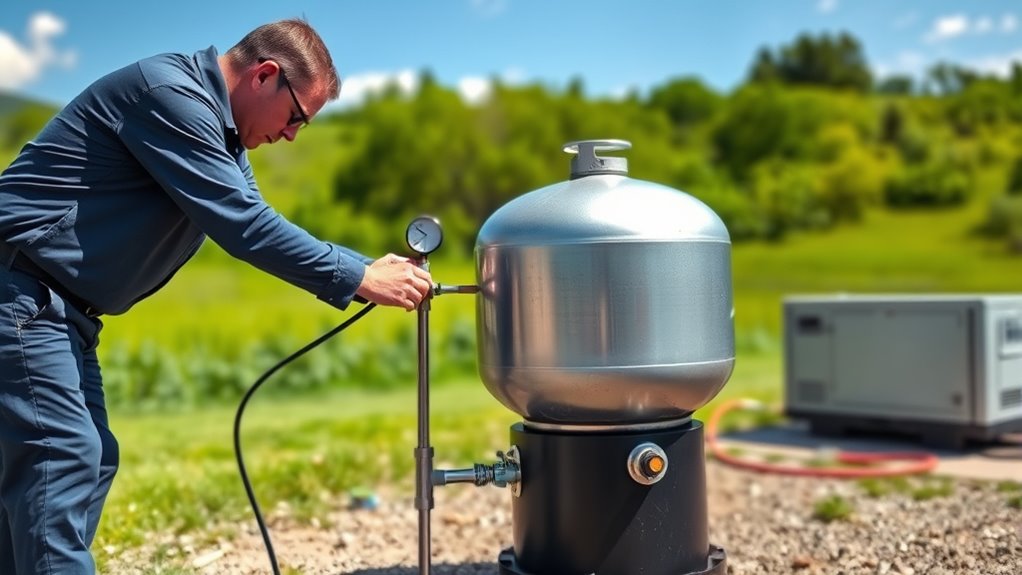
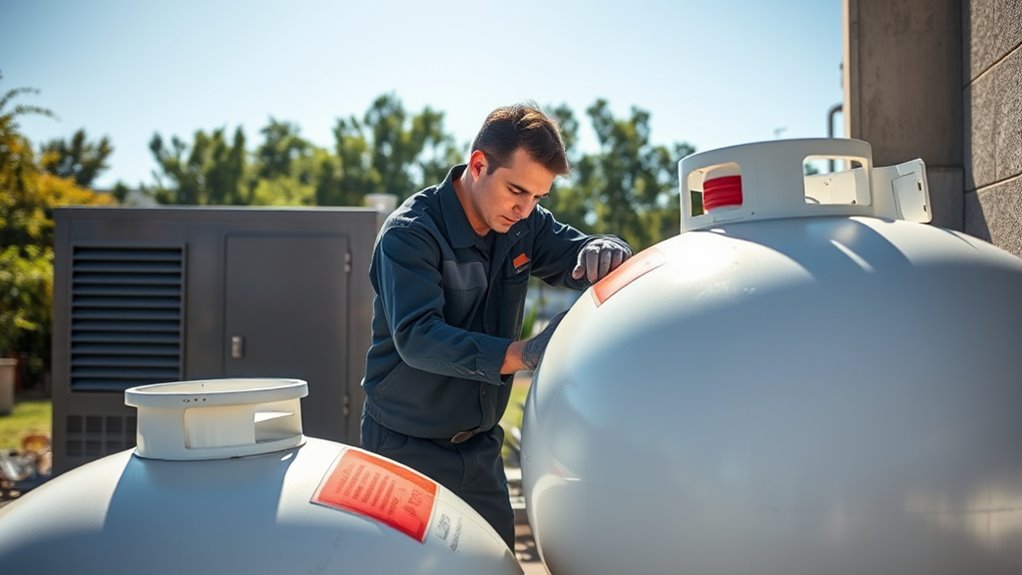
Selecting the wrong propane tank size can lead to costly issues, from running out of fuel during emergencies to overspending on unnecessary capacity. One common mistake is ignoring proper tank installation procedures, which can compromise safety and efficiency. Always make certain your tank complies with safety regulations and is installed by certified professionals. Avoid overestimating your needs, as larger tanks may seem beneficial but can be more expensive and harder to maintain. Conversely, undersized tanks risk running empty when you need backup power most. Also, don’t overlook the importance of proper venting and clearance requirements during installation. Failing to follow safety regulations or rushing tank installation can create hazards, increase costs, and lead to costly delays. Proper planning and adherence to guidelines are essential for reliable, safe generator operation. Additionally, understanding tank sizing principles helps ensure you select the appropriate capacity for your specific energy needs.
Frequently Asked Questions
How Often Should I Monitor Propane Levels During a Power Outage?
You should monitor your propane levels daily during a power outage, especially if your tank is nearing empty. Keep an eye on your tank level alerts and consider checking more frequently if usage is high or if your generator runs continuously. Regular monitoring guarantees you won’t run out unexpectedly, providing peace of mind and uninterrupted power. Stay proactive to avoid emergency situations caused by low propane supply.
Can Propane Tank Size Affect Generator Startup Performance?
Sure, a tiny tank might seem cute, but it can totally sabotage your generator’s startup. When tank capacity is too small, pressure regulation falters, causing inconsistent fuel flow and potential startup failures. Larger tanks maintain steady pressure, ensuring your generator kicks on when needed. So, don’t skimp on tank size—bicking up pressure regulation and capacity guarantees reliable power, not a game of propane roulette.
What Safety Considerations Are Essential When Installing a Large Propane Tank?
When installing a large propane tank, guarantee you regularly check for tank corrosion to prevent leaks and ensure safety. Keep emergency access clear at all times, avoiding obstructions that could delay urgent response. Follow local codes for proper distance from structures and ignition sources. Use certified installers and inspect the installation periodically. These precautions help safeguard your property, your family, and ensure reliable generator performance.
Are There Legal Restrictions on Propane Tank Placement in Residential Areas?
You’re stepping into a world where safety and legality are your guiding stars. Zoning restrictions and permit requirements act like a map, guiding you through residential area regulations. Local laws often limit propane tank placement to keep your community safe, so check with your city or county before installation. Ignoring these rules can lead to hefty fines or dangerous situations. Stay informed, follow the rules, and guarantee your setup is both legal and secure.
How Does Climate Impact Propane Storage and Consumption for Generators?
Climate variability impacts your propane storage and generator use by affecting temperature regulation. In colder weather, propane may vaporize less efficiently, reducing its availability and increasing consumption to meet your power needs. Hotter temperatures can cause pressure buildup in tanks, requiring proper venting and safety measures. To guarantee reliable operation, you should monitor temperature fluctuations closely, insulate tanks if needed, and adapt your storage practices to maintain consistent propane supply regardless of climate changes.
Conclusion
Remember, don’t let misconceptions steer your propane tank choices. Accurate sizing guarantees your generator runs smoothly when you need it most. Take the time to contemplate your power needs and avoid common mistakes—because a well-sized tank is like a wise investment. After all, “Measure twice, cut once”—and in this case, size up your propane tank carefully to keep the lights on when it counts.