
Fuel stabilizers come in various types designed for specific engines and storage durations. If you have small engines like lawnmowers or chainsaws, choose stabilizers formulated for them, especially if storing fuel for more than a month. For long-term storage of gasoline, use products labeled for extended stability to prevent degradation and varnish buildup. Proper application guarantees your equipment stays ready when needed—stick with the right stabilizer and instructions to protect your fuel and engine effectively. Keep exploring to learn how to select and use the best stabilizer.
Key Takeaways
- Different stabilizers are formulated for small engines (lawnmowers, chainsaws) versus larger engines (generators, boats).
- Use fuel stabilizers for storage durations over 30 days to prevent fuel degradation and engine issues.
- Choose stabilizers with antioxidants for long-term fuel preservation, especially with ethanol-blended fuels.
- Add stabilizer to a full tank of fuel before storage and run the engine to circulate it through the system.
- Follow manufacturer instructions for proper dosage and application to ensure optimal engine protection.
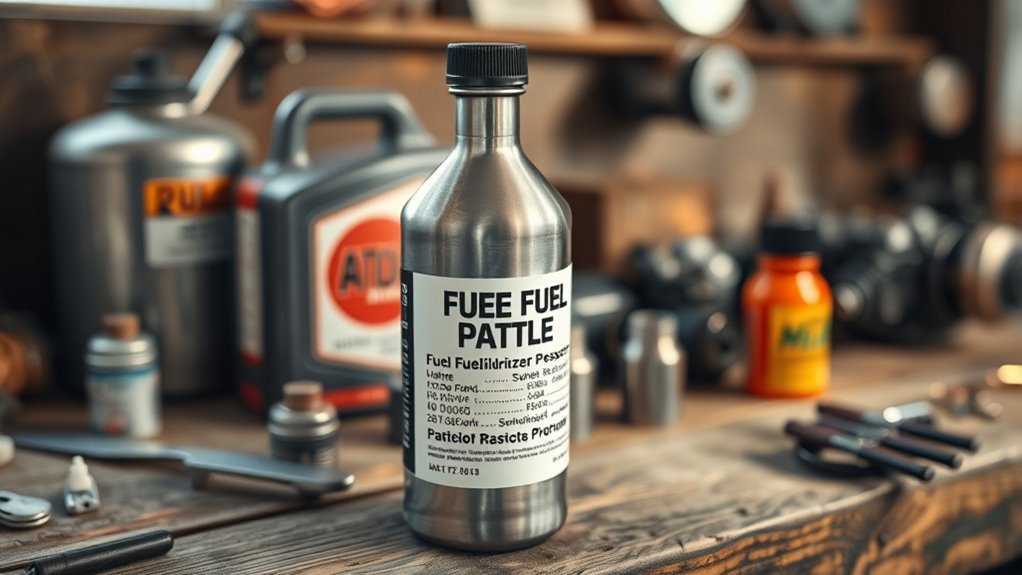
Have you ever wondered how to keep your fuel fresh and prevent engine problems during periods of storage? When you’re not using your equipment for weeks or months, fuel can degrade, leading to clogged fuel lines, poor engine performance, or even damage. That’s where fuel stabilizers come into play. They’re specifically designed to extend the shelf life of gasoline, ensuring your engine runs smoothly when you’re ready to use it again. But not all stabilizers are the same, and choosing the right one depends on your equipment’s engine compatibility and how long you plan to store the fuel.
First, understanding engine compatibility is essential. Some stabilizers work better with small engines like lawnmowers, chainsaws, or snowblowers, while others are formulated for larger engines such as generators or boats. Always check the product label to confirm it’s suitable for your specific engine type. Using an incompatible stabilizer can result in incomplete fuel stabilization or even damage to your engine. For example, certain stabilizers contain additives tailored for 2-stroke engines, while others are designed for 4-stroke engines. Matching the stabilizer to your engine ensures supreme performance and protection.
Choosing the right stabilizer depends on your engine type for optimal performance and protection.
Next, consider the storage duration. If you’re only putting your equipment away for a short period—say a couple of weeks—you might not need a stabilizer at all, especially if you plan to run the engine periodically and top off the tank with fresh fuel. However, for longer storage periods—more than 30 days—adding a quality fuel stabilizer becomes highly recommended. It prevents the fuel from oxidizing and forming varnish deposits, which can clog carburetors and fuel filters. For storage durations extending beyond a few months, look for stabilizers labeled as “long-term” or “extended stability,” often capable of preserving fuel for 12 months or more. These products contain stronger antioxidants and additives that keep the fuel fresh and prevent phase separation, especially in ethanol-blended fuels, which are more prone to deterioration. Additionally, using a fuel stabilizer that includes antioxidants helps combat the oxidation process, ensuring the fuel remains effective for longer periods.
Applying the stabilizer is straightforward. Typically, you add the recommended amount directly to a full tank of fuel before storage. Running the engine afterward ensures the stabilizer circulates throughout the system, protecting the entire fuel pathway. Remember, the effectiveness of the stabilizer depends on proper application and the quality of the fuel used initially. Always follow the manufacturer’s instructions for dosage and storage recommendations. By choosing the right stabilizer for your engine compatibility and storage duration, you safeguard your equipment, reduce maintenance costs, and ensure reliable operation when you need it most.
Frequently Asked Questions
Can Fuel Stabilizers Be Used in Diesel Engines?
Yes, fuel stabilizers can be used in diesel engines if they are diesel-compatible. You should use them especially when storing diesel fuel for extended periods, as they help prevent oxidation and microbial growth. Always check the label to confirm diesel compatibility and follow the recommended dosage. This will maintain fuel quality during storage duration, ensuring your diesel engine runs smoothly when you need it.
How Long Can Fuel Stay Stabilized Before Degrading?
When you use a fuel stabilizer, your fuel can stay fresh for about 12 to 24 months, depending on storage conditions. After this storage duration, fuel degradation can occur, reducing its effectiveness and causing engine problems. To maximize the stabilizer’s benefits, keep your fuel in a cool, sealed container away from direct sunlight. Regularly check your stored fuel and add stabilizer if you plan to store it long-term.
Are There Eco-Friendly Fuel Stabilizer Options Available?
Yes, eco-friendly fuel stabilizer options exist that can make you feel better about your environmental impact. You might be surprised to find biodegradable additives and plant-based stabilizers on the market, designed to keep fuel fresh without harming the planet. These alternatives are just as effective as traditional stabilizers, giving you peace of mind knowing you’re helping reduce pollution while protecting your engine’s performance.
Do Fuel Stabilizers Work With Ethanol-Blended Fuels?
Yes, fuel stabilizers work with ethanol-blended fuels, but you need to check their ethanol compatibility. Not all stabilizers are designed for ethanol blends, so using one that’s compatible helps prevent issues like phase separation and corrosion. Always consider your fuel blend considerations and choose a stabilizer specifically formulated for ethanol fuels. This way, you protect your engine and maintain fuel quality during storage.
Can Fuel Stabilizers Be Added to Partially Used Tanks?
Adding fuel stabilizers to a partially used tank is like adding a fresh coat of armor; it’s possible but not always ideal. You can do it, but storage compatibility and additive effectiveness vary. If the tank has been sitting for a while, adding stabilizer helps prevent degradation. Just make certain you follow manufacturer instructions for the right amount, and be aware that effectiveness may be limited if the fuel has been in storage too long.
Conclusion
Using a fuel stabilizer is like giving your engine a refreshing breeze, ensuring it runs smoothly when you need it most. Knowing when and which type to use keeps your equipment humming along like a well-tuned orchestra. Don’t let your fuel sit idle like a forgotten book on a dusty shelf—stabilize it, and keep your engine’s story alive and thriving for seasons to come.