TL;DR

Get backup power and energy gear delivered free — and shop member deals
- Fast, free delivery on millions of items
- Access to Prime Big Deal Days deals on October 6–7
- Prime Video, Amazon Music and more included
CBAK Energy has signed an investment agreement with the Nanjing Gaochun Economic Development Zone for a project designed to add 12 GWh of annual cell capacity. The lines could produce sodium-ion or lithium-ion cells, and development is planned from the second half of 2027, subject to financing, demand and project readiness. A separate 6 GWh expansion at the company’s existing Nanjing site is expected by the end of 2026.
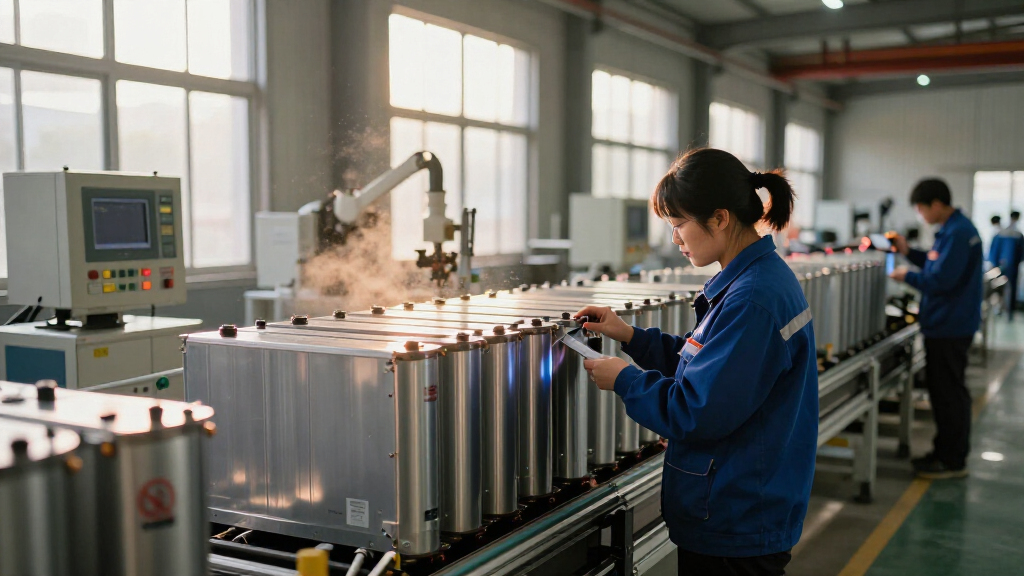
CBAK Energy has signed an investment agreement with the Nanjing Gaochun Economic Development Zone for a project planned to add 12 GWh of annual battery-cell capacity in Nanjing, Jiangsu province. The proposed facility is part of the Chinese manufacturer’s sodium-ion expansion plans, but its production lines are designed to make either sodium-ion or lithium-ion cells, with the choice depending on market conditions and customer demand.
The agreement covers research and development, manufacturing of large cylindrical cells, and integration of battery modules and packs. CBAK says it expects to develop the project in phases, with work planned to advance in the second half of 2027. That schedule is conditional: the company says financing must be secured and that project stages will depend on available funding, demand and readiness.
CBAK estimates the 12 GWh project could produce CNY 4.8 billion to CNY 5 billion in annual revenue at full capacity if all output were sold, using current lithium-ion cell market prices as its basis. This is a company estimate, not a reported revenue figure or a forecast of guaranteed sales. The company has not specified which chemistry it expects to produce at the site or how much capacity would be allocated to each type.
The announcement is separate from a planned 6 GWh expansion at CBAK’s existing Nanjing facility, which the company expects to complete by the end of 2026. That site currently has 4.5 GWh of annual capacity for Model 32140 cells. If the additional capacity is added, CBAK says the facility would reach 10.5 GWh annually. It is considering two Model 60150 production lines, while also weighing a configuration with one Model 32140 line and one Model 60150 line.
Two Nanjing Projects, Different Timelines
The proposed 12 GWh project would give CBAK a planned production base that can serve customers seeking either sodium-ion or lithium-ion cells. That flexibility matters because the company has not committed the lines exclusively to sodium-ion manufacturing: production choices will depend on customer orders and market conditions. The agreement signals a step in its sodium-ion plans, but it does not by itself establish that the project is financed, under construction or ready to produce cells.
The separate 6 GWh expansion has a nearer stated target, with CBAK expecting the added capacity by the end of 2026. The company says it is responding to strong demand for large cylindrical cells, particularly its Model 60150. It estimates the added capacity could generate CNY 2.4 billion to CNY 2.7 billion in annual revenue at full operation if all output is sold. As with the larger project estimate, that figure depends on utilization and sales rather than confirming future revenue.
Together, the plans point to a substantial increase in the company’s stated Nanjing capacity, but their progress depends on different conditions and schedules. The distinction is relevant to customers and investors: the existing-site expansion has a year-end target, while the new 12 GWh project remains a later, financing-dependent proposal.
CBAK’s Sodium-Ion Development
The investment agreement follows CBAK’s previously announced sodium-ion expansion plans. The company reported in September 2026 that it had completed internal testing of its 32140 NH-7Ah full-tab sodium-ion cell across a temperature range from minus 40 to 70 degrees Celsius. CBAK said the results indicate potential for use in varied climates and environments. These were company-reported internal test results; the source material does not provide independent verification or a broader commercial performance assessment.
CBAK said the cell uses sodium iron phosphate pyrophosphate, an iron-based polyanion cathode material. It also reported that customers are testing sodium-ion samples for residential and portable energy storage, as well as electric mobility. Testing is underway, according to the company; the announcement does not identify the customers, provide results, or state that the samples have won commercial orders.
The planned Nanjing production lines’ ability to make either chemistry is a central feature of the project. It allows CBAK to leave the eventual product mix open, but the company has not disclosed detailed equipment plans, capital costs or a construction timetable. The proposed 12 GWh figure describes intended annual capacity, not current production.
“The 12 GWh investment agreement advances our plans for sodium-ion production. Designing the lines to produce lithium-ion cells as well would give us more options to serve customers as demand develops in both markets.”
— Zhiguang Hu, CBAK Energy CEO
Financing and Cell Mix Remain Open
CBAK has not disclosed whether financing for the 12 GWh project is secured, how much the project will cost, or when construction would begin. Its plan to advance development in the second half of 2027 is conditional, and the company says the work will be phased according to financing, demand and project readiness. The agreement alone does not confirm a final investment decision or a completed factory.
The eventual mix of sodium-ion and lithium-ion production is also unsettled. CBAK says it will select chemistry based on market conditions and customer demand, but has not provided capacity allocations, confirmed orders or customer names. For the separate 6 GWh addition, the company is still considering alternative production-line configurations, and says the cell models and line setup may change as demand evolves.
The company’s revenue estimates assume full capacity and that all output is sold. Actual revenue would depend on production ramp-up, utilization, prices and sales. The source material does not provide independent confirmation of the customer testing or the reported internal cell-test results.
Watch for Funding and Build Plans
The next key developments for the 12 GWh proposal are whether CBAK secures financing and provides details on phased investment, construction and the intended production mix. The company has said development is planned to advance in the second half of 2027, but has not announced a confirmed construction start or completion date.
For the existing Nanjing facility, the company’s stated milestone is to add 6 GWh of annual capacity by the end of 2026. Updates may clarify whether CBAK chooses two Model 60150 lines or combines Model 60150 and Model 32140 production, and whether that timetable changes. Customer testing of sodium-ion samples is also ongoing, according to CBAK; the company has not announced test outcomes or resulting commercial orders.
Key Questions
What did CBAK Energy agree to do in Nanjing?
CBAK signed an investment agreement with the Nanjing Gaochun Economic Development Zone for a project planned to add 12 GWh of annual cell capacity, including research, development, manufacturing and battery-system integration.
Will the proposed 12 GWh facility make only sodium-ion cells?
No. CBAK says the planned lines could produce sodium-ion or lithium-ion cells. It has not announced the eventual production mix, which it says will depend on market conditions and customer demand.
When could the 12 GWh project move forward?
CBAK plans to advance the project in the second half of 2027, subject to securing financing. Development is expected to take place in phases based on funding, demand and project readiness.
Is the 6 GWh expansion the same project?
No. The 6 GWh addition is a separate expansion at CBAK’s existing Nanjing facility, which currently has 4.5 GWh of annual Model 32140 capacity. CBAK expects the addition by the end of 2026; if completed as planned, the site would have 10.5 GWh of annual capacity.
Are the company’s revenue estimates guaranteed?
No. CBAK’s estimates of CNY 4.8 billion to CNY 5 billion annually for the 12 GWh project assume full capacity and that all output is sold, using current lithium-ion cell market prices. They are company estimates, not confirmed revenue or guaranteed sales.
Source: rss
Halloween Picks
halloween
As an affiliate, we earn on qualifying purchases.