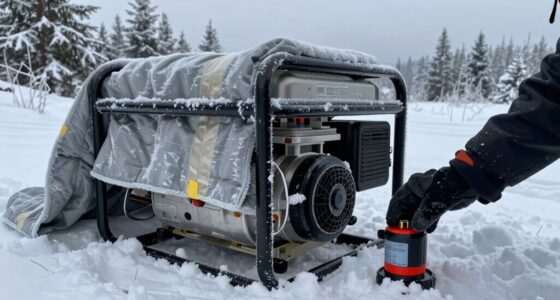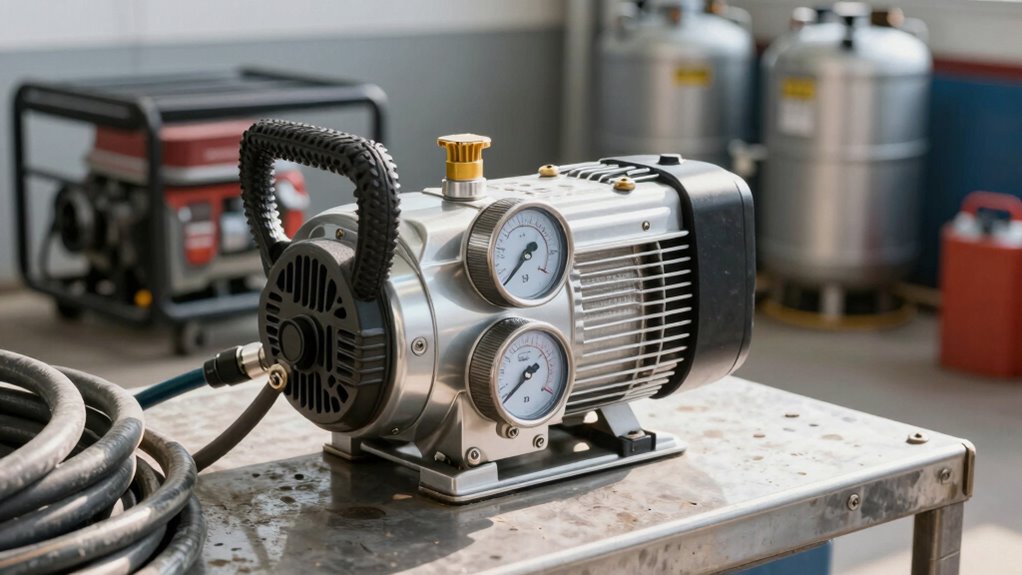
To choose a fuel transfer pump for backup power refueling, guarantee it’s compatible with your fuel type to prevent damage. Look for durable, high-quality models built to withstand frequent use and harsh conditions. Prioritize safety features, easy operation, and clear flow indicators to minimize errors. Make sure the pump has enough capacity for quick refueling without overloading the system. If you keep these factors in mind, you’ll find the right pump that guarantees safe, efficient backup power support and more essential tips ahead.
Key Takeaways
- Verify fuel compatibility to ensure the pump matches the specific fuel type used in backup systems.
- Choose a durable, high-quality pump built to withstand frequent use and harsh conditions.
- Ensure the pump has safety features and is easy to operate to minimize errors during urgent refueling.
- Consider the flow rate and capacity to enable quick, efficient fuel transfer without overloading the system.
- Prioritize regular maintenance access and safety protocols to maintain reliable, safe backup power refueling.
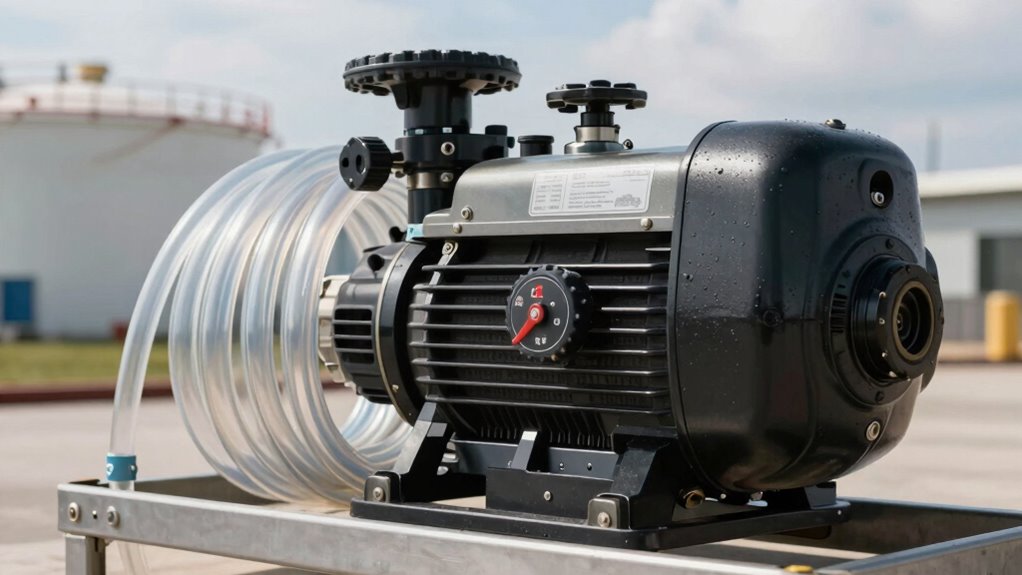
Have you ever struggled with transferring fuel efficiently and safely? Choosing the right fuel transfer pump for backup power refueling is essential to guarantee your generator runs smoothly when you need it most. The first thing to contemplate is fuel compatibility; not all pumps work with every type of fuel. Some pumps are designed specifically for diesel, others for gasoline, and some can handle multiple fuel types. Using a pump that isn’t compatible with your fuel can cause damage, reduce efficiency, and even pose safety risks. Before purchasing, verify that the pump is rated for the fuel you plan to use. This simple step can save you time, money, and potential hazards down the line. Additionally, understanding the importance of security strategies can help protect your fuel supply from theft or tampering during storage and refueling.
Next, consider pump durability. Backup power systems often require reliable equipment, especially in emergency situations where failure isn’t an option. A durable pump is built to withstand frequent use, harsh conditions, and long-term operation without breaking down. Look for models made from high-quality materials like corrosion-resistant metals or reinforced plastics, which can handle fuel vapors and environmental exposure. A sturdy construction not only extends the life of your pump but also maintains consistent performance over time. It’s worth investing in a well-made pump, even if it costs a bit more initially, because it will save you the inconvenience and expense of replacements and repairs later. Moreover, choosing a pump with proper safety features can further ensure secure operation and minimize risks during refueling. Incorporating training and maintenance routines can also help prolong the life of your equipment and ensure safe handling. Regular maintenance can also enhance overall safety by reducing the likelihood of leaks or malfunctions. Additionally, selecting a pump with easy operation features can make routine tasks more manageable, especially during urgent situations.
When evaluating options, also think about how easy it is to operate and maintain the pump. A durable pump with straightforward controls and simple maintenance routines will serve you better in critical moments. Check for features like secure hoses, reliable valves, and clear flow indicators to make your refueling process safer and more efficient. Additionally, consider the pump’s capacity and flow rate, ensuring it can deliver enough fuel quickly without overburdening the system. A pump with adequate flow and proper compatibility will minimize refueling time, keeping your backup power fully operational when you need it most.
Top picks for "choose fuel transfer"
Open Amazon search results for this keyword.
As an affiliate, we earn on qualifying purchases.
Frequently Asked Questions
What Safety Precautions Are Necessary When Operating a Fuel Transfer Pump?
When operating a fuel transfer pump, you must prioritize safety by preventing fuel spills and reducing fire hazards. Always wear protective gear and guarantee proper grounding to avoid static sparks. Keep a fire extinguisher nearby and work in a well-ventilated area. Check hoses and connections for leaks before starting, and never smoke or create sparks around the pump. These precautions help keep you safe and prevent accidents.
How Often Should I Perform Maintenance on the Pump?
You should perform maintenance on your fuel transfer pump regularly, ideally every 3 to 6 months. During this time, check pump calibration to guarantee accurate fuel dispensing and verify fuel compatibility to prevent damage. Regular maintenance keeps the pump functioning efficiently, reduces downtime, and prolongs its lifespan. Always follow the manufacturer’s guidelines for specific maintenance intervals and procedures to ensure safety and peak performance.
Can the Pump Handle Different Types of Fuel?
Think of your pump as a versatile artist, capable of working with various paints—here, different fuels. Yes, your pump can handle multiple types of fuel, but check its fuel compatibility first. Pump versatility depends on its design; some are specialized, others adaptable. Always verify the specifications to confirm it safely supports the fuel types you need, preventing damage and ensuring reliable backup power refueling.
What Is the Typical Lifespan of a Fuel Transfer Pump?
You can expect a fuel transfer pump to last around 5 to 10 years, depending on usage and maintenance. Fuel pump durability varies, so establishing a replacement schedule is essential to prevent unexpected failures. Regular inspections, cleaning, and timely replacements ensure your pump operates efficiently and lasts longer. Proper care minimizes wear and tear, ultimately extending the lifespan and maintaining reliable backup power refueling.
Are There Any Legal Regulations for Fueling Backup Generators?
Think of fueling backup generators like steering through a busy highway—legal compliance and regulatory standards keep you on the right path. Yes, there are regulations you must follow, including proper storage, labeling, and safety measures. Failing to adhere can lead to fines or safety hazards. Always check local, state, and federal laws to guarantee your fueling practices meet all legal requirements, protecting both your equipment and your community.
Conclusion
Choosing the right fuel transfer pump is like finding the perfect partner for a long journey—you want reliability, ease of use, and peace of mind. I once saw a farmer navigate a storm with a backup pump that kept his generator running, illustrating how the right choice can turn a potential disaster into a smooth ride. Remember, investing in quality now guarantees you’re prepared for any power outage—because when the storm hits, you’ll be glad you chose wisely.