TL;DR
A solar backup power bank stores electricity in a rechargeable battery so you can charge devices away from an outlet. Small models with built-in panels are best for extending a phone’s charge, while a separate panel and a larger portable power station suit longer trips or bigger devices. Check usable watt-hours, output limits, solar input, and weight before buying.
A phone at 8 percent battery can make a trail map feel like a ticking clock. A solar backup power bank can give you another way to charge when the nearest outlet is miles away, but the word “solar” can make a small accessory sound more powerful than it is.

Get backup power and energy gear delivered free with Prime
- Fast, free delivery on millions of items
- Prime Video, Amazon Music and more included
- Member-only deals all year
These products range from pocket-size battery packs with a tiny panel to heavy portable power stations connected to folding solar panels. Those categories serve different jobs. A compact unit may help keep your phone alive on a day hike; a power station can store more energy for several devices during a longer outage or campsite stay.
This guide explains what the numbers mean, how sunlight affects charging, and what to check before you buy. You’ll be able to match the equipment to your real plan, whether that means one extra phone charge or a dependable way to power several small devices away from the grid.
A solar backup power bank stores energy in a battery; a panel collects energy in daylight, and the stored supply is limited by capacity.
Use watt-hours to compare stored energy when available, and remember conversion losses reduce usable output.
A built-in panel is convenient for topping up; a larger separate panel usually makes more sense when sustained solar charging matters.
Check both input and output ratings, plus port compatibility, before planning to charge a laptop or other demanding device.
Match capacity and weight to your trip or outage plan, and follow the maker’s temperature, storage, and travel guidance.
Know what a solar backup power bank can actually power
A solar backup power bank is a rechargeable battery pack that stores energy for later use and sends it to devices through ports such as USB-A, USB-C, or, on larger units, AC outlets. Some models have a built-in solar panel; others take power from a separate panel. The battery supplies the electricity, so it can charge devices after sunset, but it does not generate power at night.
The name covers products with very different capacities. A pocket-size charger usually focuses on phones and other small USB devices. A portable power station has a larger battery and may run a laptop or several accessories, if its outlets and output ratings support them. Calling both a “solar charger” can blur the difference—like calling a water bottle and a rain barrel the same thing.
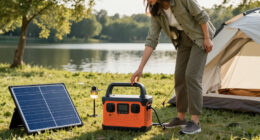
Say you spend Saturday at a campsite and use your phone for photos, messages, and a trail map. A compact bank could help with that. If you want to keep a laptop running for work or power a small appliance, you need to examine a power station’s energy capacity and output limits instead. A refrigerator can draw far more power than a phone, so neither the word “solar” nor a big-looking case tells you whether it will work.
Start with the devices, not the product label. Write down what you plan to charge and for how long. That simple list will steer you toward the right category before you compare model claims.
Products Worth Considering

eufy Security eufyCam C35 4-Camera Wireless Indoor/Outdoor Kit

Levoit Core 400S-P Smart Air Purifier for Large Rooms

eufy Security eufyCam C37 4-Camera Kit with 360° Pan and Tilt, Auto Tracking, 2K Color Night Vision, and Solar Panels
As an affiliate, we earn on qualifying purchases.
Compare capacity in watt-hours, not just phone-charge claims
Capacity tells you how much energy a power bank stores, but watt-hours (Wh) make comparisons clearer across devices with different battery voltages. Smaller power banks are often advertised in milliamp-hours (mAh), which can be harder to compare directly. In either case, the energy you can deliver is lower than the battery’s rated capacity because voltage conversion and other losses use some of the stored energy.
A claim such as “charges your phone three times” depends on the phone’s battery size and on charging conditions. A phone with a larger battery will use more of the bank’s energy per full charge. The result also changes when you keep using the screen, maps, or camera while charging. Treat a charge-count claim as an estimate, then check the capacity and test results for the specific product.
For example, imagine you carry a power bank on a weekend trip. You use your phone for navigation in the morning, top it up during lunch, and take photos through the afternoon. That pattern can consume more energy than one full charge from a powered-off phone at home. Leave room for those losses and real-world use when deciding whether the bank has enough capacity.
Capacity is only half the picture. Check the output rating too: a device might store plenty of energy but deliver it too slowly, or lack a port compatible with what you need. USB-C Power Delivery can charge compatible phones, tablets, and some laptops faster, but both the bank’s port and your device must support the relevant charging standard.
Choose built-in solar for convenience and a separate panel for speed
A built-in solar panel is handy for supplemental charging, while a larger separate panel usually collects more useful energy. Small panels on pocket power banks have limited surface area, so direct sunlight, panel angle, shade, clouds, season, and location all affect how much energy they deliver. A rated wattage describes a maximum under favorable conditions, not a guaranteed everyday result.
Imagine you stop for lunch on a sunny hike and leave a compact bank facing the sun while you eat. It may collect some energy and help extend your reserve. If a tree’s shadow crosses the panel, or the weather turns overcast, charging can slow sharply. The panel is a useful extra in that scenario, but it is a poor substitute for a wall charger when you need a predictable refill before leaving home.
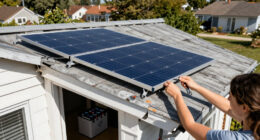
A separate folding panel takes more room, yet it can provide a larger surface aimed toward the sun. That matters if you’re camping for several days and want to replenish a power station. Even then, you’ll need suitable conditions and enough time; a panel cannot deliver energy when darkness falls, and stored battery energy remains limited by the unit’s capacity.
If you’re comparing setups, check the bank’s maximum solar input as well as the panel’s rated output. A larger panel does not automatically make charging faster if the bank cannot accept its full output. Match the panel, cables, and input limits, and treat the maker’s charging-time estimate as a guide rather than a promise.
Match the setup to a hike, a camping trip, or a power outage
The right solar backup power bank depends on what you need to keep running and where you’ll use it. A light pack for emergency phone charging has different priorities from a campsite setup or a home outage plan. Compare the devices, duration, and carrying weight before choosing a capacity.
| Use | What may fit | Check before buying |
|---|---|---|
| Day hike or small emergency reserve | Compact power bank, perhaps with a built-in panel | USB output, weight, weather guidance, usable capacity |
| Multi-day camping | Larger bank or power station with a separate panel | Solar input, ports, recharge options, carry weight |
| Home outage backup for small electronics | Portable power station | Wh capacity, continuous output, recharge methods, storage guidance |
| Laptop or demanding appliance | A suitably rated power station, if compatible | Required voltage, continuous and surge output, total energy |
For a hiker who only needs a phone for navigation and a headlamp after dark, a light bank may be easier to carry than a high-capacity station. A family camping for a long weekend might prefer more stored energy and a folding panel, even if that adds bulk. For an outage, check each device’s power needs: a laptop may work with a compatible high-output USB-C port, while a refrigerator requires a much larger and appropriately rated setup.
Make a quick list of essential devices and their expected use. Compare that list with the power bank’s ports and output specifications. A familiar brand name or a sunny-looking product photo cannot replace that check.
Use these five checks to avoid a frustrating purchase
Before you buy, check the battery’s capacity, device outputs, solar input, weight, and outdoor guidance against your actual use. Specifications should match both your devices and your routine. A large battery that sits at home because it is too heavy for your backpack may be less helpful than a smaller one you carry.
- List your devices. Note which ones you need to charge, which ports they use, and whether they need USB-C Power Delivery or an AC outlet.
- Compare capacity in Wh. For compact banks, look beyond the mAh number if you are comparing products with different battery voltages. Allow for conversion losses and active device use.
- Check input and output limits. Maximum solar input controls how much power the bank can accept; output ratings affect what it can charge. Confirm both ends of the connection are compatible.
- Weigh the whole setup. Include the bank, panel, and cables. A folding panel may improve solar charging but add bulk to a bag or campsite box.
- Read the care and protection details. Look for clear guidance on temperature, water and dust exposure, ports, over-temperature protection, and warranty coverage.
Suppose you plan to use the bank for a laptop during a weekend away. Check the laptop’s charging requirements and the bank’s USB-C output, then see whether its capacity covers the time you expect to work. A model that only lists impressive storage capacity could still be the wrong fit if its output cannot charge that laptop.
Recharge methods matter too. Many units can charge from a wall outlet or vehicle as well as solar. Wall charging is usually more predictable before a trip; solar can help when outlets are unavailable. If the product uses lithium-ion or lithium iron phosphate (LiFePO₄), follow its storage and temperature instructions. LiFePO₄ is common in larger stations and often offers longer cycle life and improved thermal stability, though the model may weigh more or cost more. Actual lifespan depends on design and use.
Set realistic expectations for clouds, emergencies, and safety
A solar backup power bank can help when outlets are scarce, but sunlight and stored energy set hard limits. Cloudy skies can still provide some light for a panel, yet charging often becomes slower and less predictable than in direct sun. The panel’s position and any shade matter too, so a power bank left behind a tent flap may collect less energy than one facing open sky.
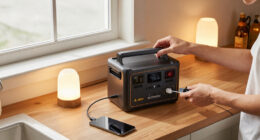
Picture a household during an evening outage: a power station charged earlier can run small electronics until its stored energy runs low. A solar panel may help refill it the next day, if weather, panel size, and charging input allow. The station does not create an endless supply, and a larger appliance can consume stored energy quickly. For a fridge or other demanding equipment, confirm continuous output, surge output, energy capacity, and device compatibility with the manufacturer’s specifications.
Use and store battery products according to their maker’s instructions. Heat and very cold conditions can affect performance and lifespan, so don’t assume a weather-resistant case makes a battery safe in every outdoor situation. For an emergency kit, note the recommended storage charge range, inspect the device periodically, and recharge it as directed; stored batteries can lose charge over time.
Travel adds another practical check: airlines commonly restrict spare lithium batteries according to watt-hour rating, and rules vary by airline and route. Before flying, check current requirements with the airline and relevant aviation authority. A few minutes spent checking can spare you an awkward conversation at the airport counter.
Frequently Asked Questions
Can a solar power bank charge a phone on a cloudy day?
Often, but more slowly and less predictably than in direct sun. Some light still reaches a panel under clouds, though shade, weather, and panel size can cut its output. Treat a small built-in panel as a backup aid, not a guaranteed quick recharge.
How long does solar charging take?
Charging time depends on battery capacity, panel wattage, sunlight, panel angle, and conversion losses. Use the manufacturer’s estimate as a guide, since its test conditions may differ from your campsite or backyard. A cloudy afternoon can take much longer than clear, direct sun.
Can a small solar power bank run a laptop or refrigerator?
Most pocket-size models cannot run a laptop or refrigerator. A laptop needs a compatible high-output USB-C bank or an appropriately rated power station; a refrigerator generally needs a much larger unit with enough continuous and surge output, plus sufficient stored energy. Check the device and power station specifications together.
Is a built-in panel enough, or should I buy a separate panel?
A built-in panel is convenient for extending a compact bank’s charge during an outing. A separate panel usually makes more sense when you need more sustained solar input, such as during multi-day camping. Check the bank’s maximum solar input before pairing it with a panel.
How many phone charges will a power bank provide?
It depends on the bank’s usable energy, your phone’s battery size, and conversion losses. Phone use during charging also affects the count: navigation, bright screens, and camera use draw power while the bank is connected. Treat advertised charge counts as estimates rather than guarantees.
Can I take a solar power bank on an airplane?
Airlines commonly restrict spare lithium batteries by watt-hour rating, and rules can vary by airline and route. Check current airline and aviation authority requirements before you fly, using the product’s battery specifications to confirm which rules apply.
Conclusion
Choose your solar backup power bank by naming the devices you need to run, estimating how long you’ll use them, and checking the unit’s usable capacity and outputs. A pocket-size bank can be a sensible phone reserve; a longer trip or outage may call for a larger station and separate panel.
Think of sunlight as a refill opportunity, not a guarantee. Pack the setup that fits your real plan, and you’ll spend less time staring at a battery icon and more time enjoying the trail, campsite, or quiet evening at home.