
To meet NFPA 110 standards, you need to keep detailed records of all maintenance, inspections, repairs, and testing activities for your generator. Regular tests, including daily fuel checks, weekly load runs, and annual load bank testing, must be documented accurately, showing performance details and any issues. Proper record keeping helps verify readiness, identify potential problems early, and ensures compliance. If you want a clear understanding of each step, keep exploring these essential requirements.
Key Takeaways
- Maintain detailed logs of all inspections, maintenance, repairs, and testing activities to demonstrate compliance with NFPA 110 standards.
- Establish and follow a scheduled testing plan, including daily fuel checks, weekly load tests, and annual load bank testing.
- Record all test results meticulously to verify generator readiness, performance, and identify potential issues early.
- Document inspection findings, component conditions, and personnel involved to ensure thorough record-keeping during maintenance.
- Use sensor technology or real-time monitoring tools to enhance accuracy and track system performance over time.
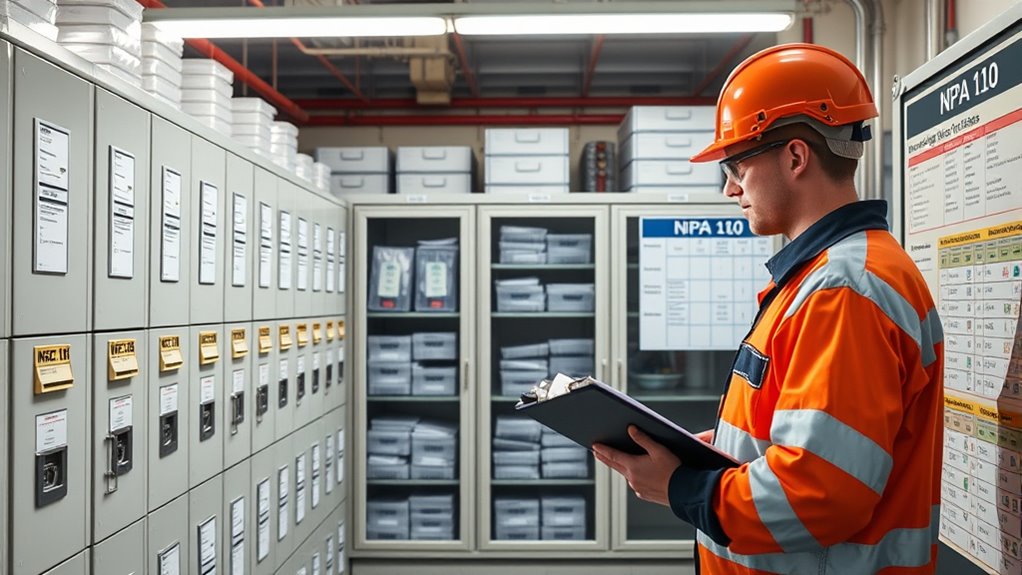
Proper record keeping and regular testing are fundamental components of complying with NFPA 110, the standard for emergency and standby power systems. Maintaining detailed records ensures you can demonstrate compliance and helps identify patterns that might indicate potential issues. When it comes to generator maintenance, keeping accurate logs of all activities—such as inspections, repairs, and part replacements—is essential. These records serve as a historical reference, allowing you to track the performance and reliability of your generators over time. In addition, thorough documentation helps during inspections or audits, providing proof that scheduled maintenance and testing procedures are being followed consistently.
Regular testing is a core requirement of NFPA 110, and you must establish a complete testing schedule. This includes daily, weekly, monthly, and annual tests, each designed to verify different aspects of your emergency power system’s readiness. Daily checks might involve inspecting the generator’s fuel and oil levels, while weekly or monthly tests typically include running the generator under load to ensure it starts and operates correctly. Annual testing often involves more extensive procedures, such as load bank testing to simulate real power demands. It’s important to record the results of each test meticulously, noting any anomalies, failures, or irregularities. These records help you assess whether the generator performs as expected and whether maintenance or repairs are needed.
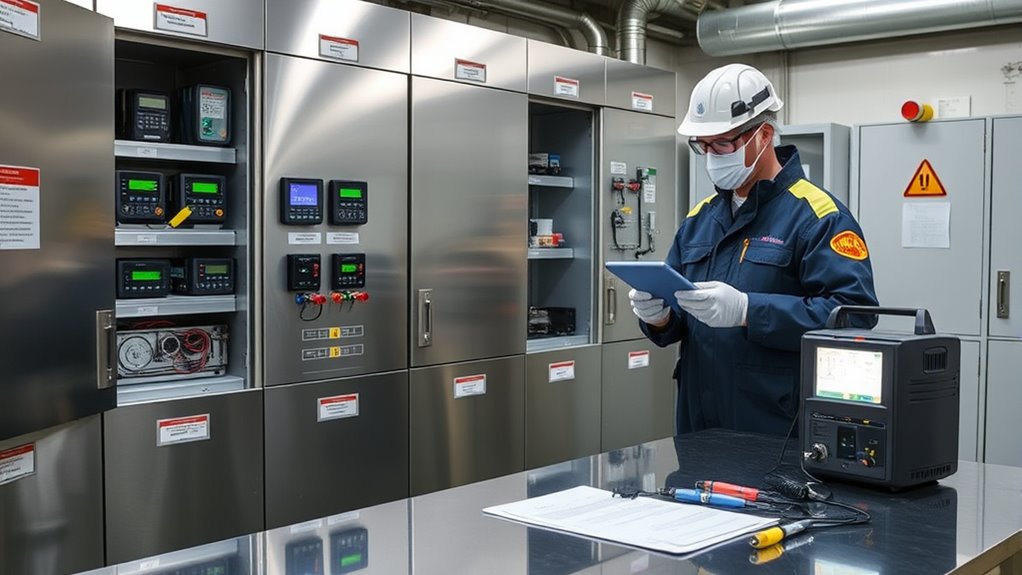
Inspection procedures form an essential part of your ongoing maintenance efforts. During inspections, you should verify that all components are in good condition, clean, and free of corrosion or damage. Inspect the battery system, fuel supply, exhaust system, and control panels. Check for leaks, unusual noises, or signs of wear that could compromise the generator’s performance. Following a standardized inspection protocol ensures consistency and thoroughness. Documenting each inspection, including the date, personnel involved, and findings, allows you to monitor the system’s health over time. If issues are identified, prompt maintenance actions are necessary to prevent failure during an actual emergency. Incorporating sensor technology can further enhance monitoring capabilities, providing real-time data to support maintenance decisions.
Frequently Asked Questions
How Often Should NFPA 110 Testing Be Scheduled?
You should schedule NFPA 110 testing at least annually to guarantee reliable operation. Maintenance schedules and inspection frequency are vital for compliance and safety. Regular testing helps identify potential issues early, preventing failures during power outages. Follow manufacturer recommendations and local codes, but generally, annual testing is a standard. Keep detailed records of each test to demonstrate adherence to requirements and maintain ideal generator performance.
What Are the Consequences of Non-Compliance With NFPA 110?
Imagine your facility’s backup power system failing when you need it most—non-compliance with NFPA 110 can lead to severe legal penalties and insurance repercussions. You risk costly fines, lawsuits, and losing coverage, which could leave you unprotected during emergencies. Staying compliant guarantees safety and shields you from these consequences, so make sure you follow testing schedules and record-keeping requirements diligently.
Are There Specific Record-Keeping Formats Recommended by NFPA 110?
You should follow record keeping best practices and utilize documentation templates recommended by NFPA 110. These templates help guarantee consistency and completeness in documenting generator testing, maintenance, and inspections. Keep detailed records of all activities, including dates, results, and any issues found. Regularly review and update your documentation to stay compliant, and use standardized formats to make audits and inspections smoother and more efficient.
Who Is Authorized to Perform NFPA 110 Inspections?
You are authorized to perform NFPA 110 inspections if you’re trained in the proper inspection procedures and have the necessary certification. Typically, qualified personnel such as fire safety professionals or technicians with specialized training should conduct these inspections. They guarantee that all equipment operates correctly and meets safety standards. Always follow the established inspection procedures closely, and keep detailed records of your inspections to maintain compliance and ensure system reliability.
How Long Must Records of Testing Be Retained?
You must retain records of testing for at least one year, including maintenance schedules and calibration procedures. This guarantees compliance with NFPA 110 and helps verify that your equipment operates correctly over time. Regularly updating and securely storing these records allows you to track performance, schedule necessary maintenance, and demonstrate proper testing procedures, which are essential for safety and regulatory adherence.
Conclusion
By keeping thorough records and performing regular tests, you guarantee your backup power system’s reliability. Neglecting these requirements can lead to costly failures when you need power most. Just like a well-maintained engine keeps a vehicle running smoothly, proper documentation and testing keep your emergency systems ready. Don’t let oversight be your downfall—embrace diligent record-keeping and testing to safeguard your facility and peace of mind.