TL;DR

Get backup power and energy gear delivered free with Prime
- Fast, free delivery on millions of items
- Prime Video, Amazon Music and more included
- Member-only deals all year
A man constructed a highly realistic fake home theater, aiming to deceive visitors and social media followers. The project highlights trends in digital deception and social validation, though full motives remain unclear.
A man has constructed a highly convincing fake home theater, designed to deceive visitors and online viewers about its authenticity. The project has garnered attention on social media, prompting discussions about digital deception and social validation. While the setup appears realistic, details about the creator’s motives and the extent of the deception are still emerging.
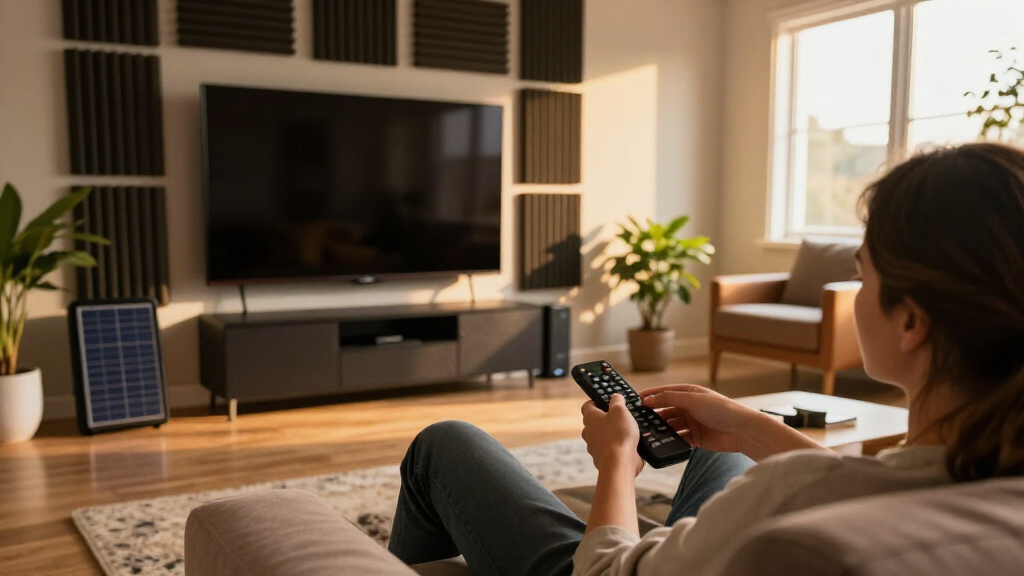
The individual, whose identity has not been publicly disclosed, built the fake home theater using a combination of real and artificial components. The setup includes a large screen, surround sound speakers, and custom-designed furniture that mimics a professional theater environment. The creator shared images and videos online, claiming it was a genuine home theater, though some viewers quickly questioned its authenticity based on visual cues.
Sources familiar with the project say the construction involved significant effort, including custom carpentry, digital effects, and strategic lighting to enhance realism. The creator reportedly aimed to test how easily perceptions can be manipulated in digital spaces and to explore social reactions to fabricated environments. The project has gone viral, with many social media users commenting on its realism and the implications of digital deception.
Experts in digital media and psychology note that such projects highlight how easily visual cues can deceive viewers, especially when shared widely online. However, it remains unclear whether the creator intends to use the setup for personal deception, social experiments, or simply as a form of artistic expression. The identity of the person behind the project has not been confirmed, and their motivations are still uncertain.
This project underscores the growing ability to create convincing fake environments using accessible technology, raising questions about authenticity in digital content. As social media platforms become primary sources of information and entertainment, the line between real and fabricated content blurs, potentially impacting public trust. The creator’s experiment demonstrates how easily perceptions can be manipulated, which has broader implications for digital literacy, misinformation, and the ethics of content creation.
Furthermore, the project taps into current trends where individuals craft elaborate fake scenarios to garner social validation and attention. It reflects a broader cultural shift towards curated personas and fabricated realities, emphasizing the importance of critical media consumption. While some view such projects as harmless artistic expression or social commentary, others warn of the risks posed by widespread digital fakery.
Interest in creating and sharing fake environments online has surged in recent years, driven by advancements in digital editing, virtual reality, and DIY fabrication techniques. The trend is partly fueled by social media’s emphasis on visual content and the desire for likes, shares, and validation. Previous instances include virtual backgrounds, deepfake videos, and fabricated social scenarios, all of which challenge perceptions of authenticity.
The recent spike in coverage and searches related to fake environments coincides with broader discussions about misinformation and digital literacy. Experts note that while some creators pursue artistic or experimental goals, others may aim to deceive for personal or financial gain. The current project fits into this pattern, illustrating how accessible tools now make it possible for individuals to craft convincing fake spaces with minimal resources.
However, it is important to note that the full scope of this trend remains unconfirmed, and the motivations behind individual projects vary widely. The trigger for the current surge in interest appears to be a combination of social media virality and curiosity about digital manipulation, but specific details are still emerging.
Motivations Behind the Fake Home Theater Unknown
It is not yet clear whether the creator’s primary goal was artistic expression, social experiment, personal deception, or another motive. The individual has not publicly explained their intentions, and their identity remains undisclosed. Further details about whether the project was meant to be a commentary or simply a viral stunt are still emerging.
Potential for Future Digital Fabrication Projects
As interest in digital deception grows, more creators may undertake similar projects, exploring the boundaries of realism and perception. Researchers and social media platforms are likely to scrutinize such content more closely, possibly leading to discussions about regulation and digital literacy education. The creator may reveal additional details or intentions in the coming weeks, and authorities or platforms could respond if the deception crosses ethical or legal boundaries.
Key Questions
Was the fake home theater built for a specific purpose?
It is currently unclear if the creator intended the project as an artistic statement, social experiment, or personal deception. No official explanation has been provided.
How realistic is the fake home theater?
The setup appears highly convincing, with visual cues and design elements that mimic a real theater. However, some viewers have identified subtle signs of artificiality.
Could this project influence future digital deception efforts?
Yes, as tools for creating convincing fake environments become more accessible, similar projects may increase, raising questions about authenticity and misinformation online.
Are there ethical concerns with building such fake environments?
Ethical concerns depend on the intent and use. If the project is used to deceive maliciously, it raises significant ethical issues. As a form of artistic or social commentary, it may be viewed differently.
Source: rss
Halloween Picks
halloween
As an affiliate, we earn on qualifying purchases.