TL;DR

Get backup power and energy gear delivered free with Prime
- Fast, free delivery on millions of items
- Prime Video, Amazon Music and more included
- Member-only deals all year
The Chicago-based 548 Foundation has run clean-energy workforce training through an Illinois state program since 2023, with sessions in Chicago and several suburbs. The foundation reports 700 graduates and a 68% placement rate; its training includes hands-on instruction, stipends and continuing support, though the figures are foundation-reported and some graduates pursue other trades.
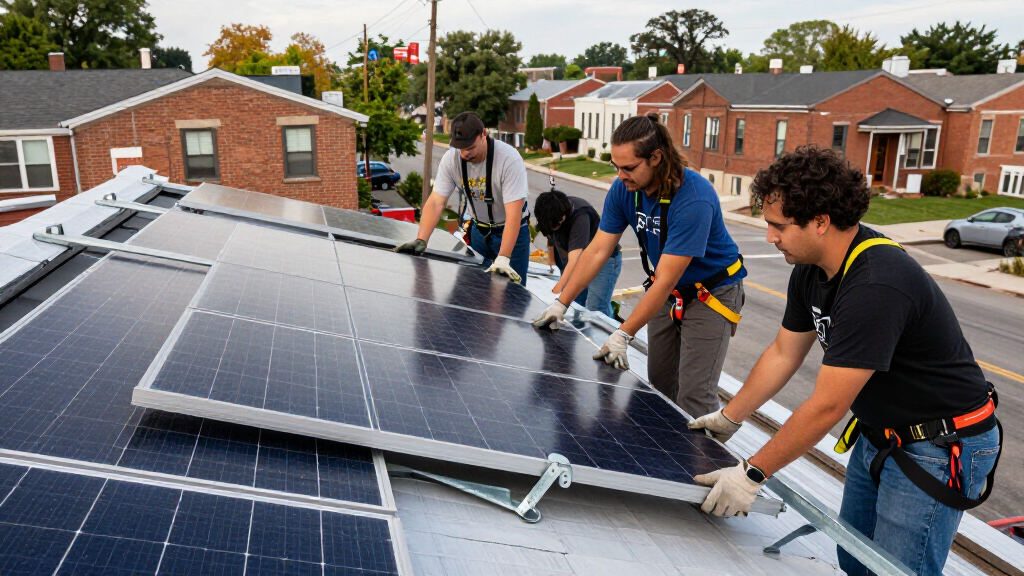
The 548 Foundation is preparing another Chicago cohort for solar and related trade careers through an Illinois workforce-development program, combining technical instruction with stipends and support for barriers such as child care and transportation. The foundation says it has graduated 700 people and reports a 68% job-placement rate, making the program one local effort to widen access to clean-energy work.
Since joining the state program in 2023, 548 has held multiple training sessions each year in Chicago, Aurora, Elgin and Waukegan. The suburbs and city neighborhoods served include substantial Latino immigrant and African American populations, according to the source report. Another Chicago session is scheduled to begin this month, though the source does not specify its start date or enrollment.
Students receive a stipend and help addressing practical needs, including child care and car trouble. Instruction covers solar and other technical skills as well as basic math and resume-writing. The foundation and its partners also provide support related to mental health, housing and other needs, with access to staff and affiliates continuing after graduation, according to the report.
Training is designed to reflect conditions graduates may face at work. Instructors use role-play to practice conflict mediation and begin hands-on classes at 6 a.m., matching common early field-work schedules and giving trainees a chance to plan around family responsibilities. A job fair for graduates in August 2024 brought in solar employers who conducted interviews and said offers would follow promptly, the report said; it did not establish how many offers resulted.
Support Beyond Solar Skills
The program addresses a gap between being able to attend training and being able to stay in it. Stipends and help with child care, transportation, housing and mental health can make participation more workable for people facing competing responsibilities. Continuing support after graduation also recognizes that finding and keeping a job can require more than completing a course.
Its reach may extend beyond solar installation. Some graduates described interest in desk-based roles or other construction trades, and the state has recently revised clean-energy curriculum to prepare workers for a broader range of careers amid volatility in parts of the sector, according to the source report. That flexibility matters when job availability shifts or physical installation work is not the right fit for every trainee.
The foundation’s placement and graduation figures offer a picture of its reported outcomes, but do not by themselves show how long graduates stay employed, what roles they enter or how their earnings change over time. Still, the program illustrates how local training organizations can connect clean-energy workforce goals with access to trade careers in communities that have faced barriers to employment.
From State Training to Local Cohorts
The source report places 548’s training within Illinois’ workforce-development system, which provides the framework for instruction and trainee support. The program has expanded across Chicago and nearby suburbs through repeated sessions, rather than operating only as a one-time course. The source does not provide the state program’s full budget, the number of annual seats or the share of costs covered by public funding.
At a graduation ceremony described in the report, foundation leader Patton cited a 500-person waiting list, a 70% graduation rate, 700 graduates and a 68% placement rate. He also said graduates found jobs within 33 days of graduation and averaged $68,000 a year. These are figures presented by Patton, not independently verified statistics in the available source, and the report does not define the periods, cohort sizes or methods used to calculate each measure.
The ceremony also underscored that the training is not limited to a single occupational route. Graduate Kelvin Davis said he was interested in desk work rather than the physical demands of installation. Mikah Allen said he preferred iron work and construction; the report says links to trade-union apprenticeships embedded in the training could support that direction. The state’s curriculum changes are intended to prepare participants for a wider range of clean-energy careers.
““We have a 70% graduation rate, 700 graduates. Then they said the market wasn’t ready for us. Meanwhile, we have a 68% placement rate.””
— Patton, a 548 Foundation leader
Outcome Figures Need More Detail
The foundation’s reported outcomes are not accompanied in the source material by a detailed methodology. It is unclear which cohorts are included in the 68% placement rate, how placement is defined, how long graduates remain employed or whether the reported average annual pay applies to all graduates or only those in particular jobs. The waiting-list count and 70% graduation rate are also attributed to Patton, with no date or calculation details supplied.
The source report does not give the upcoming Chicago cohort’s enrollment target, funding level, course length or participating employers. It also does not say how many people interviewed at the August 2024 job fair received offers, or how many graduates entered solar jobs rather than other trades. Those details would help readers assess the program’s scale and longer-term results.
Next Chicago Cohort and Job Paths
The next scheduled milestone is a new Chicago training session set to begin this month, according to the source report. The foundation’s continued sessions in Chicago and the suburbs, along with post-graduation support and employer connections, will determine how the current model serves future cohorts.
Further reporting could clarify enrollment and completion for the new class, the number and types of jobs secured, and whether graduates remain employed over time. Details on how the revised state curriculum connects trainees to solar, other clean-energy roles and union apprenticeships would also show how the program is adapting to changes in the sector.
Key Questions
What is the 548 Foundation program?
It is a workforce-training program offering solar and related trade instruction through an Illinois state workforce-development program. The foundation also provides stipends and support services, according to the source report.
Where does the program hold classes?
The source says sessions take place in Chicago, Aurora, Elgin and Waukegan. Another Chicago session is scheduled to begin this month, but no exact date is provided.
What outcomes does the foundation report?
Patton cited 700 graduates and a 68% placement rate, along with a 70% graduation rate and an average annual salary of $68,000. These are foundation-reported figures; the source does not provide the methodology or cohort details behind them.
Does the training lead only to solar installation jobs?
No. The report describes graduates interested in desk-based solar work and other construction trades, including iron work. It also says the state recently revised clean-energy curriculum to prepare trainees for a wider range of careers.
Source: rss
Halloween Picks
halloween
As an affiliate, we earn on qualifying purchases.