
TL;DR

Get backup power and energy gear delivered free with Prime
- Fast, free delivery on millions of items
- Prime Video, Amazon Music and more included
- Member-only deals all year
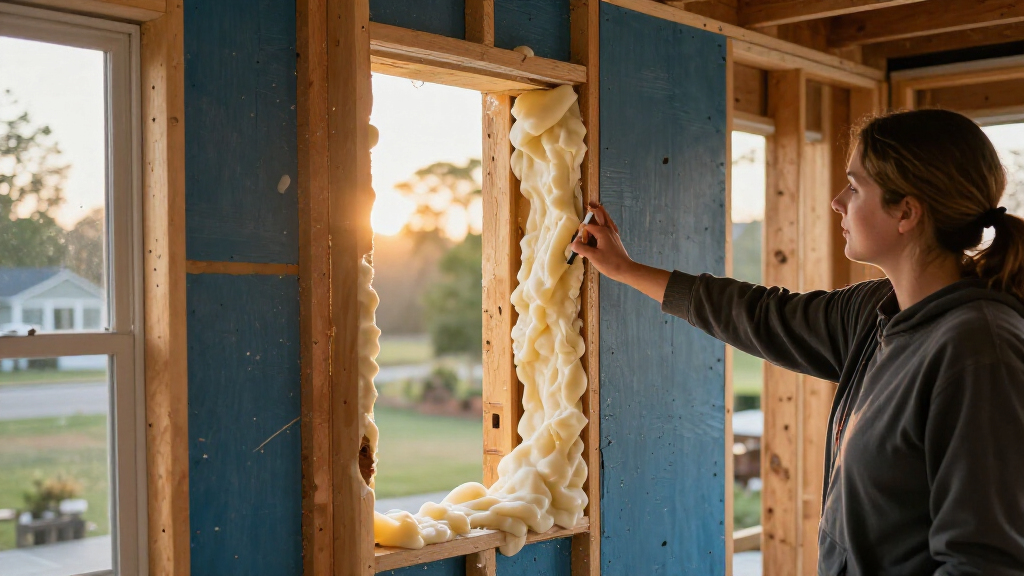
A homeowner in Northwest Arkansas asked whether leftover closed-cell spray foam is suitable for an unconditioned garage wall in a 1975 home. The wall’s brick cladding, existing sheathing and painted drywall raise questions about drying and moisture, but the supplied report contains the question only—not an expert recommendation or confirmed damage.
A homeowner in Northwest Arkansas is asking whether to apply at least two inches of leftover closed-cell spray foam to an exterior wall of an unconditioned garage, citing concern that the wall could be left with inadequate drying capacity. The GreenBuildingAdvisor report describes the homeowner’s proposed assembly and concerns, but the supplied material does not include an expert answer, inspection findings or evidence that damage has occurred.
The homeowner identifies the house as built in 1975 and located in climate zone 4A, described in the question as mixed-humid. The proposed work is part of a broader effort to insulate the garage, which is currently unconditioned. The product named is a DAP 600FR dual-tank kit, left over from another do-it-yourself project; the homeowner says the planned application would be at least two inches thick.
In the assembly described, the exterior finish is brick cladding, followed by a one-inch airspace, existing dark-colored sheathing, a two-by-four stud wall with studs spaced 16 inches on center, and half-inch painted drywall on the interior. The wall faces south, according to the homeowner. These are details reported by the questioner, not independently verified measurements or an assessment of the wall’s current condition.
The homeowner is concerned that closed-cell foam could restrict drying through the wall, especially alongside the existing layers, and asks whether it could act as a second vapor barrier. The question also raises the possibility of moisture being driven inward from sun-heated brick. As an alternative, the homeowner says they could use unfaced batts, but is weighing that option against putting the leftover foam to use. The source does not establish which material is appropriate for this particular assembly.
Moisture Risks in the Garage Wall
The practical issue is whether adding insulation would change how moisture moves through an existing wall. Brick, an airspace, sheathing and interior drywall are already part of the assembly described; adding a foam layer could affect air leakage, vapor movement and drying. Whether those effects create a problem depends on details the question alone cannot settle, including the sheathing type and condition, the foam’s installed properties and coverage, and the wall’s exposure to rain and sun.
The garage being unconditioned may mean its temperature and humidity conditions differ from those of a heated living space. But the question does not provide measured temperatures, humidity, air movement or moisture readings. That makes it inappropriate to treat the garage’s status as proof that condensation or moisture accumulation is either likely or impossible.
For homeowners, the stakes are more than the choice between two insulation products. If a wall cannot dry adequately after getting wet, moisture may persist in materials hidden behind the drywall. The source does not say that this wall is wet or damaged; it documents a homeowner trying to avoid creating a future problem before carrying out the work.
The Wall Assembly Behind the Question
The report is a reader question, not a published inspection report or a confirmed building failure. The homeowner says they have read a guide to mixed-humid climates repeatedly but could not find an answer for this specific combination of brick cladding, a 1975 wall and an unconditioned garage. They are seeking advice before installing the material.
The concern centers on the balance between limiting moisture entry and allowing a wall to dry. The reader’s reference to “drying in both directions” describes their understanding of guidance for the region; it should not be treated as a finding about this wall. Likewise, their concern about heat from sunlit brick is a question, not confirmation that inward moisture movement is occurring.
The proposed foam thickness and product are provided by the homeowner, but the source does not include a product-data review, installation plan, code evaluation or details about how the brick cavity is built and drained. Those missing facts limit what can responsibly be concluded from the report.
“I just don’t want to shoot myself in the foot by creating a moisture trap that destroys the wall in a few years.”
— The homeowner, in the GreenBuildingAdvisor question
No Assembly-Specific Answer Provided
The supplied report does not include a response from a building-science expert, a recommendation to use or avoid the foam, or any follow-up from the homeowner. It is therefore unknown whether the proposed installation would cause a moisture problem in this specific wall.
Key details also remain unreported: the exact sheathing material and condition, whether the brick cavity has functioning drainage and ventilation provisions, the state of the framing, and whether the wall has a history of leaks. The source gives the foam brand and proposed minimum thickness but does not provide the product’s relevant vapor-permeance data or confirm the final installed thickness and coverage. No measurements of moisture or evidence of rot are reported.
The homeowner’s concern about a double vapor barrier and sun-driven moisture is not a diagnosis. The source also does not establish that the unconditioned garage eliminates condensation risk. Without an assembly-specific evaluation, the report supports describing the question—not declaring a safe thickness, a failure mechanism or a preferred insulation product.
Evaluate Before Applying the Foam
The next step in the reported discussion would be an answer based on the complete wall assembly and the specific foam product; no such answer or schedule is included in the source. Before spraying, the homeowner could have the existing wall reviewed by a qualified building-science professional or insulation contractor familiar with brick-clad walls in mixed-humid climates. The review should account for the sheathing, cavity, interior finish, exposure and product specifications rather than relying on the climate-zone label alone.
If the work proceeds, the installer should follow the product’s instructions for substrate conditions, application thickness, ventilation and protective equipment. Because spray foam application has product-specific safety requirements, the homeowner should not assume leftover material can be safely applied without checking those directions. Any local code or permit requirements should also be checked. The supplied report does not say whether the homeowner ultimately used foam or batts.
Key Questions
Did the report conclude that closed-cell foam is unsafe for this wall?
No. The supplied material contains the homeowner’s question but no expert response or conclusion. It does not establish that the foam is safe or unsafe for this assembly.
What wall is the homeowner considering insulating?
The homeowner describes a south-facing wall in an unconditioned garage of a 1975 Northwest Arkansas house: brick, a one-inch airspace, existing sheathing, a two-by-four stud wall and painted half-inch drywall.
How much foam did the homeowner propose using?
The question names a DAP 600FR dual-tank kit and says the homeowner was considering an application of at least two inches. The report does not confirm that the foam was applied.
Is the homeowner’s concern about moisture damage confirmed?
No. The homeowner is concerned about restricted drying and possible moisture accumulation, but the source reports no inspection, moisture readings, leak history or damage.
Source: rss
Halloween Picks
halloween
As an affiliate, we earn on qualifying purchases.