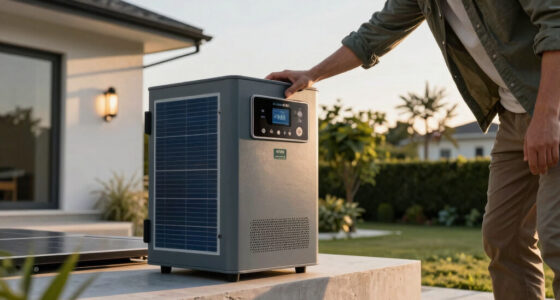
Portable solar power banks promise backup power anywhere the sun shines, but the category is full of inflated capacity claims and panels that barely trickle-charge. After comparing 12 of the most popular models, the SOARAISE Solar Power Bank 48000mAh with 4 Built-in Cables stands out as the best overall pick thanks to its massive capacity, built-in cables, and wireless charging. The Blavor 10,000mAh is the smarter choice for everyday carry because it actually fits in a pocket, while the Solar Power Bank 20000mAh with 4 Panels is the only option here with enough solar surface area to meaningfully recharge itself off-grid. The core tradeoff in this category is simple: giant 40,000mAh+ units offer endurance but weigh over a pound and take days to solar-recharge, while smaller units are portable but solar-limited. Read on for the full breakdown of which model fits your situation.
Key Takeaways
- Four-panel models like the 20000mAh 4-Panel charger are the only units that can solar-recharge at a useful rate; single-panel ‘solar‘ banks are best treated as regular power banks with an emergency trickle feature.
- Many models in this roundup share identical 49800mAh internals with different branding — capacity ratings near 50,000mAh should be discounted heavily, as real usable output is typically 30-40% lower.
- Built-in cables (SOARAISE, BLASOUL) eliminate the most common failure point in the field: forgotten or broken charging cables, which matters more than raw capacity for casual users.
- The Blavor 10,000mAh and FEELLE‘s hand-crank model serve opposite niches — one prioritizes pocketability, the other true off-grid redundancy — and neither is trying to be an all-rounder.
- Wireless charging is near-universal here but adds weight and heat; it only earns its keep if you own multiple Qi devices, otherwise wired PD fast charging (MINRISE, 40000mAh PD20W models) is faster and more efficient.


| portable solar power bank | Capacity | Wireless Charging | Fast Charging |
|---|---|---|---|
| SOARAISE Solar Power Bank 4800 | — | Yes | PD and QC 3.0 |
| FEELLE Solar Power Bank 50000m | — | Magnetic wireless | — |
| Blavor Solar Power Bank 10,000 | 10,000mAh | — | — |
| Solar Charger Power Bank | 49,800mAh | Yes | QC 3.0 |
| Solar Power Bank 20000mAh with | 20,000mAh | — | — |
| SOARAISE Solar Power Bank 4800 | 48000mAh | Yes | — |
| BLAVOR Solar Power Bank 20000m | 20000mAh | Yes (phones and Apple Watch) | 20W via USB-C |
| Durecopow 20,000mAh Solar Char | 20000mAh | — | — |
| Solar Charger Power Bank 49800 | 49800mAh | Yes | QC3.0 |
| MINRISE Solar Power Bank 40000 | — | — | — |
| Solar Power Bank 40000mAh PD20 | 40000mAh | — | 20W PD Type-C |
| BLASOUL Solar Power Bank 49800 | 49800mAh | 15W | 22.5W wired |
More Details on Our Top Picks
SOARAISE Solar Power Bank 48000mAh Wireless Portable Charger with 4 Cables
This pick makes the most sense for buyers who want one do-everything power bank rather than a drawer full of specialists. The 48,000mAh capacity translates into a full weekend of phone charges, and the four built-in cables mean nobody in camp needs to remember theirs — a practical advantage the Blavor 10,000mAh simply can’t match with its smaller single-device focus. Four solar panels also give it a meaningful edge in recovery speed over single-panel rivals. The tradeoff is honest: this is a big, heavy brick, and solar input still crawls compared with wall charging, so think of the panels as an emergency trickle, not a primary charging method. Compared with the FEELLE 50,000mAh, you give up the hand crank but gain a more streamlined form factor.
Pros:- Huge 48,000mAh capacity covers a weekend of heavy device use
- Four built-in cables eliminate forgotten-cable emergencies
- Four solar panels recharge faster than single-panel competitors
- Waterproof, shockproof, and dustproof housing survives rough handling
Cons:- Bulk and weight make it a poor everyday-carry option
- Solar charging slows dramatically in cloudy or low-light conditions
Best for: Campers and families who need to keep several phones, earbuds, and tablets alive across a multi-day trip without carrying separate cables
Not ideal for: Day hikers and everyday-carry minimalists — the size and weight make it impractical for a jacket pocket or daily commute
- Battery Capacity:48,000mAh
- Solar Panels:4
- Built-in Cables:4
- Number of Ports:3
- Wireless Charging:Yes
- Fast Charging:PD and QC 3.0
- Output Current:3A at 5V
- Dimensions:6.38 x 3.43 x 1.57 inches
Our verdict“Buy this if you want the most complete all-around solar power bank for group camping; skip it if portability ranks above capacity.”
FEELLE Solar Power Bank 50000mAh Magnetic Portable Charger with Hand Crank
What separates this model from every other entry here is the hand crank generator — a genuinely useful fallback when the sun refuses to cooperate for days, which is exactly when emergencies tend to happen. Combined with 50,000mAh of capacity, a compass, and magnetic wireless charging, it reads like a bug-out-bag checklist. The magnetic charging is more convenient than the cable-juggling approach of the SOARAISE 48,000mAh, though thick cases weaken the connection noticeably. It’s also the heaviest-feeling option in this lineup, so this option stands out for preparedness, not portability. If your use case is a go-bag in the car trunk or a home emergency kit, the weight is a fair price for triple redundancy in charging methods.
Pros:- Hand crank provides power even without sunlight
- 50,000mAh capacity charges multiple devices for days
- Magnetic wireless charging is convenient for compatible phones
- Shockproof, dustproof, and waterproof build for harsh conditions
Cons:- Largest and heaviest form factor in this lineup
- Magnetic wireless charging struggles through thicker phone cases
Best for: Emergency preppers and off-grid travelers who want solar, crank, and wired charging as backup layers for power outages or disasters
Not ideal for: Everyday commuters and light travelers — the size, weight, and orange survival aesthetic are overkill for topping up a phone at work
- Battery Capacity:50,000mAh
- Power Source:Solar and hand crank
- Number of Ports:3 (USB-A and USB-C)
- Wireless Charging:Magnetic wireless
- Built-in Cables:Yes
- Amperage:3A at 5V
- Battery Type:Lithium Polymer
- Extras:Compass
Our verdict“This is the pick for buyers building an emergency kit who refuse to depend on sunlight alone; everyone else can save weight and money elsewhere.”
Blavor Solar Power Bank 10,000mAh Portable Wireless Charger
After the 48,000mAh-plus monsters elsewhere in this roundup, the Blavor feels almost refreshing by contrast — this is the only option here that genuinely fits in a jacket pocket or hydration pack pocket. The 10,000mAh cell delivers roughly two to three phone charges, which is plenty for an overnight trip or a long travel day. Compared with the 20,000mAh 4-panel model, the solar panel is small and charges slowly, so treat it strictly as an emergency trickle rather than a real recharging strategy. The IPX5 weather resistance, dual flashlights, and 20W USB-C output punch above its size class, but the ruggedized shell adds bulk relative to plain non-solar power banks at the same capacity. This model is better suited to weight-conscious adventurers than to base-camp power users.
Pros:- Genuinely pocketable compared with high-capacity rivals
- 20W USB-C fast charging refills a phone quickly
- IPX5 water resistance plus shockproof construction
- Dual flashlights and compass add survival utility
Cons:- Small solar panel charges very slowly
- Rugged casing makes it bulkier than standard 10,000mAh power banks
Best for: Day hikers, solo travelers, and commuters who want emergency solar backup without carrying a brick
Not ideal for: Group campers or multi-day off-grid trips — 10,000mAh runs dry quickly when several devices need charging
- Capacity:10,000mAh
- Charging:USB-C 20W fast charging, wireless
- Waterproof Rating:IPX5
- Battery Type:Lithium-cobalt
- Material:Flame-retardant ABS and PC
- Extras:Dual flashlights, compass, shockproof
Our verdict“Choose this if you value carry weight over capacity and see solar as a bonus, not a primary charging method.”
Solar Charger Power Bank – 49800mAh with Fast Charging and Wireless Charging
This model earns its spot for one reason: charging up to six devices at once. With four USB-A outputs plus wireless charging, it handles a whole campsite’s phones simultaneously — something the Blavor 10,000mAh can’t attempt and the SOARAISE only partially matches. The IP65 rating and multi-mode flashlights round out a solid base-camp package. That said, the sheer scale works against it: this is the least portable option besides the FEELLE, and the feature set leans complicated for buyers who just want a simple charger. QC 3.0 speeds are decent but spread thin across six simultaneous outputs. If your trips involve a car or base camp rather than a backpack, the weight penalty stops mattering and the multi-device capability becomes the whole point.
Pros:- Charges up to six devices simultaneously
- 49,800mAh capacity handles extended group trips
- IP65 waterproofing for outdoor exposure
- Multiple flashlight modes for camp lighting
Cons:- Large and heavy even by solar power bank standards
- Charging speeds drop when many devices are connected at once
- Feature-dense interface may overwhelm casual users
Best for: Base campers, road trippers, and families at a fixed site who need to charge several phones, tablets, and accessories at the same time
Not ideal for: Backpackers and tech-averse users — the weight and layered feature set are wasted on single-device, on-the-move use
- Capacity:49,800mAh
- Fast Charging:QC 3.0
- Output Ports:4 USB-A plus wireless
- Input Ports:USB-C, USB-A
- Wireless Charging:Yes
- Waterproof Rating:IP65
- Flashlights:Yes, multiple modes
Our verdict“This is the base-camp workhorse for groups; solo travelers should opt for something half its size.”
Solar Power Bank 20000mAh with 4 Panels
This option stands out for hitting the sweet spot most buyers actually need: 20,000mAh is enough for roughly four phone charges without the backbreaking bulk of the 48,000mAh-and-up entries, and the four unfolding solar panels give it the fastest sunlight recovery in this batch relative to its size. The IP67 rating actually beats the FEELLE and 49,800mAh models’ IP65, meaning it shrugs off full water immersion — a real advantage for kayak or fishing trips. A 24-month warranty adds confidence that cheaper no-name competitors lack. The tradeoffs are modest but real: solar input still slows to a crawl on overcast days, and you can’t run the flashlight and camping light together. Compared with the Blavor 10,000mAh, you double the capacity for modest added weight.
Pros:- 20,000mAh balances capacity against carry weight
- Four solar panels recharge faster than single-panel designs
- IP67 rating survives submersion, beating several pricier rivals
- 24-month warranty adds long-term peace of mind
Cons:- Solar recharging slows considerably in weak sunlight
- Flashlight and camping light cannot operate simultaneously
Best for: Budget-conscious campers and weekend adventurers who want a dependable middle-ground capacity with strong weatherproofing and a real warranty
Not ideal for: Buyers needing multi-device marathon charging — the capacity and port count trail the 48,000mAh+ models in this lineup
- Capacity:20,000mAh
- Solar Panels:4
- Charging Ports:USB-C, Lightning, USB-A
- Simultaneous Devices:Up to 5
- Weatherproof Rating:IP67
- Lighting Modes:Steady, SOS, Strobe
- Warranty:24 months
Our verdict“The smartest middle-ground purchase here — buy it if you want proven capacity and weatherproofing without paying for capacity you’ll never use.”
SOARAISE Solar Power Bank 48000mAh Wireless Battery Pack with 4 Cables
What sets this SOARAISE model apart is its four-panel solar array — most competitors, including the MINRISE 40000mAh, rely on a single panel that trickle-charges at best. Four panels actually generate meaningful power during a full day at camp, which matters when you’re recharging for a whole group. The 48000mAh capacity is enough for roughly ten phone charges, and the built-in cable set (USB-C, Lightning, USB-A, Micro) means nobody in the group needs to remember their own cord. Wireless charging adds another layer of convenience. The tradeoff is obvious, though: all those panels and that much battery make it bulky and heavy compared to a slim option like the Blavor 10000mAh. This pick makes the most sense as a base-camp power station rather than something carried in a pocket on a hike.
Pros:- Four solar panels deliver genuinely faster solar charging than single-panel rivals
- 48000mAh capacity handles roughly ten phone recharges
- Built-in cables for four connector types eliminate cord clutter
- Charges multiple devices simultaneously
Cons:- Bulky and heavy for its class due to four panels and large battery
- Solar input still depends heavily on direct sunlight
- Slow to fully recharge itself over USB given the capacity
Best for: Camp leaders and families running a shared charging station for multiple phones and tablets over several days off-grid
Not ideal for: Day hikers and ultralight backpackers — the multi-panel design and huge battery make it too heavy to carry comfortably
- Capacity:48000mAh
- Solar Panels:4 high-efficiency panels
- Ports:2 USB-A, 1 USB-C (input/output)
- Wireless Charging:Yes
- Built-in Cables:USB-C, Lightning, USB-A, Micro USB
- Best Use:Base camp / group charging
Our verdict“Buy this if you’re powering a group at a fixed campsite; skip it if you need something pocketable for day trips.”
BLAVOR Solar Power Bank 20000mAh Wireless Charger for Phones & Apple Watch
This BLAVOR unit is less a power bank and more a survival toolkit that happens to charge your phone. Beyond the 20000mAh battery and wireless charging for both phones and Apple Watch, you get a flashlight, camping light, compass, thermometer, carabiner, and rope — gear the Durecopow 20000mAh doesn’t come close to matching. The 20W USB-C fast charging also beats what most solar banks offer, and the real device-charge figures listed (up to 4 iPhone charges, 37 Apple Watch charges) are refreshingly concrete compared to vague claims elsewhere. Compared with the higher-capacity SOARAISE, you give up raw power, but you gain a genuinely waterproof, shockproof, dustproof build that justifies a permanent spot in a go-bag. The tradeoff: it’s still too large for everyday pocket carry, and casual users may find the outdoor features gimmicky they never leave the city.
Pros:- Wireless charging works for both phones and Apple Watch
- Waterproof, shockproof, and dustproof construction
- Includes flashlight, camping light, compass, thermometer, carabiner, and rope
- 20W USB-C fast charging with clearly stated charge counts per device
Cons:- Larger than typical 20000mAh banks due to rugged housing
- Feature set adds cost that casual users won’t exploit
- Charging speed varies by device compatibility
Best for: Preppers and outdoor enthusiasts building an emergency or camping kit who want charging plus survival tools in one device
Not ideal for: Everyday commuters — the size and toolset are overkill if you just need a top-up between home and office
- Capacity:20000mAh
- Fast Charging:20W via USB-C
- Wireless Charging:Yes (phones and Apple Watch)
- Cables:4 (2 USB-C, 1 iOS, 1 USB-A)
- Durability:Waterproof, shockproof, dustproof
- Extras:Flashlight, camping light, compass, thermometer, carabiner, rope
- Battery Charges:Up to 4x iPhone 17, 37x Apple Watch 11
Our verdict“This is the one to pack in a bug-out bag or camping kit where versatility and durability matter more than minimal size.”
Durecopow 20,000mAh Solar Charger Power Bank with 4 Cables and 3 Ports
The Durecopow takes a simpler, more affordable approach than feature-loaded rivals. Where the BLAVOR 20000mAh layers on compasses and thermometers, this model focuses on the fundamentals: a solid 20000mAh battery, four built-in cables, three ports, and the ability to charge up to six devices at once. That straightforward package is exactly what budget-conscious buyers want — no paying for tools you’ll never touch. The eco-friendly silicone-and-ABS housing feels rugged, the 1000+ recharge cycle rating is respectable, and the LED flashlight covers basic emergency needs. The honest downside is transparency: the manufacturer doesn’t publish dimensions, weight, or per-port charging speeds, which makes pre-purchase comparison frustrating. If you want wireless charging or Apple Watch support, the BLAVOR justifies its higher price; if you just need dependable wired power for a family’s worth of gadgets at a lower cost, this is the more sensible buy.
Pros:- Charges up to six devices simultaneously with four cables and three ports
- Eco-friendly silicone rubber and ABS PC construction
- Battery rated for over 1000 recharge cycles
- CE, FCC, and RoHS certified
Cons:- No published dimensions, weight, or per-port charging speeds
- No wireless charging despite similar-priced rivals offering it
- Water-resistant rather than fully waterproof
Best for: Budget-minded buyers who want maximum wired charging capability for a family’s devices without paying for outdoor extras
Not ideal for: Spec-conscious shoppers who need documented charging speeds and dimensions before buying
- Capacity:20000mAh
- Cables:4 built-in (Type-C, Lightning, Micro USB, USB-A)
- Ports:3 (Type-C in/out, 2x USB-A)
- Battery Lifecycle:Over 1000 recharges
- Material:Eco-friendly silicone rubber and ABS PC
- Certification:CE, FCC, RoHS
Our verdict“A practical, no-frills choice for multi-device households that value capacity and cables over premium features.”
Solar Charger Power Bank 49800mAh Wireless Portable Phone Charger with Fast Charging and Multiple Outputs
If battery anxiety is your main problem, this 49800mAh monster offers the largest capacity in this batch, edging out even the SOARAISE 48000mAh. That’s roughly twelve phone charges — enough for a week-long trip or several days of powering a small group. It matches the BLASOUL 49800mAh on paper, but differentiates itself with 22.5W QC3.0 fast charging across its USB-A, Type-C, and Micro-USB outputs, plus wireless charging and a built-in flashlight. The IP65 rating means it can handle rain splashes better than unrated competitors. Be realistic about two things, though: no solar panel of this size will meaningfully recharge a battery this large, so the panel functions as an emergency trickle source, and you’ll want to USB-charge it fully before any trip. It’s also physically bulky — this is a pack-in-the-bag device, never a pocket one.
Pros:- Largest capacity in the lineup at 49800mAh
- 22.5W QC3.0 fast charging outpaces most solar banks
- Wireless charging plus six-device simultaneous support
- IP65 water resistance for outdoor durability
Cons:- Solar panel too small to meaningfully recharge a battery this large
- Bulky — not pocket-friendly
- Requires full USB charging before use for best performance
Best for: Long-trip travelers and off-grid adventurers who need the largest possible reserve of stored power
Not ideal for: Anyone prioritizing portability — nearly 50000mAh means serious bulk and weight you’ll notice in a daypack
- Capacity:49800mAh
- Output Power:22.5W
- Fast Charging:QC3.0
- Ports:USB-A, Type-C, Micro-USB
- Wireless Charging:Yes
- Waterproof Rating:IP65
- Extras:Built-in flashlight
Our verdict“Choose this when stored capacity is the single deciding factor and size is a secondary concern.”
MINRISE Solar Power Bank 40000mAh, Portable Charger PD 20W Fast Charging
The MINRISE wins on build quality and transparency. Unlike the Durecopow, which hides its dimensions, MINRISE publishes everything: 1.1 pounds, 6.67 x 3.35 x 1.22 inches, and a full input/output spec sheet across its ten ports. The silicone-cornered ABS shell is rated waterproof, dustproof, and drop-proof, making it the toughest-feeling option here alongside the BLAVOR. Its four built-in cables cover every common connector, and the dual LED flashlights are genuinely useful — 165 feet of illumination for up to 25 hours beats the single flashlights on the Durecopow and the 49800mAh model. One honest caveat the manufacturer deserves credit for: they state outright that solar charging is emergency-only and slow. That candor is rare in this category. With 20W PD output, it charges phones quickly, though it lacks the wireless charging the SOARAISE and BLAVOR provide.
Pros:- Waterproof, dustproof, and drop-proof with silicone corner protection
- Full published specs including weight and dimensions
- Dual LED flashlights with 25-hour runtime and 165-foot range
- Four built-in cables plus ten total ports
Cons:- Solar charging explicitly slow and emergency-only
- No wireless charging despite mid-range pricing
- Bulkier than similarly capable non-solar power banks
Best for: Buyers who want a genuinely rugged, fully specified power bank with cables included and no marketing fluff about solar speed
Not ideal for: Wireless-charging fans and anyone hoping to solar-recharge the battery as a primary method
- Battery Capacity:40000mAh Li-polymer
- Output Power:20W PD, 3A
- Ports:10 total
- Built-in Cables:Type-C, iOS, Micro USB, USB-A
- Durability:Waterproof, dustproof, drop-proof
- Weight:1.1 pounds
- Dimensions:6.67 x 3.35 x 1.22 inches
- Flashlights:2 LED, 165 ft range, 25 hours runtime
Our verdict“The most durable and honestly specified pick here — ideal if you value ruggedness and included cables over wireless convenience.”
Solar Power Bank 40000mAh PD20W Fast Charging Portable Solar Charger
Where most solar power banks in this roundup settle for IP65 splash resistance, this model carries an IP67 rating, meaning it can survive full submersion in shallow water — a genuine differentiator if your trips involve rain, river crossings, or beach days. Combined with shockproof and dustproof construction, this is the pick that feels built to be dropped rather than babied. Compared with the BLASOUL 49800mAh, it gives up some capacity and wireless charging, but its four-mode LED lighting (including a proper SOS signal) and faster 20W PD input make it more practical as an emergency tool. The honest tradeoff: the solar panel is a trickle charger, not a primary power source, and the 40000mAh cell means real weight in a pack.
Pros:- IP67 rating beats the IP65 competition with true water submersion resistance
- 20W PD Type-C charges phones fast and recharges the bank itself quickly
- Four-mode LED flashlight with SOS mode doubles as an emergency beacon
- Massive 40000mAh capacity handles multiple full phone recharges
Cons:- Solar charging is slow and only viable as emergency backup, not primary recharging
- Large and heavy compared with slimmer 10000mAh options like the Blavor
Best for: Backpackers and emergency-kit builders who need a power bank that survives water, drops, and dust while topping up a phone several times
Not ideal for: Everyday commuters or ultralight hikers — the size and weight outweigh the capacity benefit for pocket carry
- Capacity:40000mAh
- Fast Charging:20W PD Type-C
- Input/Output Ports:USB-C (input/output), USB-A, Micro USB
- LED Flashlights:Dual, 4 modes (steady, SOS, strobe, low)
- Material:ABS
- Waterproof Rating:IP67
- Shockproof / Dustproof:Yes / Yes
Our verdict“Buy this if your priority is a nearly indestructible emergency power source for harsh outdoor conditions rather than daily convenience.”
BLASOUL Solar Power Bank 49800mAh Wireless Portable Phone Charger with Fast Charging and Built-in Cables
The standout feature here isn’t the headline capacity — several models in this roundup, including the SOARAISE 48000mAh and the FEELLE 50000mAh, match or beat it. What sets this unit apart is the built-in cable system: three integrated output cables covering iOS, Type-C, and Micro-USB, plus an input cable, so you can leave your entire cable pouch at home. Add 15W wireless charging on top of 22.5W wired output and a single bank can feed four devices at once. The tradeoffs are real, though. The IP65 rating falls short of the IP67 protection on the 40000mAh PD20W model, and at this capacity it is a bag battery, not a pocket one.
Pros:- Four built-in cables eliminate the need to pack or remember charging cords
- 22.5W wired plus 15W wireless charging supports simultaneous multi-device use
- 49800mAh capacity recharges a phone roughly eight to ten times
- LED flashlight with SOS and strobe modes for emergencies
Cons:- Heavy and bulky — poorly suited to everyday pocket carry
- IP65 rating handles splashes but not submersion like IP67 competitors
- Wireless charging speed varies and is slower than wired for most phones
Best for: Families or group travelers who want to charge several devices at once without carrying any cables
Not ideal for: Anyone prioritizing true weatherproofing or ultralight packing — it’s heavy and only splash-resistant, and wireless charging speed varies by device
- Capacity:49800mAh
- Fast Charging:22.5W wired
- Wireless Charging:15W
- Built-in Cables:3 output (iOS, Type-C, Micro) + 1 input (USB-A)
- Water Resistance:IP65
- Additional Features:LED flashlight with SOS and strobe modes
Our verdict“This makes the most sense for multi-device households or travelers who value never hunting for a cable over maximum durability or portability.”
How We Picked
I evaluated these 12 portable solar power banks against the criteria that actually determine whether a purchase is satisfying: real-world capacity versus claimed capacity, charging speed (wired PD output and wireless wattage), solar panel surface area and honest recharge expectations, portability and weight, and convenience features like built-in cables, flashlights, and ruggedness. Models were ranked by how well their strengths align with realistic use cases — emergency home backup, hiking and camping, and everyday carry — rather than by spec-sheet size alone.
Ranking logic was straightforward: units that solve a specific problem well ranked above units that claim to solve everything. A 49,800mAh bank that weighs 1.5 pounds and trickle-charges via a single small panel is a home emergency kit, not a hiking companion, so I grouped and ranked accordingly. Usability details — cable management, number of ports, hand crank redundancy, and durability — broke ties between models with near-identical internals, because these are the differences buyers notice after week one.
Factors to Consider When Choosing Portable Solar Power Banks
Before picking a specific model, it helps to understand how this category actually works — because marketing claims and physical reality diverge more here than in almost any accessory category.Why Solar Charging Is a Bonus, Not the Main Event
The single biggest mistake buyers make is expecting a pocket-sized power bank to solar-recharge itself in an afternoon. A single fold-out panel of roughly 30-60 square centimeters produces 1-2 watts in direct sun at best, which means 10-20 hours of ideal sunlight to add one phone charge to a mid-sized bank. Only the 4-panel designs in this roundup generate enough surface area (5+ watts) to be a genuine charging source over a multi-day trip. Treat single-panel solar as an emergency trickle feature for topping up, not a primary recharging method. If off-grid solar recharging is your main goal, you may be better served by a separate foldable solar panel paired with a regular power bank — a combination that outperforms any all-in-one unit.
Reading Capacity Claims Honestly
Nearly every high-capacity model here advertises 40,000-50,000mAh, and several are clearly the same internal hardware rebranded. Two things reduce that number: lithium battery voltage conversion losses (expect 30-40% less usable output than the label suggests) and optimistic or entirely fictitious ratings from budget brands. A genuinely delivered 50,000mAh would weigh well over two pounds; most of these banks weigh 12-16 ounces, which physically caps real capacity closer to 20,000-30,000mAh. That is still plenty — roughly 4-6 phone charges — but do not budget for a week of off-grid power based on the sticker number. When two banks claim the same capacity, use weight as the tiebreaker: heavier almost always means more real battery inside.
Charging Speed: Ports, Watts, and Wireless Reality
Output wattage determines how fast your devices charge and how many can charge simultaneously. PD 20W output (found on the MINRISE and 40000mAh PD20W models) fast-charges modern iPhones and most Android phones meaningfully faster than older 10W ports. Wireless charging, present on almost everything here, tops out around 5-15W and wastes energy as heat — fine for convenience, wasteful when you are rationing battery. Also check input wattage: how fast the bank itself recharges from a wall outlet matters if you top up at home before trips. A 50,000mAh-class bank with only a 10W input can take 10+ hours to fully recharge, which is a real annoyance the spec sheets bury.
Weight, Size, and Who Actually Carries These
Match the form factor to how you will carry it. Everyday-carry users should stay at or under 10,000mAh — anything bigger lives in a bag, not a pocket, and stops getting carried. Campers and emergency-prep buyers can justify 1-1.5 pounds, but consider whether one big bank or two mid-sized ones serves you better; two 20,000mAh units offer redundancy if one fails. Built-in cables add slight bulk but remove the most commonly forgotten accessory, and models like the FEELLE add a hand crank that provides genuine last-resort power despite its tedious output. If weight is the deciding factor between two similar models, remember you will feel every ounce on mile ten.
Durability and Weather Resistance
Solar power banks are marketed for outdoor use, but ratings vary widely, and many generic models carry no official IP rating at all. Look for at least IP65 water and dust resistance if the bank will ride in an open pack or live in a car emergency kit. Rubberized exteriors and port covers do most of the practical weather protection work even without certification. Beware of models with exposed built-in cables — the cables themselves are usually the durability weak point, and a frayed attached cable can render ports unusable. For glovebox storage in hot climates, lithium banks degrade faster at extreme temperatures, so a rugged shell matters more for longevity than for drop protection.
When to Pay More (and When Not To)
The established brands here — Blavor/BLAVOR in particular — charge a premium of $10-20 over generic 49,800mAh clones, and that premium buys more reliable capacity ratings, better warranty support, and consistent quality control. Paying more makes sense when the bank is your emergency power plan or when you need it to work flawlessly on a remote trip. For casual use — occasional travel, festivals, power outages at home — the budget generics are a reasonable gamble since the core battery cells are often similar. The worst value in this category is a mid-priced generic that costs almost as much as a brand-name unit without the support behind it. Identify which buyer type you are before comparing prices, not after.
Frequently Asked Questions
Can a solar power bank actually recharge itself fast enough to matter?
Are 49,800mAh capacity claims real?
Is wireless charging worth having on a solar power bank?
What is the hand crank on the FEELLE actually good for?
Should I buy one big power bank or two smaller ones?
Conclusion
The right pick depends entirely on how you plan to use it. For best overall, the SOARAISE 48000mAh with 4 built-in cables balances capacity, convenience, and versatility for the widest range of buyers. For best value, the MINRISE 40000mAh PD20W delivers verified fast charging and honest performance at a budget price. The BLAVOR 20000mAh with Apple Watch support is the best premium pick, with brand-name reliability and device-specific charging that Apple users will appreciate. For beginners and everyday carry, the compact Blavor 10,000mAh is the least intimidating and most portable option — and a better first purchase than a 1.5-pound giant you will stop carrying. For specific needs: the 4-panel 20000mAh model for hikers who need real solar recharging, and the FEELLE with hand crank for emergency-preparedness kits where any power, generated any way, is the point. Whatever you choose, size the bank to your actual carrying habits — the best power bank is the one you have with you when you need it.