To save food and fuel during power outages, organize your freezer and fridge with long-lasting, versatile ingredients and keep them in good condition by regular maintenance. Use appliances efficiently by keeping doors closed and placing them in cool, shaded spots. Invest in quality storage and preservation methods like freezing surplus items or canning. If outages happen, operate a generator wisely and store enough fuel safely. For more helpful tips, continue exploring how to optimize your backup plan effectively.
Key Takeaways
- Maintain optimal fridge and freezer temperatures, and keep doors closed to conserve cold air during outages.
- Use generators selectively and efficiently to power essential appliances, minimizing fuel consumption.
- Store foods in airtight, long-lasting containers to reduce spoilage and extend shelf life during storage disruptions.
- Regularly service appliances and use thermometers to ensure safe temperatures, preventing food spoilage.
- Keep a well-organized inventory to prioritize older items, reducing waste and ensuring efficient use of preserved foods.
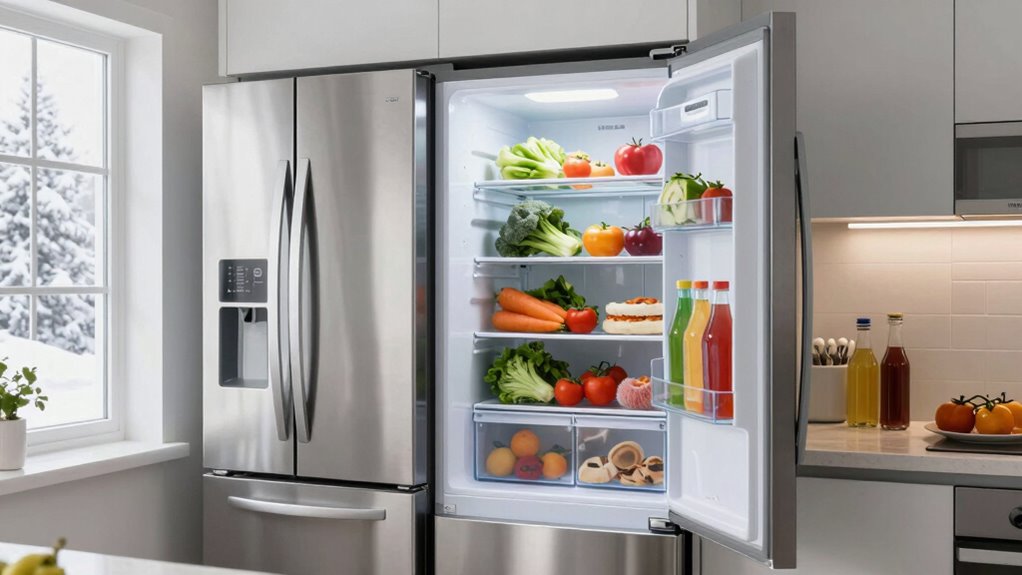
Ensuring your freezer and fridge stay stocked and functional during emergencies requires a solid backup strategy. The key is to be proactive with meal planning and food preservation, so you’re prepared when supplies run low or power is disrupted. Start by organizing your pantry and freezer with versatile ingredients that can be combined into various meals, reducing dependence on fresh produce or perishable items. When you plan your meals, focus on items with longer shelf lives, like canned goods, dried grains, and frozen foods, which can be stored safely and used in many recipes. This approach minimizes waste and ensures you can nourish yourself even without immediate access to fresh groceries. Incorporating emergency preparedness into your routine helps you stay ready for unexpected disruptions.
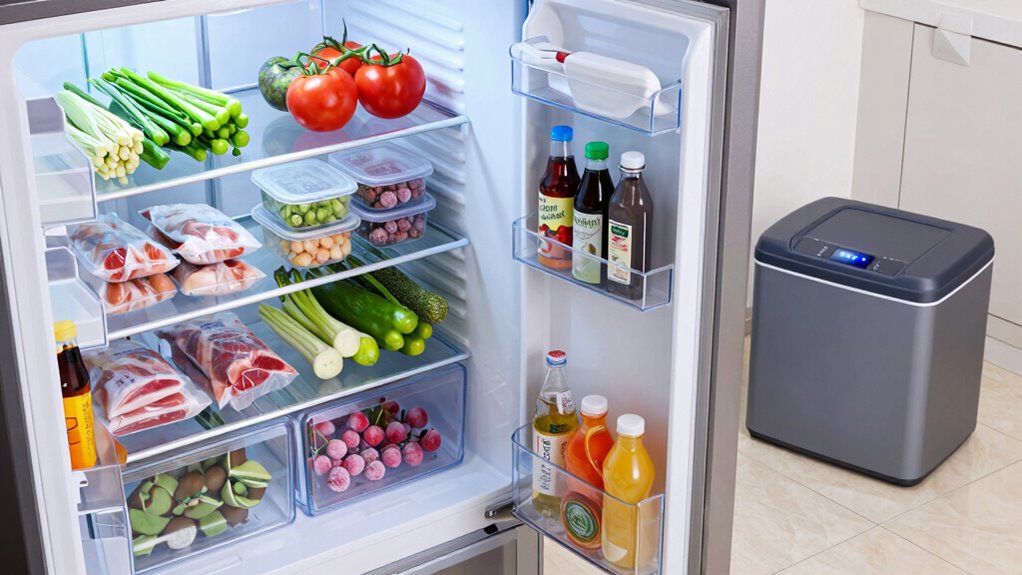
Food preservation plays a critical role in your backup strategy. Freezing surplus fruits, vegetables, and cooked meals can extend their usability for weeks or even months. Invest in quality storage containers or vacuum sealers to prevent freezer burn and maintain the freshness of your preserved foods. Label everything with dates so you can prioritize using older items first, reducing spoilage and waste. Additionally, consider canning or dehydrating certain foods as a means of long-term storage, especially if you want to diversify your options and save space in your freezer. Proper food storage techniques are essential to maintaining the quality of your preserved foods over time.
Freezing, canning, and dehydrating extend food shelf life and diversify storage options for emergencies.
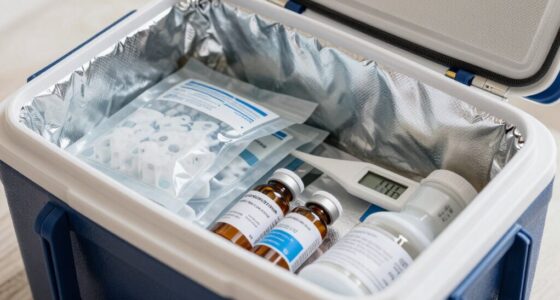
To ensure your freezer and fridge remain functional during emergencies, you should also think about fuel-efficient ways to keep them running. Regularly maintaining your appliances helps prevent breakdowns when you need them most. During long outages, a generator can keep your refrigerator and freezer cold, but it’s essential to have enough fuel stored safely and in accordance with safety guidelines. Using a generator sparingly and efficiently can save fuel and prolong its availability. To cut down on power needs, keep your fridge and freezer doors closed as much as possible, and consider installing a thermometer to monitor internal temperatures, ensuring your food stays safe without wasting energy. Additionally, placing your appliances in a cool, shaded area can help improve their efficiency during outages.

Porch Shield Generator Cover for 5500-15000W, 38 x 28 x 30 inch, Black
- Compatible - More sizes for 5500w -15000w gas...
- Upgrade Material - Made of 600D polyester fabric...
- Tear Resistant & Waterproof - The high-level double...
As an affiliate, we earn on qualifying purchases.
Frequently Asked Questions
How Long Can Food Safely Stay Frozen During a Power Outage?
During a power outage, you can keep food safe in your freezer for about 48 hours if it’s full and unopened, or 24 hours if half-full. Follow emergency preparedness and food safety guidelines to prevent spoilage. Keep the freezer door closed as much as possible to maintain cold temperatures. If you notice any thawed or smelly food, discard it. Staying informed helps protect your health and reduces food waste.
What Temperature Should My Freezer and Fridge Be Set To?
Did you know keeping your fridge at 37°F (3°C) and your freezer at 0°F (-18°C) can cut energy costs by up to 25%? The ideal temperature for both appliances ensures food safety and energy efficiency. Set your fridge slightly above freezing to keep things cold but save power, and keep your freezer at zero for maximum preservation without wasting energy. Regularly check your thermometers to stay on track!
How Often Should I Check and Rotate Stored Food?
You should check your food inventory and rotate stored food weekly to prevent spoilage. Regularly inspecting your meal planning guarantees you use older items first, reducing waste. Keep track of expiration dates and move newer items to the front. This habit helps maintain a fresh food supply, saves fuel by avoiding unnecessary trips, and keeps your fridge and freezer efficiently stocked, making meal prep easier and more sustainable.
Can I Refreeze Thawed Food Safely?
Yes, you can refreeze thawed food safely if you followed proper thawing methods and food safety guidelines. If the food was thawed in the refrigerator, it’s safe to refreeze without cooking. However, if you thawed it using faster methods like microwave or cold water, cook it first before refreezing. Always check for spoilage or unusual odor before refreezing to guarantee safety.
What Are the Best Types of Containers for Freezer Storage?
You should choose airtight containers for freezer storage to keep food fresh and prevent freezer burn. Opt for BPA-free options to guarantee safety, especially when storing liquids or items that might leach chemicals. Look for containers that are durable, stackable, and freezer-safe. These features help maximize space and maintain food quality, making your freezer organization efficient and secure. Always label your containers for easy identification.
Porch Shield Generator Cover for 5000-10000W, 32 x 24 x 24 inch, Black
- Compatible - More sizes for 5000w -10000w gas...
- Upgrade Material - Made of 600D polyester fabric...
- Tear Resistant & Waterproof - The high-level double...
As an affiliate, we earn on qualifying purchases.
Conclusion
By implementing a reliable freezer-and-fridge backup strategy, you can substantially reduce food waste and save fuel during outages. Did you know that nearly 38% of food waste in households occurs due to spoilage from power failures? Keeping a backup plan not only preserves your food but also cuts down on unnecessary trips to the store. Stay prepared, and you’ll enjoy fresher food and peace of mind, no matter what power disruptions come your way.
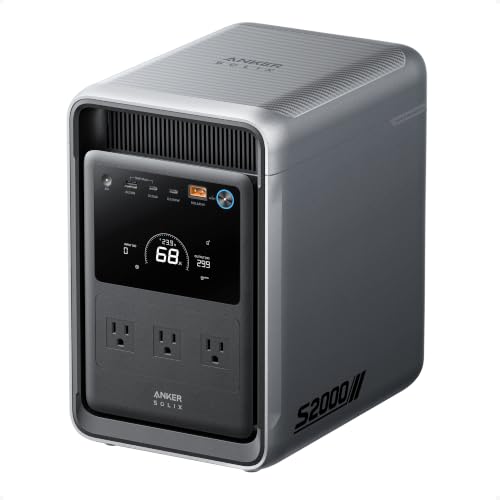
Anker SOLIX S2000 Portable Power Station, 2,010Wh, 1,500W, Home Backup, UPS
- Up to 35-Hour Fridge Backup: With 6W idle power draw...
- 10,000-Cycle LFP Battery: Powered by 314Ah LFP cells,...
- Smallest and Lightest 2kWh Power Station: 30% smaller and 25% lighter...
As an affiliate, we earn on qualifying purchases.

Jackery Solar Generator 1000 v2 and 200W Solar Panel,1070Wh,1500W AC
- Powerful yet Compact: Boasting a 1,500W AC output...
- One Hour Fast Charging: Charge your Explorer 1000 v2...
- 10 Year Lifespan: The Explorer 1000 v2 portable...
As an affiliate, we earn on qualifying purchases.