
To create a generator readiness scorecard, list key components like the generator, fuel supply, batteries, control systems, and transfer switches. Develop criteria such as maintenance, testing frequency, and performance monitoring, assigning scores (e.g., 1-5 or 0-100) based on condition. Regularly update scores after checks, using them to prioritize repairs and track trends. Keeping the scorecard current helps guarantee your system stays reliable in emergencies. If you continue exploring, you’ll discover how to optimize your process further.
Key Takeaways
- Identify critical components (generator, fuel, batteries, control systems, transfer switches) to assess their condition.
- Develop a scoring scale (e.g., 0-100 or 1-5) to rate each component’s performance and health.
- Establish criteria for assessments, including inspections, testing frequency, and manufacturer-recommended servicing.
- Implement routine operational checks and document results to update component scores regularly.
- Prioritize maintenance and repairs based on score thresholds to ensure system reliability during emergencies.
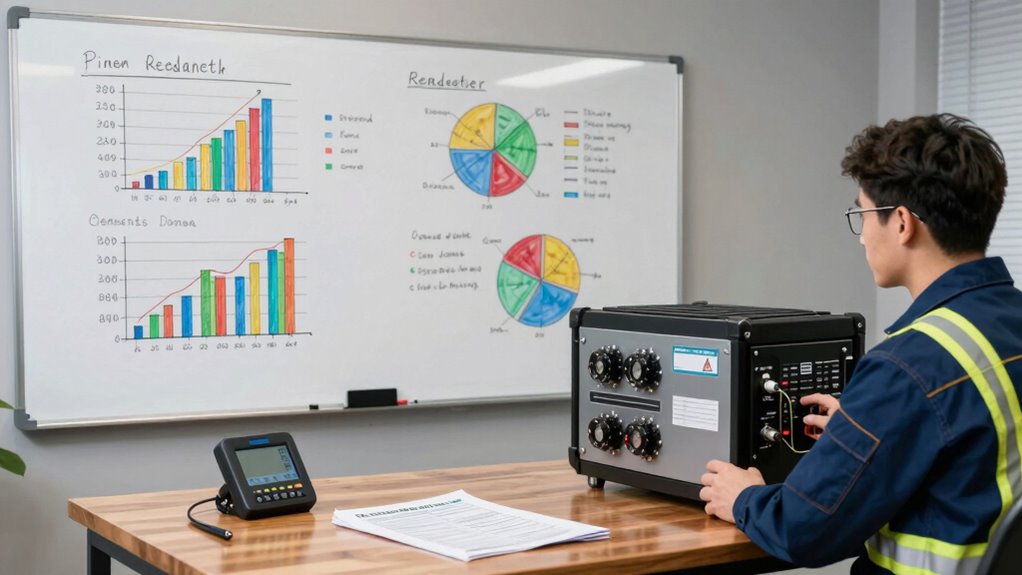
Creating a generator readiness scorecard is essential for verifying your backup power systems are prepared to handle emergencies. This scorecard acts as a clear, organized way to evaluate how well your generator setup is maintained and ready for unexpected outages. When you develop a detailed scorecard, you can easily identify areas needing attention, which ultimately boosts your power outage preparedness. It also helps you plan maintenance proactively, preventing breakdowns when you need your generator most.
Start by listing all critical components of your backup power system: the generator itself, fuel supply, battery condition, control systems, and transfer switches. For each, establish specific criteria that measure their current status. For example, under maintenance planning, include scheduled inspections, oil changes, filter replacements, and testing frequency. These criteria help you keep track of whether each part has been serviced according to manufacturer recommendations, reducing the risk of sudden failures. A well-maintained generator is less likely to malfunction during a power outage, ensuring you’re always ready when disaster strikes.
Next, assign a straightforward scoring system—such as a scale from 1 to 5 or 0 to 100—to each component based on its condition. A high score indicates ideal performance, while a lower score signals the need for maintenance or repairs. When you regularly update these scores, you gain immediate insight into your system’s health, enabling you to prioritize repairs or maintenance activities before an outage occurs. This proactive approach minimizes downtime and ensures your backup power is dependable. Incorporating regular assessments into your routine can help maintain optimal performance.
In addition to technical assessments, include operational checks like starting the generator under load, testing transfer switches, and verifying emergency shutdown procedures. These tests are critical for power outage readiness because they simulate real emergency conditions, revealing potential issues before an actual outage. Document the results, and update the scorecard accordingly. Over time, this process creates a detailed view of your generator’s readiness, giving you confidence that it will perform when needed. Regularly reviewing these performance metrics can help you identify trends and optimize your maintenance schedule. Ensuring proper maintenance and adherence to manufacturer guidelines further enhances your system’s reliability.
Frequently Asked Questions
What Are the Key Metrics to Include in a Scorecard?
You should include key metrics like generator maintenance schedules, to track upkeep and prevent failures, and reliability metrics, such as mean time between failures (MTBF) and failure rates, to assess performance consistency. Monitoring fuel levels, start-up times, and load capacity also helps determine readiness. These metrics give you a clear picture of your generator’s health, ensuring you can address issues proactively and maintain best operational reliability.
How Often Should the Scorecard Be Updated?
You should update your generator readiness scorecard regularly, ideally monthly or after significant maintenance schedules. This guarantees compliance standards are consistently met and allows you to track performance trends over time. Frequent updates help catch issues early, keep maintenance on track, and ensure your generators are prepared for any emergency. Adjust the update frequency based on operational demands and regulatory requirements to maintain ideal readiness and compliance.
Who Should Be Responsible for Maintaining the Scorecard?
Like a knight guarding a castle, you should assign a dedicated team to maintain your scorecard, ensuring it stays accurate and up-to-date. They’re responsible for updating maintenance scheduling and tracking training requirements. This team must have a clear understanding of generator operations, safety standards, and data analysis. Regular reviews and audits are essential, so assign a proactive individual or team to oversee the scorecard’s integrity and continuous improvement.
How Do You Prioritize Generator Improvements Based on Scores?
You should prioritize generator improvements based on scores by focusing on areas that impact emergency preparedness the most. Start with generators that show the lowest readiness scores, indicating maintenance issues or outdated parts. Conduct regular generator maintenance to address these weaknesses promptly. This approach guarantees you’re prepared for emergencies, minimizing downtime and maximizing reliability. Prioritizing improvements this way ensures your generator fleet is always ready when needed most.
What Tools Can Help Automate the Scorecard Creation Process?
Tools like automated data collection systems and dashboard integration software can dramatically simplify scorecard creation. These tools actively assemble accurate, up-to-date data, enabling you to analyze generator readiness swiftly. By syncing with your existing systems, dashboards display real-time results, removing manual effort and minimizing errors. This automation accelerates decision-making, allowing you to focus on maintenance and improvements while the tools handle the tedious tasks of tracking, tallying, and translating data into actionable insights.
Conclusion
Now that you’ve mapped out your generator readiness scorecard, you’re like a captain steering your ship through stormy waters—confident and prepared. With this tool in hand, you’ll navigate power disruptions smoothly, turning potential chaos into calm. Think of it as your trusty lighthouse, guiding you safely to shore. Keep it updated, stay vigilant, and you’ll guarantee your operations never miss a beat, no matter what the currents of uncertainty throw your way.