
Separately derived systems get power from a transformer secondary that’s isolated from other sources, providing a separate grounding point, which helps reduce interference and improve safety for sensitive equipment. Non‑separately derived systems connect directly to the main supply and share a common ground with the building’s system, simplifying wiring but requiring proper bonding at the main panel. Understanding these differences affects grounding methods and safety measures; explore further to see how each impacts your electrical setup.

Get backup power and energy gear delivered free with Prime
- Fast, free delivery on millions of items
- Prime Video, Amazon Music and more included
- Member-only deals all year
Key Takeaways
- Separately derived systems are isolated from other sources and grounded directly to earth, while non‑separately derived systems connect directly to the main supply and share a common ground.
- Separately derived systems use an isolated transformer secondary, reducing interference and shock hazards; non‑separately derived systems bond the neutral to earth at the main panel.
- Proper grounding in separately derived systems enhances safety and fault detection; in non‑separately derived systems, grounding is integrated with the building’s main system.
- Separately derived systems often serve specialized equipment needing dedicated grounding, whereas non‑separately derived systems are part of the overall electrical system.
- Correct classification affects wiring, grounding methods, and protective devices to ensure safety, reliability, and code compliance.
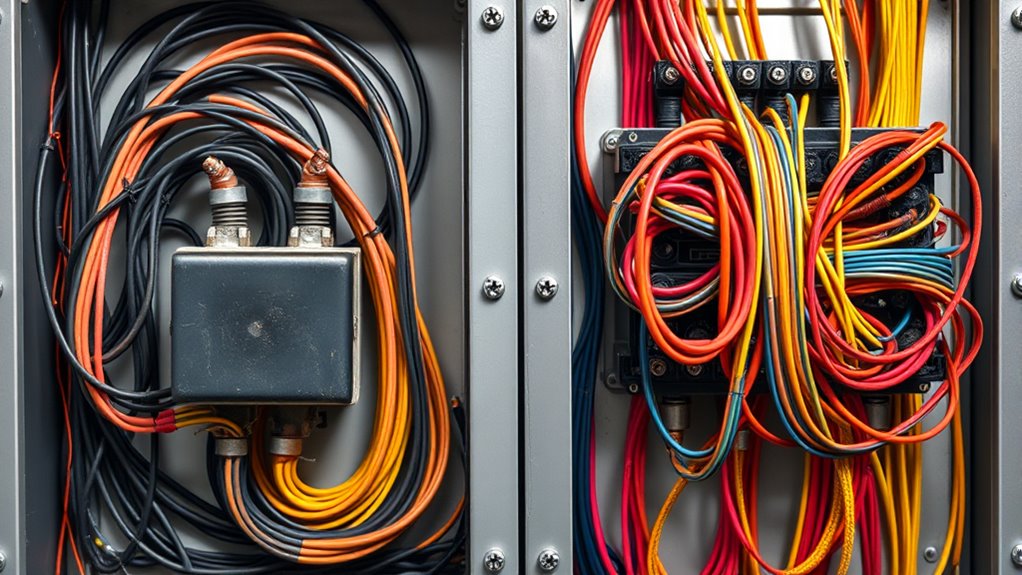
Have you ever wondered what sets separately derived systems apart from non‑separately derived systems in electrical wiring? Understanding this difference is vital because it influences how you approach grounding methods and system classifications. In simple terms, separately derived systems are those that get their power from a source that is isolated from other systems, such as a transformer with a secondary that’s not connected to earth or other systems. Non‑separately derived systems, on the other hand, derive power directly from a main supply without such isolation. This distinction impacts safety, fault protection, and how you implement grounding methods.
Understanding the difference between separately derived and non‑separately derived systems is key for proper grounding and safety.
When dealing with separately derived systems, system classifications become particularly important. These systems are categorized based on their isolation from other sources, which means they require specific grounding methods to guarantee safety and proper operation. For example, in a separately derived system, the grounding conductor is connected directly to the secondary of the transformer and then to earth. This setup creates a clear reference point, reducing the risk of shock hazards and facilitating fault detection. Because these systems are isolated, they often serve specialized equipment or sensitive circuits that require a dedicated grounding scheme to prevent interference or unintended current paths.
In contrast, non‑separately derived systems typically use grounding methods that connect directly to the main grounding system of the building or facility. Here, the system is not isolated, so the grounding approach involves bonding the system’s neutral conductor to earth at the main service panel. This creates a common reference point for all connected equipment, which simplifies fault detection and minimizes potential differences that could cause electrical shock hazards. The system classification in this case emphasizes its integration with the overall electrical system, and grounding methods are designed to guarantee continuity and safety across all circuits.
Knowing whether you’re working with a separately derived or non‑separately derived system guides your choice of grounding methods and influences how you classify the system within your electrical setup. Proper classification ensures that protective devices operate correctly during faults, and grounding methods are correctly implemented to prevent shock hazards and equipment damage. It’s essential to follow electrical codes and standards, which specify the criteria for system classifications and grounding practices depending on the system type. Additionally, understanding the role of color coding in wiring can help ensure correct connections and safety. By understanding these differences, you can design safer, more reliable electrical systems tailored to their specific requirements, guaranteeing safety and compliance every step of the way.
Frequently Asked Questions
How Do I Identify if My System Is Separately Derived or Not?
To identify if your system is separately derived, check your grounding methods and system design. If your system has its own grounding connection, typically from a transformer or power source, it’s likely separately derived. Conduct system identification by tracing the grounding path and verifying if the system has a distinct source connection. This helps determine whether it’s a separately derived system or not, ensuring proper electrical safety and code compliance.
What Are the Main Safety Concerns With Each System Type?
Your main safety concern with separately derived systems is guaranteeing proper grounding practices to prevent shock hazards from fault current. For non‑separately derived systems, the risk lies in managing fault current paths effectively to avoid equipment damage or electrical fires. In both cases, verifying correct grounding and bonding minimizes shock risks and ensures safe operation, especially during faults. Proper grounding and fault current management are essential for safe system performance.
Can a System Switch From Non‑Separately Derived to Separately Derived?
Think of your system as a chameleon, capable of change. Yes, you can convert a non‑separately derived system into a separately derived one, but it requires careful system conversion and adherence to code compliance. You must follow the electrical code’s guidelines, ensuring proper grounding and bonding. This changeover demands meticulous planning and inspection, but it’s entirely feasible if you prioritize safety and code requirements throughout the process.
Are There Cost Differences Between Installing These Two Systems?
You’ll find that the cost comparison between installing separately derived and non‑separately derived systems varies. Generally, separately derived systems tend to be more expensive due to increased installation complexity, such as additional components and wiring. Non‑separately derived systems are usually simpler and cheaper to install. Keep in mind that choosing one over the other depends on your specific electrical needs and safety requirements, which can impact overall costs.
How Do Local Electrical Codes Affect System Classification?
You need to follow local electrical codes, which specify grounding methods and wiring configurations that determine system classification. These codes often require specific grounding methods for separately derived systems to guarantee safety and proper operation. Wiring configurations, such as the use of a grounding conductor, also influence whether a system is classified as separately derived or not. Always check your local codes to ensure compliance and proper system setup.
Conclusion
In the end, understanding the nuances between separately derived and non‑separately derived systems helps you make smarter choices in electrical setups. While both have their place, choosing the right one can gently simplify your work and keep things running smoothly. Remember, knowing the subtle differences allows you to navigate electrical design with confidence and finesse, making your projects flow effortlessly. So, embrace the knowledge, and you’ll find the path to safer, more efficient systems becomes clearer and more rewarding.
Fall Picks
fall essentials
As an affiliate, we earn on qualifying purchases.