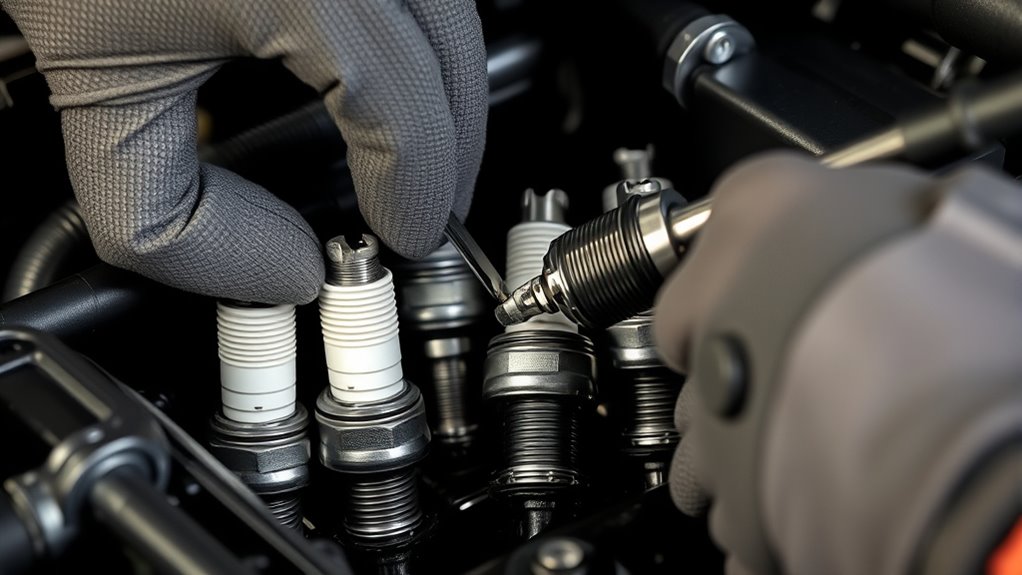

To maintain your spark plugs and ignition components, regularly inspect for signs of wear, damage, or corrosion, and replace parts as needed. Always check the spark plug gap using a gauge to ensure proper combustion efficiency, and inspect ignition coils for cracks or overheating signs. Keeping these components in good shape prevents misfires, improves fuel economy, and ensures reliable engine starts. Continuously monitoring and adjusting these parts will help keep your engine running smoothly—discover more tips to optimize your ignition system.
Key Takeaways
- Regularly inspect ignition coils for cracks, corrosion, and overheating signs to prevent misfires and engine issues.
- Check and adjust spark plug gaps according to manufacturer specifications using a gap gauge.
- Replace damaged or worn ignition coils and spark plugs promptly to maintain engine performance.
- Perform maintenance with the engine cool, using precise tools to avoid component damage.
- Include ignition component checks in routine service to ensure smooth, efficient engine operation.

Keeping your vehicle’s spark plugs and ignition components in good condition is essential for ideal engine performance. When these parts function properly, your engine starts smoothly, runs efficiently, and delivers optimal power. One key aspect of maintenance is regularly inspecting your ignition coil, which plays a crucial role in delivering the necessary voltage to ignite the fuel-air mixture in your engine. During ignition coil inspection, you should look for signs of wear, cracking, or corrosion that could cause misfires or weak sparks. If you notice any damage, replacing the ignition coil promptly can prevent more serious engine problems down the line.
Another important maintenance task is spark plug gap adjustment. Over time, the gap between the spark plug’s electrodes can change due to wear or improper installation, leading to poor combustion and decreased fuel efficiency. To perform a spark plug gap adjustment, you’ll need a gap gauge or a feeler tool. Carefully measure the gap according to your vehicle’s specifications, which you can find in the owner’s manual. If the gap is too narrow, the spark may be weak or inconsistent; if it’s too wide, the spark might not jump across the gap effectively, causing misfires. Adjusting the gap involves gently bending the ground electrode to achieve the correct measurement. Doing this ensures that your spark plugs fire properly, which improves engine responsiveness and overall performance.
Regularly inspecting your ignition coil and adjusting spark plug gaps isn’t complicated, but it’s vital for keeping your engine running smoothly. When inspecting the ignition coil, look for cracks, corrosion, or signs of overheating, and replace it if necessary. For spark plug gap adjustment, always use precise tools and follow manufacturer specifications to avoid damaging the plug or affecting engine timing. Remember, it’s best to do these checks when your engine is cool to prevent injury and ensure accurate measurements.

Anker SOLIX F3800 Portable Power Station, 3,840Wh, 6,000W,Home Backup, RVs
- Enlarged Capacity From 3.84kWh: Anker SOLIX F3800 has 3.84kWh...
- Dual-Voltage for Any Appliance: No more limitations when you're...
- Directly Charge Your EV: You don't need complicated grounding...
As an affiliate, we earn on qualifying purchases.
Frequently Asked Questions
How Do I Know When to Replace My Spark Plugs?
You should replace your spark plugs when they reach their spark plug lifespan, typically around 30,000 to 50,000 miles, or if you notice signs like poor fuel economy, misfires, or difficulty starting your engine. Worn spark plugs can affect ignition timing, leading to rough running. Regular inspections help catch these issues early, ensuring your engine runs smoothly and efficiently. Don’t ignore symptoms or maintenance schedules to keep your vehicle performing its best.
Can I Clean and Reuse Spark Plugs?
You can clean and reuse spark plugs if they aren’t damaged or excessively worn. Start with spark plug cleaning using a wire brush or a specialized cleaner, then inspect the ignition system for any issues. Make sure the electrodes are in good shape and gap them properly before reinstalling. If the spark plug shows signs of corrosion, wear, or damage, it’s best to replace it rather than clean.
What Signs Indicate Ignition System Failure?
When your engine starts acting up, it’s like a symphony missing a note. Signs of ignition system failure include misfires, rough idling, and difficulty starting. Ignition coil issues can cause inconsistent sparks, while a spark plug gap that’s too wide or narrow hampers proper firing. Keep an eye out for these clues, as ignoring them can lead to worse problems down the road. Acting early keeps your engine singing smoothly.
How Does Altitude Affect Spark Plug Performance?
Altitude effects can diminish spark plug efficiency because thinner air at higher elevations makes it harder for the spark to ignite the fuel mixture properly. You might notice rough idling, misfires, or sluggish acceleration. To counteract this, you may need to adjust your engine’s air-fuel mixture or upgrade to spark plugs designed for high-altitude performance. Staying aware of these changes ensures your vehicle runs smoothly regardless of elevation.
Are There Differences in Maintenance for Diesel vs. Gasoline Engines?
Yes, you need to maintain diesel and gasoline engines differently. Diesel engines require regular fuel injector maintenance because of their higher compression ratios, which can cause carbon buildup. Gasoline engines, on the other hand, need spark plug checks and ignition system upkeep. The compression ratio impacts how often you should inspect these parts, with diesel engines typically demanding more frequent attention due to their higher compression and fuel injector differences.

ECO-WORTHY 48V Home Backup Power,30720 Wh Battery,Liber 10KP 10KW Inverter
- Whole-Home Off-Grid Power: Still worried about power outages...
- Passed UL1973 & UL1741 Tests: The battery and inverter have...
- Closed-Loop Communication Battery: ECO-WORTHY 48V (51.2V) server rack...
As an affiliate, we earn on qualifying purchases.
Conclusion
Keeping your spark plugs and ignition components in top shape is like having a trusty sidekick on your road trip—reliable and ready when you need it. Regular checks and replacements guarantee your engine runs smoothly, saving you time and money. Don’t forget, even in this modern age, a little TLC can prevent your car from turning into a pumpkin carriage. Stay vigilant, and your ride will thank you for it!

CyberPower CP1500PFCLCD PFC Sinewave UPS Battery Backup and Surge Protector
- 1500VA/1000W PFC Sine Wave Battery Backup Uninterruptible Power...
- 12 NEMA 5-15R OUTLETS: Six battery backup & surge...
- MULTIFUNCTION, COLOR LCD PANEL: Displays immediate, detailed information on...
As an affiliate, we earn on qualifying purchases.

Jackery Explorer 300 Portable Power Station,292Wh
- Ultra-Lightweight: At only 7.5 lbs, the...
- Versatile Power for 6 Devices: Equipped with 2 AC outlets,...
- Built to Last: Upgraded with premium LiFePO4 chemistry,...
As an affiliate, we earn on qualifying purchases.