
Whole-house surge protectors help limit voltage surges entering through a home’s electrical service, but the right choice depends on panel compatibility, installation style, and the level of protection you want. I’d put the Square D HEPD50 first as a broadly capable choice, with the Siemens BoltShield FSPD140 standing out for its high stated surge-current rating and the Eaton CHSPT2SURGE for buyers seeking a familiar Type 2 setup. A higher kA rating is only one part of the decision: panel fit, device type, installation requirements, and whether you want a whole-panel or breaker-style product all matter. Some options suit specific panel families, while others call for closer checks before purchase. Read on for my full comparison and guidance on matching a protector to your service panel.

Get backup power and energy gear delivered free with Prime
- Fast, free delivery on millions of items
- Prime Video, Amazon Music and more included
- Member-only deals all year
Key Takeaways
- The Square D HEPD50 is my overall pick because its 50kA rating gives it a middle-ground position between lower-rated devices and the higher-capacity HEPD80 or Siemens FSPD140.
- The Siemens FSPD140 has the highest stated kA rating in this lineup, but a bigger number alone does not establish panel compatibility, installation suitability, or better protection for every home.
- Panel-family fit separates several picks. Square D Homeline models and the Drizzlen Type BR breaker-style product call for particular panel compatibility checks before buying.
- Type 1 and Type 2 labels affect installation context. The Gloyatin and Leviton are identified as Type 1, while several Siemens and Eaton models are Type 2 or Level 2 devices; buyers should confirm their service setup and local code requirements.
- Surge-current ratings vary widely, but the product list also varies by form. The roundup includes panel-mounted devices, plug-in or breaker-style choices, and a three-pack, so selection is not just a contest between kA figures.





| whole house surge protector | Voltage | Model |
|---|---|---|
| Square D HEPD50 Whole House Su | 120/240V | HEPD50 |
| Siemens BoltShield FSPD036 Lev | 120/240V | FSPD036 |
| Square D by Schneider Electric | 120/240V | HOM2175SB |
| Siemens QSPD2A035B 35kA BoltSh | 240V | QSPD2A035B |
| Furniqro FHSPD108S Whole-Home | 120/240V | FHSPD108S |
| Furniqro FHSPD36S Whole House | 120/240V | FHSPD36S |
| Square D HOM250PSPD Homeline W | 120/240V AC | HOM250PSPD |
| Gloyatin HSPD-25 Whole-Home Su | 120/240 VAC | HSPD-25 |
| Siemens Boltshield QSPD2A065P | 120/240V | QSPD2A065P |
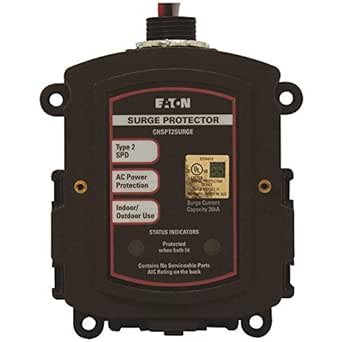
| Eaton CHSPT2SURGE Type 2 Whole | 120/240 VAC | CHSPT2SURGE |
| Leviton R2120-B Type 1 Surge P | 120/240 VAC | — |
| Drizzlen Type BR Whole-Panel C | — | ET003 |
| Siemens Boltshield FSPD140 Lev | 120/240 V | — |
| Square D HEPD80 Whole-Home Sur | 120/240 V | — |
| Eaton CHSPT2ULTRA Ultimate Sur | 120/240 V | CHSPT2ULTRA |
More Details on Our Top Picks
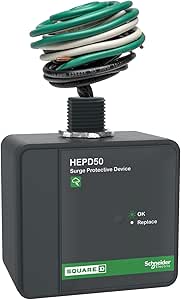
Square D HEPD50 Whole House Surge Protection Device, 120/240V, 50kA
I’d put the Square D HEPD50 first for homeowners who want a balanced whole-panel option without committing to a brand-specific plug-in device. Its 50kA rating and compatibility with residential load centers from any brand make it a more flexible fit than the Siemens QSPD2A035B, which is designed for Siemens panels. The NEMA 4X enclosure also supports indoor or outdoor placement, useful when the panel setup calls for mounting outside. A green LED gives a quick protection-status check. The tradeoff is that this is a panel-mounted, hardwired device, so it is not a plug-in shortcut; installation must suit the existing load center. Like other whole-house protectors, it is meant to work alongside point-of-use protection for sensitive electronics, not replace it.
Pros:- Compatible with residential load centers from any brand
- NEMA 4X rating supports indoor or outdoor use
- 50kA surge-current rating
- Green LED makes protection status easy to check
Cons:- Panel mounting requires a compatible load center and electrical installation
- Point-of-use protection may still be needed for sensitive electronics
Best for: Homeowners seeking a brand-flexible, indoor-or-outdoor whole-house protector for a residential load center.
Not ideal for: People who need a plug-in installation or expect a panel-mounted device to replace surge strips for sensitive electronics.
- Brand:Square D by Schneider Electric
- Model:HEPD50
- Voltage:120/240V
- Phase and wiring:1-phase, 3-wire + ground
- Mounting:Panel mount
- Status indicator:Green LED
- Warranty:3 years
Our verdict“Choose the HEPD50 for flexible panel compatibility and outdoor-ready installation, provided you have an electrician install it and retain device-level protection where needed.”
Siemens BoltShield FSPD036 Level 2 Whole House Surge Protection Device, 36kA, 120/240V
The Siemens BoltShield FSPD036 suits buyers who need a Level 2 protector with a choice of mounting locations: it can go inside a load center or outdoors in a Type 4 enclosure. That flexibility sets it apart from the Siemens QSPD2A035B, which plugs directly into a compatible Siemens panel and is intended for indoor use. Its 36kA rating and LED monitoring provide a straightforward whole-home layer against internal and external surges, while the hardwired design avoids taking up breaker positions in the same way a plug-on unit can. The compromise is that it has no plug and installation is not a casual DIY task; plan for qualified electrical work. Buyers comparing surge-current ratings will also find the Square D HEPD50 offers a higher stated figure at 50kA.
Pros:- 36kA surge-current rating for whole-home protection
- LED status monitoring
- Can mount inside a load center or outdoors in a Type 4 enclosure
- Hardwired format does not require a plug-in outlet
Cons:- Hardwired installation calls for qualified electrical work
- Its 36kA rating is lower than the Square D HEPD50’s stated 50kA
- Compatibility and installation depend on the electrical system and enclosure setup
Best for: Homeowners who want a hardwired Level 2 protector and need the option to mount it indoors or outdoors.
Not ideal for: Buyers seeking a plug-in device, a higher stated surge-current rating, or a setup that avoids professional electrical installation.
- Brand:Siemens
- Model:FSPD036
- Voltage:120/240V
- Protection level:Level 2
- Installation:Hardwired; load-center or outdoor Type 4 enclosure mounting
- Enclosure material:Polycarbonate
- Status monitoring:LED
- Warranty:3 years
Our verdict“Pick the FSPD036 if mounting flexibility matters more than a plug-in format or a higher stated surge-current rating.”
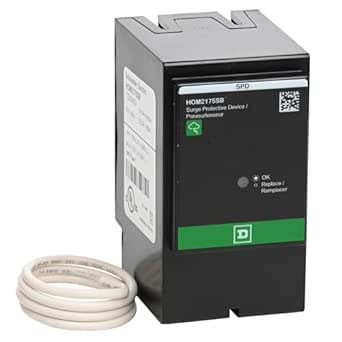
Square D by Schneider Electric HOM2175SB Homeline SurgeBreaker
The HOM2175SB Homeline SurgeBreaker is the panel-specific choice here: its plug-on installation fits Homeline load centers and uses two pole positions, so it can be a tidy addition when that panel has room. Unlike the Square D HEPD50, which is described as compatible with residential load centers from any brand and supports outdoor use, this model is limited to Homeline-compatible installations and has a NEMA 1 indoor rating. It provides equal protection to circuits and receptacles throughout the home and includes an LED status indicator. Its UL 1449 3rd Edition listing is a useful specification to check when comparing devices. The key limitation is that the provided details do not give a surge-current rating, and the product description excludes sensitive electronic devices, so buyers should plan on supplementary protection for those loads.
Pros:- Plug-on installation for compatible Homeline load centers
- LED indicator shows operational status
- UL 1449 3rd Edition listed
- Provides protection to circuits and receptacles throughout the home
Cons:- Requires two pole positions in the load center
- NEMA 1 rating limits it to indoor use
- Product details do not state a surge-current rating and exclude sensitive electronic devices
Best for: Homeowners with a compatible Homeline load center, two available pole positions, and a preference for plug-on installation.
Not ideal for: Owners of non-Homeline panels, outdoor installation locations, or households seeking a stated high surge-current rating and coverage for sensitive electronics from one device.
- Brand:Square D by Schneider Electric
- Model:HOM2175SB
- Voltage:120/240V
- Phase and wiring:Single phase, 3-wire
- Installation:Plug-on; requires 2 pole positions
- SCCR:22.5kA
- Certification:UL 1449 3rd Edition listed
- Warranty:3 years
Our verdict“Choose the HOM2175SB when you have a Homeline panel with space to spare and want a panel-matched plug-on device, but add separate protection for sensitive electronics.”
Siemens QSPD2A035B 35kA BoltShield Indoor Surge Protective Device
For a homeowner with a Siemens load center, the QSPD2A035B offers a direct, compact route to panel-level surge protection: it plugs into the load-center bus rather than requiring a separate hardwired enclosure like the Siemens FSPD036. Its 35kA per-phase rating covers both external and internal surges, and mechanical green/red indicators give a visible status check without relying on an LED. That indicator may be less readable in a dim utility area, however. Compatibility is the larger constraint: this model is specifically designed for Siemens load centers, unlike the brand-flexible Square D HEPD50. The 240V, two-pole design and indoor-only positioning also narrow where it fits. I’d favor it when panel compatibility and plug-in mounting are settled priorities, not as a universal replacement for other brands’ devices.
Pros:- Plug-in mounting connects directly to a compatible Siemens load center
- 35kA surge-current protection per phase
- Mechanical green/red indicators show protection status
- Compact dimensions for panel-area installation
Cons:- Designed specifically for Siemens load centers
- Indoor use limits installation choices
- Mechanical indicators are not LED-lit and may be harder to see in dim areas
Best for: Owners of Siemens load centers who want a compact, plug-in whole-house protector with a visible mechanical status indicator.
Not ideal for: Homeowners with another panel brand, an outdoor installation location, or a preference for an illuminated indicator.
- Brand:Siemens
- Model:QSPD2A035B
- Voltage:240V
- Poles:2
- Mounting:Plug-in
- Status indicator:Mechanical green/red indicators
- Dimensions:2 x 2.6 x 3 in
- Warranty:3-year/$10,000 standard warranty
Our verdict“Choose the QSPD2A035B for a compatible Siemens panel when you want compact plug-in installation and can accept indoor-only use.”
Furniqro FHSPD108S Whole-Home Surge Protector, 108,000 Amps, 120/240V
The Furniqro FHSPD108S is the standout for buyers focused on the highest stated surge-current figure in this five-product group: its listed 108,000A rating is well above the Square D HEPD50’s 50kA and Siemens BoltShield FSPD036’s 36kA. It also supports 120/240V systems, claims compatibility with load centers and breakers of any brand, and has a commercial-grade enclosure for indoor or outdoor installation. LED indicators provide a status check, while its compact form may help where mounting space is tight. That headline rating does not remove the need to verify suitability for the service panel and grounding setup. The product data flags startup issues linked to grounding problems or improper use, and recommends electrician installation. Choose it for the stated capacity and flexible placement, not for a no-planning install.
Pros:- 108,000A maximum-current rating is the highest stated figure among these five products
- Listed as compatible with load centers and circuit breakers of any brand
- Commercial-grade enclosure supports indoor or outdoor installation
- LED indicators show protection status
Cons:- Grounding problems or improper use may cause startup issues
- Installation should be handled by an electrician familiar with surge-protection requirements
- The high stated rating does not replace panel and grounding compatibility checks
Best for: Homeowners comparing whole-home devices by stated surge-current rating who need broad panel compatibility and indoor-or-outdoor placement.
Not ideal for: DIY installers or buyers who cannot verify grounding, panel compatibility, and installation requirements with a qualified electrician.
- Brand:Furniqro
- Model:FHSPD108S
- Maximum current:108,000A
- Voltage:120/240V
- System frequency:60Hz
- Enclosure:Commercial-grade
- Installation:Indoor or outdoor
- Status indicators:LED
- Weight:0.46kg
Our verdict“Consider the FHSPD108S if its 108,000A stated rating and broad installation options fit your system, and have an electrician confirm the grounding and panel setup.”
Furniqro FHSPD36S Whole House Surge Protector (36,000 Amps, 120/240V)
The Furniqro FHSPD36S suits buyers who need a whole-home device that can be mounted indoors or outdoors without tying the choice to a specific load-center brand. Its stated 36,000-amp capacity gives a clearer rating than the Gloyatin HSPD-25, whose capacity is listed as a broad 25/50/80 kA range. The compact enclosure and LED status lights also make it easier to fit and check than a larger, less accessible installation might be. The tradeoff is that its one-pole specification and installation details call for careful verification against the home’s panel and electrical requirements. Furniqro also warns that grounding or installation errors can cause startup problems, so this is a better fit for a qualified installer than a casual DIY project.
Pros:- Stated 36,000-amp surge capacity
- Indoor/outdoor mounting flexibility
- Compact enclosure with LED status indicators
- Listed as compatible with load centers and breakers from all brands
Cons:- Grounding and installation mistakes may cause startup problems
- Professional electrical knowledge is needed for installation
- One-pole specification deserves verification for the intended 120/240V panel
Best for: Homeowners seeking an indoor- or outdoor-mount surge protector that is not limited to one load-center brand, with installation handled by an electrician.
Not ideal for: DIY buyers who want a clearly documented, panel-specific plug-in installation, or anyone unwilling to confirm the one-pole configuration and grounding requirements before purchase.
- Model:FHSPD36S
- Voltage:120/240V
- Frequency:60Hz
- Surge capacity:36,000 amps
- Mounting:Wall mount
- Environment:Indoor or outdoor
- Compatibility:All brands of load centers and circuit breakers
- Number of poles:1
Our verdict“Choose the FHSPD36S when flexible mounting and broad stated compatibility matter and a qualified installer can confirm the panel fit.”
Square D HOM250PSPD Homeline Whole House Surge Protection Device
For a homeowner with a qualifying Square D Homeline plug-on-neutral panel, the HOM250PSPD is the most straightforward panel-integrated choice in this group. Its plug-on-neutral design avoids the separate wiring required by the Eaton CHSPT2SURGE, which can make installation neater, though electrical work still needs to follow panel and safety requirements. The listed 50kA per phase rating also exceeds the Furniqro FHSPD36S’s stated 36,000 amps, but that number alone does not tell the whole story of system protection. The defining limitation is compatibility: this device is for Homeline load centers manufactured after 2014, not a universal solution. Its LED indicator helps show status, but buyers with another panel brand—or an older Homeline panel—should choose a compatible device instead.
Pros:- Plug-on-neutral format avoids additional wiring
- 50kA surge current rating per phase
- LED status indicator
- Protects hard-wired appliances such as washers, dryers, and stoves
Cons:- Limited to qualifying Square D Homeline load centers
- Not suitable for older Homeline panels manufactured before the stated compatibility period
- Panel-specific fit makes it unsuitable as a general-purpose replacement
Best for: Owners of post-2014 Square D Homeline plug-on-neutral load centers who want a compact, panel-specific surge device.
Not ideal for: Homeowners with non-Homeline panels, older Homeline load centers, or buyers looking for a universal wall-mounted SPD.
- Model:HOM250PSPD
- Maximum surge current:50kA per phase
- Voltage:120/240V AC
- Phase:1-phase
- Compatibility:Square D Homeline load centers manufactured after 2014
- Installation:Plug-on neutral
- Dimensions:3.5 × 3 × 7.5 inches
- Weight:5.92 ounces
Our verdict“Buy this for a compatible post-2014 Homeline panel; choose a broadly compatible wall-mounted option if your load center is a different brand.”
Gloyatin HSPD-25 Whole-Home Surge Protective Device, Type 1 SPD, 120/240 VAC
The Gloyatin HSPD-25 is aimed at buyers who want a Type 1 SPD with indoor/outdoor wall-mount options and compatibility across breaker brands. That flexibility contrasts with the Siemens Boltshield QSPD2A065P, which is a plug-in device intended for Siemens panels. Gloyatin’s listed 25/50/80 kA capacity range, however, is its main drawback: the product data does not identify which rating applies to this model, making comparison with the Siemens unit’s stated 65kA less dependable. Its compact build and standard-breaker compatibility may suit installations where panel-brand flexibility is useful, but buyers should confirm the exact rating and installation requirements before choosing it. The available information is less specific than the documentation provided for several other options here.
Pros:- Type 1 surge protective device
- Indoor or outdoor wall-mount installation
- Listed compatibility with circuit breakers from any brand
- Compact design for flexible placement
Cons:- Surge capacity is stated as a 25/50/80 kA range without identifying the applicable value
- Product data gives limited detail for comparing its protection rating with other models
Best for: Homeowners and electricians seeking a Type 1, wall-mounted device for an indoor or outdoor installation where breaker-brand flexibility matters.
Not ideal for: Buyers who need an unambiguous surge-current rating or want a plug-in device matched to a particular panel.
- Model:HSPD-25
- Device type:Type 1 SPD
- Voltage:120/240 VAC
- Surge capacity:Listed as up to 25/50/80 kA; applicable value unspecified
- Mounting:Wall mount
- Number of poles:2
- Installation environment:Indoor or outdoor
- Compatibility:Circuit breakers from any brand
Our verdict“Consider the HSPD-25 for Type 1 mounting flexibility only after confirming its exact surge rating and fit with the installer.”
Siemens Boltshield QSPD2A065P Plug-in Surge Protection Device, 2-Pole, 65kA, 120/240V
The Siemens Boltshield QSPD2A065P is the panel-specific pick for a homeowner who values a stated 65kA rating and clear replacement alerts. Its plug-in format is designed for most Siemens panels, unlike the Eaton CHSPT2SURGE, which mounts externally and connects through a dedicated breaker. That convenience comes with a firm boundary: it is not a universal load-center device, and the fit should be checked against the exact Siemens panel. Audible and visual indicators give the owner more than a silent status light, helping flag when the SPD needs replacement; those indicators still require attention over time. The listed 20kA nominal discharge current is a separate rating from its 65kA surge-current figure, so buyers should not treat the two numbers as interchangeable.
Pros:- 65kA surge current rating
- Plug-in design for most Siemens panels
- Audible and visual replacement indicators
- 10-year warranty listed in the product data
Cons:- Compatibility is limited to most Siemens panels
- Indicators need periodic monitoring to track device status
- Nominal discharge current and surge-current ratings describe different measures and may be confusing
Best for: Owners of compatible Siemens residential panels who want a plug-in SPD with audible and visual replacement alerts.
Not ideal for: Homeowners with non-Siemens panels or anyone wanting a universal wall-mounted device that can connect to different load-center brands.
- Model:QSPD2A065P
- Poles:2-pole
- Voltage:120/240V
- Surge current:65kA
- Nominal discharge current:20kA
- Phase and wires:1-phase, 3-wire
- Dimensions:2 × 2.5 inches
- Warranty:10 years
Our verdict“Choose this Siemens model if your panel is compatible and you want plug-in installation with both audible and visual status alerts.”
Eaton CHSPT2SURGE Type 2 Whole Home Surge Protector
The Eaton CHSPT2SURGE is the practical choice when a homeowner wants a Type 2 device that is listed for any manufacturer’s load center. That broad compatibility separates it from the Siemens QSPD2A065P and Square D HOM250PSPD, both of which depend on matching panel families. Its quick-connect design and LED indicators make the device straightforward to mount and check, but this is not a simple plug-in substitute: it must be installed on the load side of the main service disconnect, mounted outside the enclosure, and connected through a dedicated circuit breaker. Its stated 22kA surge capacity is also lower than the Siemens model’s 65kA figure, so buyers prioritizing the higher listed rating may prefer that Siemens option if their panel permits it.
Pros:- Listed for use with any manufacturer’s load center
- Quick-connect design simplifies mounting
- LED indicators show protection status
- Type 2 device rated for 120/240 VAC single-phase service
Cons:- Requires a dedicated circuit breaker on the load side of the main service disconnect
- Must be mounted externally to the load-center enclosure
- 22kA stated surge capacity is lower than the Siemens QSPD2A065P’s 65kA rating
Best for: Homeowners with a load center from any manufacturer who want a Type 2 SPD and have room for an externally mounted, breaker-connected installation.
Not ideal for: Buyers seeking a plug-in device, a panel-integrated installation, or a model with a higher stated surge-current capacity.
- Model:CHSPT2SURGE
- Device type:Type 2 SPD
- Voltage:120/240 VAC
- Phase:Single-phase
- Frequency:60 Hz
- Nominal discharge current:5kA
- Surge current capacity:22kA
- Weight:13.44 ounces
Our verdict“Pick the Eaton when broad load-center compatibility matters more than plug-in convenience or a higher stated surge-current rating.”
Leviton R2120-B Type 1 Surge Protective Device, 120/240 VAC Split Phase, 36kA per Phase, Gray
The Leviton R2120-B stands apart from the Type 2 options here because it is a Type 1 SPD, a fit for residential installations where that device category is specifically wanted. Its 36kA-per-phase rating and LED status monitoring offer a clear combination of listed surge capacity and at-a-glance condition checks. Compared with the much higher-rated Siemens Boltshield FSPD140, this Leviton has a more modest surge-current figure, but its compact design may suit buyers prioritizing a direct residential-panel installation. It is UL 1449 listed and described as meeting NEC Article 230.67 requirements, though an electrician should verify the applicable installation and local code. The NEMA 4X enclosure is a useful environmental feature, but the plastic construction is less reassuring for rough settings than a tougher housing might be. Professional installation is also part of the package.
Pros:- Type 1 SPD for residential applications
- 36kA maximum surge current per phase
- LED status monitoring makes protection status easy to check
- Compact design and NEMA 4X enclosure
Cons:- Professional installation is needed for safe, code-compliant work
- Plastic enclosure may be less durable in harsh environments
- Its stated surge-current rating is lower than the Siemens Boltshield FSPD140
Best for: Homeowners and electricians seeking a compact Type 1 SPD for a 120/240 VAC split-phase residential installation, with LED status monitoring.
Not ideal for: DIY installers or buyers who want the highest stated surge-current rating in this group; installation calls for electrical expertise, and the Siemens FSPD140 lists a much higher rating.
- Type:Type 1 SPD
- Voltage:120/240 VAC
- Phase:Split phase
- Maximum surge current:36kA per phase; 18kA per mode
- Nominal discharge current:10kA
- Enclosure:NEMA 4X; plastic enclosure
- Certification:UL 1449 listed
- Warranty:5-year limited
Our verdict“Choose the Leviton R2120-B if you want a compact, listed Type 1 residential SPD and have an electrician handle installation.”
Drizzlen Type BR Whole-Panel Circuit Breaker Surge Protective Device (3 Pack)
The Drizzlen set is the lineup’s unusual choice for buyers who need three Type BR panel devices rather than one external whole-home unit. Each unit is rated at 18kA and occupies two branch-circuit spaces, so the pack can serve multiple compatible panels or provide replacements without buying units individually. That flexibility is its main distinction from the single-device Square D HEPD80 and Siemens Boltshield FSPD140. The tradeoff is strict compatibility: these are for Type BR panels only, and each installation uses two panel spaces that may already be needed for circuits. The listing describes whole-panel protection but provides less detail on monitoring, enclosure, or certifications than some other options here. I’d have a qualified electrician confirm panel fit and installation requirements before choosing this pack.
Pros:- Three devices in one pack can serve multiple compatible panels
- 18kA surge-current rating per device
- Panel-mounted format provides whole-panel protection
- Two-pole Type BR configuration is specified
Cons:- Compatible only with Type BR circuit breaker panels
- Each unit takes up two branch-circuit spaces
- Product data does not specify an indicator or enclosure rating
Best for: Property owners or electricians maintaining multiple homes, outbuildings, or compatible panels that accept Type BR devices.
Not ideal for: Owners of non-Type BR panels or crowded load centers, since the devices are panel-specific and each uses two branch-circuit spaces.
- Quantity:3 devices
- Model:ET003
- Part number:BRSURGE
- Surge current:18kA per device
- Breaker type:Type BR
- Mounting:Panel mount
- Poles:2
Our verdict“Pick the Drizzlen pack when you need several surge devices for Type BR panels and have the panel space to spare.”
Siemens Boltshield FSPD140 Level 2 Whole-House Surge Protection Device, 140 kA, 120/240 V
For buyers prioritizing the largest stated surge-current figure in this batch, the Siemens Boltshield FSPD140 leads with 140kA, well above the Square D HEPD80’s 80kA. It is a Level 2 device with thermally protected MOVs, and its visual flag plus audible replacement alarm gives homeowners more than a simple status light when the unit needs attention. The Type 4 enclosure allows outdoor mounting or placement inside a load center, offering more location flexibility than the panel-specific Drizzlen devices. That flexibility comes with a practical tradeoff: the FSPD140 uses an external parallel connection next to electrical gear, so installation is not a simple plug-in task. Its larger stated capacity may appeal to buyers seeking a robust whole-home layer, but it does not remove the need for properly installed point-of-use protection for sensitive electronics.
Pros:- 140kA stated surge-current rating
- Visual red flag and audible replacement alarm
- Type 4 enclosure supports outdoor or indoor mounting
- Thermally protected MOVs
Cons:- External parallel connection requires installation beside electrical gear
- Higher stated capacity may be unnecessary for buyers seeking a simpler, lower-capacity device
- Does not replace plug-in protection for sensitive electronics
Best for: Homeowners seeking a high stated surge-current rating, audible replacement alerts, and the option to mount the SPD outdoors or near a load center.
Not ideal for: Buyers seeking a device that installs directly into a breaker slot or can be set up without a qualified electrician; it requires an external parallel connection.
- Protection level:Level 2
- Voltage:120/240 V
- Maximum surge current:140kA
- Protection components:Thermally protected MOVs
- Indicators:Visual red flag and audible replacement alarm
- Enclosure:Type 4, polycarbonate
- Installation:External parallel connection; outdoor or inside load center
- Warranty:10 years; 100K warranty
Our verdict“Choose the FSPD140 if high stated surge capacity and clear replacement alerts matter more than a direct panel-slot installation.”
Square D HEPD80 Whole-Home Surge Protection Device, 120/240V, 80 kA
The Square D HEPD80 is a straightforward choice for homeowners who want a compact load-center SPD without the external mounting arrangement of the Siemens Boltshield FSPD140. Its 80kA maximum surge-current rating sits below the Siemens model’s 140kA, but above the 36kA-per-phase rating stated for the Leviton R2120-B; those figures are not a complete measure of how a device will perform in a specific installation. The HEPD80’s LED replacement indicator gives a simple visual cue when attention is needed, and its design is intended to complement rather than replace plug-in strips. That distinction matters for electronics needing protection close to the device. Its main limitation is that it must be installed in a residential load center, so it is not a standalone plug-in solution or a substitute for point-of-use protection.
Pros:- 80kA maximum surge-current rating
- Compact design for residential load centers
- LED indicator signals when replacement is needed
- Can complement plug-in surge strips
Cons:- Requires installation in a residential load center
- Does not replace point-of-use strips for sensitive electronics
- Its stated surge-current rating is below the Siemens Boltshield FSPD140
Best for: Homeowners with a residential load center who want a compact whole-home layer and are prepared to keep plug-in strips for sensitive electronics.
Not ideal for: Renters, DIY shoppers looking for a plug-in product, or anyone expecting a panel SPD to replace surge strips at sensitive equipment.
- Voltage:120/240 V
- Phases:1-phase
- Wiring:3-wire
- Maximum surge current:80kA
- Installation:Residential load center
- Enclosure material:Polycarbonate and rubber
- Weight:14.88 oz
- Status indicator:LED replacement indicator
Our verdict“The HEPD80 suits load-center owners who want a compact whole-home SPD and will retain plug-in protection for sensitive devices.”
Eaton CHSPT2ULTRA Ultimate Surge Protection Device
The Eaton CHSPT2ULTRA earns its place for buyers whose load center is not from one of the brands tied to a specific breaker format. Its any-manufacturer load-center compatibility makes it more flexible than the Drizzlen Type BR pack, which is limited to matching panels. It is a Type 2 AC SPD rated at 108kA per phase, and the LED status indicator provides a quick way to check its condition. The described quick-connect feature is intended for telephone and cable protection modules, but those modules are not included in the available product details, so buyers should verify what is supplied before planning a complete low-voltage setup. Like the Square D HEPD80, it connects to a load center rather than acting as a plug-in strip; it also needs suitable electrical installation and does not replace protection near sensitive equipment.
Pros:- Compatible with load centers from any manufacturer
- 108kA per-phase surge protection rating
- LED status indication
- Rated for indoor or outdoor use
Cons:- Requires connection to a load center
- Telephone and cable protection modules are not specified as included
- Does not replace point-of-use protection for sensitive electronics
Best for: Homeowners with a non-Eaton load center who want a Type 2 SPD with a stated 108kA-per-phase rating and possible telephone or cable module connections.
Not ideal for: Shoppers seeking a plug-in surge strip, a self-install product, or telephone and cable protection modules included without verifying package contents.
- Model:CHSPT2ULTRA
- Protection type:Type 2 AC
- Voltage:120/240 V
- Compatibility:Load centers from any manufacturer
- Use:Indoor or outdoor
- Dimensions:2.38 × 5.25 × 7.5 in
- Status indication:LED
Our verdict“Choose the Eaton when cross-brand load-center compatibility is your priority and you can confirm the accessory details before installation.”
How We Picked
I compared the 15 listed devices by the factors that affect a whole-home installation: stated surge-current capacity, device type, voltage and split-phase fit, panel or breaker compatibility, and installation style. I also considered whether the product information makes its intended use clear enough for a buyer to check against an existing service panel. A larger kA figure can be a useful point of comparison, but it does not replace the need to verify the device’s listing, wiring requirements, and fit for the home.
The ranking favors options with a clear use case and a practical balance of stated capacity and installation fit. That puts the Square D HEPD50 ahead as a middle-ground choice, while higher-capacity models such as the Siemens FSPD140 and Square D HEPD80 are better matches for buyers prioritizing their stated ratings. Panel-specific products, Type 1 devices, and breaker-style options rank for narrower needs rather than broad appeal. I treat all listed ratings as product specifications, not as proof that one model will outperform another in every installation.
Factors to Consider When Choosing Whole House Surge Protectors
Choosing a whole-house protector involves more than matching a number on a product page. I’d start with the panel and installation conditions, then compare device type and stated capacity against the kind of protection you want. These broader checks can prevent a purchase that looks suitable on paper but does not fit your electrical system.
Start With Your Panel’s Brand, Series, and Available Space
Check the panel label and model information before choosing a breaker-connected or panel-specific protector. A product described for Square D Homeline or Type BR systems may not be interchangeable with another panel, even if both are rated for 120/240V service. Also check whether the installation requires a dedicated two-pole breaker and whether the panel has room for it. Buyers often focus on voltage and overlook the exact panel family. If the product documentation does not clearly confirm compatibility, ask a licensed electrician or the manufacturer before ordering. A broadly described device is not automatically universal.
Understand Type 1, Type 2, and Installation Location
Type labels describe where a surge protective device is intended to connect in relation to the service equipment, not a simple quality ladder. A Type 1 device and a Type 2 device may suit different installation points and wiring arrangements. The right choice depends on the home’s electrical layout, existing service equipment, and applicable local requirements. Do not assume that a Type 1 label means a device can be installed anywhere without checking its instructions. Likewise, a Type 2 product may need a specific breaker or mounting arrangement. Have an electrician confirm the appropriate device type and location when the service configuration is unclear.
Compare kA Ratings Carefully
The kA figure is a stated surge-current capacity and can help compare models, but it does not tell the whole story about protection. A larger rating does not by itself establish lower let-through voltage, longer service life, or a better match for a particular home. Look for the full technical documentation, including the device’s protection modes, voltage protection ratings, listing information, and any replacement indicators. Avoid selecting solely by the biggest number printed in a product name. In this lineup, the 140kA Siemens and 80kA Square D models stand apart by stated capacity, while the HEPD50 offers a more moderate rating. Compare those figures only alongside fit and installation details.
Budget for Installation and Verify Who Should Do the Work
Many whole-panel surge protectors connect directly to electrical equipment, so installation can involve working near dangerous voltages. A product that appears simple to mount may still require a qualified electrician, especially if a new breaker, panel changes, or service-side work is involved. Check the manufacturer’s wiring instructions and local rules before deciding whether the device is a suitable do-it-yourself project. The purchase decision should include installation access, not just the device itself. If the panel is crowded, obsolete, or difficult to reach, that can change which model is practical. Ask for an installation assessment before buying a device that depends on a specific mounting position.
Decide Whether a Panel Device Meets Your Protection Needs
A whole-house device is designed to reduce surges entering through the electrical service, but it does not necessarily replace point-of-use protection for sensitive electronics. Devices installed near equipment can address surges that arise within the home or remain after service-level protection. Think about what you want to protect, how sensitive it is, and whether it has a separate data or communications connection that electrical-panel protection will not cover. A common mistake is expecting one panel device to protect every pathway into a home. Coordinate whole-house protection with suitable outlet-level devices where needed. Ask an electrician how the devices should work together in your setup.
Check Indicators, Warranty Terms, and Replacement Plans
Surge protective devices can wear out after handling surges, so check whether the model provides a status indicator and how it signals that protection has been reduced or lost. Read the warranty terms for what is covered, how claims are handled, and whether connected-equipment coverage has conditions. Do not treat a warranty as a substitute for technical specifications or assume it will cover every device affected by a surge. Consider how you will check the protector after storms or electrical events. Product documentation should explain any maintenance or replacement steps. This matters especially when choosing a device that will sit out of sight inside or beside a panel.
Frequently Asked Questions
Should I choose the Siemens FSPD140 because it has the highest kA rating in this roundup?
Not automatically. Its 140kA stated rating makes it the capacity-focused choice in this list, but that figure alone does not confirm that it fits your panel or provides the best match for your electrical setup. Compare its installation instructions, protection ratings, device type, and listing details with those of the Square D HEPD80 or HEPD50. A lower-rated device that is properly selected and installed may be a more sensible fit than a higher-rated model that does not suit the service equipment. Ask an electrician to verify compatibility before choosing on kA alone.
Can I install a whole-house surge protector myself?
Some products may look straightforward, but panel installation can expose the installer to dangerous electrical conditions even when the main breaker is off. The work may also involve adding a two-pole breaker, selecting the correct connection point, and following local electrical rules. Check the manufacturer’s instructions and local requirements rather than relying on the product’s appearance or marketing. If you are unsure about panel work, use a licensed electrician. Ask for confirmation of panel compatibility and placement before purchasing so installation issues do not arise afterward.
Do I need a Type 1 device or a Type 2 device?
The right type depends on where the device is intended to connect and how your home’s service equipment is arranged. Type 1 and Type 2 are not simple grades, and one should not be chosen just because its label sounds more protective. Check the device documentation, panel configuration, and local code requirements together. The Gloyatin and Leviton in this roundup are labeled Type 1, while several listed Siemens and Eaton models are Type 2 or Level 2. An electrician can identify the appropriate type and mounting location for your service.
Will a whole-house surge protector protect my electronics without outlet-level surge strips?
A panel-mounted protector addresses surges entering through the electrical service, but it may not handle every surge source or every connection into a device. Some surges can originate within the home, and communications lines such as coaxial or data connections may need separate protection. Sensitive electronics may still benefit from properly selected point-of-use surge protection. Check the equipment manufacturer’s guidance and use devices that are compatible with the loads they serve. Think of panel and outlet-level protection as potentially complementary, rather than assuming one makes the other unnecessary.
How can I tell whether a protector will fit my existing panel?
Read the panel’s brand, series, and model information from its label, then compare those details with the protector’s compatibility list and installation instructions. Check the required breaker type, pole count, voltage, and available panel space. A device that fits a brand family may still be limited to a particular series, so a matching logo is not enough confirmation. For breaker-style products such as the Drizzlen Type BR three-pack, verify the exact panel listing before buying. If the documentation is unclear, contact the manufacturer or have an electrician confirm the match.
Conclusion
For a balanced pick, I’d choose the Square D HEPD50 as best overall; it sits between lower-rated options and the lineup’s higher-capacity models. The Furniqro FHSPD36S is my best value-style choice for buyers seeking a straightforward 36,000-amp option, though I’d verify its panel fit and documentation before purchase. For buyers prioritizing stated capacity, the Siemens BoltShield FSPD140 is my premium pick, provided its installation requirements suit the home. The Square D HOM250PSPD is a better beginner choice for someone with a compatible Homeline panel who wants a clearly panel-family-specific option. For specific needs, choose the Gloyatin HSPD-25 or Leviton R2120-B only when a Type 1 device matches the service setup, and look to the Drizzlen Type BR only after confirming exact breaker and panel compatibility. If your panel series, device type, or installation point is uncertain, make that check before choosing a model.