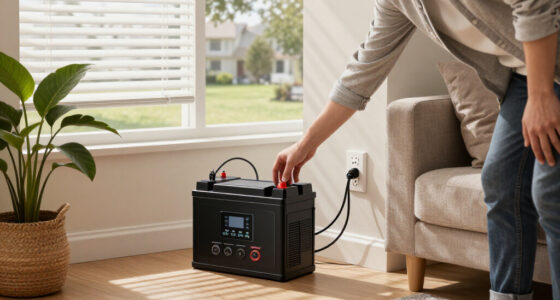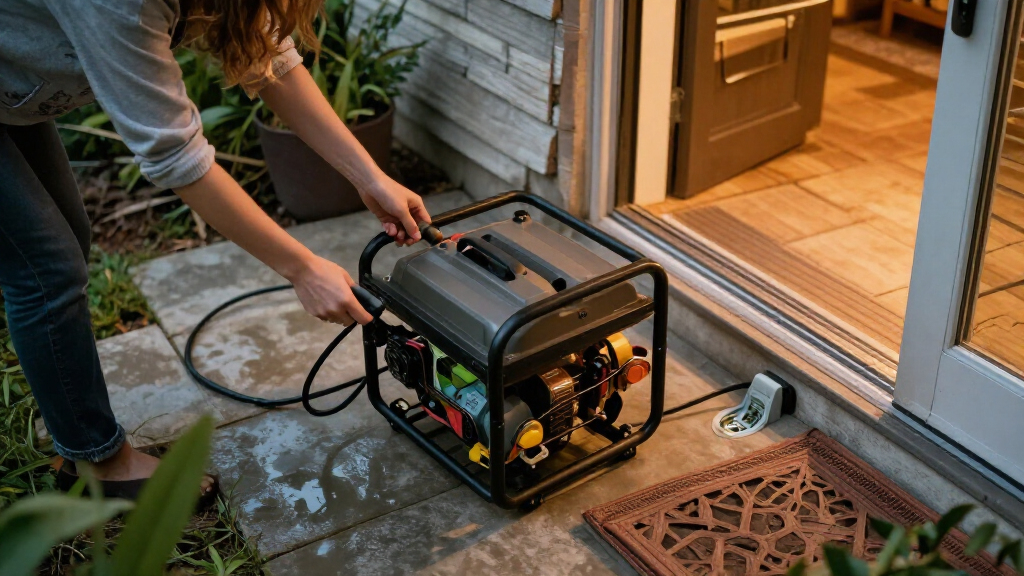
For most homeowners seeking automatic, whole-home backup, I’d start with the Generac Guardian 22kW; its standby design and Wi-Fi monitoring make it the strongest all-around choice in this lineup. The Generac 10kW is a better fit for a smaller, load-managed backup plan, while the Westinghouse WGen10500TFc offers portable power and three fuel options for buyers who want flexibility. The main tradeoff is between automatic convenience and installation needs on one side, and lower-commitment portability with more hands-on operation on the other. Output, fuel availability, starting loads, and safe placement matter as much as the headline wattage. Read on for the full comparison and guidance on choosing a generator that fits your home and outage plan.

Get backup power and energy gear delivered free with Prime
- Fast, free delivery on millions of items
- Prime Video, Amazon Music and more included
- Member-only deals all year
Complete the kit


Key Takeaways
- Standby versus portable is the biggest choice: The Generac models are designed for an installed, automatic home backup system; the Westinghouse and Oxseryn options are portable generators that require setup and connection planning.
- The Guardian 22kW leads for broad home coverage: It has the highest stated output among the listed standby models, while the 10kW and 14kW Generac options suit more selective load plans.
- Fuel flexibility favors the portable Westinghouse picks: The WGen10500TFc and WGen11500TFc accept three fuel types, while several other Westinghouse models support two.
- Remote monitoring and starting solve different problems: Standby Wi-Fi or cellular monitoring helps owners check system status; remote electric start on portable models reduces trips to the generator but does not make them automatic whole-home systems.
- Portability comes with operating tradeoffs: The Oxseryn inverter generator is the compact, lower-output choice here, while the larger portable Westinghouse models deliver more backup capacity at the cost of more space, handling, and setup effort.
| Generac 10kW Whole-Home Standby Generator with Transfer Switch and Cellular Connectivity |  | Best for Smaller Homes | Running output: 10,000 watts | Fuel: Natural gas or propane | Transfer switch: Automatic, 16-circuit | VIEW LATEST PRICE | See Our Full Breakdown |
| Generac Guardian 22kW Home Standby Generator with Transfer Switch and Wi-Fi Monitoring |  | Best for High-Capacity Automatic Backup | Output: 22,000 watts | Fuel: Natural gas or LP gas | Transfer switch: 200-amp, NEMA 3R outdoor | VIEW LATEST PRICE | See Our Full Breakdown |
| Westinghouse WGen10500TFc Tri-Fuel Portable Generator, 13,500 Peak Watts |  | Best for Flexible Fuel and Portable Backup | Running output: 10,500 watts | Peak output: 13,500 watts | Fuel: Gasoline, propane, or natural gas | VIEW LATEST PRICE | See Our Full Breakdown |
| Generac 14 kW Whole Home Standby Generator with 200 Amp Transfer Switch and Cellular Connectivity |  | Best Mid-Capacity Standby Pick | Running output: 14,000 watts | Fuel: Liquid propane or natural gas | Transfer switch: 200 amp | VIEW LATEST PRICE | See Our Full Breakdown |
| Generac GP9500E Tri-Fuel Portable Generator, 12,500 Starting Watts, Electric Start |  | Best Portable Pick for Multiple Fuel Options | Running output: 9,500 watts | Starting output: 12,500 watts on gasoline | Fuel: Gasoline, liquid propane, or natural gas | VIEW LATEST PRICE | See Our Full Breakdown |
| Oxseryn 4400-Watt Gas-Powered Inverter Generator |  | Best Compact Pick | Fuel: Gasoline | Starting wattage: 4,400 watts | Running wattage: 3,400 watts | VIEW LATEST PRICE | See Our Full Breakdown |
| Westinghouse WGen5300DFcv Dual-Fuel Portable Generator with CO Sensor |  | Best Mid-Range Dual-Fuel Pick | Fuel: Gasoline or propane | Gasoline running wattage: 5,300 watts | Gasoline peak wattage: 6,500 watts | VIEW LATEST PRICE | See Our Full Breakdown |
| Westinghouse WGen11500DFc Dual Fuel Portable Generator with Remote Electric Start | 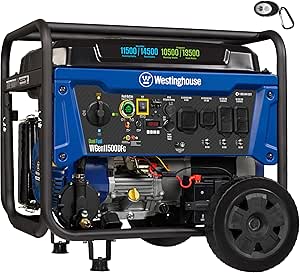 | Best High-Output Dual-Fuel Pick | Fuel: Gasoline or propane | Running wattage: 11,500 watts | Peak wattage: 14,500 watts | VIEW LATEST PRICE | See Our Full Breakdown |
| Westinghouse WGen9500DF Dual Fuel Portable Generator |  | Best for Flexible Starting Options | Fuel: Gasoline or propane | Running wattage: 9,500 watts on gasoline; 8,500 watts on propane | Peak wattage: 12,500 watts on gasoline; 11,200 watts on propane | VIEW LATEST PRICE | See Our Full Breakdown |
| Westinghouse WGen11500TFc Tri-Fuel Portable Generator |  | Best for Three-Fuel Flexibility | Fuel types: Gasoline, propane, and natural gas | Running wattage: 11,500 watts | Peak wattage: 14,500 watts | VIEW LATEST PRICE | See Our Full Breakdown |
| Westinghouse WGen10500DFc Dual-Fuel Portable Generator with Remote Electric Start and CO Sensor |  | Best Dual-Fuel High-Output Portable Pick | Model: WGen10500DFc | Peak wattage: 13,500 watts | Running wattage: 10,500 watts | VIEW LATEST PRICE | See Our Full Breakdown |
| home backup generator | Fuel | Engine | Runtime | Fuel tank |
|---|---|---|---|---|
| Generac 10kW Whole-Home Standb | Natural gas or propane | — | — | — |
| Generac Guardian 22kW Home Sta | Natural gas or LP gas | Generac G-Force 1000 Series, 999 cc | — | — |
| Westinghouse WGen10500TFc Tri- | Gasoline, propane, or natural gas | 500 cc 4-stroke OHV | Up to 19 hours at 25% load on gasoline | 9.5 gallons |
| Generac 14 kW Whole Home Stand | Liquid propane or natural gas | — | — | — |
| Generac GP9500E Tri-Fuel Porta | Gasoline, liquid propane, or natural gas | 500 cc Generac OHV | Up to 9.5 hours at 50% load or 14 hours at 25% load | 7.5 gallons |
| Oxseryn 4400-Watt Gas-Powered | Gasoline | 208 cc, 4-stroke | Up to 14 hours at 25% load with ECO mode | 2 gallons |
| Westinghouse WGen5300DFcv Dual | Gasoline or propane | 274 cc, 4-stroke OHV | Up to 14.5 hours | 4.7 gallons |
| Westinghouse WGen11500DFc Dual | Gasoline or propane | 550 cc, 4-stroke OHV | Up to 19 hours at 25% load | 9.5 gallons |
| Westinghouse WGen9500DF Dual F | Gasoline or propane | 457 cc, 4-stroke OHV | Up to 12 hours | 6.6 gallons |
| Westinghouse WGen11500TFc Tri- | — | 550 cc, 4-stroke OHV | Up to 19 hours at 25% load | 9.5 gallons |
| Westinghouse WGen10500DFc Dual | Gasoline and propane | 500 cc, 4-stroke OHV | Up to 19 hours at 25% load | — |
More Details on Our Top Picks
Generac 10kW Whole-Home Standby Generator with Transfer Switch and Cellular Connectivity
The Generac 10kW suits homeowners who want outage response handled automatically without moving or starting a portable unit. It detects a utility failure, starts on its own, and includes an automatic 16-circuit transfer switch, making it a more self-managing setup than the Westinghouse WGen10500TFc, which requires a separately purchased transfer switch and manual setup. Natural gas or propane operation also avoids dependence on a gasoline tank during an extended outage.
The tradeoff is capacity: its 10,000-watt output is below the Generac Guardian 22kW, so it is a better fit for selected household circuits than for buyers seeking more headroom. Cellular monitoring can help track status remotely, but app features require a premium subscription. At 384 pounds, this is a fixed installation, not a generator to reposition as needs change.
Pros:- Automatically detects outages and starts without manual intervention.
- Includes an automatic 16-circuit transfer switch.
- Runs on either natural gas or propane.
- Cellular monitoring and a 5-year limited warranty are included.
Cons:- Lower output than the Generac Guardian 22kW, limiting capacity for larger household loads.
- Mobile Link app features require a premium subscription.
- Its 384-pound weight makes it unsuitable for routine repositioning.
Best for: Homeowners who want automatic backup for selected household circuits and have access to a natural gas line or propane supply.
Not ideal for: Owners seeking broad whole-home capacity or a movable backup unit; its 10,000-watt output and 384-pound build favor a fixed installation.
- Running output:10,000 watts
- Fuel:Natural gas or propane
- Transfer switch:Automatic, 16-circuit
- Connectivity:Built-in cellular; Mobile Link app features require premium subscription
- Voltage:120 volts
- Weight:384 pounds
- Dimensions:47.3 × 25.6 × 30.7 inches
- Warranty:5-year limited
Our verdict“Choose this Generac if you want automatic, fixed backup for selected circuits and do not need the greater capacity of the Guardian 22kW.”
Generac Guardian 22kW Home Standby Generator with Transfer Switch and Wi-Fi Monitoring
For buyers prioritizing household capacity and automatic operation, the Generac Guardian 22kW leads this group of standby models. Its 22,000-watt output and included 200-amp outdoor transfer switch make it a stronger match for broader home loads than the 10kW Generac, while natural gas or LP fuel connects it to an ongoing supply rather than requiring gasoline storage. Wi-Fi monitoring adds remote status and maintenance alerts.
This is a substantial fixed installation, not a portable alternative to the Westinghouse WGen10500TFc. At 466 pounds, it requires careful handling, and Generac recommends a certified, licensed electrician for installation. That installation commitment makes the Guardian less appealing to buyers seeking a flexible or self-contained portable setup. Its higher output is useful only if the home’s fuel supply, installation plan, and electrical needs support a standby system.
Pros:- Provides 22,000 watts for greater load capacity than the 10kW Generac standby model.
- Includes a 200-amp outdoor transfer switch.
- Runs on natural gas or LP gas.
- Wi-Fi monitoring provides remote generator status and maintenance alerts.
Cons:- At 466 pounds, it requires careful handling and is not portable.
- Installation is recommended to be handled by a certified, licensed electrician.
- Requires a compatible natural gas or LP fuel supply.
Best for: Households seeking high-capacity automatic backup, with a suitable natural gas or LP supply and plans for professional installation.
Not ideal for: Renters, budget-conscious DIY buyers, or anyone who needs portable power; this heavy standby unit calls for a fixed installation and licensed electrical work.
- Output:22,000 watts
- Fuel:Natural gas or LP gas
- Transfer switch:200-amp, NEMA 3R outdoor
- Engine:Generac G-Force 1000 Series, 999 cc
- Voltage:240 volts
- Connectivity:Mobile Link Wi-Fi monitoring
- Weight:466 pounds
- Dimensions:50 × 27 × 29 inches
- Warranty:5-year limited
Our verdict“Pick the Guardian 22kW when automatic operation and higher household capacity matter more than portability or a simpler installation.”
Westinghouse WGen10500TFc Tri-Fuel Portable Generator, 13,500 Peak Watts
The Westinghouse WGen10500TFc is the flexible alternative to the fixed Generac standby units: it runs on gasoline, propane, or natural gas, so owners can choose among available fuel sources as circumstances change. Its 10,500 running watts and 13,500 peak watts provide substantial portable output, while remote and push-button electric start reduce the effort of starting it; recoil remains available as a backup. A gasoline runtime of up to 19 hours at 25% load can also help stretch refueling intervals when demand is modest.
Unlike the Generac 10kW, this Westinghouse does not include an automatic transfer switch, so it will not start and take over household circuits on its own. A transfer switch is sold separately, and the heavy-duty portable design can be difficult to move. The CO sensor and low-oil shutdown add useful safeguards, but this remains a fuel-powered machine that needs hands-on operation and maintenance.
Pros:- Tri-fuel operation supports gasoline, propane, and natural gas.
- Delivers 10,500 running watts and 13,500 peak watts.
- Remote and push-button electric start, with recoil backup.
- Up to 19 hours of runtime at 25% load on gasoline, plus CO and low-oil safeguards.
Cons:- Automatic transfer switch is sold separately.
- Heavy-duty construction can make moving it difficult.
- Requires hands-on operation, unlike the automatic Generac standby models.
Best for: Homeowners who want strong portable output and the option to run on gasoline, propane, or natural gas during outages.
Not ideal for: Buyers who want automatic outage response or a ready-to-use transfer-switch setup; the switch is separate and the generator needs manual operation.
- Running output:10,500 watts
- Peak output:13,500 watts
- Fuel:Gasoline, propane, or natural gas
- Engine:500 cc 4-stroke OHV
- Fuel tank:9.5 gallons
- Runtime:Up to 19 hours at 25% load on gasoline
- Starting system:Push-button electric, remote key fob, and recoil
- Voltage:240 volts
- Warranty:3-year limited residential
Our verdict“Choose the WGen10500TFc if you want high-output portable backup and fuel flexibility rather than automatic standby operation.”
Generac 14 kW Whole Home Standby Generator with 200 Amp Transfer Switch and Cellular Connectivity
The Generac 14kW occupies the middle ground between the 10kW Generac and the 22kW Guardian. Its 14,000-watt output and 200-amp transfer switch offer more capacity than the smaller standby option, while its automatic start means homeowners do not have to deploy a portable generator when utility power fails. Built-in cellular connectivity supports remote monitoring and control, and oil-level sensors plus cold-start improvements are aimed at keeping the unit ready when conditions are difficult.
Compared with the Guardian 22kW, it offers less output, so it is not the pick for buyers who need the most capacity in this lineup. Like both standby Generacs, it also depends on an LP or natural gas supply and a permanent installation. Mobile Link features require a premium subscription, and its 391-pound weight reinforces that it is a fixed home system rather than a portable backup choice.
Pros:- Automatically starts when utility power is lost.
- Provides 14,000 watts and includes a 200-amp transfer switch.
- Built-in cellular connectivity supports remote monitoring and control.
- Oil-level sensors and cold-start improvements support readiness.
Cons:- Mobile Link app features require a premium subscription.
- Requires an LP or natural gas fuel supply.
- Offers less output than the Generac Guardian 22kW and weighs 391 pounds.
Best for: Homeowners who want automatic standby operation and more output than a 10kW unit, but do not need the Guardian 22kW’s higher capacity.
Not ideal for: Buyers who need a portable generator, lack a natural gas or LP supply, or want maximum standby capacity for larger household loads.
- Running output:14,000 watts
- Fuel:Liquid propane or natural gas
- Transfer switch:200 amp
- Voltage:240 volts
- Connectivity:Built-in cellular; Mobile Link app
- Engine type:Internal combustion
- Weight:391 pounds
- Dimensions:46.4 × 26.3 × 30.7 inches
Our verdict“Choose the Generac 14kW for fixed automatic backup when the 10kW model feels limited but the Guardian 22kW is more capacity than you need.”
Generac GP9500E Tri-Fuel Portable Generator, 12,500 Starting Watts, Electric Start
The Generac GP9500E gives homeowners a portable tri-fuel option with 9,500 running watts and up to 12,500 starting watts on gasoline. That makes it a strong choice for buyers who want substantial backup output while keeping fuel choices open: gasoline, propane, or natural gas. Its electric start, included battery, wheel kit, and folding handle make setup more manageable than a bare-bones portable generator, though its 219-pound weight still limits easy movement. The COsense shutdown and voltage regulation add practical protection for home backup use.
Compared with the Westinghouse WGen10500TFc, it has lower running output and a shorter stated gasoline runtime at 50% load, but it includes wheels and a folding handle and connects with Generac HomeLink manual transfer switches. It does not provide the automatic outage response of the Generac standby models. Owners also need to follow its oil-change schedule, including an early service after the first 20 hours.
Pros:- Runs on gasoline, propane, or natural gas.
- Provides 9,500 running watts and up to 12,500 starting watts on gasoline.
- Includes electric start, a 12V battery, wheels, and a folding handle.
- COsense shutdown, low-oil shutdown, and GFCI-protected outlets support safer operation.
Cons:- At 219 pounds, it remains heavy despite the wheel kit and folding handle.
- Gasoline runtime is up to 9.5 hours at 50% load, shorter than the WGen10500TFc’s stated runtime at 25% load.
- Requires an oil change after the first 20 hours, then every 100 hours or once per season.
Best for: Homeowners who want a portable, tri-fuel generator with electric start, useful outlet options, and compatibility with a Generac HomeLink manual transfer switch.
Not ideal for: Buyers seeking automatic startup, long refueling intervals at substantial loads, or a lightweight generator that one person can easily move.
- Running output:9,500 watts
- Starting output:12,500 watts on gasoline
- Fuel:Gasoline, liquid propane, or natural gas
- Engine:500 cc Generac OHV
- Fuel tank:7.5 gallons
- Runtime:Up to 9.5 hours at 50% load or 14 hours at 25% load
- Outlets:Two 120V 20A GFCI duplex; one 120/240V 30A L14-30R; one 120/240V 50A 14-50R
- Weight:219 pounds
- Warranty:3-year residential / 2-year commercial limited
Our verdict“Pick the GP9500E if you want portable tri-fuel backup with electric start and can manage manual operation, weight, and routine maintenance.”
Oxseryn 4400-Watt Gas-Powered Inverter Generator
For a home backup kit that needs to stay portable, the Oxseryn 4400 offers a useful middle ground: 3,400 running watts can support selected essentials, while its 56-pound weight is easier to manage than the larger Westinghouse WGen5300DFcv. Its RV outlet and 12V DC outlet also make it more flexible for camping than a generator focused mainly on home connections. The tradeoff is scale: this is for targeted backup, not running a whole home or several large appliances at once. Its 2-gallon tank keeps the unit compact but means checking fuel more often during extended outages, and under 72 dBA is audible rather than quiet. I’d choose it for portability, not long-duration household coverage.
Pros:- 56-pound weight is easier to move and store than the larger Westinghouse models in this group.
- 3,400 running watts can cover a selected set of household essentials.
- AC, DC, and RV outlets suit both emergency use and recreational trips.
- ECO mode supports up to 14 hours of runtime at 25% load.
Cons:- The 2-gallon fuel tank requires more frequent refueling during an extended outage.
- Its output is not suited to whole-home coverage or multiple high-demand appliances.
- Under 72 dBA at 23 feet is still audible around a home.
Best for: Homeowners who want a light, portable generator for a refrigerator, lights, and a few essentials, with occasional RV use.
Not ideal for: Households seeking broad outage coverage or long stretches between refueling; its 3,400 running watts and 2-gallon tank are limiting.
- Fuel:Gasoline
- Starting wattage:4,400 watts
- Running wattage:3,400 watts
- Engine:208 cc, 4-stroke
- Fuel tank:2 gallons
- Runtime:Up to 14 hours at 25% load with ECO mode
- Outlets:2 × 120V AC, 1 × 12V DC, 1 × RV
- Weight:56 pounds
- Noise:Under 72 dBA from 23 feet
Our verdict“Choose the Oxseryn for portable, targeted backup and RV flexibility, but pick a higher-output model for broader household coverage.”
Westinghouse WGen5300DFcv Dual-Fuel Portable Generator with CO Sensor
The WGen5300DFcv is a practical step up from the compact Oxseryn 4400: it supplies more running power and can use gasoline or propane, giving owners another fuel option when outages disrupt normal routines. Its 30A RV and transfer-switch-ready outlets make it a stronger fit for connecting selected home circuits or an RV than the Oxseryn, while the CO sensor and low-oil shutdown add automatic safeguards. The tradeoffs are a heavier, assembly-required setup and a product listing with varying wattage figures, so I’d confirm the output ratings for the chosen fuel before planning loads. It also falls well short of the WGen9500DF in capacity. This is the more manageable choice for moderate backup needs, not a high-demand household.
Pros:- Gasoline and propane operation gives a useful alternative fuel option.
- 30A RV and transfer-switch-ready outlets support common backup connections.
- CO sensor and automatic low-oil shutdown provide added safety features.
- Wheel kit and setup accessories are included.
Cons:- Wattage figures vary across the product specifications, so buyers should verify output before sizing loads.
- Some assembly is required before use.
- Its capacity is notably below the Westinghouse WGen9500DF for larger backup demands.
Best for: Households that want a mid-capacity portable generator, propane flexibility, and 30A connections for an RV or transfer switch.
Not ideal for: Buyers who need high-output backup for many circuits, or who want a clearly consistent set of wattage ratings without checking the listing.
- Fuel:Gasoline or propane
- Gasoline running wattage:5,300 watts
- Gasoline peak wattage:6,500 watts
- Propane running wattage:4,800 watts
- Engine:274 cc, 4-stroke OHV
- Fuel tank:4.7 gallons
- Runtime:Up to 14.5 hours
- Connections:120V household duplex, TT-30R 30A, L14-30R 30A
- Safety:CO sensor with automatic shutdown; automatic low-oil shutdown
Our verdict“Pick the WGen5300DFcv for moderate backup with dual-fuel flexibility and 30A connections, not for high-demand whole-home loads.”
Westinghouse WGen11500DFc Dual Fuel Portable Generator with Remote Electric Start
For buyers who need substantial portable backup, the WGen11500DFc delivers 11,500 running watts and adds remote and push-button starting, avoiding the recoil-start routine of smaller or simpler units. It runs on gasoline or propane and lists less than 5% THD, a useful specification for powering sensitive electronics alongside larger household loads. Compared with the WGen9500DF, it offers more stated output and longer listed runtime; compared with the WGen11500TFc, it gives up natural-gas capability. That narrower fuel choice may matter if a home already has a natural-gas connection for backup. The large engine and 9.5-gallon tank make this a substantial machine, and the transfer switch is sold separately. I’d favor it when output and convenient starting matter more than easy handling.
Pros:- 11,500 running watts provide more capacity than the WGen9500DF.
- Gasoline and propane operation offers fuel flexibility.
- Remote and push-button electric start simplify starting during poor weather.
- Less than 5% THD is specified for use with sensitive electronics.
Cons:- The large 550 cc engine and 9.5-gallon tank make handling and storage more demanding.
- A transfer switch is sold separately.
- It does not offer natural-gas operation like the WGen11500TFc.
Best for: Homeowners seeking high portable output, remote starting, and gasoline-or-propane flexibility for multiple essential circuits.
Not ideal for: Buyers who need natural-gas operation, an included transfer switch, or a generator that is easy to move and store.
- Fuel:Gasoline or propane
- Running wattage:11,500 watts
- Peak wattage:14,500 watts
- Engine:550 cc, 4-stroke OHV
- Fuel tank:9.5 gallons
- Runtime:Up to 19 hours at 25% load
- Starting:Push-button electric start and remote start
- Voltage:240 volts
- Total harmonic distortion:Less than 5%
Our verdict“Choose the WGen11500DFc for high-output backup and remote starting if gasoline and propane meet your fuel needs.”
Westinghouse WGen9500DF Dual Fuel Portable Generator
The WGen9500DF suits buyers who want strong portable backup without moving up to the WGen11500 models. Its gasoline output reaches 9,500 running watts, and propane operation provides an alternative when gasoline is inconvenient or unavailable. The standout practical difference is its choice of remote, electric, and recoil starting: there is a convenient option for routine use and a manual fallback if the battery is depleted. Its household, transfer-switch, and RV connections also give it broader hookup flexibility than the Oxseryn 4400. The tradeoffs are meaningful: runtime is listed at up to 12 hours on a 6.6-gallon gasoline tank, and the unit requires some assembly. Compared with the WGen11500DFc, it gives up output and longer listed runtime in exchange for a less powerful backup tier.
Pros:- Gasoline and propane operation allow a choice of fuel.
- Remote, electric, and recoil starting include both convenient and manual options.
- Household, transfer-switch, and RV outlets support varied backup setups.
- Digital display and automatic low-oil shutdown add useful operating information and protection.
Cons:- Up to 12 hours of runtime on gasoline may require refueling during a prolonged outage.
- Some assembly is required.
- Its output is lower than the WGen11500DFc for homes with larger connected loads.
Best for: Homeowners who want substantial dual-fuel backup, multiple starting methods, and connections for household circuits or an RV.
Not ideal for: Households that need the highest portable output or long intervals between refueling; the WGen11500DFc offers more output and longer listed runtime.
- Fuel:Gasoline or propane
- Running wattage:9,500 watts on gasoline; 8,500 watts on propane
- Peak wattage:12,500 watts on gasoline; 11,200 watts on propane
- Engine:457 cc, 4-stroke OHV
- Fuel tank:6.6 gallons
- Runtime:Up to 12 hours
- Starting methods:Remote, electric, and recoil
- Outlets:Two 120V 20A GFCI; one 120V 30A L14-30R; one 120/240V 50A 14-50R
Our verdict“Choose the WGen9500DF for strong dual-fuel backup with multiple start methods, while accepting more frequent refueling than the larger WGen11500DFc.”
Westinghouse WGen11500TFc Tri-Fuel Portable Generator
The WGen11500TFc is the strongest fit here for homes that want a portable unit but do not want to depend on a single fuel supply. It offers gasoline, propane, and natural gas, unlike the dual-fuel WGen11500DFc, while matching that model’s listed 11,500 running watts and 14,500 peak watts. Natural gas can be a useful option when the home’s supply remains available, and remote and push-button electric start make operation more convenient. The up to 19 hours at 25% load and less than 5% THD add flexibility for extended use and sensitive electronics. This capability comes with a sizable, difficult-to-move generator, and an automatic transfer switch is sold separately. I’d pick it over the dual-fuel version when the third fuel option is worth the extra setup and handling demands.
Pros:- Three fuel options provide more supply flexibility than the WGen11500DFc.
- 11,500 running watts support substantial portable backup loads.
- Remote and push-button electric start reduce reliance on manual starting.
- Up to 19 hours at 25% load and less than 5% THD support extended operation and sensitive electronics.
Cons:- Its large size makes it difficult to move despite its wheels.
- An automatic transfer switch is sold separately.
- Natural-gas capability is of limited use to buyers without a suitable supply and connection.
Best for: Homeowners who want high-output portable backup and access to gasoline, propane, and a compatible natural-gas supply.
Not ideal for: Buyers with limited storage or mobility needs, or anyone who does not need natural-gas capability and would prefer the simpler WGen11500DFc.
- Fuel types:Gasoline, propane, and natural gas
- Running wattage:11,500 watts
- Peak wattage:14,500 watts
- Engine:550 cc, 4-stroke OHV
- Fuel tank:9.5 gallons
- Runtime:Up to 19 hours at 25% load
- Starting:Remote and push-button electric start
- Outlets:L14-30R 30A and 14-50R 50A
- Total harmonic distortion:Less than 5%
Our verdict“Choose the WGen11500TFc if three-fuel flexibility matters for high-output portable backup; otherwise, the WGen11500DFc offers a simpler dual-fuel alternative.”
Westinghouse WGen10500DFc Dual-Fuel Portable Generator with Remote Electric Start and CO Sensor
I’d choose the WGen10500DFc for households that want substantial backup output without committing to a fixed standby installation. Its 10,500 running watts and 240-volt output can support more home loads than compact portables such as the WGen5300DFcv, while gasoline and propane options give owners a fallback if one fuel is unavailable. Remote and push-button starting are useful when reaching the generator is awkward, and the CO sensor and low-oil shutdown add safeguards during operation.
The tradeoff is its heavy, portable-generator form: moving it and arranging safe outdoor operation take planning. It also lacks the automatic transfer switch and hands-off response of Generac standby models, and that switch is sold separately. Its 19-hour runtime applies at just 25% load, so heavier demand will shorten it. I see it as a strong middle ground for buyers who want high output and fuel flexibility, not automatic whole-home backup.
Pros:- 10,500 running watts and 240-volt output suit a broader set of household loads than smaller portable options.
- Gasoline and propane support gives owners a choice of available fuel.
- Remote key-fob and push-button electric starting reduce reliance on recoil starting.
- CO sensor and automatic low-oil shutdown add operating safeguards.
Cons:- Its heavy-duty portable design can be cumbersome to position and move.
- An automatic transfer switch is sold separately, so it does not provide standby-style automatic backup.
- The stated 19-hour runtime is at 25% load and will be shorter under heavier demand.
Best for: Homeowners who can operate and position a large portable generator and want high output with gasoline and propane flexibility during outages.
Not ideal for: People seeking automatic, unattended whole-home backup or anyone who needs a lightweight generator that is easy to move alone.
- Model:WGen10500DFc
- Peak wattage:13,500 watts
- Running wattage:10,500 watts
- Fuel:Gasoline and propane
- Engine:500 cc, 4-stroke OHV
- Gasoline tank capacity:9.5 gallons
- Runtime:Up to 19 hours at 25% load
- Starting system:Push-button electric start, remote key fob, and recoil start
- Safety features:CO sensor and automatic low-oil shutdown
Our verdict“Choose this model if you want high-output, dual-fuel portable backup and can manage its size and manual setup; choose a Generac standby model for automatic outage response.”
How We Picked
I compared these 11 models through the needs of a household facing outages: how much usable backup capacity each design offers, how it is started and connected, and whether it can run on fuel a buyer can store or obtain. I gave weight to the distinction between installed standby systems and portable generators, because they solve different problems. Output figures are useful only when matched to a home’s essential circuits, appliance starting demands, and chosen connection method.
The ranking favors options with a clear fit for common home backup plans, then accounts for fuel flexibility, monitoring or starting convenience, and the practical demands of storage and setup. That puts the Generac Guardian 22kW first for buyers seeking broad automatic coverage, while smaller standby models rank well for managed loads. Portable models are ordered by their combination of capacity and fuel choice, with the compact Oxseryn serving a narrower, lighter-duty role rather than competing directly with whole-home systems.
| home backup generator | Runtime |
|---|---|
| Generac 10kW Whole-Home Standb | — |
| Generac Guardian 22kW Home Sta | — |
| Westinghouse WGen10500TFc Tri- | Up to 19 hours at 25% load on gasoline |
| Generac 14 kW Whole Home Stand | — |
| Generac GP9500E Tri-Fuel Porta | Up to 9.5 hours at 50% load or 14 hours at 25% load |
| Oxseryn 4400-Watt Gas-Powered | Up to 14 hours at 25% load with ECO mode |
| Westinghouse WGen5300DFcv Dual | Up to 14.5 hours |
| Westinghouse WGen11500DFc Dual | Up to 19 hours at 25% load |
| Westinghouse WGen9500DF Dual F | Up to 12 hours |
| Westinghouse WGen11500TFc Tri- | Up to 19 hours at 25% load |
| Westinghouse WGen10500DFc Dual | Up to 19 hours at 25% load |
Factors to Consider When Choosing Home Backup Generators
Choosing a generator is less about finding the largest wattage and more about matching the machine to the way your household will use backup power. I’d settle the connection plan, fuel supply, and essential loads before comparing convenience features.
Decide Whether You Need Automatic Standby or Portable Backup
A standby generator is permanently installed and paired with a transfer switch, so it can take over selected or broader home circuits when utility power fails. That convenience comes with installation requirements, a fixed location, and less flexibility if you move. A portable generator costs you setup time during an outage, but it can be stored when not needed and may serve other locations. Don’t treat a portable model’s high wattage as a substitute for a properly installed whole-home system: the connection method and circuit capacity still limit what you can safely power. Choose standby if outages make hands-on setup unrealistic; choose portable if you value flexibility and can manage setup safely.
Size for Starting Loads, Not Just Everyday Running Watts
Make a list of the circuits and appliances you want to run at the same time, then account for the brief surge some motors need when starting. Refrigerators, pumps, and air-conditioning equipment may draw more during startup than while running. A generator sized only to the combined everyday draw can struggle when two demanding appliances start together. Load management or a smaller essential-circuits plan can make a lower-output generator workable, while whole-home ambitions may call for higher capacity and professional planning. Ask an electrician to check the loads and transfer equipment rather than relying on a single wattage figure on a product page.
Choose Fuel Around Real Outage Conditions
Fuel flexibility can help when one supply becomes hard to access, but each fuel type has different storage, availability, and connection needs. A tri-fuel model gives more options than a dual-fuel model, yet that flexibility only helps if you can safely connect and obtain the fuels you plan to use. Natural gas can reduce the need to store gasoline for compatible installations, while gasoline and propane call for safe storage and regular readiness checks. Think through how long a typical outage lasts in your area and how you would replenish fuel if roads or local suppliers are disrupted. Avoid buying for theoretical flexibility you are unlikely to set up or maintain.
Plan the Transfer Switch and Electrical Connection First
A transfer switch or other approved connection method determines how generator power reaches household circuits and helps prevent dangerous backfeeding into utility lines. Standby packages may include a transfer switch, but the model and installation must match your electrical service and intended loads. Portable generators need a compatible connection plan; extension cords are not a replacement for a correctly designed home hookup. Before buying, have a qualified electrician review the panel, circuit priorities, and any local requirements. This step can reveal that a lower-capacity generator is enough with selected circuits, or that the generator you had in mind cannot support your intended connection.
Match Convenience Features to Who Will Run the Generator
Wi-Fi or cellular monitoring can make it easier to check a standby system’s status, but it does not replace maintenance or confirm that every household circuit is covered. Remote starting on a portable model saves a trip to the machine, yet the generator still needs safe placement and a suitable electrical connection. If several people may need to operate the system, clear controls and a written startup plan can matter more than a feature that only one person knows how to use. Carbon monoxide sensing adds a layer of protection on models that include it, but it does not make indoor or enclosed operation safe. Pick convenience features that address a specific task in your outage routine.
Account for Placement, Noise, Maintenance, and Storage
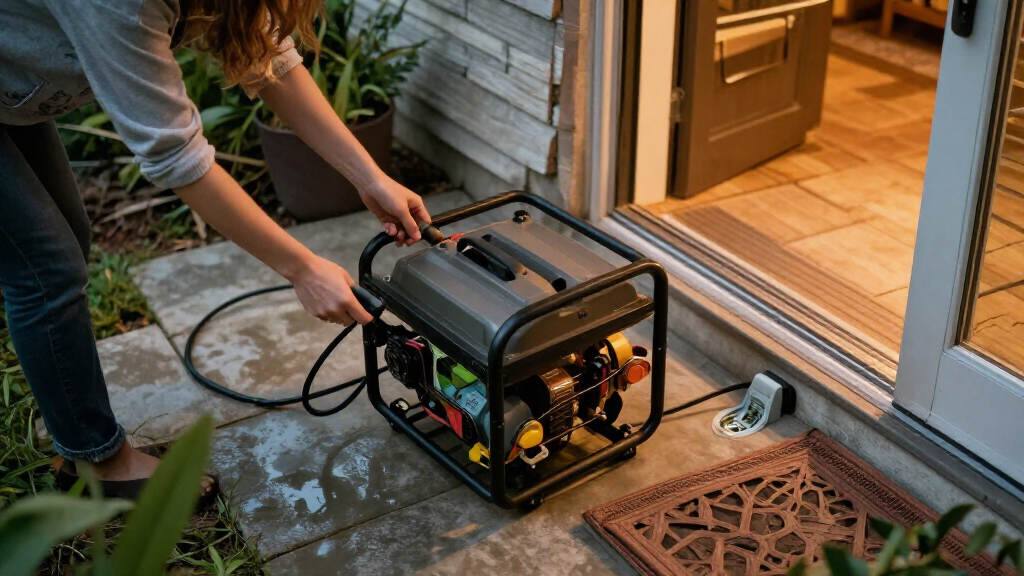
Portable generators need an outdoor operating location with safe separation from doors, windows, and air intakes; never run one indoors, in a garage, or in another enclosed space. Check the manufacturer’s placement instructions and local rules before choosing where it will sit, since a yard or driveway may not offer a suitable spot. Larger portable units also need enough storage space and a practical way to move them into position. Standby systems avoid repeated setup but require installation and ongoing service planning. Review the maintenance schedule for whichever design you choose, and plan fuel checks and routine readiness tasks before the next outage rather than during it.
Frequently Asked Questions
Can a portable generator power my whole house?
It may support many household loads, but “whole house” depends on generator output, the home’s electrical service, and how circuits are connected and managed. A portable unit does not automatically become a whole-home system just because its wattage is high. You’ll need a compatible transfer method installed or approved for your setup, plus a plan for motor starting loads and simultaneous appliance use. Ask an electrician to identify the circuits you can run together. If you want backup to begin without manual setup, an installed standby system is the closer match.
Is a 10kW standby generator enough for a typical home?
It can be enough for a selected group of essential circuits, but the answer depends on your appliances and whether you expect to run large loads at the same time. A home with a managed list of essentials has different needs from one seeking air conditioning, cooking equipment, and other heavy loads together. Starting surges can also affect what runs reliably. Have an electrician review your panel and load plan before selecting a size. In this lineup, the 10kW Generac suits a more selective backup plan than the 22kW Guardian.
Should I choose dual-fuel or tri-fuel for home backup?
Tri-fuel gives you another potential fuel source, which can be useful if outages disrupt access to one type. That advantage matters only if the fuel is available at your home and you have the correct, safe connection setup. Dual-fuel may be the simpler choice when its supported fuels already match your storage and supply plan. Compare the fuels you can realistically access during a long outage, not just the number of options listed. The Westinghouse WGen10500TFc and WGen11500TFc stand out here for tri-fuel flexibility, while several other Westinghouse models are dual-fuel.
Do I need a transfer switch for a portable generator?
If you want to connect a portable generator to household wiring, you need a properly designed and approved connection method, commonly a transfer switch or interlock setup installed to applicable requirements. It prevents generator power from feeding back toward utility lines, which can endanger line workers and damage equipment. A collection of extension cords does not provide the same connection or circuit control. Have a qualified electrician determine what fits your panel and local rules before purchasing. The generator’s included accessories should not be assumed to cover your home’s installation needs.
Is an inverter generator like the Oxseryn enough for outage backup?
The Oxseryn’s 4,400-watt output makes it a more compact, lower-capacity option than the large portable Westinghouse models in this roundup. It may suit a focused plan for selected essentials, depending on their running and starting demands, but it is not the closest match for broad household coverage. Make a circuit and appliance list before deciding, and leave room for startup surges. Also plan how you will connect loads safely and run the generator outdoors. If you need to power several demanding appliances at once, compare larger capacity options instead.
Conclusion
For the strongest fit for broad, automatic household backup, I’d choose the Generac Guardian 22kW as best overall, provided the home and installation plan support its capacity. The Generac 10kW is my best value for buyers who can prioritize essential circuits rather than pursue broad coverage, while the Generac 14 kW is a middle ground for those who want a standby system with more headroom than the 10kW option. For beginners who want to avoid planning a permanent installation, the Westinghouse WGen5300DFcv offers a more approachable portable backup scale, though safe connection and outdoor placement still need planning. If fuel flexibility is the priority, compare the WGen10500TFc and WGen11500TFc; for a compact, lower-output setup, consider the Oxseryn 4400-Watt inverter. My final choice would follow a load assessment, fuel plan, and connection review—not the biggest wattage alone.