
TL;DR

Get backup power and energy gear delivered free with Prime
- Fast, free delivery on millions of items
- Prime Video, Amazon Music and more included
- Member-only deals all year
Green Building Advisor published a report on temporary heating, cooling and dehumidification during home construction, focusing on worker comfort and material performance. The article says construction dust can make a home’s regular HVAC system a poor choice, while temperature alone may not control moisture-related drying problems.
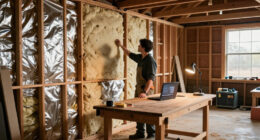
Green Building Advisor published a report on October 16, 2026, examining how temporary heating, cooling and dehumidification can protect construction workers and building materials. The report says conditions inside a home under construction affect work such as concrete placement, drywall finishing and tiling, while construction dust can make use of the home’s regular heating and cooling equipment problematic.
The report, written by Randy Williams, says jobsite conditions may call for heat, cooling, moisture removal or a combination, depending on the climate and the stage of construction. It broadens an earlier discussion of temporary heaters to include cooling in hot conditions and management of humidity as a building progresses.
Material requirements vary. The report cites the Gypsum Association’s recommendation to maintain a temperature of at least 50°F for 48 hours before drywall finishing and until the joint compound has dried. Williams also cautions that temperature is only one factor: high indoor moisture can slow joint-compound drying even when the space is warm enough.
The same general concern applies to flooring, adhesives, coatings and spray-foam insulation, which can be sensitive to temperature and moisture during installation or curing. The report warns that construction dust and debris may contaminate ductwork or cause problems for heat exchangers and air-conditioning coils if a home’s permanent equipment is used during construction.
Protecting Materials and HVAC Equipment
Temporary conditioning matters because unsuitable site conditions can affect both the people doing the work and the products being installed. A space that is too cold may not meet recommended conditions for certain finishing tasks, while damp air can extend drying time. Those issues can disrupt the construction sequence and complicate work that depends on materials curing or drying properly.
There is also a potential equipment and indoor-air concern. According to the report, dust from construction can enter a home’s ductwork and reach components such as heat exchangers and A-coils. Avoiding unnecessary exposure of the permanent system may help protect equipment and reduce the risk of construction debris affecting air quality for future occupants. The report does not quantify those risks or provide a comparison of costs among temporary conditioning options.
Temperature Is Only One Factor
The article frames temporary conditioning as a project-specific problem rather than a single heating question. In cold conditions, a site may need added heat; in hot climates, cooling may be needed. Across climates, managing moisture can also matter as building materials are installed and finished.
Williams says he had previously written about temporary jobsite heating and is expanding that discussion to cooling and humidity control. The source page describes an example from a home entering the drywall stage in early spring, but the supplied report excerpt ends before providing details of the incident or its outcome. The article is identified as a Green Building Advisor Prime piece, with access limited on the source page.
“Temperature is only part of the equation.”
— Randy Williams, Green Building Advisor report
Options and Costs Remain Unspecified
The supplied report material does not provide a full comparison of temporary heaters, cooling equipment or dehumidifiers, nor does it set out a preferred system for particular climates or construction stages. It also gives no cost estimates, energy-use figures or measured effects on schedules and finished work.
The source excerpt’s account of a home entering the drywall phase is incomplete, so the circumstances, moisture readings and eventual findings from that visit are not available here. The recommendation cited for drywall is attributed to the Gypsum Association, but the excerpt does not give a publication date or link for that guidance. Readers should not treat the article excerpt as a complete technical specification for every material or project.
Project Conditions Guide Decisions
For a construction team, the next step is to match temporary conditioning to the work underway and the materials’ stated installation requirements. That means considering both temperature and moisture, rather than assuming warmth alone will provide suitable drying conditions. The report’s examples point to checking product guidance for drywall, flooring, adhesives, coatings and insulation.
The report does not announce a new regulation, product or construction-industry policy, and it gives no timetable for further guidance. Decisions about equipment and operating practices remain dependent on the project, local weather and materials being used. The supplied source page offers no additional confirmed milestone beyond the publication of Williams’ report on October 16, 2026.
Key Questions
What does temporary space conditioning mean on a construction site?
It means using temporary heating, cooling or dehumidification to manage conditions inside a building while construction is underway. The appropriate approach depends on the climate and the work being done.
Why might builders avoid using the home’s permanent HVAC system?
The report says construction dust and debris can contaminate ductwork and create problems for components such as heat exchangers and A-coils. It also raises a concern that debris could affect air quality for future occupants.
What temperature does the report cite for drywall finishing?
Citing the Gypsum Association, the report says to maintain at least 50°F for 48 hours before finishing and until the joint compound has dried. The excerpt does not provide a complete specification for every drywall product or project.
Can a warm building still have a drywall drying problem?
Yes. Williams says high moisture in the air can slow joint-compound drying even when the space is warm enough. The article therefore treats humidity as a separate part of site conditioning.
Does the report recommend a specific temporary conditioning system?
No specific system is identified in the supplied excerpt. It discusses the need to consider heating, cooling and moisture removal but does not compare equipment, costs or performance.
Source: rss
Halloween Picks
halloween
As an affiliate, we earn on qualifying purchases.
![Fil-C: Garbage In, Memory Safety Out [Video]](https://standbygeneratorhq.com/wp-content/uploads/2026/07/fil-c-garbage-in-memory-safety-out-video-featured-560x300.jpg)